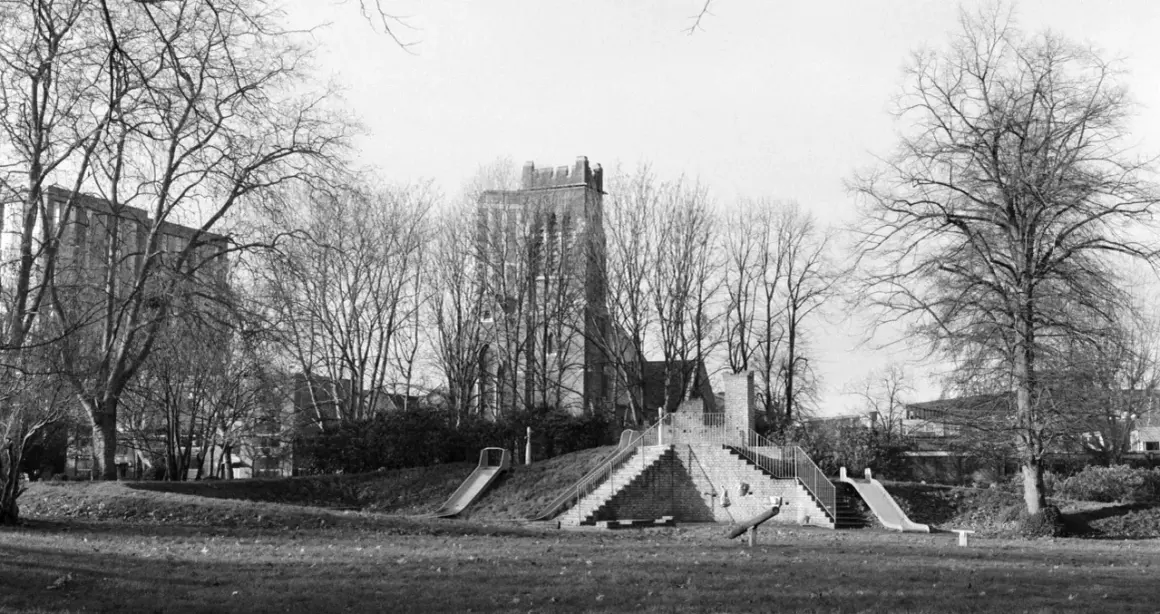
One of the most useful ISO 400 black-and-white films is the one that gives you enough speed for everyday light without forcing a harsh, gritty look. The stock many shops still list as Ilford Pan 400 sits in that practical middle ground: affordable, flexible, and easy to scan or print. Here I’m breaking down what it is, how it renders scenes, how I’d meter it, how to develop it, and when I’d choose something else instead.
The practical take on this film
- The current Harman/Ilford naming is Kentmere PAN 400; older listings may still use the Ilford label.
- It is a panchromatic black-and-white film rated at ISO 400, available in 35mm, 120, and bulk rolls.
- It works best for street, travel, documentary, casual portraits, and general available-light shooting.
- No reciprocity correction is needed from 1/10,000 second to 1 second; longer exposures need compensation.
- Box-speed development at 20°C / 68°F is around 9:30 in ID-11 stock, 16:30 in ID-11 1+1, and 8:00 in Microphen stock.
- If you want a more refined or more forgiving 400-speed option, HP5 Plus or Delta 400 are the usual step up.
What this film is today
As of 2026, the current official branding on the Harman/Ilford side is Kentmere PAN 400, even though the older Ilford Pan 400 name still shows up in forums, shops, and marketplace listings. In practical terms, that naming drift matters less than the behavior of the film itself: it is a traditional 400-speed panchromatic black-and-white emulsion built for general-purpose shooting.
“Panchromatic” simply means the film is sensitive to the visible spectrum in a balanced way, so skies, skin tones, foliage, and shadows all render in a normal black-and-white relationship instead of a filtered, ortho-style look. The format options are straightforward too: 35mm 24- or 36-exposure DX-coded cassettes, 120 roll film, and 30.5 m bulk lengths.
| Format | What it means for you |
|---|---|
| 35mm, 24/36 exp | The easiest way to try it in a standard 35mm camera. |
| 120 | A good choice if you want more negative area and slightly smoother-looking tonality. |
| Bulk length | Useful if you shoot a lot and load your own cassettes. |
If you are buying in the US, I would focus on the film class first and the label second. The stock is meant to be a dependable everyday 400, not a specialty emulsion you have to baby. Once you know the label, the next useful question is how it behaves in actual light.

How it renders light in real scenes
When I see this film used well, I usually see three things: a classic grain structure, solid sharpness, and contrast that feels present without becoming aggressive. That combination makes it comfortable for day-to-day photography where light changes quickly and you do not want every frame to feel precious.
Where it tends to shine
- Street photography because quick light changes and mixed tones are handled without drama.
- Travel and documentary work because the film is fast enough for indoor transitions and late-afternoon frames.
- Outdoor portraits because skin tones usually sit in a predictable tonal range without looking too clinical.
- Scanning workflows because clean, straightforward negatives are easier to correct than highly eccentric emulsions.
Where I would be careful
This is not the film I would pick if I wanted the smoothest possible grain or the deepest tonal refinement at 400 speed. It can absolutely deliver good negatives, but if I underexpose it too casually, the shadows tighten and the grain starts to feel more obvious. That is not a flaw so much as a reminder that this is a budget 400-speed film, not a premium one.
The tonal look is best described as practical rather than delicate. I would not use it to chase hyper-modern, ultra-clean black and white; I would use it when I want the picture to land quickly and reliably. That is why exposure discipline matters, which brings me to how I meter and rate the stock.
How I meter and shoot it
My default advice is simple: shoot it at box speed first. ISO 400 is the point where this film feels balanced, and that is usually the best starting place unless I already know the scene is flat, the light is fading, or I want a specific darker or denser negative.
Read Also: 35mm Street Photography - Film Guide for Better Shots
My practical exposure approach
- Use ISO 400 as the baseline.
- If the light is soft and I want a little more shadow density, rate it at EI 320.
- If I expect a push, I would move to EI 800 only when I actually need the speed.
- When using strong filters, I would meter carefully rather than trust the camera blindly.
- For long exposures, I would check reciprocity compensation instead of assuming film behaves like digital sensor noise.
The official technical sheet says no reciprocity adjustment is needed from 1/10,000 second to 1 second. Beyond that, the exposure must be increased, and the manufacturer bases the correction on a time curve rather than a simple one-size-fits-all rule. In plain language: once your metered exposure gets longer than a second, use the chart, not guesswork.
There is also a useful warning around filters. Through-the-lens metering usually handles filtration well, but deep red or orange filters can still produce underexposure in some automatic cameras, by as much as 1.5 stops. I would treat strong filtration as a deliberate creative choice, not a casual add-on, especially in winter light or late afternoon when the spectrum changes. If you plan to process it yourself, the next step is choosing a developer and holding your timings steady.
Development times and processing habits
This film is easy to process, but easy does not mean careless. The official guidance is written around 20°C / 68°F and intermittent agitation in spiral tanks or deep tanks, and the sheet also notes that continuous agitation or rotary processing can shorten times by up to 15%. I would treat the published numbers as starting points, then fine-tune once I see how my own tank behaves.
| Developer | Dilution | Time at 20°C / 68°F for EI 400 | What it tends to do |
|---|---|---|---|
| ID-11 | Stock | 9:30 | Classic, balanced negatives with a familiar black-and-white look. |
| ID-11 | 1+1 | 16:30 | Gives a slightly more open, controllable development style. |
| Microphen | Stock | 8:00 | A sensible starting point if you expect to push the film later. |
| D-76 | Stock | 9:30 | Very close to a standard lab-style result with a traditional curve. |
| ILFOTEC HC | 1+15 | 4:30 | Quicker processing with a punchier feel. |
There are two practical habits I would not skip. First, keep all solutions within roughly 5°C / 9°F of each other so the film does not get shocked by temperature swings. Second, use the same agitation pattern every time. With a film like this, consistency matters more than chasing a magical developer recipe.
If you are scanning, a standard negative with moderate contrast is usually your friend. If you are printing in the darkroom, the film is robust enough to tolerate ordinary processing conditions and still give usable density. Once you know the processing side, it becomes much easier to decide whether this film beats the alternatives for your work.
How it compares with the usual alternatives
Most people considering this stock are really deciding between value, grain, and latitude. That is why I think side-by-side comparisons are more useful than abstract praise. The film is good, but the right choice depends on what you want the negatives to do after the shutter clicks.| Film | Look | Strength | Tradeoff | Best use |
|---|---|---|---|---|
| PAN 400 | Classic grain, solid sharpness, straightforward contrast | Value and versatility | Less refined than premium 400-speed films | Everyday shooting, street, travel, learning |
| HP5 Plus | Slightly fuller tonality and more forgiving response | Latitude and all-round flexibility | Usually costs more | General-purpose work when you want a step up |
| Delta 400 | Smoother grain and a cleaner modern look | Refinement | Less “classic” in feel | Portraits, scans, and cleaner enlargements |
| Kentmere PAN 100 | Finer grain and lower speed | Image smoothness | Needs more light and a steadier hand | Daylight, tripod work, slower pacing |
That leaves the practical question of whether I would recommend it at all, and to whom.
What I would tell a shooter before loading the first roll
If you want a dependable ISO 400 black-and-white film that does not punish imperfect light, this is a sensible place to start. I would use it for street work, travel, family coverage, and student projects, then move up only if I needed finer grain or a more premium tonal response.
- Choose it if you want an affordable, easy-to-use 400-speed film with a classic black-and-white look.
- Choose something else if you care more about maximum tonal subtlety than about value.
- Expose it carefully if you are using filters, because red and orange filtration can trip up some automatic cameras.
- Develop it consistently at 20°C / 68°F before experimenting with push processing.
My bottom line is simple: this is a practical film, and practical is not a compromise when you are trying to make real photographs in changing light. Load it, meter it honestly, process it cleanly, and it will do the job without making the process feel technical for the sake of being technical.