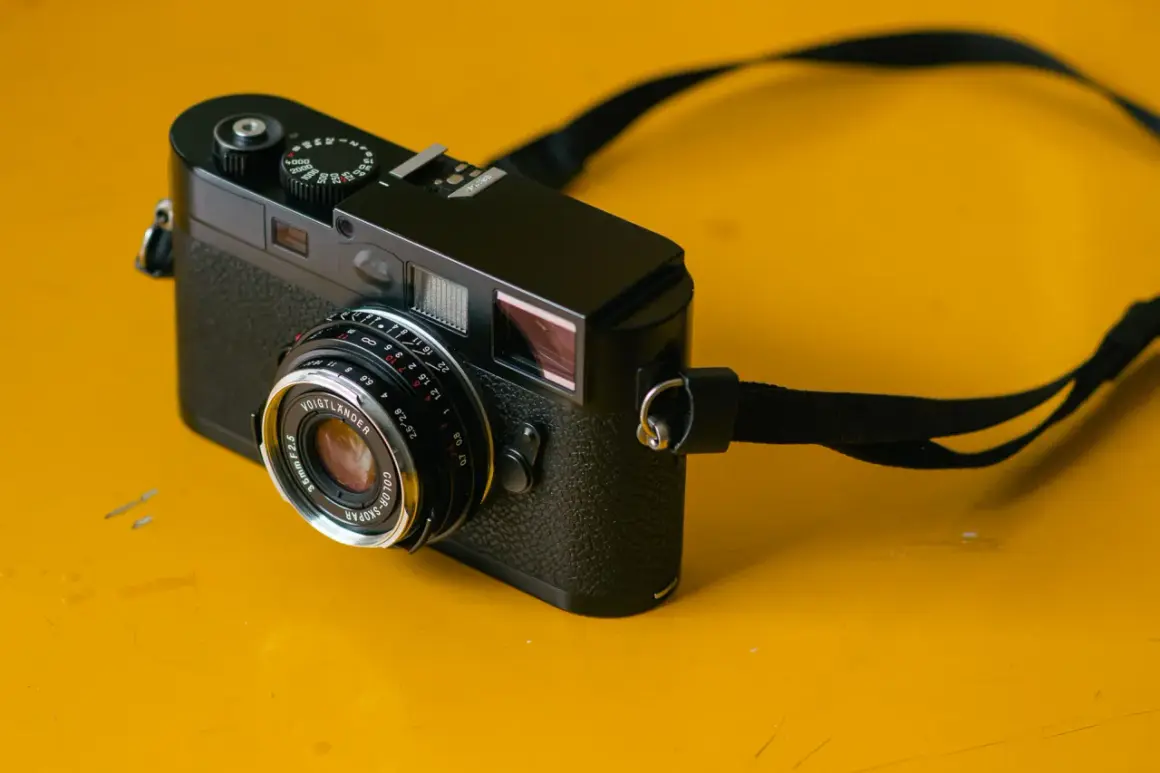
The Voigtlander Color-Skopar 35mm sits in a sweet spot that film photographers actually use: wide enough for street and documentary work, small enough to stay on the camera, and sharp enough that the negative does not need excuses. In film photography, that balance matters more than a spec-sheet headline because the lens has to support timing, framing, and film choice instead of fighting them. This guide breaks down how it handles on a film body, how it renders, which version makes sense, and when a different 35mm prime is the smarter buy.
The short version if you need a decision now
- 35mm on film is a practical storytelling focal length that shows context without feeling cramped.
- The f/2.5 pancake is the better all-round choice if you want a bit more low-light flexibility.
- The f/3.5 version is even smaller and lighter, but it asks for brighter light or faster film.
- Both versions favor clean contrast, strong sharpness, and controlled flare over dreamy vintage softness.
- I would start with ISO 400 film for most daylight and general walk-around shooting.
- If your photography lives indoors or after dark, a faster 35mm lens will still be easier to live with.
What the 35mm Color-Skopar is really for
On film, 35mm is the classic compromise focal length. It is wide enough to include environment, but not so wide that every frame becomes a geometry exercise. That is why this lens shows up so often in street, travel, reportage, and everyday documentary work. It lets me keep people in their setting, which is often the whole point of shooting film in the first place.
There are two modern versions that matter most to film shooters: the f/2.5 pancake and the newer f/3.5 aspherical. Both are manual-focus rangefinder lenses with a 0.7 m minimum focus distance, but they solve the carrying problem differently. The f/2.5 is the more balanced option, while the f/3.5 is the one I would choose if absolute compactness were the priority.
| Version | What it gives you | Main tradeoff |
|---|---|---|
| 35mm f/2.5 pancake | 23 mm long, 134 g, 39 mm filter, a little more exposure flexibility | Still compact, but not the tiniest option |
| 35mm f/3.5 aspherical | 14 mm long, 99 g, 34 mm filter, almost disappears on the camera | Slower, so it leans harder on bright light or faster film |
In the U.S., I would budget roughly $480 for the pancake version and about $550 to $700 for the newer 3.5 version depending on finish and dealer. That puts it in the zone where the lens feels premium, but not absurdly expensive for a modern manual prime. Next, the more interesting question is how it actually looks on negatives.
How it draws on film
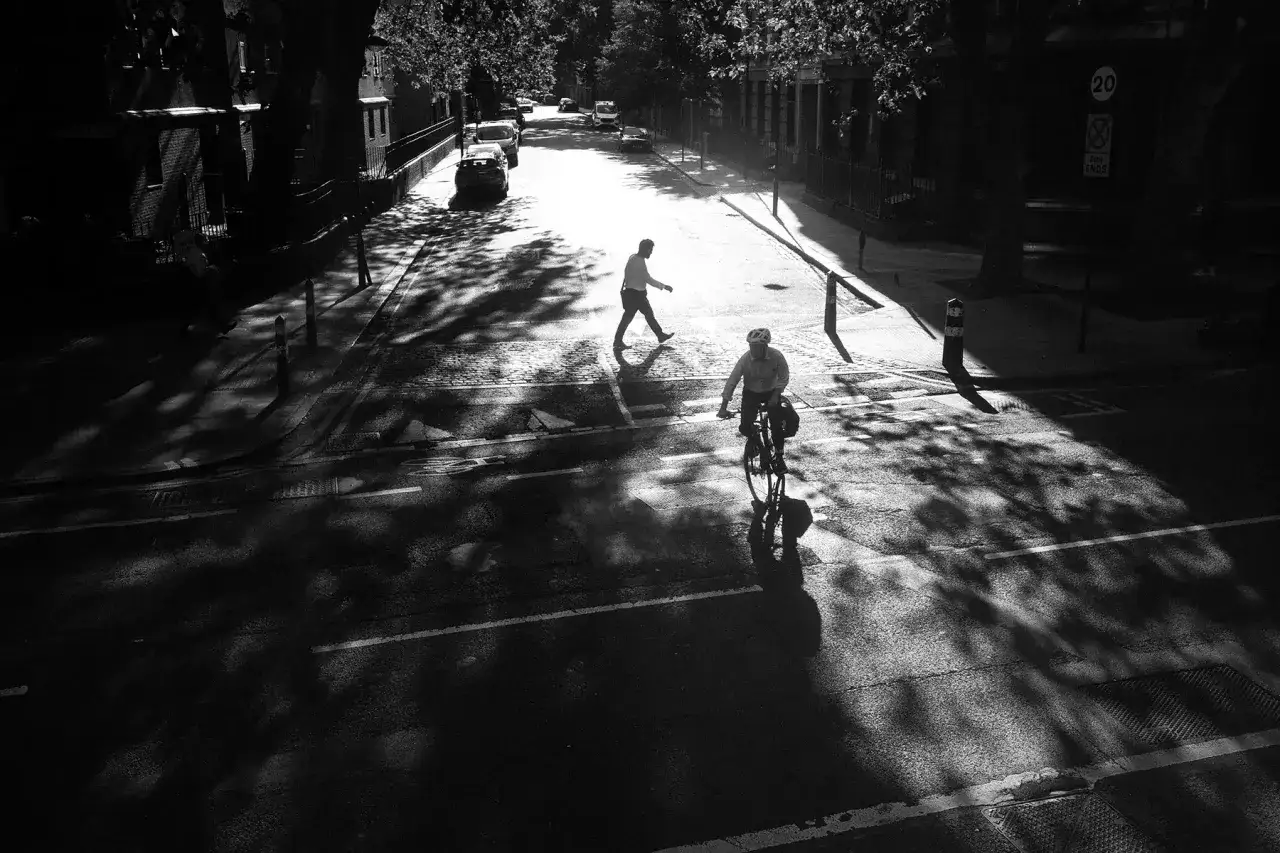
The strength of this lens is not dramatic character. It is restraint. On color negative film, I expect clean saturation, good contrast, and enough edge definition that scans look orderly without needing aggressive correction. On black-and-white film, the same rendering tends to read as crisp and honest, which is exactly what I want when I am photographing real scenes instead of chasing a mood effect.
Sharpness is strong in the center and improves as you stop down. The edges are the part to watch if you are shooting wide open and placing important detail near the frame boundary, but that is normal behavior for a compact 35mm prime. Flare is reasonably controlled, although hard backlight still benefits from the hood. I would not buy this lens for ultra-soft bokeh, because at 35mm the background blur is naturally modest and the lens is built to render the scene, not erase it.
| What you see | What it means on film | Why it matters |
|---|---|---|
| Clean contrast | Negatives scan with clear separation | Less time spent rescuing muddy midtones |
| Strong center sharpness | Subjects stay crisp even at wider apertures | Good for street, details, and travel frames |
| Controlled flare | Backlit scenes stay usable instead of washing out | More confidence in bright outdoor light |
| Moderate background blur | Subjects remain connected to their environment | Better for documentary and reportage work |
For film stocks, I would keep the pairing simple. Portra 400 is the safest all-purpose choice, Kodak Gold 200 gives you warm everyday color, Ektar 100 suits travel and architecture, and HP5 Plus or Tri-X keeps the lens honest for black-and-white work. The lens does not force a look on you, which is a real advantage if you want the film stock to remain part of the equation.
That tonal balance is why the next decision is less about image quality and more about handling.
Which version I would choose first
If I were buying for film photography only, I would start by asking one question: do I value a little more speed, or do I care more about the smallest possible kit? The answer usually separates the two versions immediately. The f/2.5 is the safer one-lens answer, while the f/3.5 is the one that makes a film camera feel almost pocketable.
| Version | Best for | Why I would pick it | When I would skip it |
|---|---|---|---|
| f/2.5 pancake | General-purpose film shooting | More light, still compact, easier to use at dusk or indoors | If I wanted the absolute smallest lens possible |
| f/3.5 aspherical | Travel, street, minimalist carry | Smaller, lighter, and less noticeable on the body | If I often shoot handheld in dim interiors |
There is also a practical difference in how each version encourages you to shoot. The f/2.5 lets me stay a little looser with shutter speed and film choice, which matters on cloudy days or in cafés and train stations. The f/3.5 rewards a disciplined approach, because once the light drops you are more likely to lean on ISO 400 or 800 film, a flash, or a tripod.
For most film shooters, I think the f/2.5 is the more forgiving buy. For someone building the lightest possible Leica M kit, the f/3.5 is the cleaner expression of the same idea. Either way, the lens earns its place by getting out of the way.
Once you know which version fits your camera bag, the real difference comes from how you shoot it.
How I would shoot it on a film body
I would treat this lens as a daylight and available-light workhorse, not as a low-light specialist. My default starting point would be ISO 400 film, because that gives enough margin for overcast weather, interiors near windows, and early evening street scenes. If I knew the day would be bright and contrasty, I would happily drop to ISO 100 or 200 for finer grain and a little extra exposure control.
- Set your base film speed deliberately. ISO 400 is the best all-round starting point. It gives the lens room to breathe without making every frame a compromise.
- Live around f/5.6 to f/8. That is where a 35mm lens becomes easiest to trust for street and documentary work.
- Use zone focusing when the scene is moving fast. Zone focusing means pre-setting distance and aperture so anything inside a chosen range is acceptably sharp.
- Respect the 0.7 m close-focus limit. This is not a close-up lens, so do not expect tight details or intimate portraits at arm’s length.
- Watch your framing at close distances. On a rangefinder, what you see and what the film records are not identical, so give important edges a little breathing room.
- Use the hood when the light turns harsh. It is a small habit that protects contrast, especially with reflective glass, chrome, or backlit faces.
For portraits, I would keep the subject a little farther away than you might think. Thirty-five millimeters can be flattering, but only when you let the frame include context. If you move too close, faces start to stretch and the shot becomes more about proximity than expression. That is not a defect of the lens, just the reality of the focal length.
I also think this lens suits scanning workflows very well. Clean negatives are easier to scan, and a lens that does not produce strange contrast swings or heavy distortion saves time later. If your lab tends to overcook scans, the lens will not fix that, but it will give you a more stable starting point.
That practical approach also explains when this lens is not the best choice.
When a different 35mm lens makes more sense
The Color-Skopar line is strongest when you want compactness first and speed second. If your shooting leans toward night streets, indoor events, or strong subject separation, I would look at a faster 35mm instead. The tradeoff is simple: faster lenses buy exposure headroom and blur, but they also make the kit larger and more noticeable.
| If you need this | I would look at | Why it may be better |
|---|---|---|
| Night shooting and dim interiors | Nokton 35mm f/1.4 or f/1.5 | Much more light, easier handheld shooting, more background separation |
| A stronger all-rounder with more speed | Ultron 35mm f/2 | Still manageable, but more forgiving when the light falls |
| The lightest possible film kit | 35mm f/3.5 Color-Skopar | Smallest and least obtrusive option |
| A vintage look with more personality | Older classic 35mm designs | More flare, softer edges, and more obvious character |
This is where I push back a little on the idea that a faster lens is always the better lens. On film, speed often hides a discipline problem more than it solves a creative one. If you mostly shoot outdoors and you care about carrying the camera all day, the Color-Skopar can actually get more rolls finished because it is easier to live with.
There is also a value argument. A modern 35mm prime that is small, sharp, and mechanically well made is not cheap, but it is easier to justify than a bigger lens that spends too much time at home. That is one reason this lens still shows up in serious film kits in 2026.
Why this little 35mm still earns a place in 2026
In 2026, the lens still makes sense because the basics have not changed. Film shooters still want a lens that is compact, predictable, and responsive. They still want one 35mm prime that can move from street to travel to everyday scenes without turning the camera into a burden. This is exactly where the Color-Skopar line stays relevant.
What I like most is the restraint. It does not try to be a character lens first, and it does not rely on gimmicks to feel special. It is simply a well-sized 35mm manual-focus tool that rewards good framing, good timing, and sensible film choice. If that sounds plain, that is because plain is often what works best on film.
If I were building a single 35mm film kit today, I would start here unless I knew I needed more speed for night work or a more stylized lens for a specific project. For a lot of photographers, that is the point where the gear stops being the story and the photographs start doing the talking.