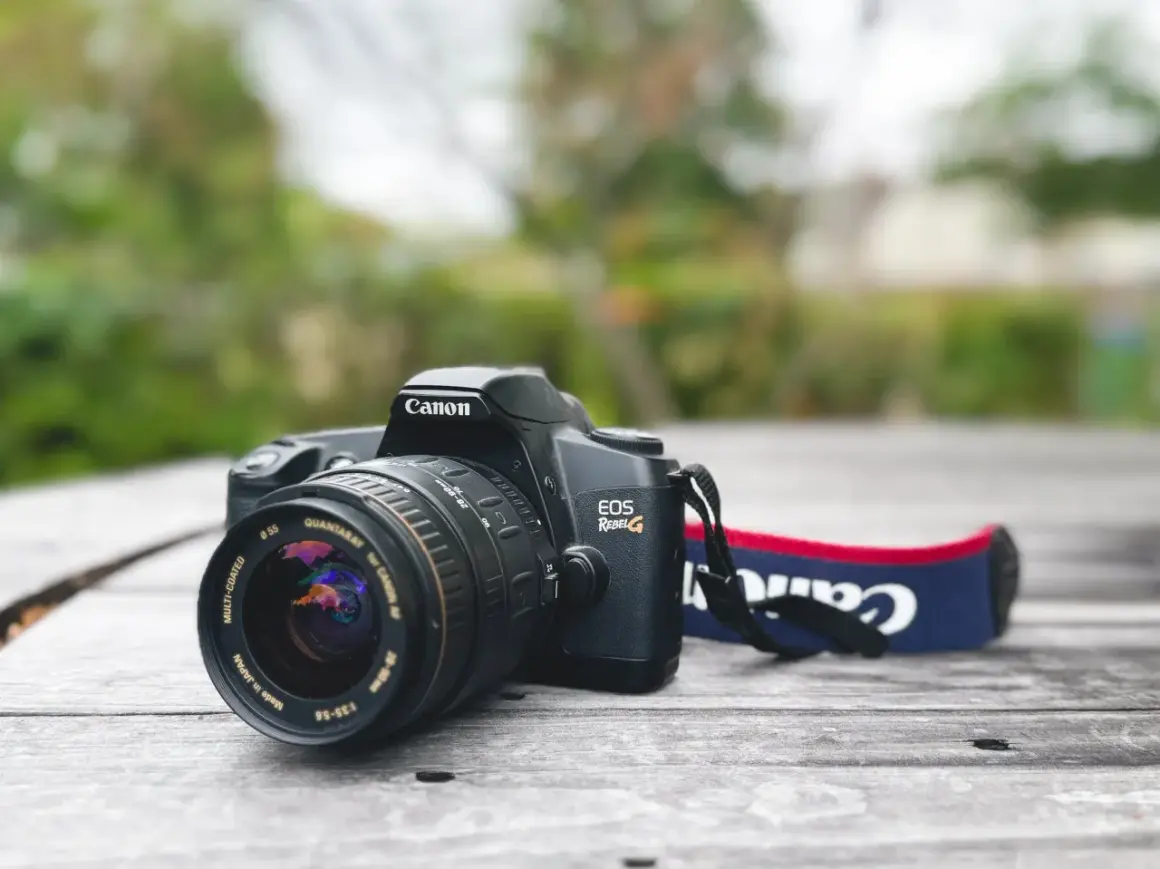
Canon made several 35mm film cameras that still earn their reputation for different reasons: the AE-1 Program is easy to live with, the A-1 gives you more control, the F-1 line feels built for work, and the EOS-1V is the late-era powerhouse. Choosing the best Canon 35mm film camera depends on whether you want a beginner-friendly SLR, a rugged manual body, or a faster EOS system that still feels serious in the hand. In this guide, I break down the models that are actually worth your money, what each one does best, and what to check before you buy used.
The shortest useful answer is to match the camera to how you shoot
- Best overall for serious shooters: EOS-1V, if you want Canon’s most capable 35mm SLR handling and EF lens support.
- Best value for most people: AE-1 Program, because it is affordable, intuitive, and easy to build around.
- Best manual-focus classic: A-1 or New F-1, depending on whether you want exposure flexibility or a more rugged pro body.
- Best compact Canon: Sure Shot AF35M or a later Sure Shot compact, if convenience matters more than control.
- Main buying rule: condition matters more than the badge; a clean working body is worth more than a “collector” shell that needs repair.
The Canon bodies that still deserve a place on the shortlist
If I strip away nostalgia, the Canon lineup becomes pretty clear. A few bodies still make sense because they hit different needs: learning, manual control, professional handling, or simple point-and-shoot convenience. If I were answering the best Canon 35mm film camera question in one line, I would start with the EOS-1V for capability and the AE-1 Program for value.
| Model | Why it matters | Main drawback | Typical 2026 used price |
|---|---|---|---|
| EOS-1V | Canon’s most advanced 35mm SLR for autofocus, customization, and fast handling. It is the one I’d choose for action, events, and a long-term EF system. | More expensive, more electronics to trust, and not interchangeable with FD lenses. | About $440-$800 for clean bodies; excellent or boxed examples can climb higher, and HS kits are usually above that. |
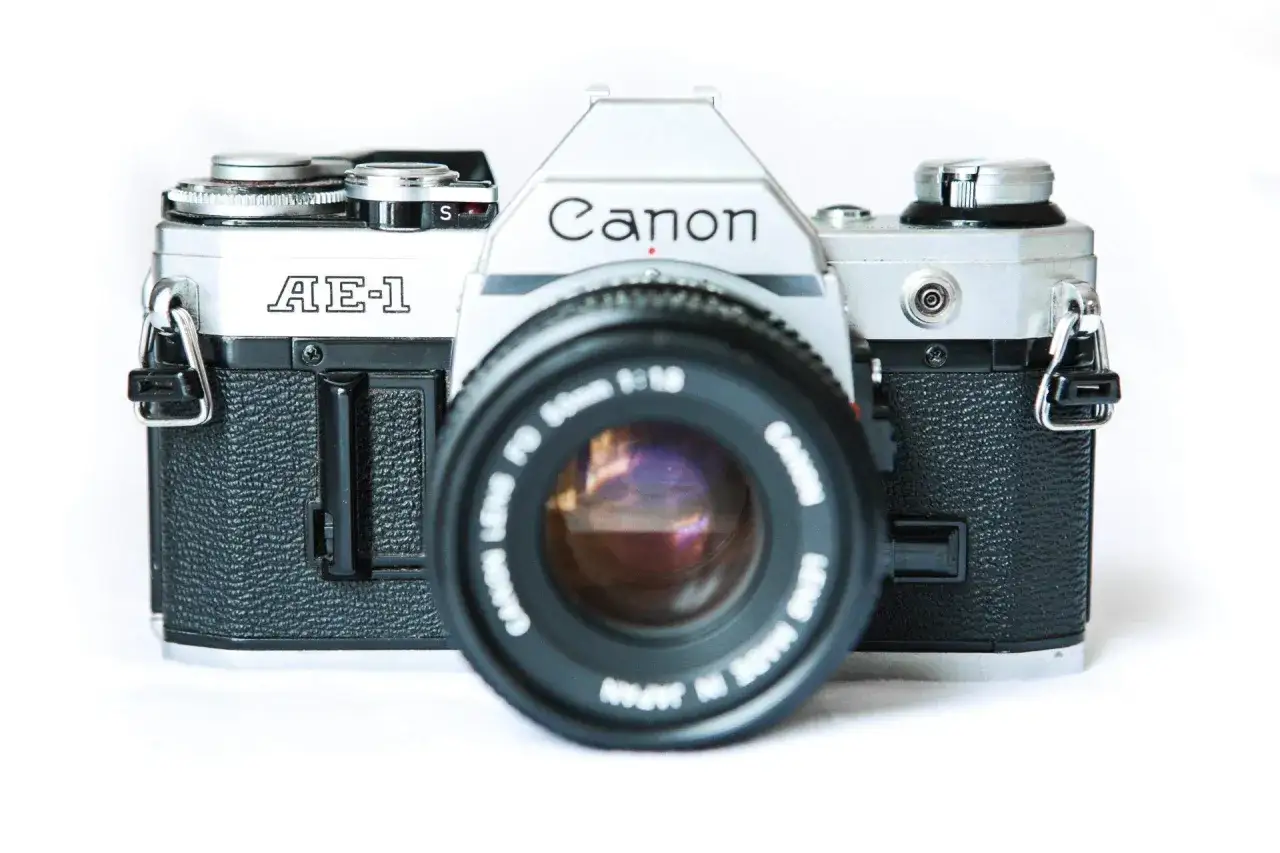
| AE-1 Program | The easiest Canon SLR to recommend to a newcomer. It is simple, widely available, and supported by a huge FD lens pool. | Older electronics, aging seals, and a meter that must work correctly. | Roughly $60-$160 body-only, or about $90-$240 with a lens in the current used market. |
| A-1 | The sleeper pick. It gives you more exposure flexibility than the AE-1 Program and still feels straightforward once you learn the controls. | Same age-related risks as the AE-1 Program, plus slightly more complexity. | Usually around $70-$240 body-only, or about $100-$260 with a lens. |
| F-1 / New F-1 | Canon’s rugged manual flagship. I like it for deliberate shooting, heavier lenses, and anyone who wants a body that feels like a tool instead of a toy. | Heavier, more accessory-dependent, and often pricier to service or complete. | Common examples often sit around $260-$700 body-only, with special editions and pristine kits going well beyond that. |
| Sure Shot AF35M / later Sure Shot compacts | The easiest way into Canon film if you want pocketable simplicity. Great for snapshots, travel, and casual carry. | Less control, aging foam and electronics, and fewer reasons to pay collector prices. | Usually $20-$120 depending on the exact model and condition. |
| Canonet G-III QL17 | A strong Canon rangefinder option if you want something smaller and more focused than an SLR. | Meter, rangefinder alignment, and service condition matter a lot. | Typically around $70-$200, with cleaner black versions often costing more. |
The pattern here is simple: the EOS-1V is the performance choice, the AE-1 Program is the practical first buy, and the A-1 is the smartest middle ground. The F-1 family is for people who want a tougher manual platform, while the compact cameras exist for a very different kind of shooting. That split matters, because the next question is not just “which model is best,” but “which one fits the way I actually photograph.”
Which Canon camera fits your kind of shooting
I do not think there is one universal winner for every photographer. The right body changes depending on whether you want to learn exposure, move quickly, carry less weight, or build a lens system you can keep using. My own filter is blunt: I want the least amount of friction between the scene and the shutter release.
For your first manual SLR
The AE-1 Program is the safest recommendation. It gives you enough automation to avoid early frustration, but not so much that you stop learning. The controls are direct, FD lenses are still common, and you can keep the system affordable by starting with a normal 50mm prime. If you want a camera that teaches you without punishing you, this is the Canon body I would hand over first.
For learning exposure without feeling boxed in
The A-1 is the better long-term learning camera. It gives you more modes and a little more room to grow, which matters once you start thinking about shutter speed, aperture, and motion blur as creative tools instead of technical chores. I call it the sleeper pick because it is often overlooked in favor of the AE-1 Program, even though it is the more capable body in practice.
For work, action, and autofocus
The EOS-1V is the obvious choice if you want the most advanced Canon 35mm experience. It belongs to a different generation: faster handling, stronger autofocus, deeper customization, and native EF lens support. That said, it is only the right answer if you actually want an EOS body and you are comfortable paying more for it. If you shoot film casually and do not need AF-driven speed, you are paying for capability you may never use.
For deliberate manual shooting
The F-1 and New F-1 sit in a different category from the AE and EOS bodies. They are the cameras I think of when someone wants a serious, mechanical-feeling tool with a pro pedigree. They are not the easiest bodies to buy cheaply, and they are heavier than the consumer classics, but they reward photographers who value durability, modularity, and a more tactile shooting rhythm.
Read Also: 35mm Film for Vintage Look - Choose the Right Stock
For casual carry and travel
The Sure Shot line is the low-effort answer. These cameras win because they are small, simple, and fast to live with. You will not get the same control as an SLR, but that is the point: point-and-shoot Canons are for people who want to carry a camera all day without thinking about a lens bag or a settings ritual. If you want creative control, I would still steer you toward an SLR.
One useful exception is the Canonet G-III QL17. It is the Canon camera I’d mention if someone says, “I want a rangefinder, not an SLR.” It is compact, sharp, and far more intentional than a compact autofocus camera, but it only makes sense if you know you want that style of shooting. From here, the more practical question becomes how much you should actually pay in 2026.
What the used market tells you in 2026
Used prices for Canon film cameras are all over the place, but not randomly so. Condition, included lens, service history, and even cosmetic color can move the price more than people expect. I would rather buy a well-kept, boring body than a mint-looking camera with a sticky shutter or dead meter.
| Budget | What you can realistically buy | What I’d expect | My advice |
|---|---|---|---|
| Under $75 | Rough Sure Shot bodies, very tired AE-1 Program bodies, or parts cameras. | Cosmetic wear, no recent service, and a real chance of meter or transport issues. | Buy only if it is tested and you are comfortable with risk. |
| $75-$150 | Entry-level AE-1 Program bodies, some A-1 bodies, and a few decent compacts. | The best value zone, but condition still matters more than the listing photos. | This is where I would start looking if I wanted a usable body without overpaying. |
| $150-$300 | Cleaner AE-1 Program kits, better A-1 bodies, working Canonet rangefinders, and occasional F-1 bodies. | A healthier mix of usability and confidence. | This is usually the sweet spot for most buyers. |
| $300-$700 | New F-1 and F-1N bodies, clean EOS-1V bodies, or carefully bundled kits. | You are paying for platform quality and better cosmetic condition. | Worth it only if you want that specific body for the long haul. |
| $700+ | EOS-1V HS kits, boxed examples, and collector-grade pieces. | Collector territory more than practical shooting territory. | Do this for a specific reason, not because a listing looks impressive. |
The detail that people underestimate is the lens. A body with a good lens is often more useful than a pristine body with nothing attached, especially on the FD side where a modest 50mm prime can turn a cheap camera into a complete system. That is why lens mount compatibility matters almost as much as the camera model itself.
FD and EF lenses are the decision most buyers miss
Canon’s film era splits cleanly into two worlds. The older FD system covers cameras like the AE-1 Program, A-1, and F-1. The EOS-1V belongs to the EF world. That difference is not a footnote; it is the platform choice.
| Mount family | Typical Canon bodies | What it means in practice | My take |
|---|---|---|---|
| FD | AE-1 Program, A-1, F-1, New F-1, Canonet-era classics | Manual-focus glass, mechanical aperture linkage, and a huge vintage lens market. | Best if you want a classic shooting experience and affordable vintage optics. |
| EF | EOS-1V and other late Canon EOS film bodies | Autofocus, electronic lens communication, and a lens system that carries into later Canon EOS work. | Best if you care about speed, AF reliability, and system continuity. |
This is where a lot of buyers make an expensive mistake. FD lenses do not simply drop onto EOS bodies in a meaningful way, and EF lenses are not the native answer for older FD film cameras. Yes, adapters exist, but most of them are compromises rather than clean solutions. If you want a Canon film body as a long-term system, I would choose the mount first and the body second.
There is also a practical side to this. The FD path is ideal if you want to learn slowly, shoot manually, and keep costs down. The EF path is better if you want a more modern shooting rhythm and plan to keep using compatible glass across Canon EOS gear. Once you decide that, the actual buying checklist becomes much easier.
What I inspect before I hand over money
With used film cameras, I do not shop with my eyes first. I shop with my ears, fingers, and patience. A camera can look beautiful and still be a bad purchase if the transport is sticky, the meter is dead, or the foam has turned into glue.
- Shutter behavior: Listen for even, consistent speeds. A shutter that sounds lazy at slower settings is a warning sign.
- Meter response: Check that the meter wakes up and changes when you move from bright to dim light.
- Foam and seals: Deteriorated light seals can leak light and leave sticky residue inside the body.
- Film advance and rewind: Make sure the lever moves smoothly and the frame counter behaves normally.
- Viewfinder condition: A little dust is normal; heavy haze, fungus, or prism damage is not something I would ignore.
- Battery compartment: Corrosion here can turn a cheap camera into a repair project fast.
- For EOS-1V bodies: Check autofocus, lens contacts, LCD behavior, and battery grip fit, because the electronics are the point of the camera.
- For Sure Shot compacts: Verify the flash, film winding, and door latch, since those cameras live or die on simple mechanics.
If I see a body that clearly needs a full service, I treat that as a cost, not a bargain. The same goes for collector-looking cameras with no functional proof. A clean, ordinary camera that works is the better buy nine times out of ten. Once you think that way, the final decision becomes much simpler.
What I would actually buy first if I were starting over
If I wanted the safest Canon film path for most people, I would start with an AE-1 Program plus a normal 50mm FD lens. It is not the most glamorous answer, but it is the easiest camera to learn on without fighting the body. If I wanted the most capable Canon 35mm body and I had the budget, I would choose the EOS-1V and build around EF glass.
If my goal were purely manual shooting with a more substantial feel, I would skip the hype and buy a clean F-1 or New F-1 body in good working condition. And if I wanted something light, simple, and almost disposable in spirit, I would buy a tested Sure Shot rather than overinvest in a compact with collector pricing. The real win is not owning the “most famous” Canon film camera; it is buying the one that keeps you shooting consistently.