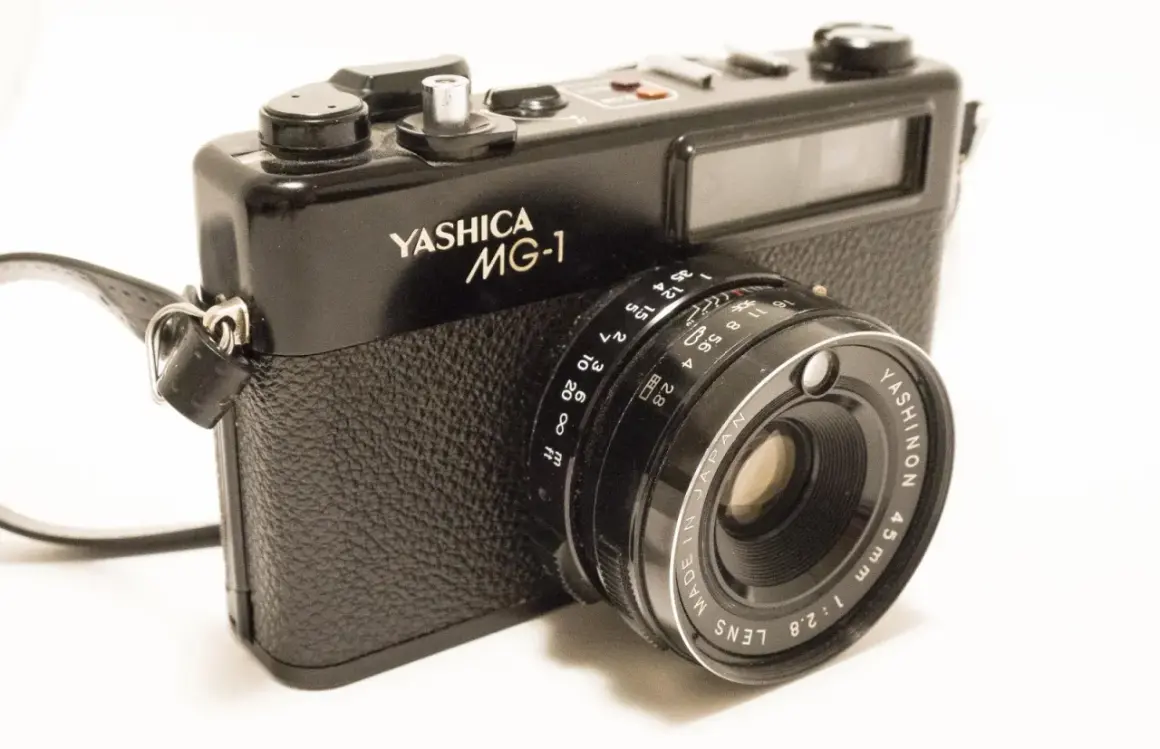
The MG-1 is one of those film cameras that looks more complicated than it is. Once the battery is sorted, it gives you a bright rangefinder view, aperture-priority exposure, and a 45mm f/2.8 lens that still works well for street, travel, and everyday photography. In this article I explain how it behaves, what to inspect before buying one, and how to get consistently better results without turning the camera into a project.
The essentials at a glance
- Fixed-lens 35mm rangefinder with a normal 45mm perspective that feels natural for everyday shooting.
- Aperture-priority only, so you choose the look and the camera chooses the shutter speed.
- The original power source was a 5.6V mercury cell; most owners now use a modern substitute or adapter.
- In 2026, a realistic U.S. budget for a working copy is usually $30 to $70, with parts bodies below that and cleaner, tested sets above it.
- It shines in daylight, travel, street, and deliberate everyday shooting, not in fast action or fully manual work.
What the MG-1 actually is
If I had to reduce it to one sentence, I would call it a fixed-lens 35mm rangefinder with aperture-priority automation. That makes it much easier to use than a fully manual classic, but less flexible than an SLR or a modern mirrorless body with adapters. The rangefinder design matters here: you do not focus through the lens, you align two images in a viewfinder patch and let the camera handle the exposure.
| Feature | Practical meaning | Why it matters |
|---|---|---|
| Lens | 45mm f/2.8 Yashinon | A normal field of view that is easy to frame with for daily work |
| Exposure | Aperture-priority with a CdS meter | You choose the aperture and the camera decides shutter speed |
| Shutter | Electronically controlled leaf shutter, about 1/500 sec. to 2 sec. | Quiet operation and straightforward flash use |
| Focus | Coupled rangefinder from 1 meter to infinity | Fast once you get used to the alignment patch |
| Film speed | ASA/ISO 25 to 800 | Best suited to daylight and moderate-speed film stocks |
| Power | 5.6V mercury cell originally | Battery planning is part of ownership |
| Filter size | 55mm screw-in filters | Makes protection and filtration easy to source |
| Flash | Direct X contact, flash mode around 1/30 sec. | Simple to use with a small flash when the light drops |
What matters most is the camera’s logic: I choose the aperture, the CdS meter reads the light, and the camera decides the shutter speed within its limits. CdS means cadmium sulfide, a light-sensitive meter cell that was common in this era. That workflow is the reason the MG-1 still feels approachable now, and it sets up the actual shooting experience in the next section.
What shooting it feels like in practice
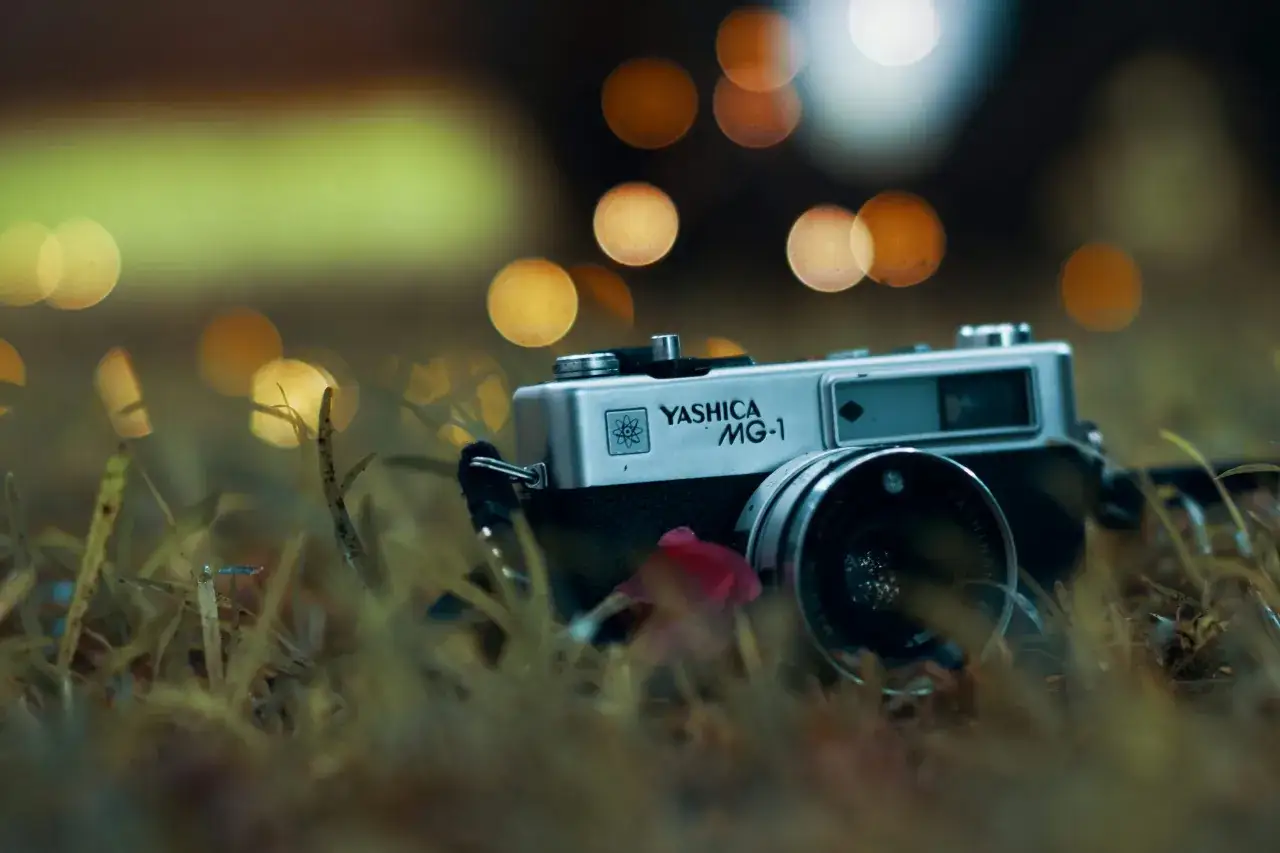
The camera rewards a calm rhythm. I lift it, align the rangefinder patch, set an aperture that fits the scene, and let the warning arrows tell me whether I am asking too much of the film. The leaf shutter is quiet, the 45mm field of view is natural, and the viewfinder is bright enough that you are not fighting the camera every frame.
- Street and travel work well because the camera is compact enough to carry and quiet enough to shoot without drawing attention.
- Portraits are a good match when you stay within the focus limit and choose a wider aperture for softer backgrounds.
- Close framing needs attention because the viewfinder and lens are offset; the parallax mark matters most near 1 meter.
- Fast action is not its strength. I would not pick it for sports, kids running indoors, or any situation where direct shutter control matters more than convenience.
What I like most is that the MG-1 asks for sensible decisions rather than constant fiddling. If you want a camera that teaches you to think in aperture, distance, and light without becoming fussy, it lands in a very useful middle ground. Once that makes sense, the setup routine becomes almost automatic.
How to load, power, and meter it without guesswork
Battery setup is the part that causes most frustration, so I handle it first. The original camera used a 5.6V mercury cell, which is no longer the normal route; in practice, most owners rely on a modern substitute or adapter, and a battery solution usually adds about $20 to the real cost of ownership. Once that is in place, the rest is straightforward.
- Load the film and set the ASA/ISO immediately after closing the back.
- Choose an aperture with the lens ring based on the light in front of you.
- Press the shutter halfway and read the arrows in the viewfinder.
- If the red arrow appears, stop down or add neutral density filtration; the camera is warning you about overexposure.
- If the yellow arrow appears, the camera is telling you the shutter will be slow, so brace it or open up the aperture.
- Use flash mode when you want the camera to hold the shutter around 1/30 sec. and let you set exposure by guide number and distance.
- Keep notes on the first roll so you learn how the meter behaves with your favorite film.
If you are choosing film specifically for this camera, I would start here:
| Situation | Film speed I would use | Why |
|---|---|---|
| Bright sun and architecture | ISO 100 to 200 | Lets you stop down and keep more of the frame sharp |
| Everyday city shooting | ISO 400 | The safest all-round choice for mixed light and changing weather |
| Indoors or dusk | ISO 800 | Gives the meter more room, though flash may still be the smarter move |
For most people, ISO 400 is the honest sweet spot. It gives the camera enough flexibility to handle shade, streets, and overcast conditions without forcing the meter into awkward territory. That leads directly to the one thing I would inspect before I ever paid for a used body.
What to inspect on a used copy before you pay
Used copies are still affordable, but condition matters more than listing copy. In current U.S. listings, I would budget roughly $30 to $70 for a working example, with untested or parts bodies below that and cleaner film-tested sets above it. The cheapest camera is usually the one with the most hidden work.
| What to check | Why it matters | My quick test |
|---|---|---|
| Battery compartment | Corrosion can kill the meter circuit | Open the base and look for white crust, rust, or broken contacts |
| Meter response | Without it, the camera loses its main advantage | Half-press the shutter and confirm the warning arrows react |
| Rangefinder patch | Misalignment makes focusing unreliable | Focus on a distant vertical edge and see whether the images merge cleanly |
| Lens condition | Haze, fungus, or scratches reduce contrast | Inspect with a flashlight from the front and back |
| Light seals | Old foam can leak light onto the film | Check the back door, hinge, and film chamber edges |
| Transport and rewind | Broken advance or rewind parts turn it into a shelf piece | Make sure the lever cocks smoothly and the rewind crank turns the spool |
If a seller cannot show the meter responding, I price the camera as untested and assume I may need to service it. That single habit saves more money than chasing the lowest listing, and it is the same reason I tend to spend a little more for a cleaner copy with better photos and a clear description. Once you know how to judge condition, the next question is whether this is the right Yashica rangefinder for your style.
How it compares with other Yashica rangefinders
The MG-1 sits in a very practical middle ground inside Yashica’s rangefinder line. It is simpler than the faster-lens Electro bodies, but that simplicity also means fewer expectations to manage. I like that tradeoff for people who want a straightforward film camera rather than a collector piece that needs explaining.
| Model | Lens | What changes in practice | Best fit |
|---|---|---|---|
| MG-1 | 45mm f/2.8 | Slower lens, easy automation, strong daylight performance | First rangefinder, walkaround use, budget-minded buyers |
| Electro 35 GSN | 45mm f/1.7 | Brighter lens gives more room in dim light, but the shooting style is similar | Indoor available light and low-light portraits |
| Electro 35 GTN | 45mm f/1.7 | Same basic family feel, usually chosen for the faster lens and similar operation | People who want a classic Yashica rangefinder with more speed |
If I were choosing between them today, I would pick the MG-1 for daylight work and simple ownership, then step up to an f/1.7 Electro only if I knew I would spend a lot of time indoors. That tradeoff leads straight into the films and habits that flatter this camera most.
Film choices and shooting habits that suit it
The camera likes film that gives it breathing room. In daylight, I reach for ISO 100 or 200 if I want maximum sharpness and slower shutter speeds that still stay safe. For most people, though, ISO 400 is the honest sweet spot because it handles shade, streets, and changing weather without forcing the meter into awkward territory.
| Situation | Film speed I would use | Why |
|---|---|---|
| Bright sun and architecture | ISO 100 to 200 | Lets you stop down and keep more of the frame sharp |
| Everyday city shooting | ISO 400 | The safest all-round choice for mixed light and changing weather |
| Indoors or dusk | ISO 800 | Gives the meter more room, though flash may still be the smarter move |
I also keep three habits in mind: stay at or beyond the 1 meter focusing limit, watch the parallax mark when subjects move close, and respect the yellow warning arrow because it is usually telling you to brace the camera rather than hope for the best. The camera is at its best when you work with its limits instead of pretending they are not there.
The details that make it worth keeping in 2026
What keeps the MG-1 relevant is not rarity or status. It is the way it turns film shooting into a small, repeatable routine: set the film speed, choose an aperture, check the arrows, and press the shutter with confidence. For a lot of photographers, that is exactly the right amount of help.
- Buy the cleanest tested copy you can find.
- Plan for the battery solution before the first roll goes in.
- Start with one ISO 400 roll so you can learn how the meter reacts in mixed light.
If you want a dependable vintage rangefinder that teaches good habits without demanding constant adjustment, this camera still makes sense. My rule is simple: pay for condition first, battery second, and only then think about the bargain price, because a clean, working body will save you far more time than the cheapest untested one ever will.