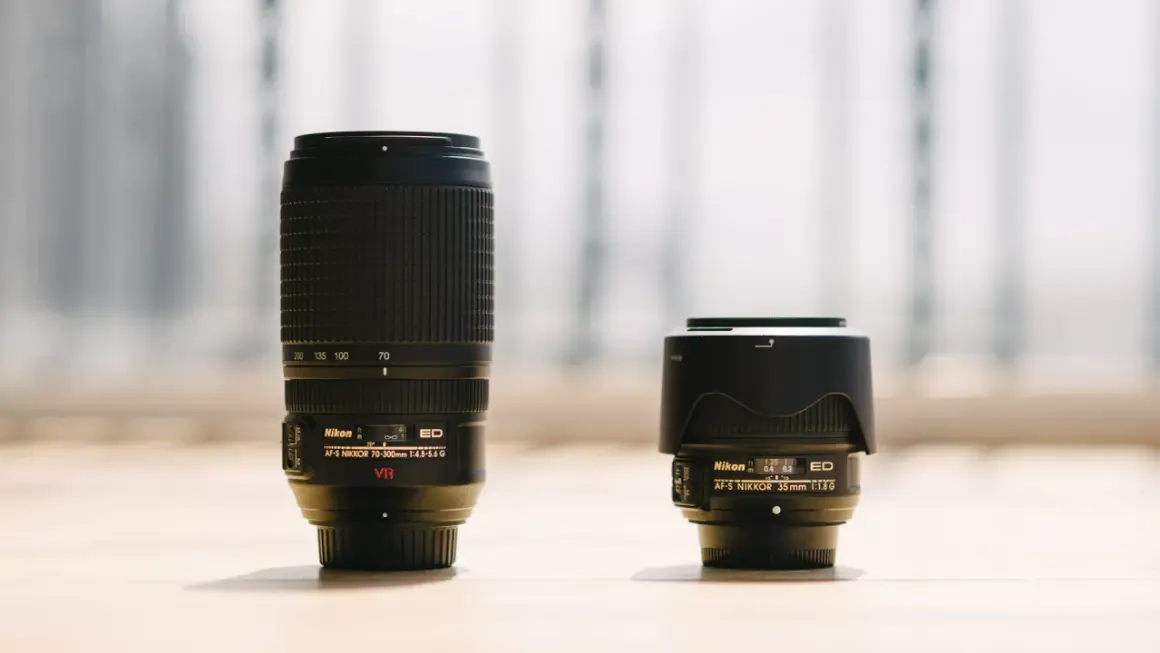
Choosing between a wide-angle and a telephoto lens is less about which one is "better" and more about what story the frame needs to tell. The wide angle vs telephoto decision changes how much of a scene you can include, how close your subject feels, and how much control you have over background clutter. If you shoot landscapes, interiors, portraits, events, or branded content, that choice affects both the look of the image and the way you work on location.
The fastest way to tell them apart
- Wide-angle lenses show more of the scene and are easier to use when space is tight.
- Telephoto lenses narrow the view, isolate subjects, and make distant subjects feel much closer.
- Perspective is driven by camera position as much as lens type; the lens changes how much you see, but your distance changes how the scene feels.
- On crop-sensor cameras, the same focal length looks tighter, so the body you use matters as much as the lens you buy.
- Filters behave differently on each type, especially when you stack polarizers or use very wide focal lengths.
- If you only care about one thing, decide whether you need more context or more separation.
What each lens changes before you press the shutter
When I evaluate a lens, I start with field of view and working distance. A wide-angle lens gives you a broad view of the scene, so it is easier to fit a room, a skyline, or an entire product setup into one frame. A telephoto lens narrows the view and lets you isolate a subject from farther away; as a rough full-frame guide, wide-angle lenses usually live below about 35mm, while telephoto lenses begin around 70mm and move upward from there.
The important part is that the lens does not magically change perspective on its own. What photographers call a "wide" or "compressed" look usually comes from where you stand: wide-angle shots often force you closer, and telephoto shots often encourage you to back up. That shift in distance changes the relationship between foreground and background, which is why the same subject can feel dramatic in one frame and restrained in another. Once you see that, the rest of the comparison becomes easier to judge.
How the frame changes when you move between them
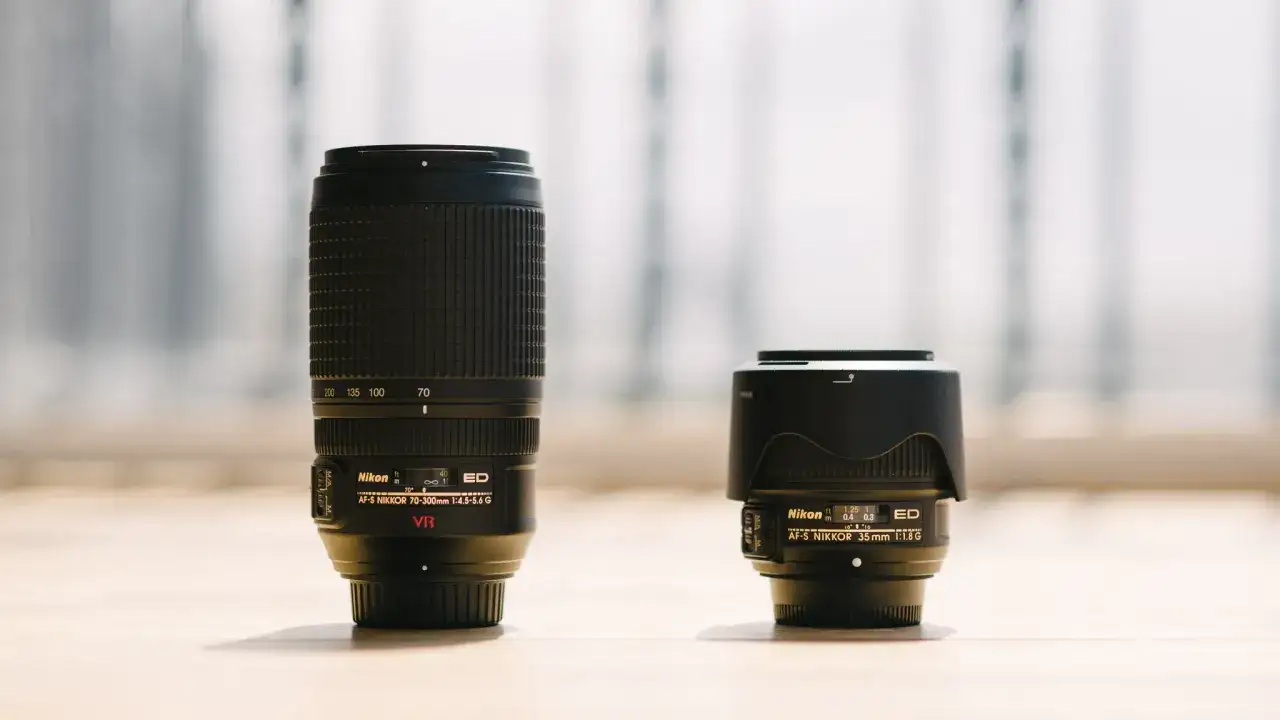
This is where the difference becomes visible in a way that matters for real shooting. Wide-angle lenses make nearby objects feel larger relative to the rest of the scene, so they are excellent when you want depth, scale, or a strong sense of place. Telephoto lenses do the opposite in practice: they simplify the frame, reduce visual distractions, and make background elements feel closer to the subject.
| Factor | Wide-angle lens | Telephoto lens |
|---|---|---|
| Scene coverage | Shows more of the environment | Shows less of the environment |
| Subject emphasis | Feels more immersed in the setting | Feels more isolated from the setting |
| Background behavior | More context, but also more clutter | Cleaner background, easier subject separation |
| Spatial feel | More dramatic near-far relationships | More layered and visually compressed |
| Common mistake | Putting the subject too small in the frame | Removing too much context and making the image feel flat |
I find that wide-angle lenses reward careful composition at the edges of the frame. They can make leading lines stronger, but they also make crooked horizons, awkward foreground objects, and edge distortion more obvious. Telephoto lenses are more forgiving on framing, but they demand better timing and focus, especially when the subject is moving. That visual gap is why one lens feels expansive and the other feels controlled, and it leads naturally to the situations where each one is the stronger tool.
Where each lens is the stronger choice
The easiest way to choose is to match the lens to the subject and the shooting distance. In real work, I rarely think in absolutes. A wide-angle lens is not only for landscapes, and a telephoto lens is not only for sports. Each one becomes the better option when it solves a specific framing problem.
| Shooting situation | Usually better choice | Why it works |
|---|---|---|
| Landscapes | Wide-angle | Lets you include sky, foreground, and distance in one frame |
| Interiors and architecture | Wide-angle | Fits tight spaces and shows the layout of the room |
| Travel and street scenes | Wide-angle or normal | Captures context and movement without forcing you too far back |
| Portraits | Telephoto | Offers cleaner background separation and a more flattering working distance |
| Sports and wildlife | Telephoto | Brings distant action closer and fills the frame with the subject |
| Events and documentary work | Both, depending on the moment | Wide for atmosphere, telephoto for moments you cannot physically reach |
There are also useful exceptions. I use wide-angle glass for environmental portraits when the location matters as much as the subject, and I use telephoto lenses for landscapes when I want to isolate a mountain ridge, compress layers of fog, or cut away visual noise. In other words, the lens is only half the decision; the other half is what you are trying to leave out. The next wrinkle is that your camera sensor can quietly change how all of this behaves.
Why sensor size changes the answer
If you shoot on APS-C or Micro Four Thirds, the same lens behaves differently in terms of field of view. The lens itself does not change, but the camera captures a smaller slice of the image circle, so the framing looks tighter. That is why a 24mm lens on APS-C does not feel as wide as it does on full frame, and why many photographers get caught off guard the first time they switch systems.
As a practical shortcut, APS-C bodies usually multiply focal length by about 1.5x or 1.6x depending on the brand, while Micro Four Thirds uses a 2x crop factor. That means a 24mm lens can look roughly like 36-38mm on APS-C and about 48mm on Micro Four Thirds. A 50mm lens can feel like an 80mm-ish portrait lens on APS-C, which is great if you want reach, but not so great if you expected it to act like a normal lens. This matters because lens choice on one camera body may be completely wrong on another.
So before you buy, translate the focal length into the field of view you actually need. That simple step prevents a lot of regret, and it also connects directly to the way filters behave on different lenses.
What filters do on wide and telephoto lenses
Filters are easy to overlook in a lens comparison, but they matter more than people think. On wide-angle lenses, thick filter stacks can cause vignetting, especially at the edges of the frame. That is why slim circular polarizers and low-profile ND filters are often worth the extra attention when you work with ultra-wide glass.
Polarizers on very wide lenses
A circular polarizer is useful for cutting reflections and deepening skies, but on an ultra-wide lens it can darken the sky unevenly. The effect becomes more obvious when the frame includes a large sweep of sky, because the polarization changes across the scene. I use polarizers carefully on wide lenses, and I avoid expecting them to behave perfectly at the widest settings.
ND and variable ND filters
ND filters are great when you want longer shutter speeds, smoother water, or more motion blur in daylight. The catch is that variable ND filters can show uneven darkening or an X-pattern on some wide-angle lenses when pushed too far. On telephoto lenses, the filter issue is usually less about vignetting and more about keeping the setup simple, because long focal lengths magnify shake and atmospheric softness quickly.
Read Also: Best Focal Length for Street Photography - Find Your Lens
Protective filters and lens hoods
Protective filters do not improve image quality by themselves, but they can be useful in harsh environments where dust, spray, or fingerprints are a real concern. Lens hoods matter too. Wide-angle hoods have to stay shallow so they do not enter the frame, while telephoto hoods can be deeper and more effective at controlling flare. If you stack filters, use the thinnest practical setup on wide glass and check the corners before you trust the shot.
Once you understand the filter side of the equation, the final choice becomes much more practical: it is about how you actually shoot, not just what the lens looks like on paper.
The simplest decision rule I trust on real shoots
When I need to choose fast, I ask one question: do I need more context, or do I need more separation? If I need context, I reach for the wider lens. If I need separation, subject isolation, or reach, I go telephoto. That rule sounds basic, but it saves me from overthinking gear and it keeps the decision tied to the story I am trying to tell.
There is one extra point I would not skip: if you only own one lens slot in your kit, buy for the problem you cannot solve later. You can crop a little from a wider frame if the image still has enough resolution, but you cannot create reach that was never captured. For a lean two-lens setup, a wide zoom plus a telephoto zoom usually covers more real-world work than chasing an extreme lens on either end. That is the cleanest way I know to think about the wide angle vs telephoto choice when you are building a kit that actually gets used.