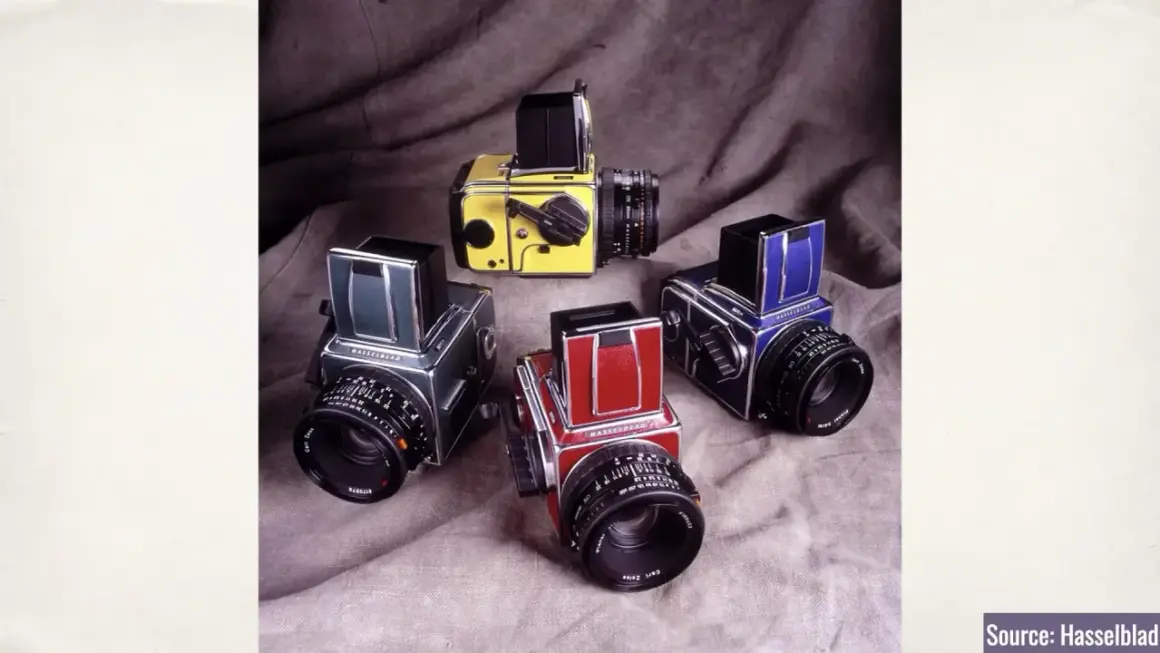
The essentials for photographers who want the real answer fast
- Hasselblad’s history page says the 500C launched in 1957 and moved the shutter into the lens, which is why it became such a flexible system camera.
- It shoots 6x6 cm square frames on 120 film, which gives you 12 exposures per roll and a very deliberate shooting rhythm.
- The leaf shutter design allows flash sync at all shutter speeds, a big reason this camera still works well for portraits and studio use.
- Condition matters more than cosmetics. A clean-looking body with a tired lens or weak back can become an expensive mistake.
- If I were starting from scratch, I would build around a body, 80mm lens, A12 back, and waist-level finder before buying anything exotic.
- In 2026, used prices are still meaningful: body-only examples can appear around the mid-$400s, while complete kits often climb into the low-to-mid thousands.
What the 500C is and why it still matters
The 500C is the original camera that launched Hasselblad’s 500 series. According to Hasselblad’s own history page, it arrived in 1957, replacing the older focal-plane approach with a leaf shutter in the lens. That sounds like a technical footnote, but in practice it is the reason the camera became a serious professional tool: you can swap lenses, film magazines, and viewfinders without changing the core shooting experience.
That modular design is still the real appeal. The body is just the center of the system. The lens controls exposure, the back controls film, and the finder controls how you compose. When all of those parts are in good shape, the camera feels less like a vintage object and more like a compact piece of precision machinery. I think that is why the 500C still lands with film photographers today: it is old, but it is not fragile in spirit.
The format itself matters too. A square 6x6 negative gives you a different way of seeing. You are not forced into horizontal or vertical framing, which means composition becomes more about balance and spacing inside the frame. That can be liberating if you print or scan carefully, and it can also expose weak composition fast. Square format is forgiving in one sense and ruthless in another.
That foundation leads directly to the way the camera behaves in actual use, and that is where the emotional reputation either becomes real or falls apart.
How it feels to shoot one
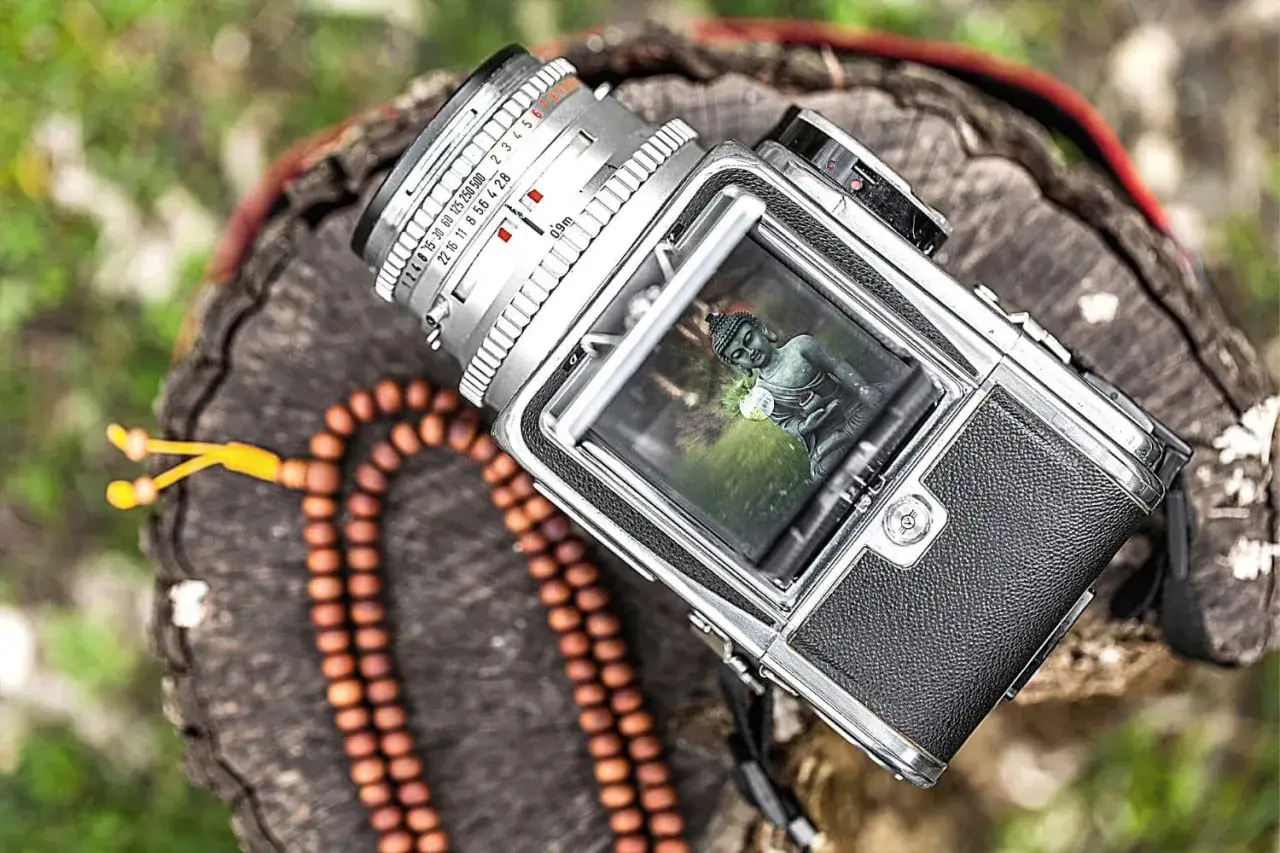
The first thing I notice when I pick up a 500C is pace. Everything slows down just enough to be useful. The waist-level finder makes you look down into the frame instead of lifting the camera to your face, and that changes the entire posture of shooting. You stop chasing moments and start arranging them.
There are a few things that define the experience:
- Composition is more deliberate because the waist-level finder shows a flipped image, which takes a little getting used to but encourages careful framing.
- The shutter sound is mechanical and unmistakable, so this is not a stealth camera in the modern sense.
- The leaf shutter is practical, especially when you want to use flash outdoors or in a studio without being limited by a slow sync speed.
- Focus is manual and honest, so your results depend on your screen brightness, eyesight, and discipline more than on automation.
- It rewards stillness, which is great for portraits, tabletop work, landscapes, and controlled documentary work.
Where the 500C struggles is speed. If you want to shoot fast-moving street scenes, events, or casual family moments, the rhythm can feel heavy. I do not mean that as a flaw. I mean it as a boundary. This is a camera that asks for intention, and the photographs usually look like that intention was worth it.
That slower handling becomes much easier to manage once you choose the right lens and back, which is where most buyers either save money or overspend.The lens and back setup that makes the most sense
If you are building a first kit, the lens choice matters more than the body badge. The classic starting point is the 80mm lens, usually the Planar, because it behaves like a normal lens on 6x6 and works for portraits, travel, and general use without forcing a style too early.
| Combination | What it gives you | Why I would choose it |
|---|---|---|
| 80mm f/2.8 Planar | Natural perspective, strong sharpness, flexible framing | The best first lens if you want one setup that can do almost everything well |
| 50mm wide-angle | More scene coverage and stronger environmental context | Better for interiors, architecture, and landscapes, but it demands cleaner composition |
| 150mm short telephoto | Flatter perspective and tighter subject isolation | Excellent for portraits when you want a more compressed look |
| A12 film back | 12 exposures on 120 film in 6x6 format | The practical standard for modern film use |
| Waist-level finder | Classic square-format composing experience | Best if you want the camera to feel like a deliberate film tool, not a hybrid compromise |
| Prism finder | Eye-level viewing and a more familiar stance | Useful if you shoot people on the move or just prefer a conventional viewing position |
The lens and back combo also determines how much the camera feels like a joy and how much it feels like a project. I would not start with a rare lens unless you already know exactly why you need it. The 80mm gets you into the system fast, and that matters more than collecting the “correct” set on day one.
One more practical point: 120 film is the sensible format today. The camera was historically compatible with 220 backs as well, but in everyday film photography now, 120 is what most people can actually source and process without friction.What to inspect before you spend real money
This is where many buyers make expensive assumptions. A 500C can look immaculate and still need serious work. I would rather buy a slightly worn kit with proof of recent service than a shiny one with unknown shutter timing and a questionable back.
| Part to check | What to look for | Why it matters |
|---|---|---|
| Body | Smooth winding, reliable cocking, mirror return, no binding, no odd noises | Mechanical drag usually means service is due |
| Lens | Clean aperture blades, even shutter operation, no haze or fungus, smooth focus | The shutter lives in the lens, so this is where reliability starts |
| Film back | Secure latch, intact seals, dark slide present, clean frame spacing, no obvious light leaks | A weak back can ruin perfectly good film |
| Finder and screen | Bright enough to focus, no cracks, no clouding, usable magnification | Composition and focus are much harder if the screen is dim |
| Service history | Recent CLA, receipts, or a seller who can describe the camera in operational terms | CLA means clean, lubricate, adjust, and it often matters more than cosmetics |
The biggest red flags are usually boring ones: a stiff shutter, a back that feels loose, a finder that has been abused, or a seller who says “untested” while asking premium money. If the camera has not been checked recently, budget for service immediately after purchase. That is not pessimism; it is part of owning vintage mechanical gear.
I also pay attention to the lens first. A body with cosmetic wear can still be a great buy. A lens with uneven shutter behavior is the part that quietly drains the fun out of the system.What a realistic budget looks like in 2026
Used Hasselblad prices are not random, but they are definitely sensitive to condition, completeness, and recent service. I am seeing body-only 500C listings in the mid-$400s from dealers such as KEH, while complete kits with lens, back, and finder often move into the low-to-mid $2,000 range. That spread is wide enough that the cheapest option is not always the best value.
| Item | Typical 2026 US range | My take |
|---|---|---|
| 500C body only | About $450 to $900+ | Fair if the body is verified working; risky if service is unknown |
| 80mm standard lens | About $600 to $1,450 | The most important piece of the kit, so pay for condition here |
| A12 film back | About $80 to $350 | Inexpensive examples exist, but completeness and wear vary a lot |
| Waist-level finder | About $330 to $420 | Worth it if you want the classic shooting experience |
| Complete working kit | About $1,500 to $3,000+ | The range makes sense once you factor in service, cosmetics, and lens version |
Those numbers explain why I keep telling people to think in terms of system cost, not body cost. The body is only one part of the purchase. If the lens and back are weak, the “deal” is not a deal anymore. And if the kit is already serviced and ready to shoot, paying more can actually be the cheaper path.
That leads to the real decision: whether this camera fits the way you actually work, not just the way it looks on a shelf.
Who should buy one and who should pass
I would recommend the 500C to photographers who enjoy process as much as result. If you like medium format negatives, square compositions, and a camera that makes every frame feel earned, this system is still deeply satisfying. It is especially strong for portrait work, studio flash, personal projects, and landscape photography where precision matters more than speed.
I would be cautious if you need any of the following:
- Fast autofocus or auto-exposure
- A lightweight camera for all-day carry
- Cheap operating costs
- One-handed spontaneous shooting
- A system you can ignore and still expect perfect results
The camera is not difficult, but it is unforgiving of laziness. That is part of the appeal for the right photographer and part of the reason some people sell it after a few rolls. The 500C is less about convenience and more about clarity. It tells you very quickly whether you are willing to work with the format or just admire it from a distance.
If that sounds like the kind of tradeoff you want, the smartest way to start is simpler than most buyers think.
The smartest way to start with a 500C kit
If I were buying one in 2026, I would keep the first purchase brutally simple: a verified body, an 80mm lens, an A12 back, and a waist-level finder. That setup gives you the full 6x6 experience without paying extra for accessories you may not need yet. I would also want evidence of recent service, or I would subtract the cost of a CLA from my offer before I even made it.
- Start with the standard lens rather than chasing a rare focal length.
- Choose a tested A12 back before worrying about cosmetic perfection.
- Use the waist-level finder first so you learn the camera as it was meant to be used.
- Buy film and shoot a test roll immediately instead of letting the camera sit.
- Only add extra lenses after you know which kinds of frames you actually make.
That is the most practical way to approach the Hasselblad 500C: treat it as a living film system, not a trophy. If you buy the condition, start with the right lens, and accept its slower rhythm, it can still deliver images that feel distinct in 2026. For me, that is the reason it remains worth talking about at all.