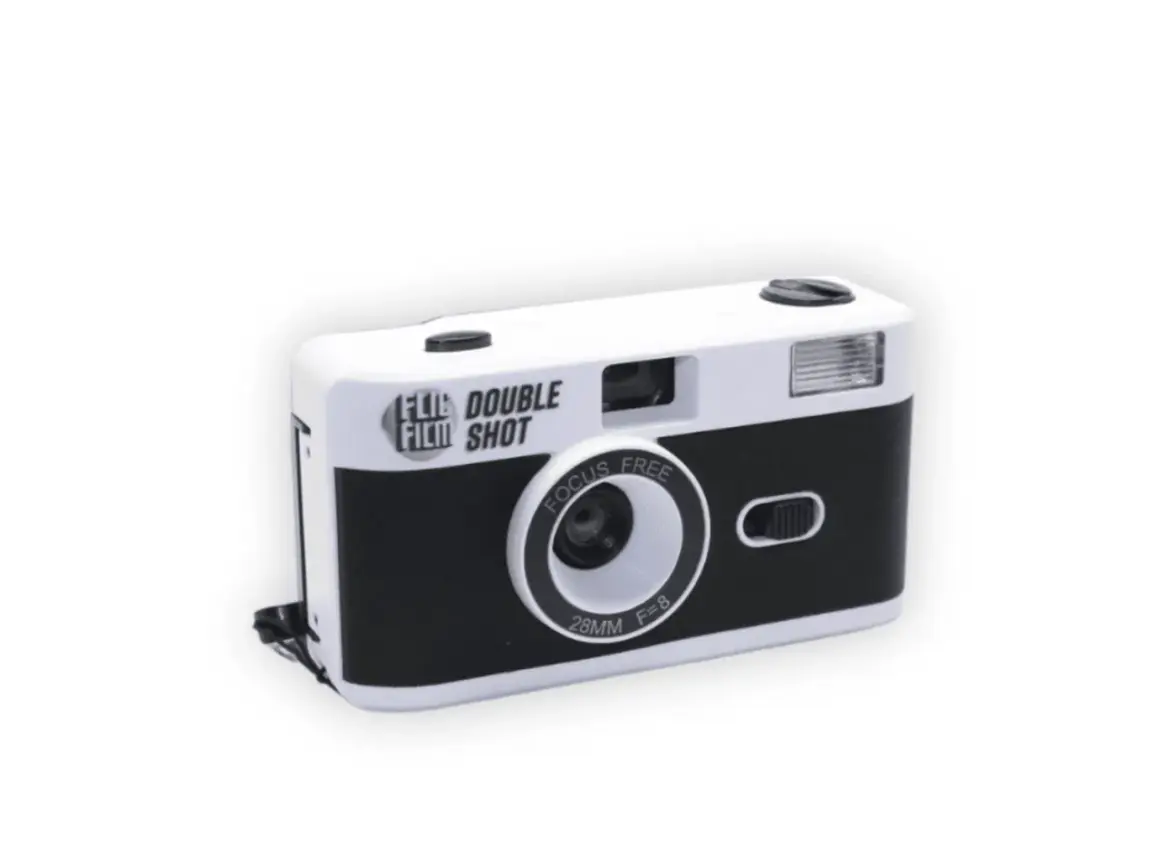
A half frame camera changes the math of film photography in a very direct way: you get twice as many frames from the same roll, but you also work with a smaller negative and a more vertical way of seeing. In this article, I break down what that means in practice, where the format shines, where it falls short, and how to choose and shoot one without building unrealistic expectations. I’ll also cover the lab and scanning side, because that is where many people discover the real cost tradeoff.
Key points at a glance
- Half-frame uses standard 35mm film, but each exposure takes only about half the normal frame area, so a 36-exposure roll can yield 72 images.
- The native frame is vertical, which makes the format feel close to smartphone shooting and naturally supports portraits, street details, and diptychs.
- The per-frame cost can be lower, but lab scans, prints, and the smaller negative change the real economics.
- Sharper lenses and cleaner exposure matter more because the image area is smaller.
- The format is strongest for travel, everyday shooting, and creative sequencing, not for large fine-art enlargements.
How the format works
Classic half-frame bodies expose roughly 18×24 mm frames on standard 35mm film, while Ricoh Imaging’s current PENTAX 17 uses a 17×24 mm half-size frame. The exact number matters less than the principle: two images fit where one full 35mm frame would normally sit.
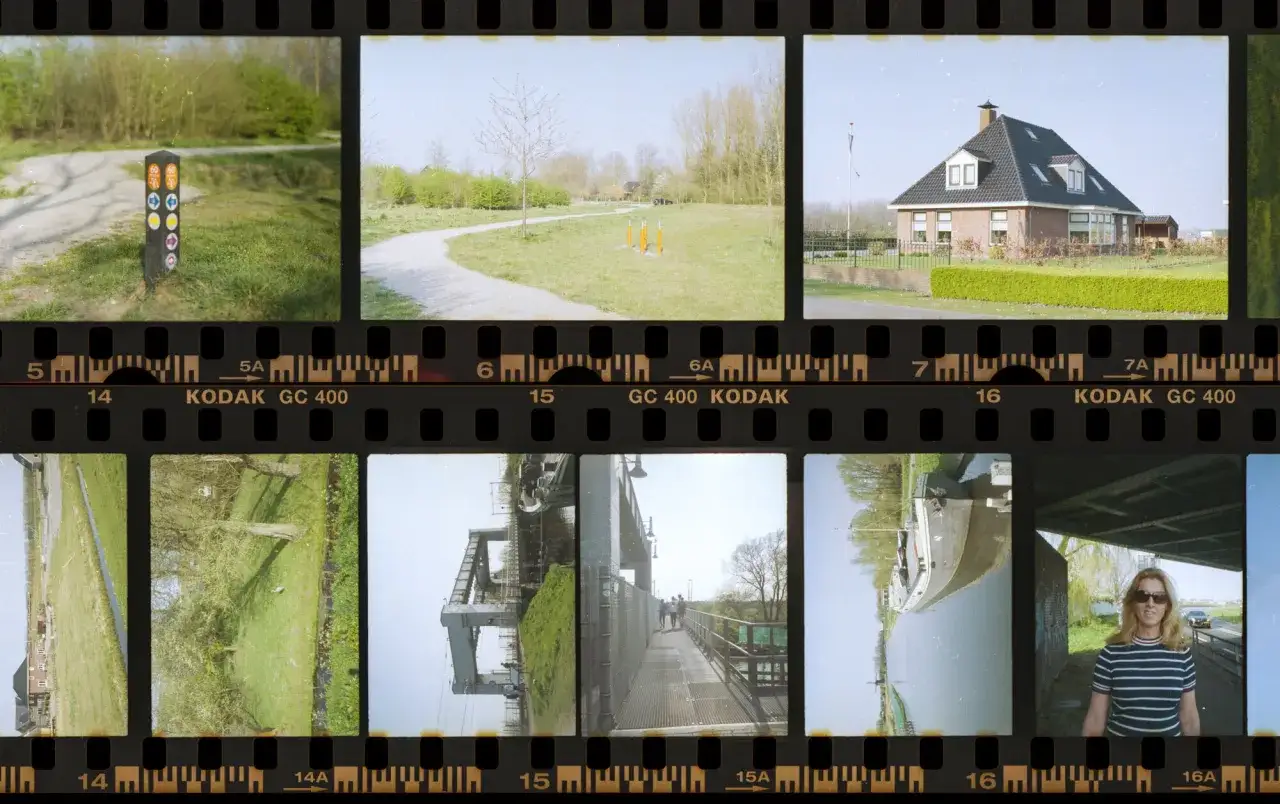
That is why a 36-exposure roll becomes 72 shots, and a 24-exposure roll becomes 48. Because the frame is recorded vertically by default, the camera gives you portrait-shaped images even when you hold it in the normal landscape position.
| Format | Frame size | Shots on a 36-exposure roll | What it feels like |
|---|---|---|---|
| Standard 35mm | 24×36 mm | 36 | More room for enlargement and cropping |
| Half-frame 35mm | About 18×24 mm | 72 | Vertical by default, compact, and efficient |
That orientation is the reason the format feels intuitive to phone shooters almost immediately. The interesting part is not the math alone, but the change in how you compose and pace a roll.
Why the format changes the way you shoot
What I notice first when I use half-frame is the rhythm. I stop treating each exposure like a final answer, and I start thinking in small sequences. That often leads to better picture-making, because I am looking for relationships between frames instead of trying to force every image to stand alone.
- There is more room to experiment without burning through a roll too quickly.
- It becomes easy to make diptychs, where two adjacent frames read as one visual idea.
- The vertical frame works well for portraits, signs, food, street fragments, and travel notes.
- The format reduces pressure on casual days, which helps if you are still learning exposure and timing.
This is also why the format fits modern visual habits better than people expect. It matches the vertical logic of mobile-first storytelling, but it still keeps enough film character to feel distinct from a phone.
The tradeoffs that matter before you commit
The smaller negative is not a footnote. It affects grain, enlargement, and how much error you can get away with before the image starts to look tired. If you only post online, the downsides are often manageable. If you want cleaner 8×10 prints or larger, the limits show up faster.
| Strength | What you gain | What you give up |
|---|---|---|
| More frames per roll | Lower cost per exposure and more chances to experiment | More files to sort, scan, and archive |
| Smaller negative | Compact shooting with a lively, snapshot feel | More visible grain and less enlargement headroom |
| Vertical default frame | Great for portraits and social-friendly compositions | Horizontal scenes need more deliberate camera rotation |
| Simple cameras | Low barrier to entry and quick shooting | Less precise focus and fewer controls on budget bodies |
On the budget side, the format is only cheaper per frame if your lab pricing makes sense. In the US, a color roll plus development and scans often lands somewhere around $25 to $40 before shipping, and the savings can shrink if a lab charges extra for half-frame handling or higher-resolution scans. That is the part I would watch most closely, because it is easy to assume the format is automatically cheaper when the real answer depends on the lab.
Which cameras are worth a look
There are three practical paths: a vintage compact, a vintage SLR, or a current-production body. I usually recommend deciding between convenience and control first, because half-frame is one of those formats where the camera shape changes the experience as much as the negative size does.
| Camera type | What it gives you | Typical budget in the US | Best for |
|---|---|---|---|
| Olympus Pen EE / EE-3 | Tiny body, simple operation, classic half-frame character | About $80 to $250 used, more if serviced | Beginners who want minimal fuss |
| Olympus Pen F / FT | Half-frame SLR handling with interchangeable lenses | About $200 to $600+ depending on condition and lens | Photographers who want more control |
| Kodak Ektar H35 / H35N | Lightweight modern body, flash, fixed-focus simplicity | About $50 to $70 new | Casual shooting and testing the format |
| PENTAX 17 | New production, manual wind, zone focus, more deliberate controls | Roughly $500 | Buyers who want a fresh camera and support |
Vintage bodies need a careful check before purchase. I would inspect the shutter, light seals, meter response, finder clarity, battery availability, and whether the lens has haze or fungus. If a camera needs a proper CLA, budget another $100 to $200 on top of the purchase price. That is often the difference between a fun body and an expensive shelf piece.
The reason the Pen F line matters is that it proves the format was never just a novelty. It could be a serious system, and that still influences how I judge half-frame cameras today.
How to get better negatives from half-frame film
Because the negative is smaller, exposure discipline matters more than it does on standard 35mm. I would rather give the film a little more light and keep the shadows healthy than underexpose a half-frame and hope a scan will rescue it.
- Start with ISO 200 or 400 color negative film in C-41, the standard color negative process, because it is forgiving and easy to process.
- Use black-and-white film when you want grain to feel like part of the design, not a flaw.
- Give the frame a clear subject. Busy scenes can collapse fast on a small negative.
- Think vertically first, then rotate the camera only when the scene genuinely needs a horizontal read.
- Ask your lab for half-frame aware scans, because generic auto-crop settings can waste the framing advantage.
- Use flash when the light is weak, especially on fixed-focus cameras with simple lenses.
One technical term that matters here is zone focus, which means you choose a distance range instead of focusing precisely on a subject. It is fast and workable, but it rewards knowing roughly how far your subject sits from the camera.
When I shoot this format, I also pay attention to subject pairing. A wide establishing shot followed by a close detail often feels stronger than two unrelated frames, and that is where half-frame can become more than a budget trick.
Where it fits in a modern film workflow
The lab side is where half-frame can become either charming or annoying. Some labs handle it cleanly, some need a note, and some will scan it as if it were ordinary 35mm unless you specify otherwise. If you care about presentation, tell the lab that you want individual half-frame scans rather than a loose center crop, because the framing is part of the point.
For digital-first workflows, the format can be excellent. You get more images to sort, more opportunities to build sequences, and more material for social or editorial use. The downside is file management: one roll can turn into 72 files, which sounds fun until you are staring at a folder of near-duplicates. I deal with that by shooting in small story arcs and culling in pairs.
For print-heavy work, the smaller negative is the limiting factor. I would trust modest 5×7 prints and carefully scanned 8×10s, but I would not choose the format if large, clean enlargement is the goal. That does not make it weak; it just means the format has a clear lane.
Why I still recommend it for the right shooter
I reach for half-frame when I want to shoot more freely, tell a small visual story, or carry a camera that does not make me overthink every outing. It is especially strong for travel notes, street details, portraits, family snapshots, and any project where paired frames can do more than one large single image.
- Try it if you want more shots per roll and a more relaxed pace.
- Try it if you like vertical compositions and contact-sheet style storytelling.
- Skip it if your priority is maximum sharpness, big prints, or the simplest possible lab workflow.
That is the honest trade: the format gives you volume, portability, and a distinct visual rhythm, but it asks you to care a little more about exposure, scanning, and what you plan to do with the images after the roll is finished. If you want the classic film experience with more frames and a more vertical way of seeing, a half frame camera deserves a serious look.