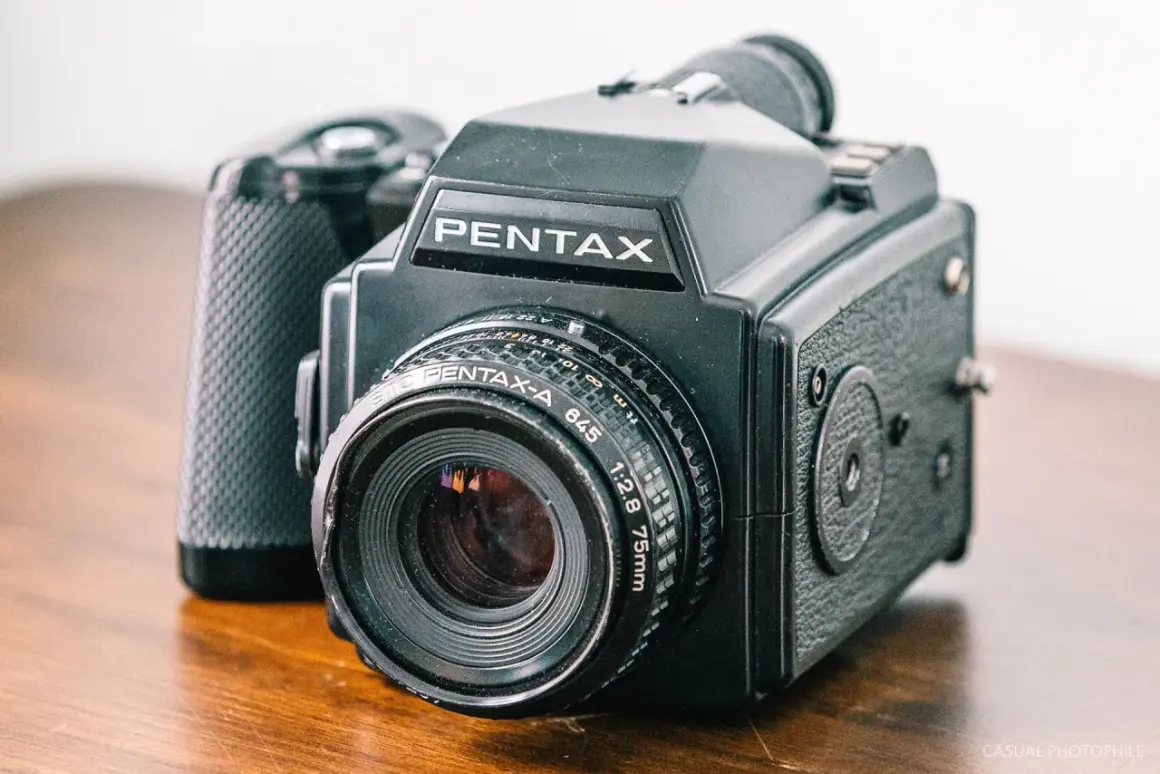
Choosing a compact medium-format film camera is really a choice between convenience and character. A medium format point and shoot sounds simple on paper, but in practice the category is small, expensive, and split between fully automatic Fujifilms, compact rangefinders, and folding cameras that feel deceptively modern until you load a roll. This article breaks down what the term usually means, which cameras come closest, what you gain from 120 film, and what I would check before buying used.
The short version before you start hunting
- True automatic options are rare; most compact medium-format bodies are rangefinders or folders, not fully hands-off cameras.
- The Fujifilm GA645 family is the closest fit if you want autofocus, auto exposure, and a simple shooting experience.
- Mamiya 6, Mamiya 7, and Fuji GF670 are better thought of as compact premium cameras, not real point-and-shoots.
- Frame size changes the pace: 6x4.5 gives about 15-16 shots per roll, 6x6 gives 12, and 6x7 gives 10.
- Used-condition risk matters more than brand hype; batteries, seals, shutters, and rangefinder calibration can make or break the purchase.
What people really mean by a compact medium-format camera
When people talk about a compact medium-format body, they are usually mixing three different ideas: portability, automation, and negative size. In the film world, you rarely get all three at once. The more automatic the camera is, the more likely it is to depend on aging electronics. The more compact and simple it is, the more likely it is to ask you to focus manually or work a little slower.
| Type | How it feels in use | Best for | Main tradeoff |
|---|---|---|---|
| Autofocus compact | Closest to a modern point-and-shoot | Fast casual shooting, travel, family photos | Limited lens choice and more electronics to fail |
| Compact rangefinder | More deliberate, but still quick | Street, documentary, controlled portraits | Manual focus takes practice |
| Folding camera | Very small in a bag, larger when opened | Travel and deliberate shooting | Slower setup and more mechanical complexity |
I usually separate the category this way because it prevents the wrong expectation. A camera like a Fujifilm GA645 is genuinely close to a point-and-shoot. A Mamiya 6 or Mamiya 7 is not, even though both are compact by medium-format standards. Once you understand that difference, the rest of the decision gets much easier.
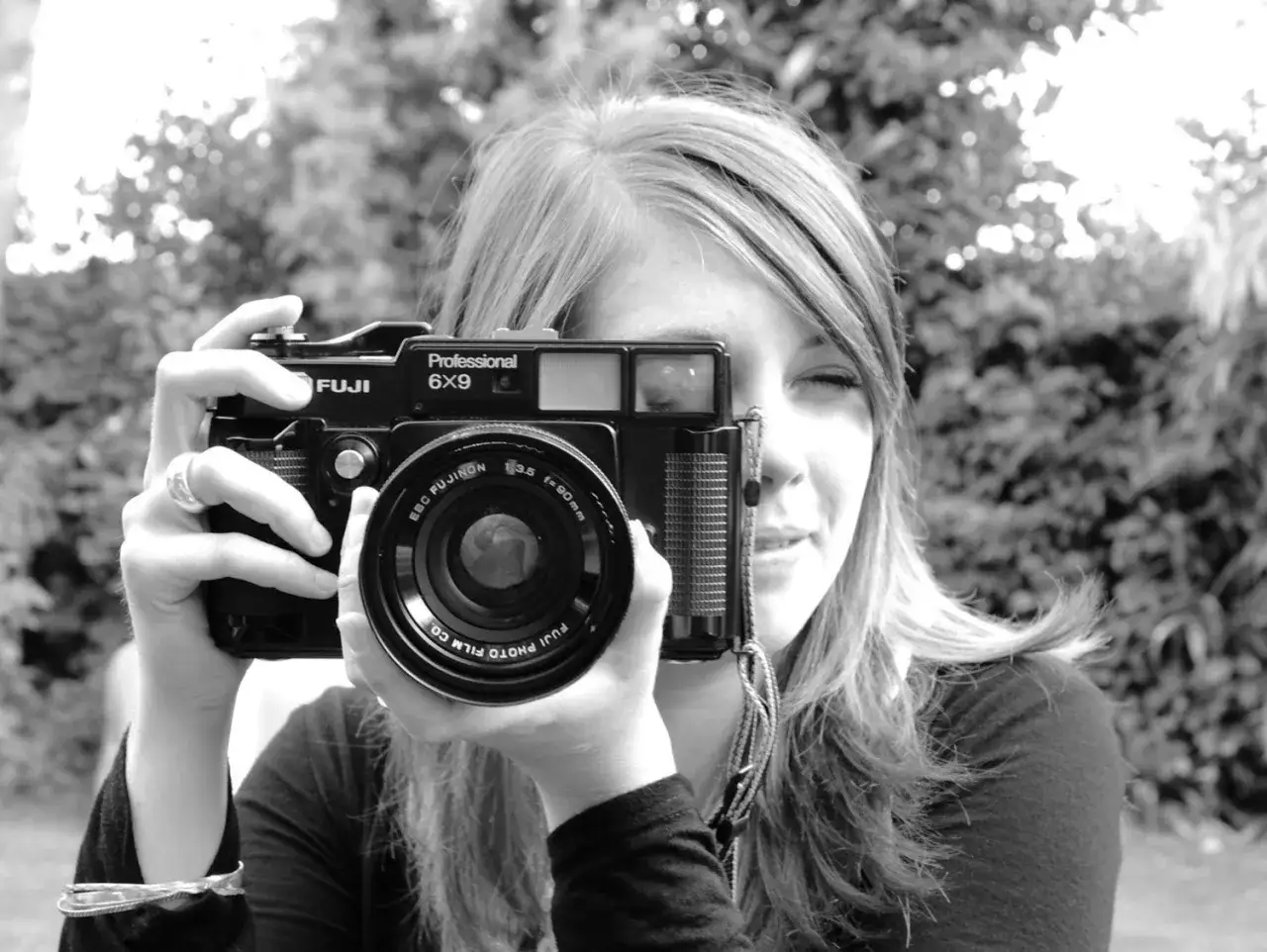
The compact cameras worth paying attention to
These are the bodies I would actually compare if I were buying one today. I am not listing every obscure option ever made; I am focusing on the cameras that still matter because they combine real usability with a negative size that justifies the format.
| Camera | Format | Operation | Why it stands out | Main drawback | Rough 2026 U.S. used price |
|---|---|---|---|---|---|
| Fujifilm GA645 / GA645i / GA645Zi | 6x4.5 | Autofocus, auto exposure, automatic advance | Closest thing to a true medium-format point-and-shoot; very easy to live with | Electronics age poorly, and the lens is fixed | $900-$1,800 |
| Fujifilm GS645S / GS645W | 6x4.5 | Rangefinder, manual focus | Light, slim, and more affordable than the premium names | Less automatic, so it asks more from the photographer | $400-$900 |
| Mamiya 6 | 6x6 | Rangefinder, manual focus | Compact for a square-format system camera, with a very elegant shooting rhythm | Limited lens set and premium pricing | $1,500-$2,800 |
| Mamiya 7 / 7II | 6x7 | Rangefinder, manual focus | Outstanding lens quality and a negative that really earns its size | Expensive, larger than the reputation suggests, and not point-and-shoot at all | $2,200-$4,500+ |
| Fuji GF670 / Voigtländer Bessa III | 6x6 or 6x7 | Folding rangefinder, manual focus | Exceptionally compact for travel and very serious image quality | Pricey, and folding cameras always deserve careful inspection | $2,500-$4,500+ |
If I had to reduce this to one sentence, it would be: the GA645 family is the easiest answer, but the Mamiya and Fuji rangefinder bodies are often the better photography tools. That sounds like a contradiction until you remember that convenience and optical quality are not the same thing. The market rewards the cameras that do both well, which is why the best examples stay expensive.
Why the negative size changes the shooting experience
Medium format is not just “more film.” The frame size affects composition, depth of field, focusing tolerance, and how much you can crop before the image starts to fall apart. On a 120 roll, 6x4.5 usually gives 15-16 exposures, 6x6 gives 12, and 6x7 gives 10, so the larger the frame, the more deliberate the pace becomes.
| Format | Frames per 120 roll | How it feels | Best use case |
|---|---|---|---|
| 6x4.5 | 15-16 | Closest to 35mm in workflow, but with a larger negative | Travel, street, everyday shooting |
| 6x6 | 12 | Square composition slows you down in a good way | Portraits, editorial work, personal projects |
| 6x7 | 10 | Big, generous frame with a very disciplined rhythm | Landscapes, fine printing, carefully composed work |
I like to think of the larger negative as a workflow change first and an image-quality upgrade second. Yes, the files you scan from 6x7 will usually hold more detail than 35mm, and yes, the rendering can feel smoother and more spacious. But the bigger win is often that the camera makes you slow down. That can be a strength or a nuisance depending on whether you want a casual carry-around body or a camera that forces you to pay attention.
One thing I tell people bluntly: medium format does not rescue sloppy technique. If focus is off, the frame is underexposed, or the scan is mediocre, the larger negative will not magically fix it. It only gives you more room to work with when the rest of the process is solid.
What I check before I buy one used
Used compact medium-format cameras are less like buying a simple lens and more like buying a small machine that has already lived a life. That is why condition matters so much. A clean-looking body can still have weak seals, sticky shutters, dead LCDs, or autofocus behavior that only shows up after a full roll.
- Electronics and battery contacts - I inspect the battery compartment for corrosion and make sure the display, meter, and shutter release behave consistently.
- Shutter and film advance - I want clean, repeatable winding and a shutter that fires at every speed without hanging or sounding uneven.
- Rangefinder alignment - On manual-focus bodies, I check whether infinity focus and close focus are still accurate.
- Light seals and foam - Old foam turns sticky, compresses, and eventually leaks light, so this is not a cosmetic issue.
- Lens condition - Haze, fungus, oil on aperture blades, and separation are all deal-breakers or negotiation points.
- Service history - A recent CLA, or at least proof the camera was actually tested, is worth real money.
I also budget for maintenance instead of pretending it is optional. A CLA, or clean-lube-adjust service, can easily run a few hundred dollars once shipping and parts are included, and that cost is often smarter than gambling on a “mint” body with no proof of function. For a category where one repair can erase the price advantage, serviceability is part of the purchase price.
How I would match the camera to the photographer
There is no single best choice here, only the right compromise for a specific kind of shooting. I would match the body to the way you actually work, not to the romance of the camera name.
| Your priority | My pick | Why |
|---|---|---|
| Lowest friction | Fujifilm GA645 family | Autofocus and auto exposure make it the easiest camera to use without losing the medium-format look |
| Best balance of size and image character | Mamiya 6 | Compact, elegant, and square format gives a distinct visual rhythm without becoming a brick |
| Biggest negative in a still-portable body | Mamiya 7 / 7II | It is the most ambitious image-making tool in this group, but it asks for more money and more care |
| Travel-friendly fold-up design | Fuji GF670 / Bessa III | It disappears in a bag better than almost anything else in the format |
| Lower-cost entry into compact medium format | GS645S / GS645W | You give up automation, but you get a practical body without immediately entering collector pricing |
My rule for 2026 is simple: buy the camera you will actually carry, not the one that photographs best in forum posts. If you want a truly automatic experience, stay focused on the GA645 line and be strict about condition. If you want a more deliberate film camera that still feels compact, the Mamiya 6 and 7 families make more sense, even though they are not point-and-shoots in the literal sense. Either way, I would rather own a well-serviced camera that I trust than a famous body that spends most of its life on the shelf.
The smartest medium-format buy is the one that fits your tolerance for weight, manual control, and repair risk. Once those three limits are clear, the choice stops being mysterious and starts looking like a straightforward tradeoff between automation, negative size, and price. That is usually where the right camera reveals itself.