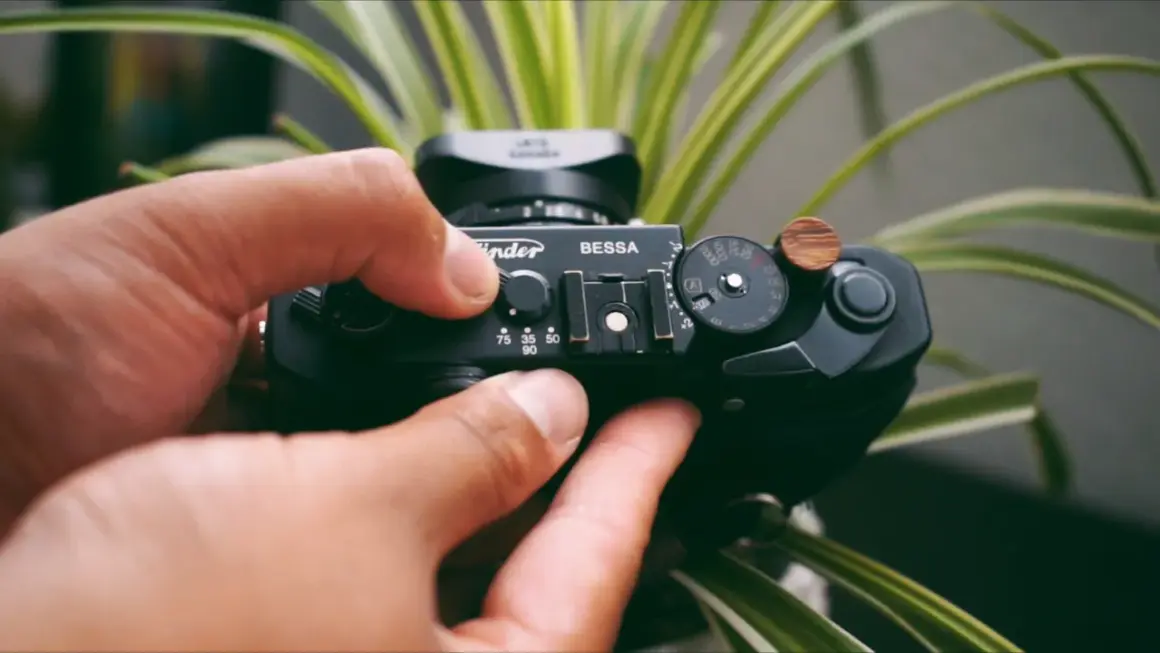
The Bessa R2A sits in a very specific sweet spot: it is a compact 35mm rangefinder that feels serious enough for daily shooting, but still approachable if you do not want to jump straight into a fully mechanical Leica body. In this article, I break down what the camera actually is, how it handles in real use, which lenses make the most sense on it, and what I would check before buying one used.
What matters most at a glance
- It is a 35mm interchangeable-lens rangefinder with Leica M compatibility.
- Its main strength is aperture-priority automation paired with a bright, easy-to-read finder.
- The body is compact and light, so it works well for street, travel, and everyday film shooting.
- It relies on two LR44 batteries, so power management matters more than on a fully mechanical camera.
- Used prices depend heavily on condition, meter health, and whether the shutter and rangefinder are still accurate.
- If you want a camera that behaves like a simple tool rather than a collectible, this one still makes sense.
What the Bessa R2A is and why it still matters
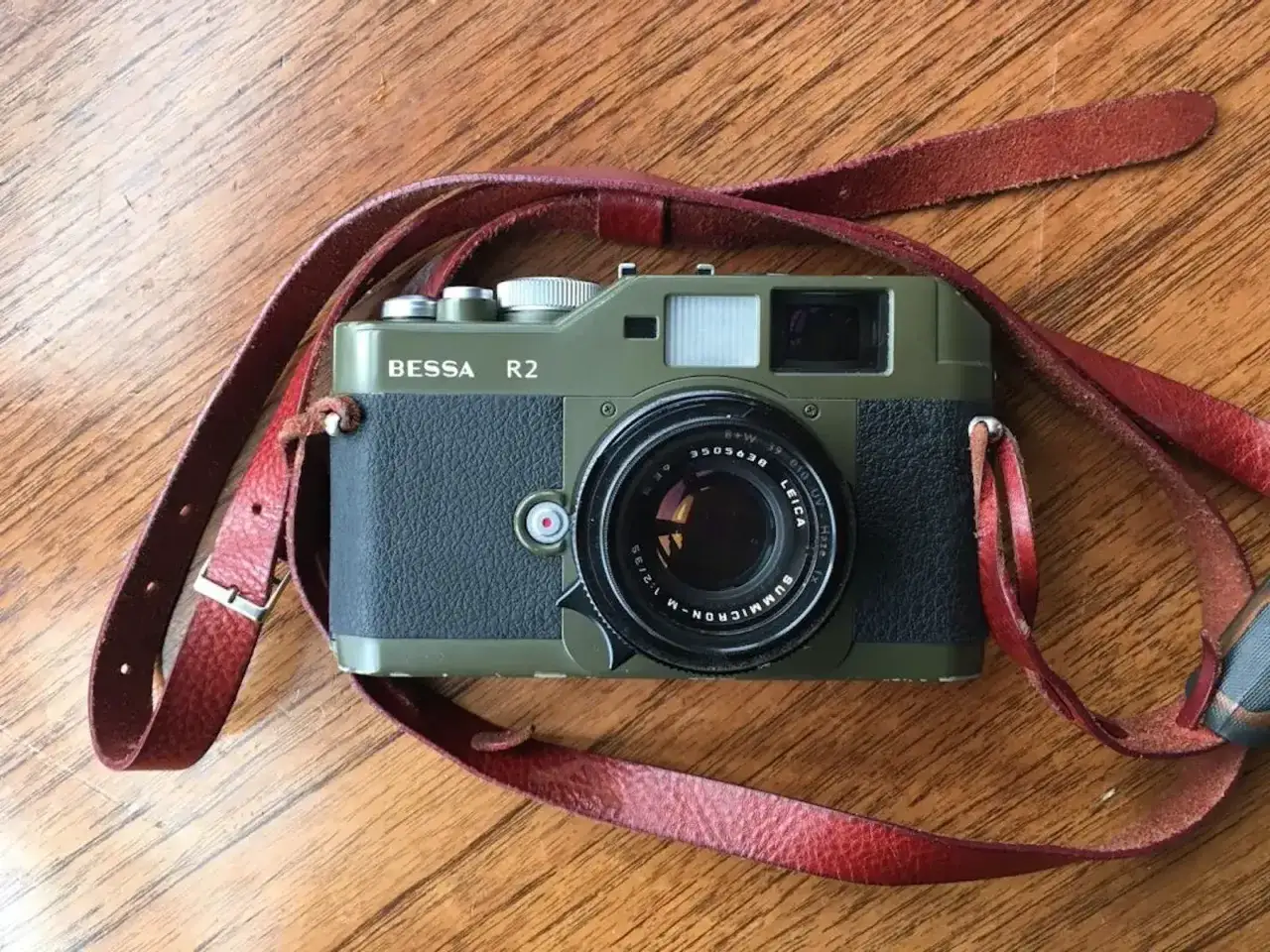
The Bessa R2A is a Cosina-made film rangefinder built around the Leica M mount, which is the real reason people still talk about it. It gives you access to a deep lens ecosystem without forcing you into the highest price tier of classic M bodies, and that alone makes it worth understanding. B&H lists it as a 35mm interchangeable-lens rangefinder with a 0.7x finder, 35/50/75/90 framelines, electronic shutter, and a body weight of about 430 g, which is exactly why it feels more like a practical working camera than a museum piece.| Format | 35mm film, interchangeable-lens rangefinder |
|---|---|
| Mount | Leica M-compatible VM mount, with screw-mount lenses usable via adapter |
| Exposure modes | Aperture priority AE and manual |
| Shutter | Electronic, from 1/2000s to 1s, plus bulb |
| Finder | 0.7x magnification with 35, 50, 75, and 90mm framelines |
| Power | Two LR44 batteries |
What still makes this body relevant is the balance. It is not pretending to be a stripped-down beginner camera, but it also does not demand the budget, patience, or collector mentality that often follows older premium rangefinders. If you want the character of a rangefinder with a more modern shooting rhythm, the Bessa R2A still lands in a very usable place. That practical balance is also what shapes how it feels when you actually shoot it.
How it behaves in real shooting
The biggest difference between the R2A and a fully mechanical rangefinder is not the look or the build; it is the way the camera makes decisions. In aperture priority, I can set the aperture I want, watch the exposure display in the finder, and keep moving. That matters in real photography, especially street and documentary work, where the light changes faster than you want to spin dials. The manual mode is there when I want full control, but I would not buy this body for manual-only discipline. I would buy it because the automation is useful.
The other important detail is that the shutter is electronic, so batteries are not optional in the way they are on a mechanical body. That is the tradeoff. In return, you get a camera that can be quick, quiet, and straightforward to meter. It is also built around center-weighted TTL metering, which is simple and predictable when you understand what it favors: subjects near the center, or scenes where you are willing to compensate a little by eye.
Flash use is practical too. The flash sync speed is 1/125s, which is fast enough for normal fill-flash work and much more useful than the sluggish sync speeds you sometimes see on older cameras. I would still treat flash as a secondary use case, but it is there when you need it. From a shooting standpoint, this is a camera that rewards decisiveness more than fussing, and that is exactly why many photographers still like it.
Once you understand that behavior, the next question is obvious: which lenses actually make the camera feel right?
Which lenses make the body feel right
The lens mount is the Bessa R2A’s biggest strength and its biggest reason for being. Because it accepts Leica M lenses, the body is not locked into a tiny, expensive, or oddball ecosystem. You can use modern M glass, older screw-mount lenses with the proper adapter, and a wide range of Voigtlander options that keep the total system cost under control.
What matters most, though, is not just compatibility. It is how the finder matches the way you shoot. The 0.7x magnification and framelines for 35, 50, 75, and 90mm lenses make this body especially comfortable with 35mm and 50mm glass. That is where it feels natural. The 75mm and 90mm framelines are usable, but they push you into a tighter, more deliberate style of focusing.
| Focal length | How it fits the R2A | My take |
|---|---|---|
| 35mm | Very comfortable; the finder and frameline work well together | This is my favorite pairing for street, travel, and general use |
| 50mm | Natural and easy to focus | The safest choice if you want one lens to learn the camera with |
| 75mm | Useful for tighter portraits and details | Works fine, but the camera starts feeling more selective |
| 90mm | Possible, but more demanding | I would choose this only if I already liked longer lenses on rangefinders |
If your main lens needs are 28mm or wider, I would look elsewhere. The R2A can be part of a wider system, but it is not the body I would choose for wide-angle-first photography. That is where a different finder layout starts to matter. And before committing to any used example, you should know exactly what to check.
What I would inspect before buying a used copy
The used market is where this camera lives now, so condition matters more than model nostalgia. I would not buy one on appearance alone. Cosmetic wear is normal on a working film body, but shutter accuracy, meter behavior, and rangefinder alignment are the details that decide whether the camera is a pleasure to use or a constant irritation.| Check | Why it matters | What worries me |
|---|---|---|
| Shutter response | Confirms that the electronic shutter is behaving consistently | Delayed release, inconsistent speeds, or dead spots at specific settings |
| Meter display | Tells you whether the exposure system is still trustworthy | Jumping LEDs, no response, or readings that make no sense in even light |
| Rangefinder patch | Determines whether focus is accurate enough for real use | Misalignment at infinity or close focus |
| Frame selector | Lets you switch framelines cleanly | Sticky movement or incorrect frameline presentation |
| Battery compartment | The camera depends on battery power | Corrosion, weak contact, or signs of repair damage |
| Advance and rewind | Shows whether the body still feels smooth under load | Rough advance, grinding, or loose rewind action |
For me, the safest buying rule is simple: pay for a camera that is ready to shoot, not one that merely looks expensive in photos. That leads directly to the comparison most people end up making anyway, because the R2A is rarely considered in isolation.
How it compares with the R2M and other M-mount options
The closest sibling is the R2M, and that is the comparison I would make first. The two bodies share the same general family feel, but they make different promises. The R2A gives you automation and speed. The R2M gives you a more traditional mechanical experience. If you know which style of shooting you want, the choice becomes much easier.
| Criterion | R2A | R2M |
|---|---|---|
| Exposure style | Aperture priority AE plus manual | Manual exposure |
| Battery dependence | Batteries are essential for operation | Batteries are mainly for metering |
| Speed in changing light | Very strong | Slower, but more deliberate |
| Failure mode | Dead batteries can stop the camera | Dead batteries usually leave you with a working shutter |
| Best fit | Photographers who want a faster, more forgiving rangefinder | Photographers who value mechanical independence and full manual control |
My take is straightforward: if you already like aperture-priority shooting on digital or compact film bodies, the R2A will feel intuitive almost immediately. If you are drawn to the idea of a camera that still works when power is gone, the R2M is the cleaner answer. That is the real decision, not a spec-sheet argument about which body is more “serious.”
In practice, the R2A also makes more sense than many other M-mount options when your priority is to actually shoot, not just own a rangefinder. If the budget starts to creep toward a more expensive body, I slow down and compare service history, finder condition, and lens cost before I let the badge make the decision for me. That is usually where the smartest buying choice is hidden.
How I would buy and use one in 2026
If I were building a film rangefinder setup around this body today, I would keep it simple: one good 35mm or 50mm lens, two fresh LR44 batteries, and a recent service check if the camera has an unknown history. I would also expect to use aperture priority most of the time, because that is where the body earns its keep. The appeal of this camera is not that it can do everything. It is that it does a few important things very well.
- Choose a lens you will actually carry, not the one that sounds most impressive.
- Budget for batteries and a possible meter check before you buy accessories.
- Favor a clean, accurate finder over a cosmetically perfect shell.
- Use the camera for fast, real-world shooting instead of babying it as a collectible.
- Skip it if you want a wider finder, full mechanical backup, or the cheapest route into M-mount film photography.
That is why the Bessa R2A still has a place: it is a compact, capable rangefinder with enough automation to stay practical and enough character to stay interesting. If you want a camera that helps you move quickly without making the shooting experience feel generic, this one still deserves attention.