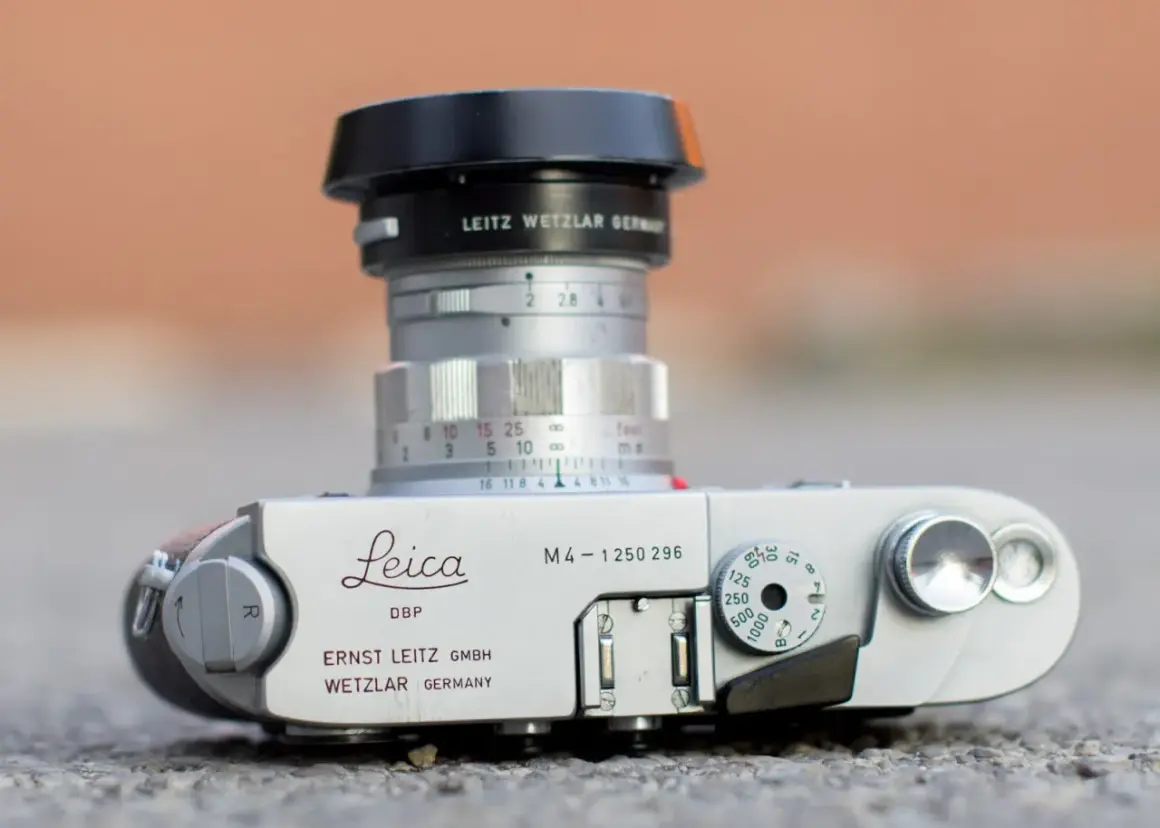
Leica M4 framelines are one of those small mechanical details that decide whether the camera feels intuitive or awkward. The M4’s bright-line finder is built around 35, 50, 90, and 135 mm lenses, with a selector that lets you preview alternate fields of view before you swap glass. That matters because the finder does more than show composition; it shapes how you read distance, movement, and space.
The M4 finder works best when you treat it as a lens guide, not a fixed crop
- 35, 50, 90, and 135 mm are the built-in frame lines you get in the M4.
- The 35 and 135 mm displays are paired, which surprises many first-time users.
- The frame selector is for previewing framing choices, not replacing lens choice.
- Parallax compensation shifts the bright lines as you focus, so the frame is more trustworthy than it first appears.
- The camera is at its most natural with 35 mm and 50 mm lenses; 90 mm is usable, while 135 mm is more specialized.
- 28 mm usually calls for an accessory finder, not the built-in frame set.
How Leica M4 framelines are arranged
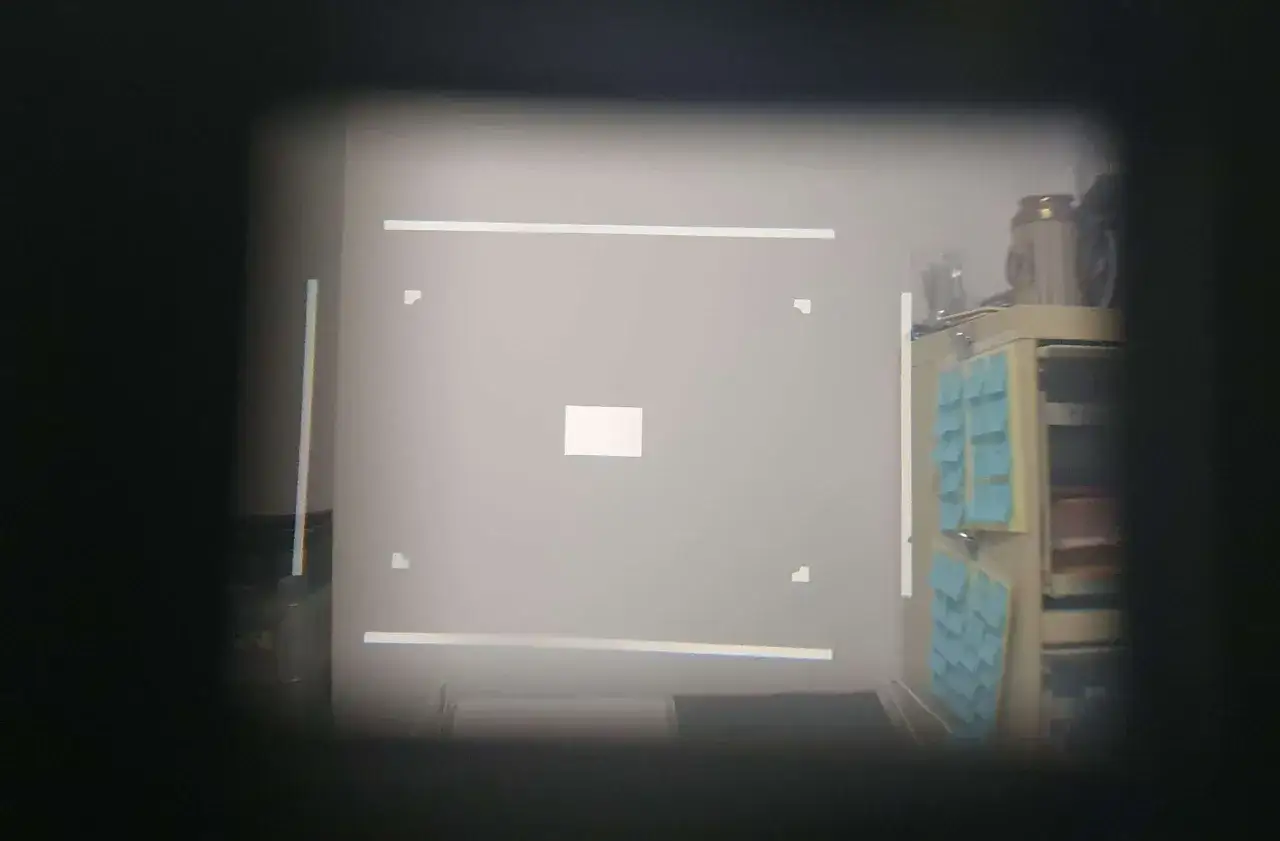
The M4 uses a combined range/viewfinder, so I’m always reading two things at once: the central focusing patch and the bright-line frame around it. Leica’s M4 manual is explicit about the four built-in frame lines and the frame selector lever that previews focal lengths in the 35-50-90-135 range without changing lenses.
That layout is simple, but it is not random. The camera is designed so the displayed field shifts with focus, which is how the M4 handles parallax across the focusing range. In practical terms, that means the framing you see is not a static sticker in the middle of the finder; it is part of the focusing system.
- 35 mm gives you the widest built-in field and the most context around the subject.
- 50 mm is the cleanest, most balanced normal view in the finder.
- 90 mm tightens the frame and makes subject placement more deliberate.
- 135 mm is available, but it is the least relaxed option in the M4 finder.
Once you understand that layout, the real question becomes which frame line actually fits the way you shoot.
What each frame line is best for
| Frame line | Best use | What I watch for |
|---|---|---|
| 35 mm | Street, documentary, travel, environmental portraits | Edge clutter, background distractions, and close-focus breathing room |
| 50 mm | Everyday shooting, general-purpose work, classic perspective | Less scene context outside the frame, so composition feels tighter |
| 90 mm | Portraits, detail work, selective framing | More precise focus and steadier hands become important |
| 135 mm | Occasional tele work, tighter crops, compressed perspective | Least comfortable for fast-moving subjects or quick framing changes |
If I were building a first lens kit around the M4, I would start with a 35 mm or 50 mm lens. Those are the focal lengths that let the camera feel fast, honest, and uncluttered. A 90 mm can be excellent, but it asks more of your focus discipline. A 135 mm works, yet it is the one I would choose because I need it, not because it is the easiest match for the body.
One practical limit is easy to miss: if your kit leans wider than 35 mm, the built-in frames stop doing the heavy lifting. A 28 mm lens is already in accessory-finder territory, and 21 mm definitely is. That is not a flaw in the camera; it is just where the M4’s finder design draws the line.
That brings us to the part of the finder that changes how you shoot even when the framing looks straightforward.
Why the bright-line box matters more than most people expect
The biggest advantage of an optical rangefinder is that I can see outside the frame lines. That extra space is useful in a way digital framings often are not. In street work, I can watch a subject enter the frame before they actually cross the border. In documentary shooting, I can keep track of the environment instead of staring at a hard crop.
The M4’s frame lines are also coupled to focus, which gives you automatic parallax compensation. That matters most when a subject is closer, because the lens and the viewfinder are not physically in the same place. Leica designed the system so the bright lines shift as you focus, and that keeps the framing more accurate than many people expect from a mechanical camera of this era.
Even so, I still leave a little room at the edges when the subject is near. A bright-line frame is a guide, not a promise that every border will land exactly where you want in every situation. If I’m shooting portraits or anything with critical negative space, I compose slightly looser than I think I need. That habit saves me more often than any amount of post-crop confidence.
Once that idea clicks, the frame selector becomes a genuinely useful tool rather than an old Leica curiosity.
How the frame selector saves time in real shooting
The frame pre-selector lever on the M4 is one of the more underrated controls on the body. It lets me preview how the scene would look through another focal length without actually changing lenses. In use, that is helpful for one reason: it lets me test composition quickly before committing to a lens swap.
- Lever upward shows the 50 mm field of view.
- Lever toward the lens shows the 90 mm field of view.
- Lever away from the lens shows the 35 and 135 mm field of view.
The key detail is that the lever returns automatically when released, so I treat it as a momentary preview. That makes it perfect for checking whether a tighter crop will actually improve the frame or just remove useful context. It is also handy when I’m deciding between a 35 and a 50 in changing light, because the difference in feeling is often more important than the difference in coverage.
If you use the M4 the way it was meant to be used, this is where the camera starts feeling fast instead of merely classic.
How the M4 compares with other Leica M finders
| Body | Built-in frame lines | What it means in practice |
|---|---|---|
| M3 | 50, 90, 135 mm | Excellent for 50 mm shooters, but 35 mm needs an external finder |
| M2 | 35, 50, 90 mm | Great for wide-normal shooting, but no built-in 135 mm framing |
| M4 | 35, 50, 90, 135 mm | The most balanced classic layout if you move between focal lengths |
| Later M bodies with broader coverage | Some add 28 and 75 mm lines | Better if your work lives at wider angles or more specialized focal lengths |
That comparison is why the M4 still makes sense for so many film shooters. It lands in the middle of the classic Leica finder philosophy: wide enough for 35 mm, clean enough for 50 mm, and still willing to show you 90 and 135 mm when you need them. If your shooting style lives in that range, the body feels intelligently designed rather than limited.
If, however, your work depends on 28 mm most of the time, I would not force the M4 to be something it is not. An accessory finder or a different M body will make that job cleaner.
And if the framelines ever look wrong or out of sync, the problem is usually mechanical, not conceptual.
When the markings look wrong
Most finder issues on an M4 fall into a few practical buckets. The first is simple visibility: if the frame lines are dim, the finder windows may need cleaning or the camera may need a proper service. The second is lens coupling: if the wrong frame appears or the selector does not behave as expected, I would check whether the lens is fully seated and whether the bayonet engagement is clean.
- Dim or hazy lines often point to internal haze or contamination in the viewfinder path.
- Unexpected frame selection usually means the lens mount did not fully engage the mechanism.
- Focus looks right but framing feels off is often just close-range parallax, especially if you are shooting near minimum distance.
- 28 mm feels unusable is not a fault at all; it simply means the M4 is asking for an accessory finder.
If the camera has not been serviced in a long time and the selector feels sticky, a proper clean, lubricate, and adjust job is usually the smartest next step. I would not assume the finder is “wrong” until the mechanical basics are checked.
That last point is worth keeping in mind, because the M4 is at its best when the camera, lens, and finder are all pulling in the same direction.
What the M4 does best and where it stops being enough
For me, the M4 is strongest when the lens choice is centered on 35 mm and 50 mm. That is where the finder feels open, fast, and genuinely helpful. Add 90 mm when you need tighter framing, and 135 mm when the subject really calls for it, and the body covers a surprisingly broad range without becoming cluttered.
Its limit is equally clear. If your visual language leans heavily toward 28 mm or other wider angles, the built-in frame set will not carry the whole job. In that case, I would treat the M4 as a classic, highly capable normal-to-tele body rather than a universal solution.
The useful test is simple: the right frame lines should disappear into the act of shooting. When they do, the camera stops feeling like a collectible and starts behaving like a tool.