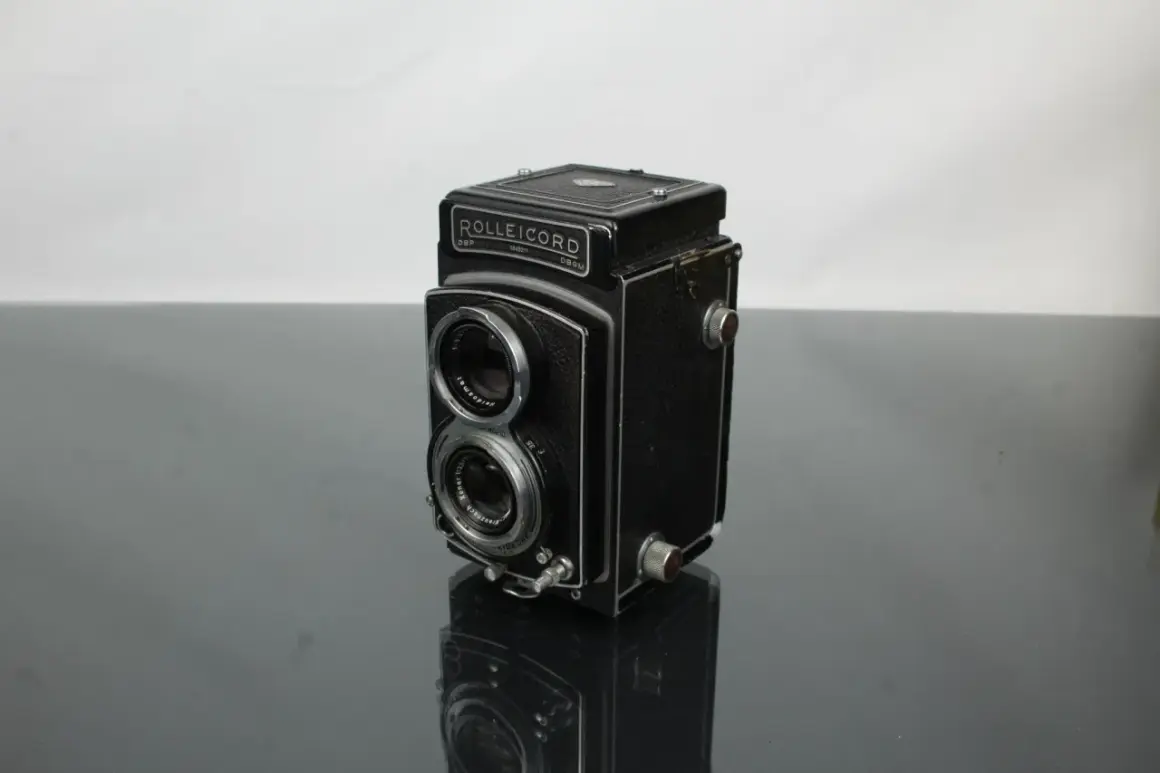
The Rolleicord is one of those cameras that looks simple until you start using it seriously. It gives you medium-format negatives, a waist-level viewing experience, and a very specific rhythm that rewards slower, more deliberate photography. This article breaks down what it is, how it differs from a Rolleiflex, what to inspect before buying one used, and what kind of photographer will actually get the most out of it.
The essentials before you buy one
- It is a medium-format twin-lens reflex that shoots 120 film and makes 6x6 square negatives.
- Most classic models are manual and unmetered, so you will usually use an external meter or a phone app.
- The Rolleicord is the more affordable sibling of the Rolleiflex, but condition matters more than badge value.
- Later versions, especially the V and Vb, are usually the safest balance of usability and price.
- Budget for service if the camera has not been recently CLA’d; old shutter work is not a small detail.
What the Rolleicord actually is
At its core, this is a classic Rollei TLR: one lens for viewing, one lens for taking the picture, both mounted in a boxy body that sits at chest level. The standard format is 120 roll film, which gives you 12 square frames on a roll, and that 6x6 frame is a big part of the appeal. The camera was built to be simpler and less expensive than the flagship Rolleiflex, but it was never a toy. On a good day, it delivers the kind of sharpness, tonal separation, and quiet mechanical experience that still feels satisfying in 2026.
What matters most is the workflow. You do not raise the camera to your eye; you look down into the hood and compose from above. That changes how you frame, how you interact with subjects, and how quickly you work. For portraiture, street work, and slower documentary shooting, that can be a strength rather than a limitation. Once you get used to it, the format has a way of making ordinary scenes feel more intentional. That difference matters, because it explains why the camera still has an audience long after the film era ended.
How it differs from a Rolleiflex
The simplest way to think about it is this: the Rolleicord gives you the Rollei experience at a lower entry point, while the Rolleiflex is the premium version with more refinement and often more convenience. The gap is not just about prestige. It affects handling, lens options, accessories, and the price you will pay in the used market.
| Area | Rolleicord | Rolleiflex | What it means in practice |
|---|---|---|---|
| Position in the line | More affordable sibling | Flagship TLR | The Rolleicord is the easier way into the Rollei world. |
| Film advance | Usually a knob-based, more manual feel | Often a crank with more automation | The Rolleiflex feels faster; the Rolleicord feels more hands-on. |
| Lens character | Good glass, often a 75mm f/3.5 on later models | More premium lens options and brighter variants | The Rolleiflex can be more flexible, but the Rolleicord is still capable of excellent negatives. |
| Metering | Usually none on classic bodies | More likely to have meter-related options on later cameras | You will usually meter externally with a Rolleicord. |
| Cost | Lower, but rising for clean examples | Higher across most desirable models | Price alone should not decide it, but it often does. |
If your priority is shooting medium format without paying flagship money, the Rolleicord makes a lot of sense. If you want the smoother, more luxurious Rollei experience and are willing to pay for it, the Rolleiflex is the better object to own. From a practical standpoint, though, the image quality gap is smaller than many collectors like to claim. The next question is which version of the camera gives you the least friction for the money.
Which version makes the most sense
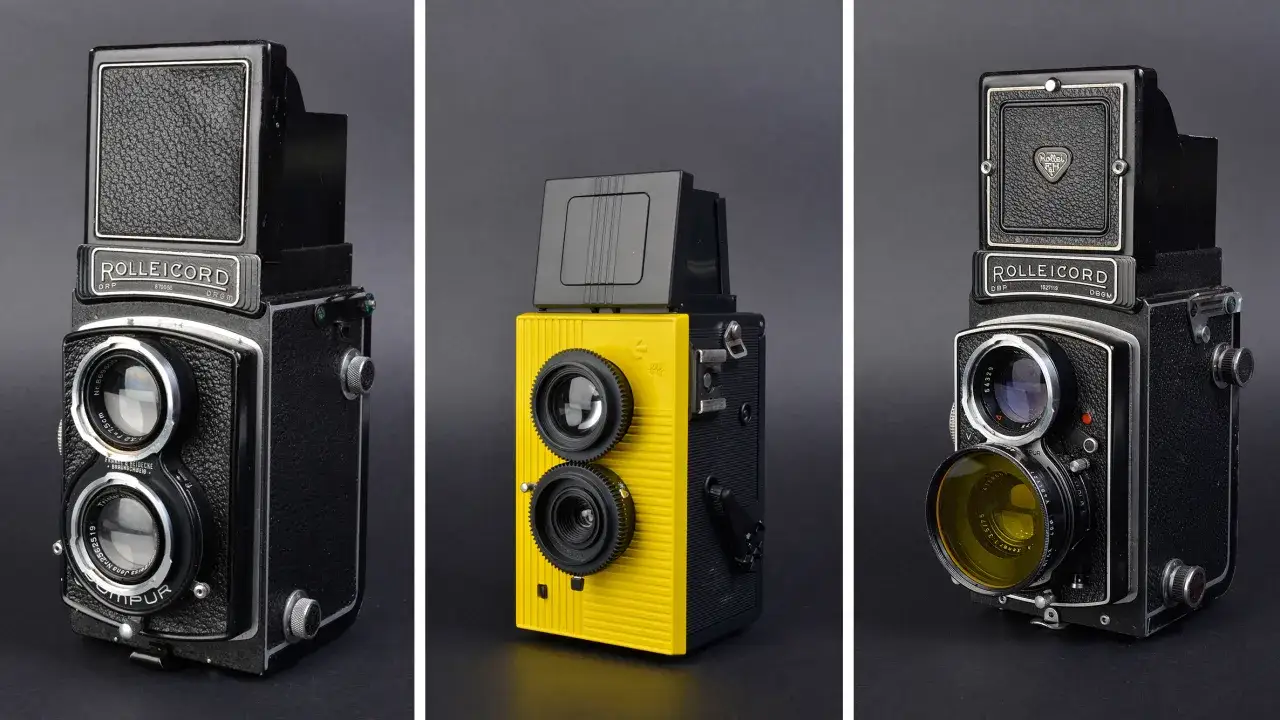
Not every Rolleicord is equally easy to live with. Early bodies are charming and historically interesting, but they can be more limited, while later models usually offer the best mix of usability, serviceability, and lens quality. If I were choosing for actual use rather than shelf value, I would focus on the later generation first.
| Model family | What you usually get | Why it stands out | Best for |
|---|---|---|---|
| Early I / II models | Simpler lenses, more basic controls, more collector appeal | Cheaper entry point, but more limited handling | Collectors and patient users who enjoy vintage quirks |
| III / IV / V | Better-balanced lenses and improved shutters | Often the sweet spot between cost and image quality | First-time medium-format buyers |
| Va / Vb | Later refinements, with the Vb being the final version | Most polished handling in the line, and the Vb adds interchangeable viewfinders | Users who want the most practical Rolleicord experience |
| Magic line | Metering and autoexposure help | Less common, but useful if you want more exposure assistance | Photographers who want a slightly less manual Rollei |
What to check before buying a used one
On paper, a vintage TLR can look like a bargain. In real life, the condition story matters much more than the cosmetic story. A clean body with a dead shutter is not a good buy, and a slightly rough camera with a recent service can be the smarter choice. I would rather pay a bit more for a camera that works than gamble on a “perfect-looking” example with hidden transport problems.
- Shutter behavior - Test all speeds, especially the slow ones. Sticky low speeds are a classic age-related problem.
- Focusing movement - The focusing knob should move smoothly from close distance to infinity without grinding or dead spots.
- Lens condition - Look for haze, fungus, cleaning marks, and separation. Small dust is normal; cloudy glass is not.
- Viewfinder brightness - A dull screen or weak mirror makes the camera much harder to use indoors.
- Film transport - The frame advance and counter should behave predictably. Any slip here is a real hassle.
- Back and seals - Check the hinge, latch, and light-sealing areas carefully. TLRs are not immune to leaks.
- Meter, if present - Do not assume an old meter is accurate unless it has been tested.
For budgeting, I would treat a service estimate of a few hundred dollars as realistic for an old Rollei-class TLR, especially if the shutter needs cleaning or the transport needs adjustment. In current used-market guides, clean examples of the Vb typically land in the mid-hundreds of dollars, while mint or boxed copies climb much higher. That is why the cheapest listing is often not the cheapest camera.
Once you know what to inspect, the final question is not whether the camera is old. It is whether its handling style fits the way you actually like to shoot.
How it behaves in actual shooting
The Rolleicord is not a fast camera, and that is exactly why many photographers like it. It slows the session down just enough to make you think about framing, timing, and subject distance. The square frame also changes your compositional habits. You stop defaulting to horizontal or vertical rectangles and start balancing shapes inside a more neutral frame. That can be a very useful discipline if you come from digital work and want to shoot more deliberately.
Focus and composition take a little practice
The waist-level finder shows you a reversed image, so left and right are flipped. The first roll can feel awkward, especially if you are used to eye-level framing or autofocus. Outdoors, the screen is usually manageable. Indoors, or in lower light, it can feel dimmer than people expect. That is not a defect so much as a reminder that this is a mechanical camera from another era.
Film loading is simple but not automatic
Most classic bodies do not give you the conveniences people expect from later cameras. You line up the film start mark yourself, watch the advance carefully, and make sure the frame counter is behaving. Once you get the routine down, it is straightforward. Until then, the risk is not drama; it is wasting a roll because you rushed the loading process.
Read Also: Olympus PEN-F Review - Still Worth It?
Exposure is your job on most models
If you want to use one well, you need a basic meter workflow. A handheld meter is ideal, but a phone app works if you are consistent. The later Magic models are the exception because they add exposure assistance, yet most buyers will encounter a fully manual camera. That is part of the charm, but it also means the camera is better suited to deliberate work than to grab-and-go shooting.
One practical upside: the leaf shutter gives you a very usable flash experience on many versions, which is helpful if you ever want to work with controlled light. For portraits, that can matter more than people think. It makes the camera feel less like a museum object and more like a legitimate production tool.
What I would budget in 2026
If I were shopping for one today, I would not just budget for the camera. I would budget for the camera plus the likelihood of service. A bargain body with unknown history can eat the savings quickly, and that is especially true if the shutter is sluggish or the focusing train needs attention. In practical terms, the smartest purchase is often the one with evidence of recent work, not the one with the lowest sticker price.
- Budget tier one - Around $250 or less usually means project-level condition, parts risk, or cosmetic appeal over reliability.
- Budget tier two - Around $350 to $600 is a more realistic range for a usable body with decent condition, especially outside the rarest variants.
- Budget tier three - Around $700 to $1,000 is where cleaner, serviced, or especially desirable examples often live.
That spread is why the Rolleicord still makes sense in 2026. It is not cheap in the way overlooked 35mm cameras can be cheap, but it is still far more accessible than many Rolleiflex bodies. For a photographer who values process, medium format, and the square frame, the value proposition is strong. I would just be blunt about one thing: a good camera is not the same as a cheap camera, and vintage Rollei gear rewards buyers who respect that difference.
Why this TLR still earns a place in a working kit
I think the strongest case for the Rolleicord is not nostalgia. It is discipline. This camera asks you to slow down, meter carefully, and compose with intention, and those habits still improve the work even if the final images end up scanned and edited digitally. That is a useful bridge between classic gear and modern production thinking: the tool is old, but the creative payoff is still current.
If you want a square-format medium-format camera with real character, manageable operating costs, and enough mechanical charm to keep the process enjoyable, this is a serious option. If you need close focusing, built-in meter convenience, or fast event shooting, I would look elsewhere. For everyone else, the right Rolleicord is the one that works smoothly, has a clean optical path, and fits your budget without forcing a repair gamble.