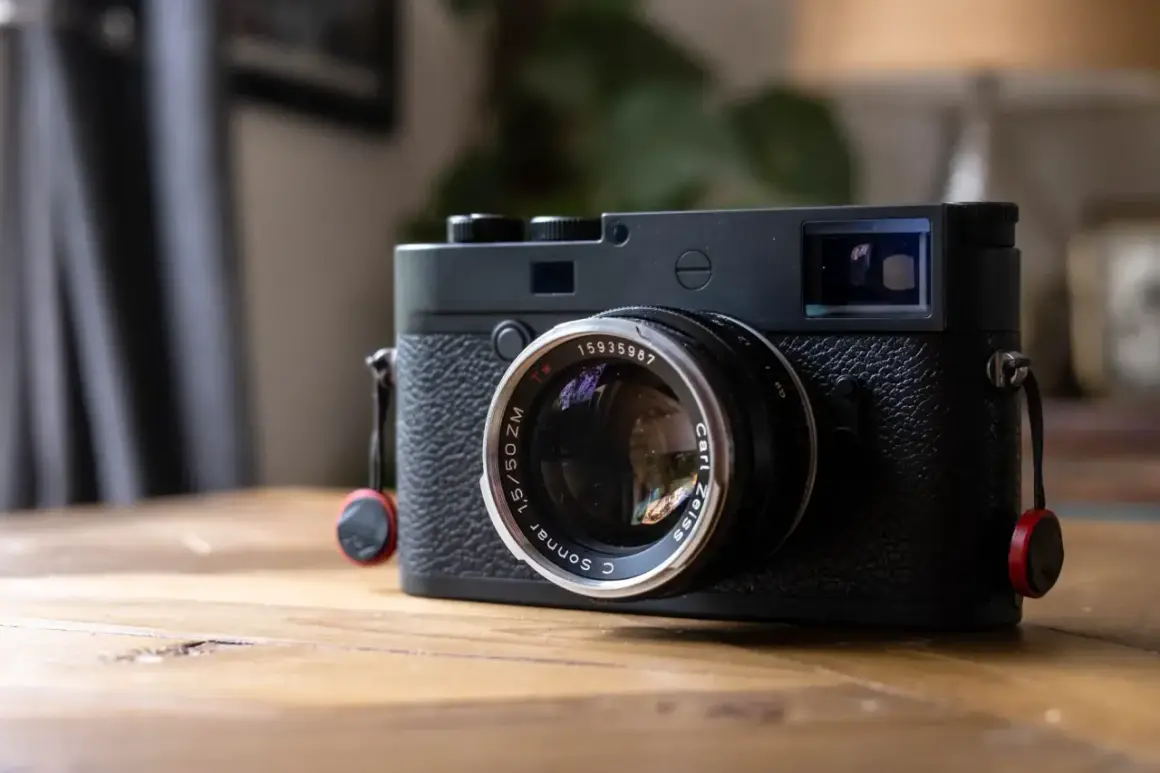
The Leica M10-P is not a camera for chasing every modern feature. It is a full-frame digital rangefinder built around manual focus, a quiet shutter, and a stripped-back shooting experience that rewards deliberate work. In this article I break down what it is, how it feels to use, where it shines, where it compromises, and how I would think about it against newer M bodies if I were choosing one for a real kit.
What matters most before you buy
- 24MP full-frame sensor with compact DNG files that are easier to manage than newer high-resolution M bodies.
- Rangefinder-first operation means manual focus, bright-line framelines, and a slower but very deliberate way of shooting.
- Quiet shutter and minimalist body make it a strong fit for street, documentary, and discreet travel work.
- M-mount compatibility keeps it in the Leica lens ecosystem, which is the real reason many people buy it.
- Current used pricing remains premium; Leica Classic listings currently place clean bodies around the mid-€4,000s to €4,900, with special editions higher.
- Best for stills if you value precision and simplicity more than autofocus speed or hybrid-video convenience.
What the M10-P actually is
Leica’s technical sheet lists the M10-P as a compact digital view and rangefinder system camera with a 24MP full-frame CMOS sensor, a 2GB buffer, and a body that weighs about 660g with the battery installed. That combination tells you almost everything about its intent: this is a serious stills camera that trades automation for feel, control, and a very specific shooting rhythm.
Here are the core details that matter in practice:
| Spec | Leica M10-P | Why it matters |
|---|---|---|
| Sensor | 24MP full-frame CMOS | Enough resolution for editorial work, prints, and most travel or street projects without huge files. |
| Lens mount | Leica M bayonet | It is built around M lenses, not adapted autofocus glass. |
| Shutter | Metal blade focal plane shutter, 1/4000s max, 1/180s flash sync | Quiet enough for discreet shooting, but not a speed machine. |
| ISO range | 100 to 50,000 | Flexible enough for available light, though the body is still happiest when exposure is intentional. |
| Rear display | 3-inch touchscreen, 1,036,800 dots | A practical addition, but not the center of the experience. |
| Weight | About 660g with battery | Heavier than many mirrorless bodies, but still compact for full-frame. |
| Burst | About 5 fps, 30-40 frames per series | Good enough for moments, not built for action coverage. |
That is the important framing: the M10-P is not trying to out-spec modern mirrorless cameras. It is trying to preserve the Leica M experience in a digital body that feels refined rather than busy. From there, the real question becomes how that rangefinder experience changes the way you actually work.
How the rangefinder shooting experience changes your workflow
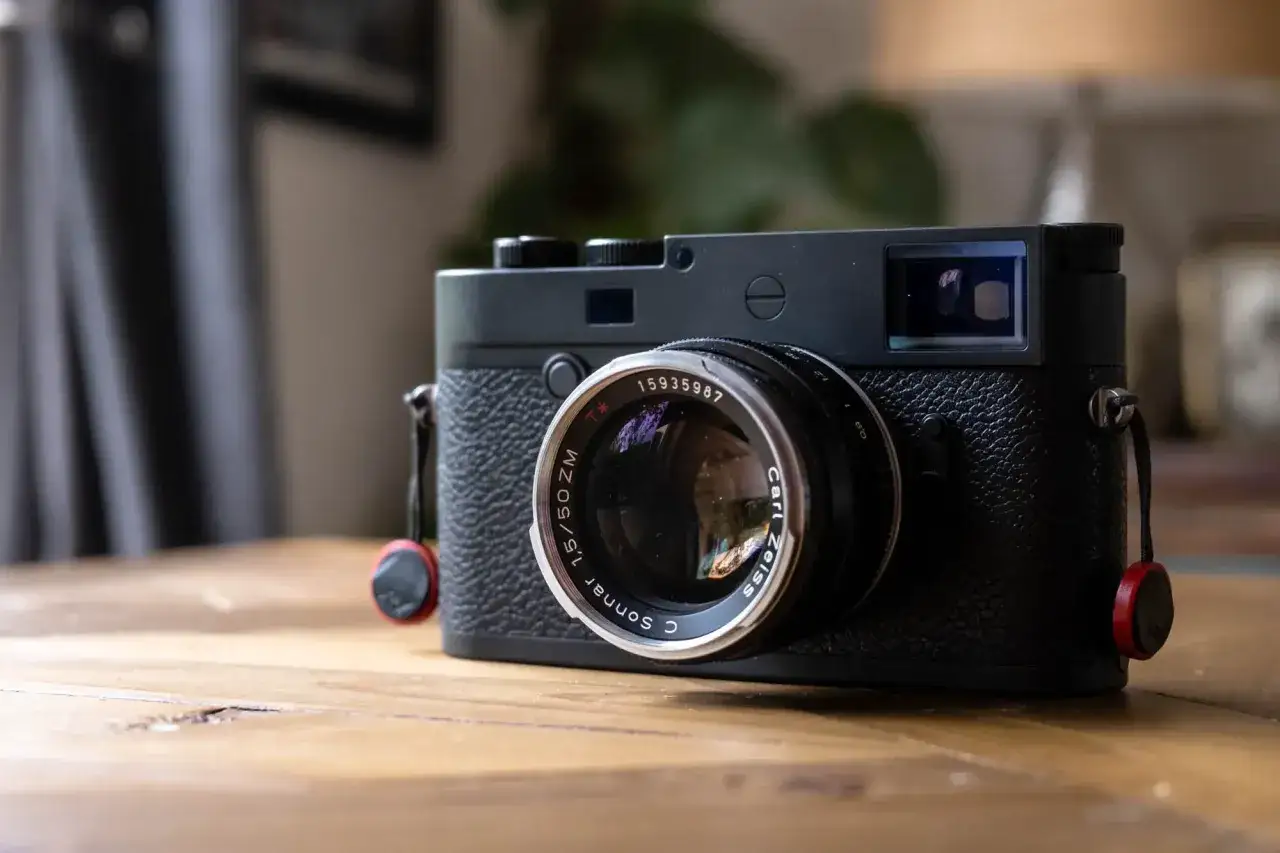
The rangefinder is the heart of the camera. You are not looking through the lens, and that changes the way you think about framing, focus, and timing. I think that is the first thing people either fall in love with or bounce off immediately. You learn to see the scene before you press the shutter, then confirm focus with the coupled rangefinder patch in the center of the bright-line viewfinder.
Leica’s design gives you a 0.73x viewfinder magnification and automatic parallax compensation, with bright-line frames for 28, 35, 50, 75, 90, and 135mm lenses. In plain English, that means the camera shows you a clean, optical view with framing guides rather than a live feed from the sensor. It is elegant, but it is also a discipline. Focus is manual, subject tracking is not the point, and fast-moving sports or wildlife work will feel awkward very quickly.
Where this really shines is in slower, more intentional photography. Street work is the obvious example, because you can keep both eyes open and stay aware of the scene around the frame. Documentary and travel work benefit for the same reason. Portraits can be beautiful too, but I would be honest about the learning curve: the closer the subject and the longer the lens, the more precision matters. If your eyes need help, the optional Visoflex electronic viewfinder is useful, especially for more critical framing or focus confirmation with longer focal lengths.
The rangefinder also changes your timing. You stop chimping every frame and start anticipating moments. That can feel old-fashioned if you want instant feedback. It can also be freeing if you are tired of cameras that constantly ask for attention. That difference matters once you start judging image quality, because the camera’s output only makes sense when it matches the pace of the system.
Image quality, file size, and where the 24MP limit shows up
In real use, the M10-P’s 24MP files are a sweet spot for a lot of photographers. They are detailed enough for magazines, web campaigns, social content, moderate-size prints, and most client delivery, but they are not so large that every image becomes a workflow decision. DNG files usually sit around 20-30MB, which is a practical number if you shoot a lot and do not want your archive turning into a storage project.
The limitation is not that 24MP is obsolete. The limitation is that higher-resolution Leicas give you more room to crop, correct, and reframe after the fact. That matters if you work like a commercial shooter, if you need generous crop latitude for architecture, or if you simply prefer to rescue composition later rather than nail it in camera. For anyone who likes to work cleanly and intentionally, 24MP is still enough.
Here is the comparison I would keep in mind:
| Body | Resolution | Strength | Main tradeoff |
|---|---|---|---|
| M10-P | 24MP | Smaller files, classic handling, easy enough for day-to-day editing | Less crop room than newer models |
| M10-R | 40.89MP | More detail, stronger cropping flexibility, better for large prints and architecture | Bigger files and tighter focus discipline |
| M11 | 60.3MP, 36MP, or 18MP | Most flexible current M body, with internal storage and USB-C | Higher cost and heavier file management |
If I were choosing purely on output, I would not pretend the newer bodies are worse. They are better at resolution and modern convenience. But the M10-P still has an appeal that resolution does not solve: it feels calm. That calmness is part of the reason people keep buying it used even now, which leads naturally to the question of who should actually buy one.
Who it rewards and who should probably skip it
The M10-P rewards photographers who already like the act of photographing, not just the results. If you enjoy manual focus, if you like a slower tempo, and if you want the camera to stay out of the way, this body makes a lot of sense. I would especially consider it for street, documentary, environmental portraits, personal travel work, and any project where discretion matters as much as image quality.
It is a weaker fit if your day job depends on speed or automation. Autofocus, eye tracking, and video are not the point here. If you cover events with unpredictable movement, shoot sports, work with children who move constantly, or want one camera that does everything from stills to reels, I would push you toward a different system. The M10-P can be used carefully in those situations, but it is not built to make them easy.
- Good fit if you want a compact, premium stills body with a deliberate workflow.
- Good fit if you already own or plan to buy M lenses.
- Good fit if you value quiet operation and understated design.
- Skip it if autofocus and subject tracking are non-negotiable.
- Skip it if you want a value-first camera rather than a premium tool.
That split is useful because it keeps the buying decision honest. The camera is excellent at its job, but its job is narrow by design, and the lens choice you make around it can either amplify that strength or waste it.
How I would build a practical lens kit around it
If I were putting together a sensible kit, I would start with one normal lens and one wider option, not a shelf full of expensive glass. The body is at its best when the lens choice matches how you naturally see. For many photographers, that means 35mm or 50mm first, then 28mm if you truly think in wide frames.
| Lens choice | Best for | Why it works here |
|---|---|---|
| 28mm | Environmental street, travel, interiors | Great if you like context, but it demands tighter framing discipline. |
| 35mm | General-purpose documentary and street | Probably the most balanced choice for a first lens on this body. |
| 50mm | Portraits, detail, classic Leica feel | Easy to learn, easy to focus, and naturally flattering for people. |
| 75mm or 90mm | Portraits and compressed perspective | Beautiful rendering, but focus accuracy becomes much more demanding. |
I would also budget for one extra battery, a fast SD card, and a strap or grip that makes the body pleasant to carry all day. Leica’s battery is rated at 1300mAh, which is fine for a day of normal shooting if you are disciplined, but rangefinder work tends to grow over the course of a day, not shrink. If you are used to mirrorless bodies with huge batteries and aggressive power management, plan accordingly. I would not overcomplicate the kit beyond that, because the appeal of the camera is how little it asks for once it is in hand.
Leica Classic’s current listings are useful here too, because they show the kind of pricing this body still commands in the market. A clean used M10-P body is not a bargain object, and special editions push well beyond standard pricing. That makes lens choice even more important, because the best value often comes from pairing the body with one or two excellent M lenses instead of chasing accessories first.
Why it still makes sense in 2026
The M10-P still matters because it sits in a very specific middle ground. It is newer and quieter than the original M10, but simpler and lower-resolution than the M10-R or current M11 family. Leica’s latest M11 generation goes up to 60.3MP and adds modern conveniences like internal storage and USB-C, so if you want the most flexible current platform, that is where I would look first. If you want a cleaner, more restrained shooting experience with smaller files and a classic tactile feel, the M10-P still has a real argument.
Leica Classic’s current body listings also tell the story plainly. Bodies are still priced like premium tools, not disposable tech, and that tells me the market sees the M10-P as a long-life camera rather than a temporary stopgap. I read that as a sign of durability, but also as a warning: this is only worth it if you genuinely want the rangefinder way of working. If you are buying it just because it is a Leica, the value equation will disappoint you fast.
My rule is simple. If you want modern flexibility, buy newer. If you want a quieter, more focused stills camera that makes you slow down and see better, the M10-P still earns its place. The body is not about doing more. It is about doing less, better.