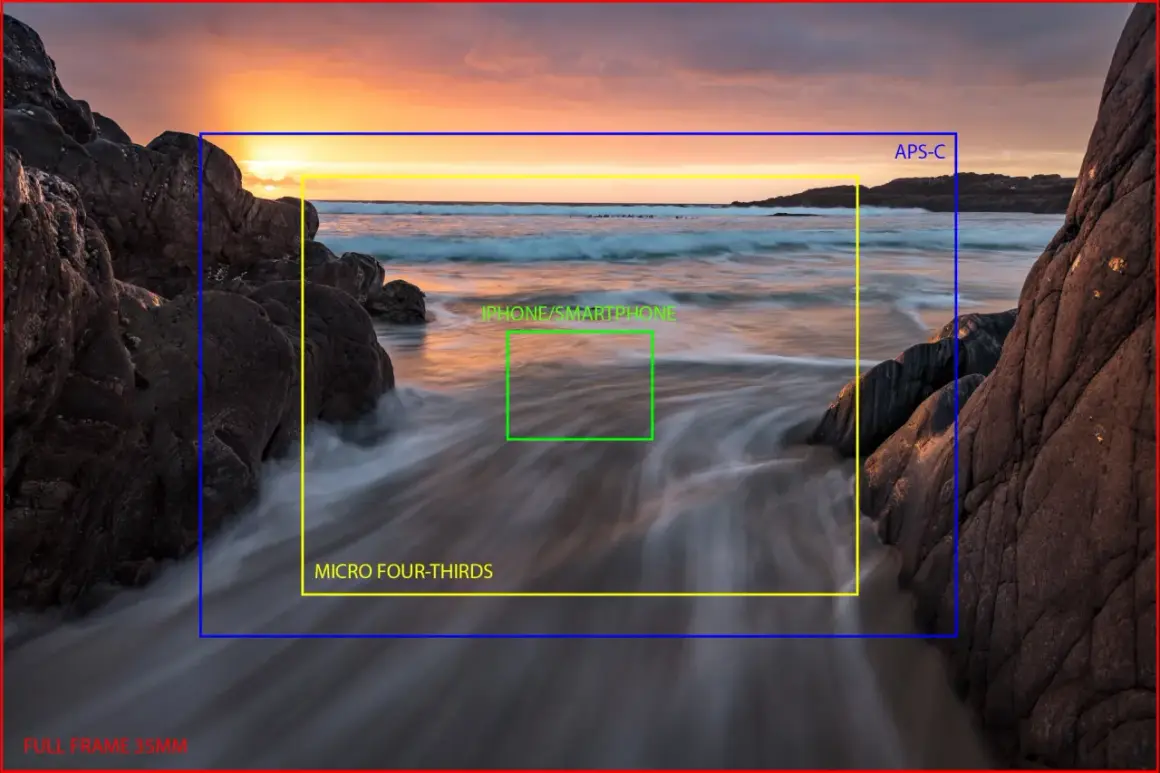
The micro four thirds vs full frame decision is mostly about how you shoot, not just how many megapixels you buy. One format gives you smaller lenses, extra reach, and a very portable kit; the other gives you easier subject separation, stronger high-ISO performance, and more room to work in bad light. In the sections below, I’ll break down the real-world tradeoffs, the situations where each format shines, and the mistakes that usually make people choose the wrong system.
The right sensor size depends on what you carry, how you shoot, and how much low-light margin you need
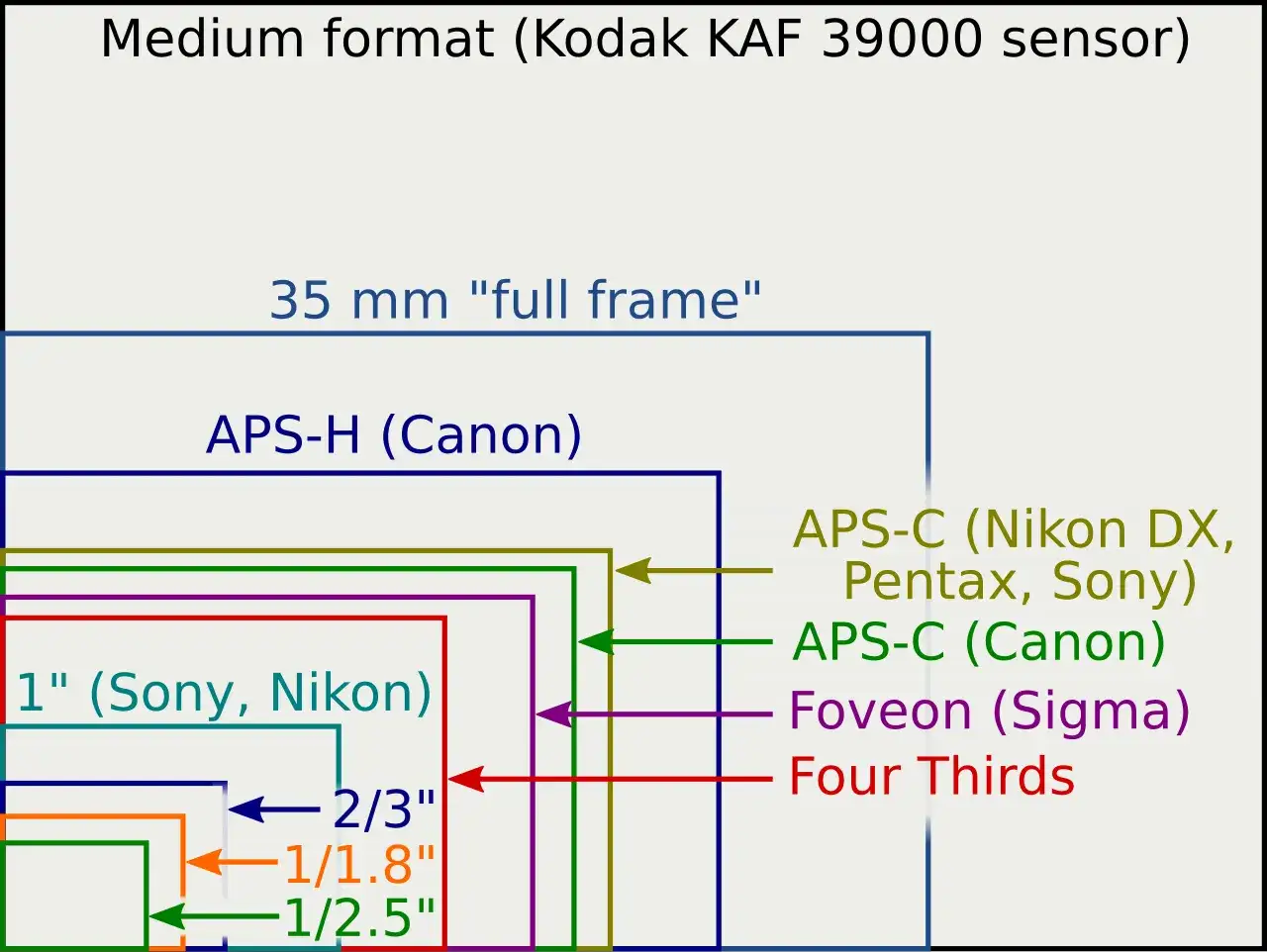
- Full frame uses a 36 x 24 mm sensor, while Micro Four Thirds uses a 17.3 x 13.0 mm sensor, so full frame has about 3.8 times more sensor area.
- MFT has a 2.0x crop factor, which makes lenses act longer for the same field of view and keeps kits smaller.
- Full frame usually wins for shallow depth of field, clean high-ISO files, and dim interiors.
- MFT still makes a lot of sense for travel, wildlife, macro, and run-and-gun video because compact lenses matter in real life.
- Body prices overlap more than many buyers expect, so the lens system and total kit cost matter more than the badge on the camera.
Sensor size is the real starting point
If you strip away the marketing, this comparison starts with geometry. Micro Four Thirds, often shortened to MFT, has a much smaller imaging area than full frame, and that changes everything downstream: field of view, depth of field, lens size, and the amount of noise you see when the light drops.
| Format | Nominal sensor size | Sensor area | Crop factor | Practical effect |
|---|---|---|---|---|
| Micro Four Thirds | 17.3 x 13.0 mm | 224.9 mm² | 2.0x | More apparent reach, smaller lenses, deeper depth of field |
| Full frame | 36 x 24 mm | 864 mm² | 1.0x | Easier background blur, cleaner high ISO, larger lenses |
Full frame has about 3.8 times the sensor area of MFT, and that is the cleanest way to understand why the two systems feel different. A 25mm lens on MFT gives roughly the same field of view as a 50mm lens on full frame, and a 75mm portrait lens behaves like a 150mm lens in framing terms. Crop factor is just the multiplier used to compare field of view against the 35 mm reference, but in practice it is also a lens-shaping tool: it lets you get more reach without carrying a giant telephoto.
Once that baseline is clear, the next question is how it changes real image quality.
Where full frame still has the easier job in image quality
Full frame earns its reputation in low light because the larger sensor usually gives you more room to work before noise becomes distracting. That matters when you are shooting at ISO 6400 and above, recovering shadows from a dark venue, or trying to keep your files clean without aggressive noise reduction.
What I would not do is turn that into a simplistic “bigger is always better” rule. In bright light, and especially when you expose carefully and share mostly online, modern MFT cameras can look excellent. A 20 to 25 megapixel file from a current MFT body is more than enough for editorial work, social media, and many printed uses.
The real difference shows up when you ask for more from the file. If you underexpose, lift shadows hard in post, or shoot a lot of night scenes, full frame tends to forgive mistakes a little more gracefully. That is why it remains the safer choice for weddings, events, concerts, indoor sports, and any job where the light is unpredictable.
Still, the larger sensor is not a free win. If you never need that extra low-light margin, you may just be buying bigger glass and more weight you do not fully use. That tradeoff is only half the story, because the smaller system does have a very real portability advantage.
Why Micro Four Thirds can be the smarter system for travel and long lenses
MFT’s strongest argument is not that it is “good enough”; it is that it changes what a practical kit looks like. A smaller sensor allows shorter focal lengths for the same angle of view, and that matters when you are hiking, flying, commuting, or carrying a camera all day. The gear feels less like a burden and more like something you will actually bring with you.
For wildlife, birds, and distant action, that extra apparent reach is not a marketing line. It is a real advantage. A 300mm lens on MFT frames like a 600mm lens on full frame, so you can cover long distances with smaller, lighter optics. That is one reason many bird shooters are happy to trade some high-ISO performance for a kit that is easier to handhold for long sessions.
Current MFT bodies have also removed an old complaint. Autofocus is no longer the weak link by default. Modern phase-detect and hybrid AF bodies from Panasonic and OM System have narrowed the gap a lot, and the best results now depend more on the specific camera than on the sensor format itself.
One example says a lot: a compact MFT body paired with a long telephoto can create an 800mm-equivalent setup, or even 1000mm-equivalent with a built-in teleconverter, without turning the bag into a shoulder workout. That kind of practical reach is hard to ignore if your subjects are small, distant, or constantly moving.
The next layer is depth of field, where the same lens numbers can mean very different looks.
Depth of field and background blur are where the formats feel most different
This is the part most buyers care about even when they say they do not. Full frame makes it easier to isolate a subject from the background, especially with fast primes and portrait lenses. If you want creamy blur without having to stand unnaturally close to your subject or use very fast glass, full frame is the more forgiving path.
Micro Four Thirds can still blur a background well, but it usually asks for faster lenses or tighter framing. A 25mm f/1.8 lens on MFT is still f/1.8 for exposure, but when you frame the subject the same way it behaves roughly like a 50mm f/3.6 lens on full frame in terms of field of view and depth of field. That is why MFT portraits often look a little more open in the background, while full-frame portraits feel easier to separate cleanly.
Read Also: Camera Cleaning Guide - Protect Your Gear & Photos
What equivalent aperture really means
Equivalent aperture is a comparison tool, not a literal change to the lens. It helps you estimate how much background blur and depth of field you will get when two different sensor sizes frame the same subject similarly. It does not change shutter speed, and it does not change the actual brightness the lens sends to the sensor.
There is a flip side, though. If you shoot documentary work, family sessions, street scenes, or macro, the deeper depth of field on MFT can be a feature rather than a compromise. It gives you a little more breathing room for focus, and that can save shots when subjects move quickly or you need both the face and context to stay readable.
I think this is where a lot of people overbuy. They chase background blur they only admire in sample galleries, then discover later that a slightly deeper depth of field would have been more useful for their actual work. That is one of the easiest mistakes to avoid if you look at your subject distance and delivery format honestly.
Video changes the ranking again, because handling and stabilization matter as much as blur.
Video work changes the equation
For video, I care less about sensor folklore and more about whether the camera is easy to live with for a two-hour shoot. Readout speed, thermal behavior, codec options, stabilization, autofocus tracking, and lens size usually matter more than the sensor badge on the front.
That is why current MFT bodies are still very relevant to creators. Panasonic’s G9 II pairs a 25.2MP Micro Four Thirds sensor with phase hybrid autofocus, 60 fps burst shooting, and 4:2:2 10-bit video options. Panasonic’s GH7 stays in the same 17.3 x 13.0 mm sensor class and pushes hard into serious hybrid use. On the full-frame side, bodies like Nikon’s Z6 III and Sony’s a7 IV show how far the larger format has moved into video, too.
In practice, MFT often feels easier for run-and-gun interviews, travel pieces, and handheld documentary work because the whole rig stays compact and balanced. Smaller lenses are easier on gimbals, easier on your shoulders, and easier to pack when you are already carrying audio gear, batteries, and lighting. Full frame still has the edge when you want the cleanest image in a dim room or the most obvious subject separation, but the camera body alone does not decide that result.
With those pieces on the table, the best choice becomes much easier to narrow down by subject and shooting style.
The choice I would make for each type of shooter
| Shooting style | Better fit | Why it usually wins |
|---|---|---|
| Travel and hiking | Micro Four Thirds | Smaller lenses and a lighter bag make the system easier to carry all day. |
| Birds and wildlife | Micro Four Thirds | The 2.0x crop factor gives you more apparent reach without massive telephotos. |
| Portraits and events | Full frame | It is easier to get subject separation and cleaner results in dim venues. |
| Macro and close-up work | Micro Four Thirds | Extra depth of field and compact optics make handheld close work easier. |
| Hybrid video and content creation | Either | Lens choice, stabilization, and autofocus matter more than the sensor size alone. |
| Budget-conscious system building | Usually Micro Four Thirds | Current body prices overlap, but the lens system often stays smaller and less expensive. |
That last point matters more in 2026 than many buyers expect. Current US pricing shows how much overlap there is: a Panasonic G9 II body sits at $1,499.99, while a Nikon Z6 III body sits at $2,499.95. Premium MFT bodies can also climb into the same territory as midrange full-frame models, so the real savings often show up in lens size and total kit cost rather than in the camera body alone.
If I were choosing a system from scratch, I would not start by asking which sensor is “better.” I would ask which subjects I shoot most, how much gear I realistically want to carry, and how much money I am willing to put into lenses over the next two years. If the answer is travel, wildlife, macro, or compact video work, MFT is usually the more efficient tool. If the answer is portraits, events, low-light stills, or the easiest route to shallow depth of field, full frame is the safer bet. The right purchase is the one that makes you want to take the camera out of the bag again tomorrow.