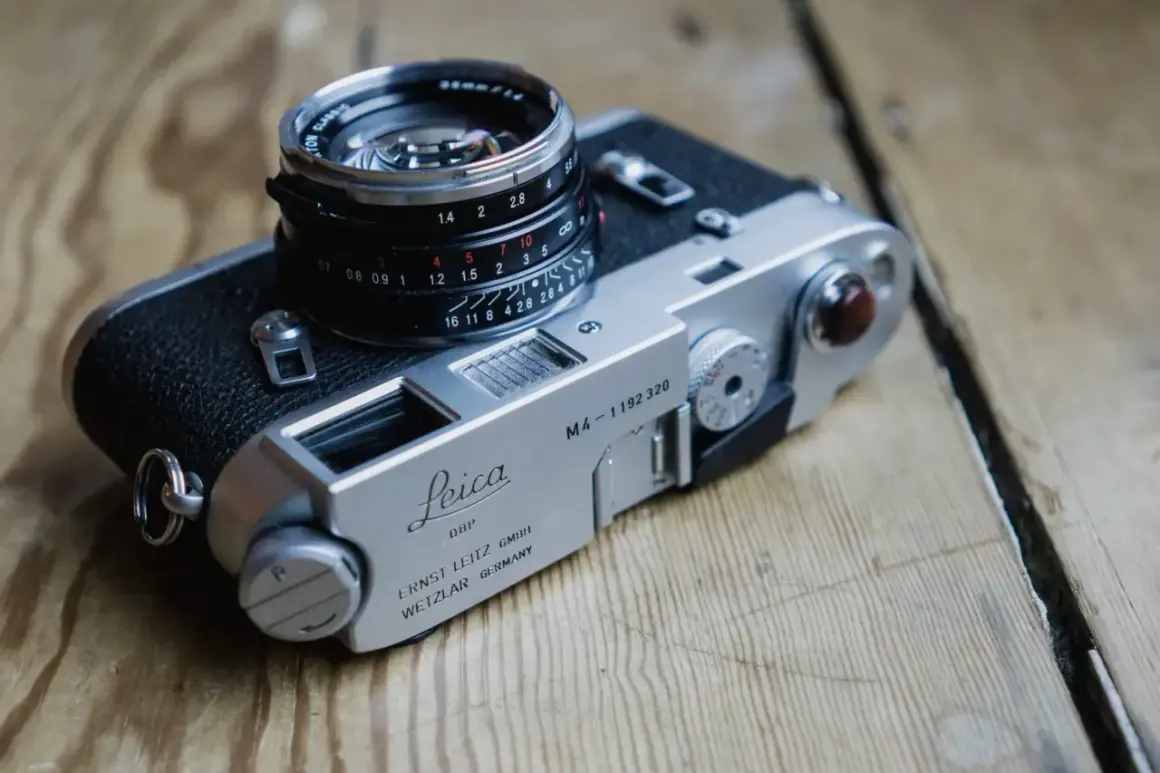
The Leica M4-P sits in an unusual sweet spot: it gives you the classic mechanical M experience, but with a finder that is genuinely useful for modern wide and normal lenses. If you want to understand what it is, how it behaves on film, where it beats the earlier M bodies, and what to check before buying one in 2026, this guide covers the practical details that actually affect shooting.
A mechanical Leica with a smarter finder and very few compromises
- 35mm mechanical rangefinder with an M-mount and no built-in meter.
- Six frame-line pairs make it much more versatile than the earlier M4-2.
- The viewfinder is 0.72x, which feels natural with 35mm and 50mm lenses.
- It adds a hot shoe and keeps the camera fully usable without batteries.
- Current 2026 used prices usually land in the low-to-mid $2,000s for clean copies, with special editions higher.
- It makes the most sense for photographers who are comfortable metering separately and want a deliberate film workflow.
What the M4-P actually is
The M4-P is a mechanical 35mm Leica M rangefinder built for photographers who wanted the body logic of the M4-2, but with a more versatile viewfinder. It was introduced in the early 1980s and built in relatively small numbers, which is part of why it still feels collectible without being completely out of reach. Most important of all, it is not a stripped-down novelty camera; it is a real working tool with a Leica M bayonet, a cloth focal-plane shutter, and a layout that still makes sense today.
What changed the game was the finder. The M4-P was the first Leica M body to add frame lines for 28mm and 75mm lenses, which is why it later became the reference point for the M6 finder layout. In practical terms, that means you are no longer limited to the older, more traditional focal-length set. You get a camera that is still fully manual, but much less fussy when you move beyond 35mm, 50mm, and 90mm use.
| Format | 35mm rangefinder |
|---|---|
| Lens mount | Leica M bayonet |
| Viewfinder | 0.72x magnification |
| Frame lines | 28/90, 35/135, 50/75 |
| Shutter | Mechanical cloth shutter, 1s to 1/1000s plus bulb |
| Flash | Hot shoe, with flash sync around 1/50s |
| Meter | None |
| Weight | About 545g body only |
I think that spec sheet explains most of the camera’s appeal. It is simple enough to be trustworthy, but not so bare that it feels compromised. The next question is how that design translates into actual framing and lens choice.
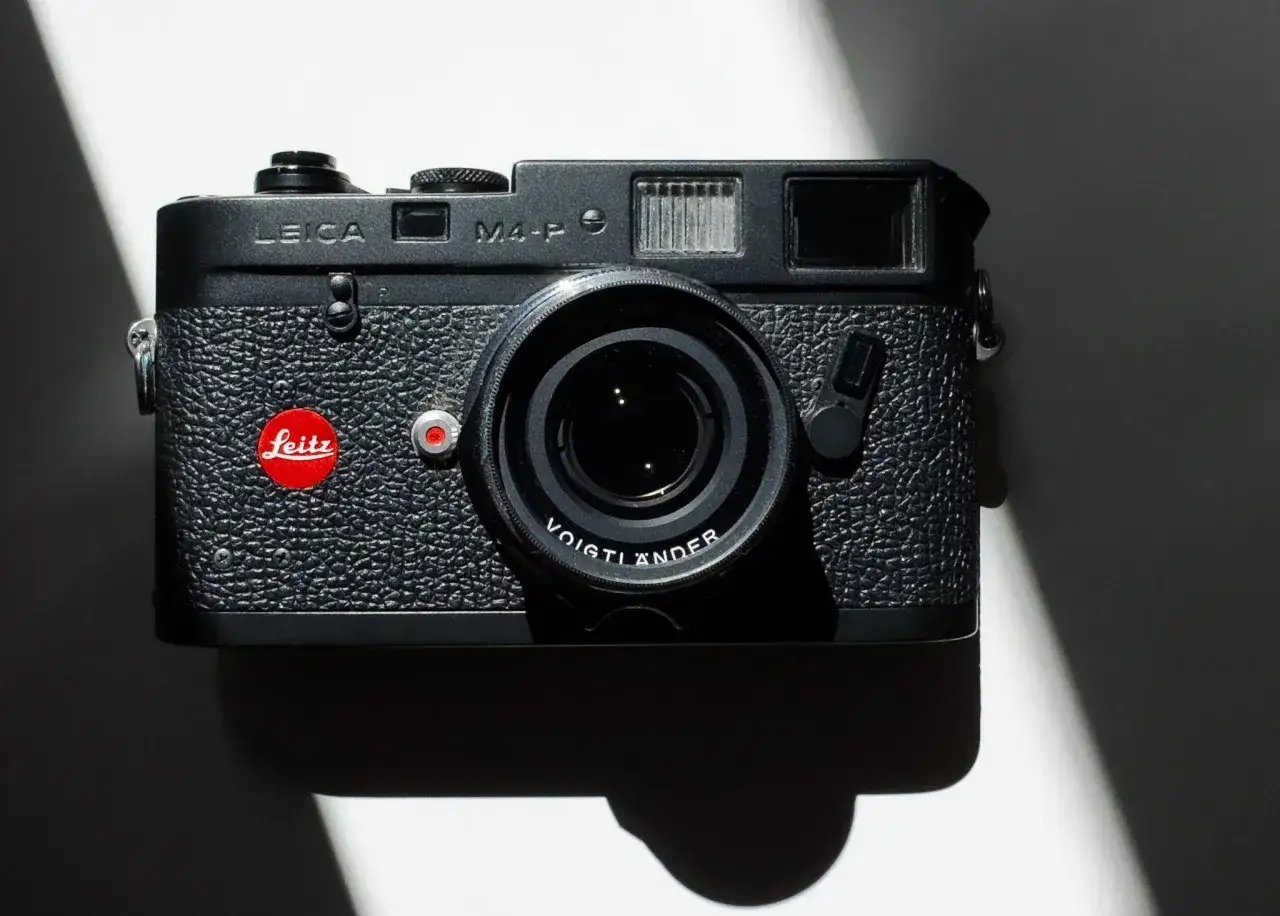
Why the viewfinder still feels useful in 2026
The finder is the reason many people prefer this body over the M4-2. The 0.72x magnification is a balanced middle ground: wide enough to be comfortable for most users, but not so magnified that 35mm and 50mm work feels cramped. If you shoot with glasses, that balance matters even more, because a finder can look technically good on paper and still be awkward in the real world.
In use, the frame-line pairs are the real advantage. You see 28/90 together, 35/135 together, and 50/75 together, so the camera covers the focal lengths most film photographers actually reach for. I would not call the 28mm frame luxurious, because it is tight and many people still prefer an external finder for that focal length. But 35mm is excellent, 50mm is easy, and 75mm is a genuine benefit if you like portrait distances or tighter documentary framing.
- 28mm works, but the built-in frame is best treated as practical rather than roomy.
- 35mm is the sweet spot for street, travel, and reportage.
- 50mm gives the cleanest, least distracting framing experience.
- 75mm is where the M4-P quietly outshines earlier bodies that never received the line.
That makes the camera feel more modern than its age suggests. The finder is not just a collectible detail; it is the part that changes how the body behaves with a lens on it, which is why I treat it as the deciding factor for most buyers.
How it feels to shoot on film
The M4-P is fully mechanical, so there is no battery dependency for the shutter, meter, or core operation. That gives it a very clean shooting rhythm: load film, set exposure manually, focus with the rangefinder patch, and shoot. The advance action is efficient, the rewind crank is faster than a knob, and the hot shoe makes flash work much less awkward than on earlier M bodies with cold shoes.
That said, I would not romanticize it too much. The camera is competent, not magical. It does not have the polished, jewel-like feel that some people associate with the best early M bodies, and it does not remove any exposure decisions from your hands. If you enjoy working deliberately, that is a strength. If you want speed and convenience, it can feel a little spartan, especially compared with a metered M6.
The real trade-off is simple: you get a cleaner mechanical tool in exchange for doing more of the thinking yourself. For many film photographers, that is exactly the point. For others, it becomes annoying after the novelty wears off, which is why this body rewards honest self-assessment more than brand loyalty.
That is also why the comparison with other M bodies matters so much, because the M4-P only makes sense when you understand what you are giving up and what you are getting back.
How it compares with the M4-2, M4, and M6
Most buyers are really choosing between three directions: the older classic M4, the stripped but cheaper M4-2, and the more practical M6. The M4-P sits in the middle of that triangle. It is not the most beautiful or the most famous, but it is one of the most usable.
| Model | What changes | Why it matters |
|---|---|---|
| M4 | Classic build, older framelines, self-timer, cold shoe | Feels more traditional and refined, but less flexible with 28mm and 75mm lenses |
| M4-2 | Cost-reduced body, hot shoe, no 28mm or 75mm framelines | Cheaper entry into the M system, but the finder is less useful for modern focal lengths |
| M4-P | Hot shoe, no meter, 28mm and 75mm framelines added | Best balance of manual simplicity and practical finder coverage |
| M6 | Built-in meter added, same finder logic | Easier exposure workflow, but more cost and more reliance on electronics |
My honest read is that the M4-P is the smartest choice if you already know how to meter or do not mind carrying a separate meter. The M6 becomes better only when you really value the built-in meter enough to pay for it. Otherwise, you are often paying extra for a convenience feature that does not change the negative.
That distinction is important because it pushes the decision away from nostalgia and toward working style, which is exactly how I would want someone to buy a film body.
What to check before you buy one in 2026
Used M bodies are not all equal, and age alone is not the real problem. Condition, service history, and repairability matter more than cosmetic wear. I would rather buy a visibly used body with a recent CLA than a shiny shelf queen with an unknown shutter and a sticky rangefinder.
- Rangefinder alignment should be accurate at infinity and at closer distances.
- Shutter speeds should sound even, especially at the fast end and on longer exposures.
- Finder clarity matters more than body cosmetics, because haze or separation makes the camera less enjoyable immediately.
- Advance and rewind action should feel smooth, without grinding or resistance that suggests internal wear.
- Frame lines should be bright and easy to see, especially the 28mm line if you plan to use it.
- Service history is worth real money; a recent CLA often justifies a higher asking price.
As a buying rule in 2026, I would budget roughly $2,000 to $3,200 for a clean, working copy, with special editions or exceptional cosmetic examples running higher. If the body needs serious attention, add a service reserve of about $350 to $500 before you decide whether the listing is actually a deal. The cheapest camera is rarely the cheapest ownership experience.
One more thing I would not ignore: the M4-P is collector-adjacent, but it is still a camera. If the seller talks mostly about rarity and barely mentions function, I get cautious fast. That leads directly into lens choice, because the right lens can make a great body feel effortless while the wrong one makes it feel fussy.
The lenses and setups that make the most sense
The M4-P is at its best when you use lenses that match the finder rather than fight it. That usually means 35mm and 50mm first, 28mm if you know you want it, and 75mm if you like portrait work or tighter subject isolation. I would not start with a complicated setup; I would start with one lens and learn the frame lines before adding anything else.
- 35mm is the safest first lens because it matches the camera’s strengths and keeps framing easy.
- 50mm is the cleanest classic pairing if you want the simplest rangefinder experience.
- 28mm is excellent for street and travel, but an external finder can make composition faster and more comfortable.
- 75mm is a real advantage on this body because the frameline already exists, which saves guesswork.
- 90mm is usable, but it demands more attention to focusing accuracy and composition.
If I were building a practical kit around this camera, I would begin with a 35mm lens and a handheld meter. That combination keeps the body fast, light, and disciplined, which is the main reason a mechanical Leica still feels relevant. A flash can be worth adding too, because the hot shoe turns the M4-P into a much more flexible documentary body than many people expect.
That setup advice matters because it turns the camera from a collectible into a tool, and that is where the M4-P earns its reputation.
Why it still earns attention from serious film shooters
The M4-P is not the most glamorous Leica M camera, and I do not think it should be judged that way. Its value is more practical than romantic: it gives you the six-frame-line finder layout that many photographers want, a fully mechanical body that can be serviced and used without battery dependence, and a shooting experience that stays out of the way once you understand it.
For the right photographer, that combination is hard to beat. If you want built-in metering, choose something else. If you want the M6’s framing logic without the meter, this body is one of the most sensible routes into film Leica ownership. And if you buy one, I would focus on condition, service, and the lens you plan to use most, because those three things affect the day-to-day experience far more than the name engraved on the top plate.
In the end, that is why the M4-P still matters in 2026: it is one of the few classic film bodies that still feels like a working camera first and a collector object second, which is exactly the balance I look for in serious gear.