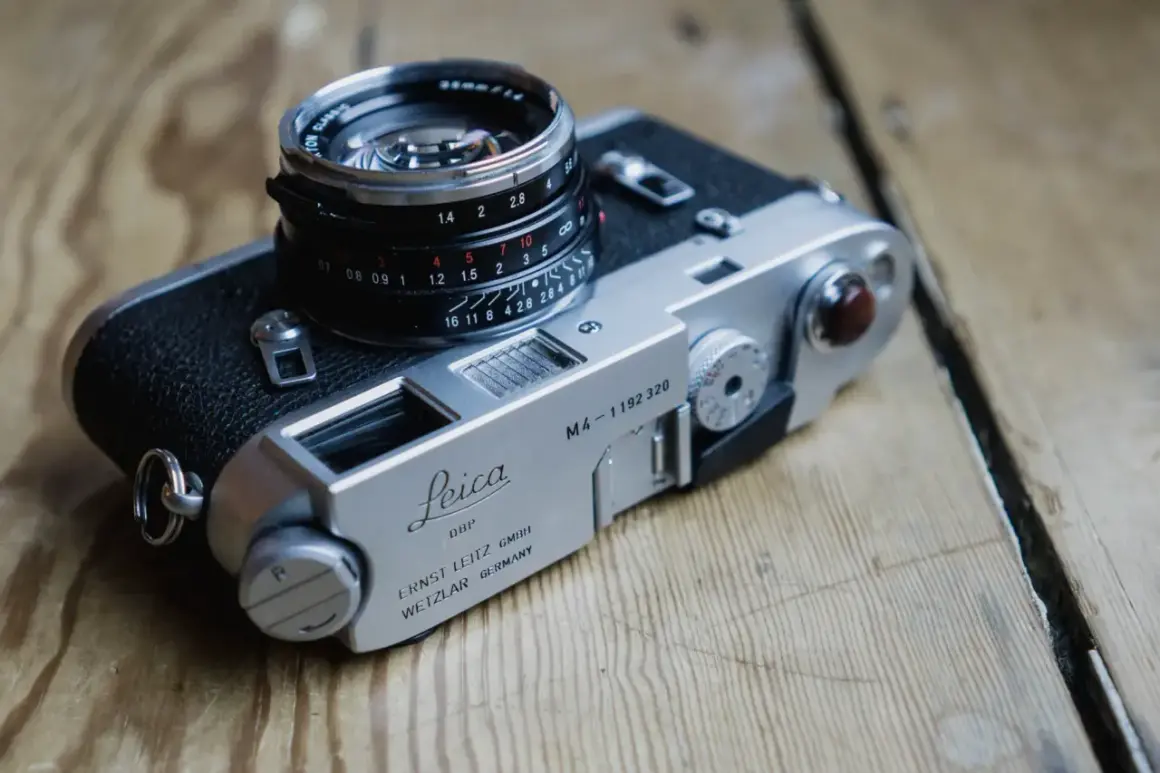
Three lenses are enough for a Leica M4 when each one has a clear job. I would build the kit around the camera’s native frame lines and then decide how much width or reach the work actually needs, instead of chasing a bag that looks complete on paper. That keeps the system lighter, faster to use, and more consistent on a rangefinder body.
A Leica M4 works best with a compact, deliberate three-lens set
- The M4 gives you native framelines for 35 mm, 50 mm, 90 mm, and 135 mm, so those focal lengths feel the most natural.
- The cleanest all-round trio is usually 35 mm, 50 mm, and 90 mm.
- A 28 mm lens is usable, but it is not the most convenient first choice on this body because the M4 does not give you a built-in 28 mm frame line.
- Filters matter most for black-and-white contrast, reflection control, long exposures, and basic front-element protection.
- If you adapt M lenses to Micro Four Thirds, the same focal lengths become much tighter because of the 2x crop factor.
What the M4 actually encourages
The M4 is already telling you what it wants. It is a Leica M-bayonet rangefinder with built-in framelines for 35 mm, 50 mm, 90 mm, and 135 mm, so those focal lengths sit naturally in the viewfinder. A 50 mm is the anchor, 35 mm gives context, 90 mm handles portraits and detail, and 135 mm is there when you need extra reach.
That does not make a 28 mm lens wrong, but it does make it a lens with more friction. I use 28 mm on an M4 only when I know I want a wide story and I am happy to carry an external finder. For film work, that matters: speed and confidence usually beat theoretical versatility.
In practice, the camera rewards a small kit with clear roles. Once the focal lengths start overlapping too much, the bag gets heavier without becoming more useful. That is why the next step is not “buy more Leica glass”, but “choose the right three-lens combination”.
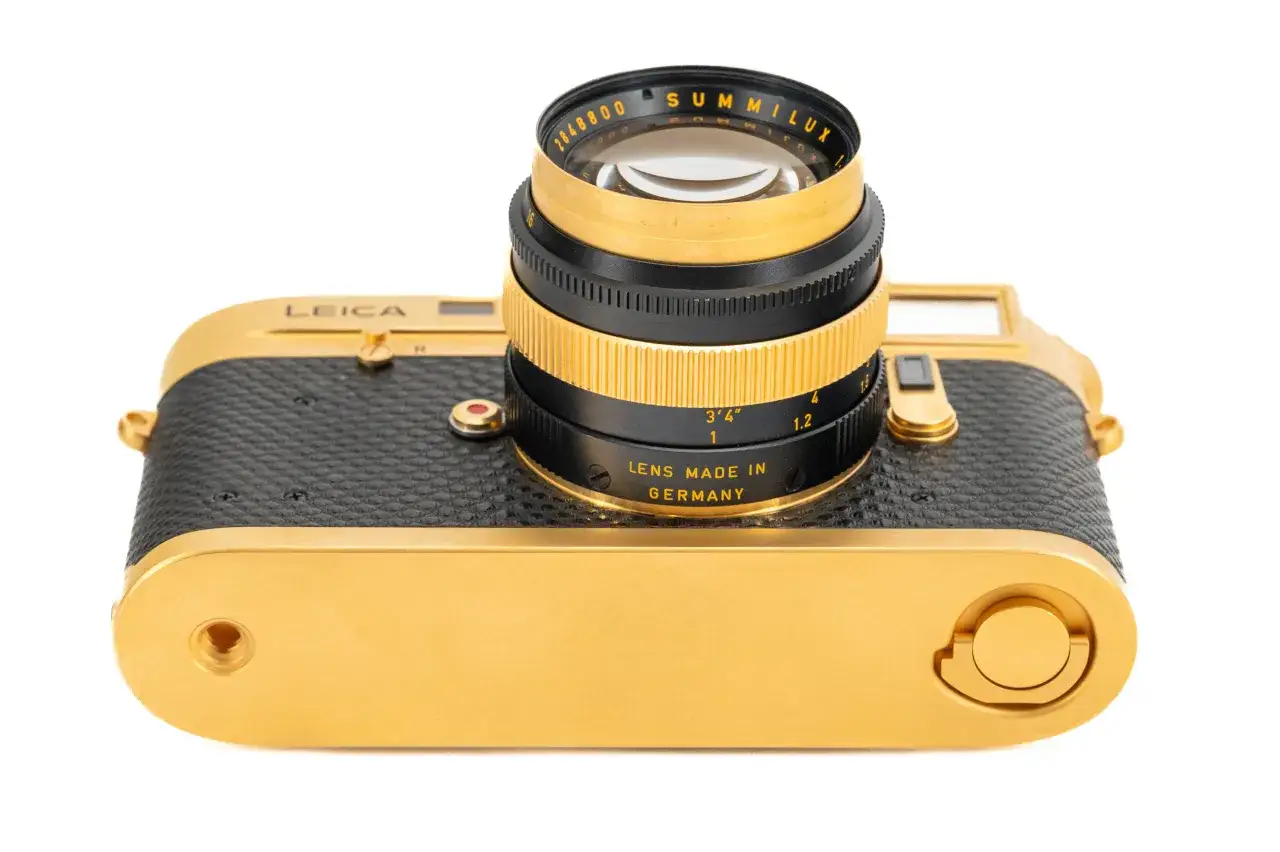
The three-lens kits I would actually build
When I build a three-lens kit for an M4, I start with framing behavior, not brand prestige. The lens list below is the version I would actually trust in real shooting, because each set solves a different problem instead of just filling a number sequence.| Kit | Why I would choose it | Main compromise | Best for |
|---|---|---|---|
| 35 mm + 50 mm + 90 mm | It matches the M4’s framelines perfectly and gives the cleanest, least fussy workflow. | 35 and 50 overlap a little, although that overlap is useful when you want a subtle change in perspective. | Street, travel, documentary, and portrait work with one camera bag. |
| 28 mm + 35 mm + 50 mm | It leans wide and keeps the kit excellent for interiors, architecture, and environmental storytelling. | 28 mm needs an external finder on the M4, so framing is less elegant. | Travel, reportage, and scenes where context matters more than subject isolation. |
| 50 mm + 90 mm + 135 mm | It favors reach, compression, and people work from a bit farther back. | 135 mm is the least forgiving option here and the least pleasant for quick framing. | Portraits, candid work, and detail-driven shooting. |
If I were buying from zero, I would buy the 35 first, then the 50, then the 90. That sequence gives you a useful range without forcing accessory finders or leaving you with awkward gaps. I would also stay mostly in the f/2 class unless low-light portrait work is the main brief; a smaller lens that stays on the camera is usually better than a faster lens that feels annoying to carry.
One thing I would not do is build a kit around lenses that sit too close together, like 35/40/50. That looks efficient until you try to shoot a real assignment and discover you actually need either a wider view or more reach. Deliberate spacing matters more than collecting names.
How filters change the value of each lens
On an M4, filters are not software fixes. They are part of the exposure and rendering decision, which matters even more because the camera is mechanical and you are handling exposure manually. I treat filters as tools with a job: protection, tonal control, or motion control.
| Filter type | What it does | Typical exposure penalty | How I use it |
|---|---|---|---|
| Clear or protective | Protects the front element from dust, rain, and small knocks. | 0 stops | When I want the lens protected without changing the image. |
| Yellow | Gives modest contrast separation in black-and-white film. | About 1 stop | General-purpose monochrome shooting. |
| Orange | Pushes skies darker and separates skin and clouds more strongly in B&W. | About 2 stops | Street and landscape work when I want more tonal bite. |
| Red | Creates dramatic tonal separation, especially in skies. | About 3 to 4 stops | Special effect work, not an everyday choice. |
| Circular polarizer | Reduces reflections from glass, water, and shiny surfaces. | About 1.5 to 2 stops | Useful for color and B&W when reflections are the problem. |
| ND | Reduces light so you can use wide apertures or longer shutter speeds in daylight. | Commonly 3, 6, or 10 stops | Daylight portraits at f/2, motion blur, and long exposure work. |
Leica Camera’s current filter range runs from E52 to E95, and the Universal-Polfilter-M adapter covers E39 to E49. The practical takeaway is simple: if two of your lenses share a thread size, the kit gets cheaper and less annoying immediately. I prefer native threads over a mess of step-up rings because hoods, caps, and handling stay cleaner.
Some classic M lenses also use insert filters rather than screw-ins, so I always check the hood design before I assume accessories will transfer from one lens to another. If you are putting together a three-lens kit for film, it is worth planning the filter strategy at the same time as the focal lengths. That usually saves more frustration than buying an extra lens ever solves.
If you mean M lenses on Micro Four Thirds
The same lenses behave very differently on Micro Four Thirds. The 2x crop factor turns the field of view into something much tighter, which means the classic M4 trio stops being a general-purpose kit and starts looking like a telephoto set. That is the part people miss when they try to treat one lens family as if it solves both systems equally well.
| Leica M focal length | On the M4 | On Micro Four Thirds | What it means in practice |
|---|---|---|---|
| 28 mm | Wide, but not native to the M4 framelines | 56 mm equivalent | Becomes a normal-ish lens, not a true wide. |
| 35 mm | Natural contextual lens | 70 mm equivalent | Turns into a short portrait lens. |
| 50 mm | Classic standard lens | 100 mm equivalent | Becomes a strong portrait focal length. |
| 90 mm | Native telephoto framing | 180 mm equivalent | Starts behaving like a long telephoto. |
If someone wants one lens family for both an M4 and an MFT body, I usually tell them to choose based on the harder camera to satisfy, and that is often the Micro Four Thirds body. The crop factor forces you wider, while the M4’s framelines reward a more traditional rangefinder spread. Trying to make one trio do both jobs perfectly usually ends in compromise.
What I would buy first and why
My buying order is simple, and it is based on how often a lens actually gets used, not how good it sounds in a forum thread. I would start with the focal length that solves the most problems for the kind of shooting you do most often.
- Start with 50 mm if you want one lens that is easy to frame and hard to regret.
- Start with 35 mm if you shoot street, travel, reportage, or cramped interiors and want more context in the frame.
- Add 90 mm when you want portraits, subject separation, or the ability to stand farther back.
- Leave 28 mm for later unless you already know you like wider framing and do not mind an accessory finder.
- Do not overbuy speed; a smaller f/2 lens that lives on the camera is usually better than a larger f/1.4 lens that stays home.
- Check filter and hood compatibility early if you want the three lenses to share accessories and stay compact.
The biggest mistake I see is buying three lenses that look impressive but overlap too tightly. That looks tidy until the first real shoot, when you realize you never solved the wide problem or the reach problem. The second mistake is treating a faster aperture as if it automatically makes a lens better. On an M4, usability usually beats headline speed.
The simplest kit that still feels complete
If I had to give one answer, I would build a Leica M4 around 35 mm, 50 mm, and 90 mm. That trio respects the camera’s finder, covers most documentary and portrait situations, and leaves room for filters that serve a clear purpose instead of a drawer full of accessories.
If your work leans wider, move to 28/35/50 and accept the external finder. If your work leans toward Micro Four Thirds, do not force the same trio onto that body; the crop factor changes the whole equation. The cleanest kit is not the one with the most lenses, but the one you can explain in one sentence and carry without thinking.
That is the standard I use: every lens earns its place, every filter solves a problem, and nothing stays in the bag just because it is a classic.