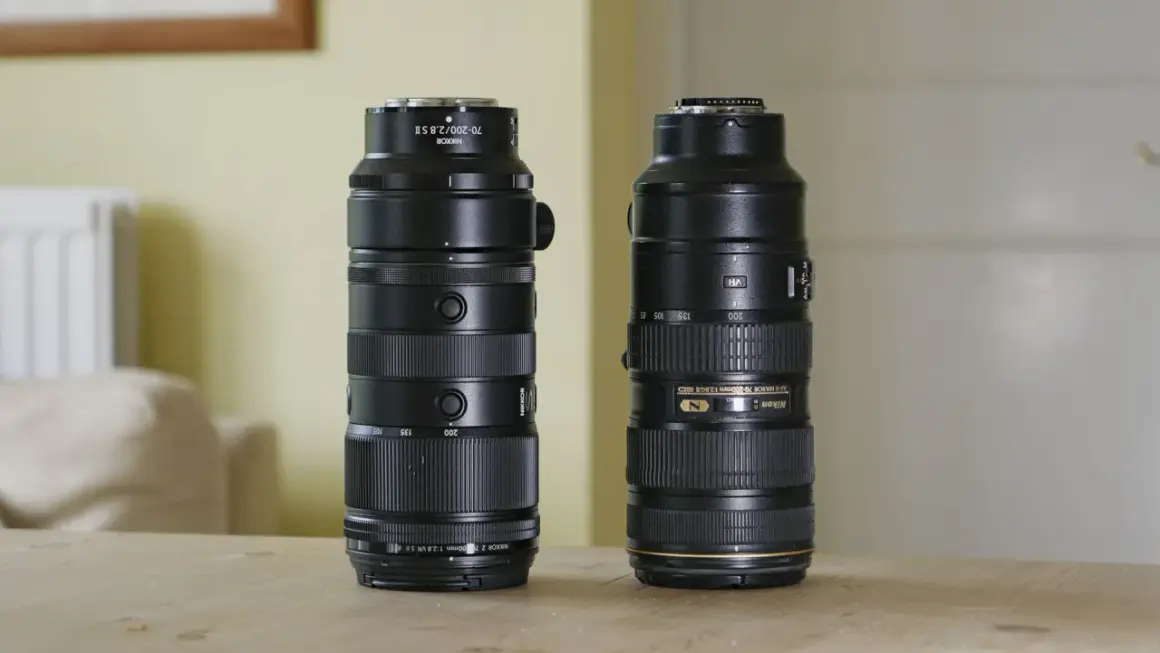
I treat Nikon's 200mm f/2 as a specialist lens, not a general-purpose telephoto. It gives you a tight perspective, a bright f/2 aperture, and enough subject separation to make portraits, stage work, and indoor action look instantly more polished. Here I break down what that means in practice, how the Nikon versions differ, how the 52mm filter system works, and what I would check before buying one used.
The practical facts that matter before you commit
- 200mm gives strong compression; f/2 buys one stop over f/2.8 and a very noticeable jump in background separation.
- The lens is heavy at 2,900 g and large at 124 x 203 mm, so it is a deliberate carry rather than a casual one.
- Filtering is handled through a 52mm holder system, not like a normal everyday front-thread telephoto.
- It shines in portraits, indoor sports, theater, and controlled production work where subject isolation matters more than zoom flexibility.
- Most buyers run into it on the used or refurbished market, where condition and accessories matter more than age alone.
What the 200mm f/2 gives you in the field
The first thing I notice about this lens is not reach, but rendering. At 200mm, the perspective compresses space in a flattering way, and at f/2 the background falls away so quickly that the subject feels carved out of the frame. That combination is the whole reason people chase this lens: it gives you a look that is hard to fake with a zoom or a slower prime.
There is also a straightforward exposure advantage. One stop over f/2.8 means you can often choose between half the ISO or double the shutter speed, and that matters in indoor sports, theater, and low-light portrait work. VR helps with camera shake, but it does not freeze a moving subject, so I still plan shutter speed around the action rather than leaning on stabilization to do everything.
The other practical detail is focus behavior. The close-focus limit is 6.2 ft, which is useful for tight portraits, but this is not a pseudo-macro lens and it never pretends to be one. I think of it as a lens that rewards careful positioning: if you can place yourself and the subject well, the files look superb; if you cannot, the lens becomes stubborn very quickly. That is why the version differences matter so much.
The Nikon versions you may run into
On paper, the two main versions are closer than people expect. Nikon lists both at about 2,900 g and 124 x 203 mm, so this is not a story about one model suddenly becoming portable. It is a story about refinement, and the better copy for you depends on condition, price, and whether you value the later handling improvements.
| Version | What changes in practice | My take |
|---|---|---|
| AF-S VR NIKKOR 200mm f/2G IF-ED | Original pro 200/2 with VR, SWM, internal focusing, focus preset, and panning-aware stabilization | Still capable if the mechanics are clean; a smart buy only when the price reflects its age |
| AF-S NIKKOR 200mm f/2G ED VR II | Later refresh with VR II, tripod detection, Nano Crystal Coat, and the same compact footprint for a lens this class | The safer recommendation if you want the most refined version and can justify the premium |
At the moment, Nikon's refurbished store has listed the VR II at $4,559.95, which is a useful reality check. This is not a lens you buy because it sounds impressive; it is a lens you buy because your assignments regularly need exactly this rendering, and the market price reflects that reality.
If I were choosing between the two, I would lean toward the VR II when condition is similar. If the older lens is substantially cheaper and has clear service history, it can still be the smarter value. The important point is that neither one is a casual purchase, so the condition of the actual copy matters more than a spec-sheet comparison. That leads directly into the filter setup, which is more unusual than most buyers expect.
How filters work on this lens
The filter story is worth understanding before you buy accessories. This lens uses a 52mm filter holder system, so I think about filtration at the lens assembly rather than as a normal front-thread setup. That changes the buying decision: you want the right holder and the right type of filter, not just a random front filter from another telephoto.
- Clear protection makes sense if you work in dusty venues, on crowded sidelines, or anywhere the front of the lens may get bumped, but I would still trust the hood first.
- Polarizers can be useful for glass, water, or sky control, but they are less convenient here than on a standard front-thread lens.
- ND filters are practical for video or deliberate motion blur, especially when you want to keep the aperture open for look rather than exposure.
- Cheap glass is a bad idea on a lens at this level. If the optics are the point, the filter should not become the weakest link.
I would not over-filter this lens. The hood and cap do the real physical protection, and a high-quality clear filter is optional rather than mandatory. If you need filtration often, buy the holder and the right glass up front instead of trying to improvise with generic accessories. Once that is sorted, the more interesting question is whether the lens fits your actual subjects.
Where it shines, and where it is overkill
This is the part that decides whether the lens earns a place in your kit or gathers dust. I think of it as a look-first optic: the combination of 200mm perspective and f/2 blur works best when you can control distance, background, and subject movement.
| Scenario | Why it works | Where it falls short |
|---|---|---|
| Portraits | Compression is flattering, and f/2 gives very strong subject isolation | Framing changes slowly, so it is less nimble than a zoom |
| Indoor sports | The bright aperture helps keep ISO down while preserving shutter speed | You still need enough working distance and good anticipation |
| Theater and concerts | Quiet AF, strong isolation, and a very clean subject/background split | It can be too narrow if your shooting position is restricted |
| Wildlife | Very good for larger or closer subjects where the background matters | Too short for most birds and distant field work |
| Travel or general events | Excellent image quality if you can stand far enough back | Heavy, expensive, and more specialized than most people need |
The biggest mistake I see is buying it for image quality alone and forgetting that image quality only matters when the job fits the lens. A 70-200mm f/2.8 is more honest for general event coverage because it gives you range and speed together. A 300mm f/2.8 makes more sense when you need extra reach. The 200mm f/2 sits between those jobs and does its best work when the shot is already well defined in your head.
That makes it excellent for production environments where the subject distance is predictable and the look matters more than flexibility. It also means the lens is a poor fit for run-and-gun shooting, where you are constantly reacting to changing scenes. If you already know how you work, that limitation is either a deal-breaker or the very reason you want it.
What I would check before buying one used
If I were evaluating a used copy, I would spend more time on mechanics than on cosmetics. A scuffed barrel is not a problem by itself; a tired focus unit, loose collar, or noisy VR system is. This lens is expensive enough that a clean, complete copy is worth much more than a bargain with unknown history.
- Test autofocus from minimum focus to infinity and make sure it snaps cleanly instead of hunting or hesitating.
- Switch VR on and off, then listen for unusual chatter, lag, or a system that does not settle properly.
- Inspect the tripod collar, foot, hood, caps, and the 52mm filter holder. Missing accessories are annoying on any lens and expensive on this one.
- Look for haze, fungus, oil on the diaphragm, and impact marks around the mount or barrel.
- Shoot a flat subject wide open to catch decentering or one side of the frame that is softer than the other.
- If you are planning to adapt it to a mirrorless body, verify your adapter and expected autofocus behavior before you commit.
I would rather pay more for a documented copy with complete accessories than gamble on a cheap one that looks fine from across the room. For a lens at this level, the service record and the condition of the optical and mechanical parts matter more than cosmetic wear. Once a copy passes those checks, the final decision becomes simple: do you actually need what this lens does?
The decision I would make before buying this lens
I would buy this lens only when the assignment repeatedly rewards its exact rendering. If I were shooting indoor sports, stage performance, or tightly controlled portrait sessions, it would feel justified very quickly. If I needed a single telephoto to do everything, I would still start with a 70-200mm f/2.8; if I needed more reach, I would move to a 300mm f/2.8. The real test is whether your work needs the 200mm f/2 look, not whether the spec sheet sounds impressive.
In practical terms, this is a premium specialist tool with a clear identity: heavy, expensive, extremely fast, and very hard to replace once you are used to the files it produces. If that description matches the way you shoot, the lens is still one of the most compelling telephoto primes Nikon ever made.