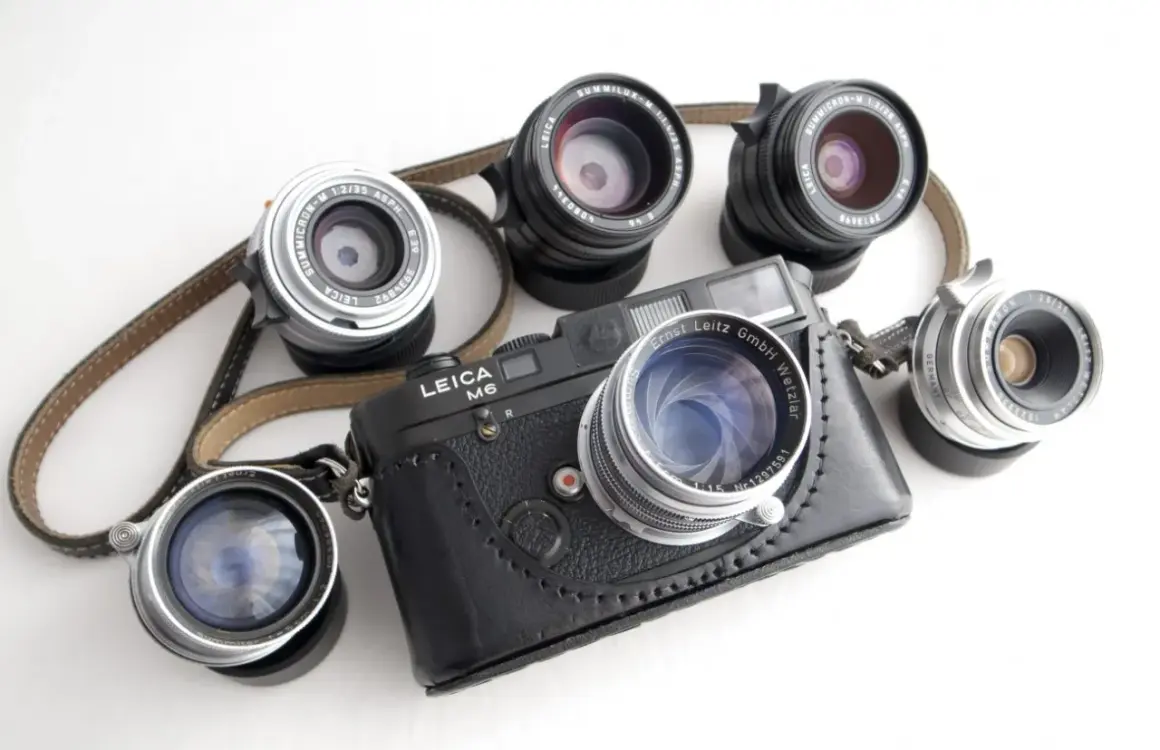
M-mount lenses are where compact size, mechanical feel, and image character still matter as much as sheer spec-sheet performance. This guide covers the best M-mount lenses for everyday shooting, low light, portraits, and tighter budgets, with a practical look at focal lengths, filter sizes, and the compromises that actually change the final image. I am focusing on choices that make sense in the U.S. market in 2026, not collector pieces that look impressive but are awkward in real use.
The fastest way to narrow the field
- 35mm and 50mm remain the safest focal lengths for most M shooters.
- Leica offers the most refined build and rendering, but the price jump is real.
- Voigtländer is usually the best balance of price, optical quality, and compact size.
- TTArtisan is the lower-risk way to enter the system if you want to learn first and spend less.
- Filter threads matter because 39mm, 46mm, 49mm, and 55mm accessories are not interchangeable.
- Digital bodies change the experience, especially with wider lenses that benefit from live view or an EVF.
What makes an M lens worth paying for
With M-mount glass, I do not start by asking only how sharp a lens is. I ask how it focuses, how it balances on the camera, how it handles flare, and whether the rendering supports the kind of work I actually do. A lens can be technically excellent and still feel wrong if it is too heavy, too contrasty, or too awkward to use with filters and hoods.
Rangefinder coupling is the first practical difference to understand. On a Leica M body, the lens talks directly to the rangefinder patch, so focusing stays fast and tactile. On an adapted mirrorless body, that coupling disappears and the lens becomes a purely manual-focus tool, which is fine for deliberate work but slower for fast street or run-and-gun shooting.
Then I look at the two things people often underestimate: minimum focus distance and filter size. Most M lenses are not close-up lenses, and many stop at 70cm unless you move to a live-view-friendly body or an EVF workflow. Filter threads also affect the whole kit, because 39mm filters are cheap and common while 55mm filters add cost every time you buy a CPL, ND, or diffusion filter.That is why the best M-mount lenses are not just the ones with the most impressive optics. They are the ones that fit the camera system, the shooting style, and the accessory plan without creating friction later. Once those constraints are clear, the shortlist gets much easier to read.
The lenses I would shortlist first
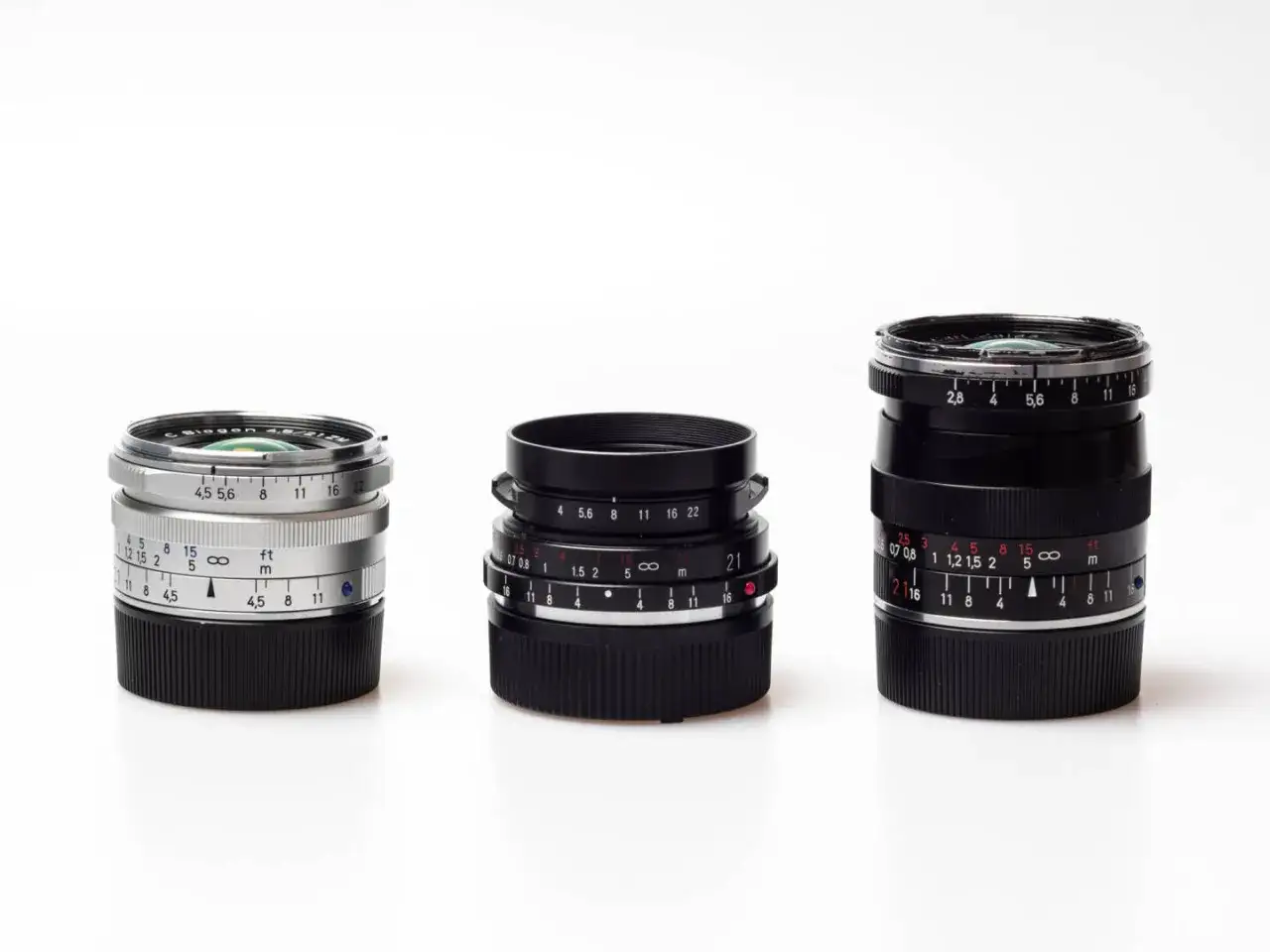
If I had to narrow the field quickly, I would start with the lenses below. Prices are approximate U.S. street prices in 2026, and they can move with stock, used availability, and special editions.
| Lens | Best for | Approx. U.S. price | Filter size | Why it earns a spot |
|---|---|---|---|---|
| Leica Summicron-M 35mm f/2 ASPH. | All-around street, travel, and documentary work | About $4,275 | 39mm | Compact, balanced, and easy to live with every day. |
| Leica Summilux-M 35mm f/1.4 ASPH. | Low light and more expressive shallow depth of field | About $6,900 | 46mm | Brighter, more characterful, and still very usable as a daily lens. |
| Leica APO-Summicron-M 50mm f/2 ASPH. | Technical 50mm work, color accuracy, and high-end rendering | About $10,265 new, around $7,390 used | 39mm | Apochromatic correction and floating elements make it a benchmark lens. |
| Voigtländer APO-LANTHAR 35mm f/2 Aspherical | Premium third-party alternative to Leica’s top 35s | About $899 | 49mm | Very high optical correction without Leica-level pricing. |
| Voigtländer Nokton Vintage Line 35mm f/1.5 Type II | Value, compactness, and a slightly more classic look | About $799 | 39mm | Small, fast, and affordable enough to buy without overthinking it. |
| TTArtisan 50mm f/1.4 ASPH. | Budget entry into the system | About $369 | 49mm | It gives you the M-lens experience for a fraction of the usual cost. |
| Voigtländer 90mm f/2.8 Apo-Skopar | Compact telephoto, portraits, and compressed framing | About $749 | 39mm | Small, sharp, and much easier to carry than most 90mm alternatives. |
If your eye runs wider than 35mm, the Leica Summicron-M 28mm f/2 ASPH. belongs in the same conversation. It sits around $6,000 and uses 46mm filters, which makes it a premium wide-angle option rather than a casual add-on. I would only buy it if you genuinely compose from a wide perspective, not because it sounds like the “serious” choice.
The pattern here is simple: Leica dominates the top tier, Voigtländer owns the smart-money middle ground, and TTArtisan lowers the entry barrier. Once you see the list that way, the next question becomes which focal length you actually need, because that choice changes everything.
How focal length changes the way the system feels
The M system becomes much easier to understand when you think in focal-length behavior instead of brand names. On these cameras, the lens you choose affects how quickly you can frame, how far you stand from a subject, and how much of the scene you include by default.
| Focal length | What it feels like | Best for | Main tradeoff |
|---|---|---|---|
| 28mm | More context, more foreground shape, more environmental storytelling | Street, interiors, documentary, travel | Less forgiving at the edges and harder to compose quickly without practice |
| 35mm | The most natural all-round M focal length | Street, editorial, travel, hybrid stills and video | Can feel too familiar if you want a stronger visual signature |
| 50mm | Classic, familiar, and slightly more isolating | Portraits, everyday use, details, general-purpose shooting | Requires more precise framing and focus than 35mm |
| 75mm to 90mm | Compressed, flattering, and subject-focused | Portraits, stage work, tighter storytelling, separating subjects from backgrounds | Less forgiving for focus and usually less fun in cramped spaces |
In practical terms, I would call 35mm the safest first buy, 50mm the safest second buy, and 28mm the lens you choose when you already know you prefer a broader field of view. For portrait work, 75mm and 90mm make sense, but only if you are comfortable working a little farther back and focusing with care. That focal-length decision comes before brand loyalty, which is why the brand comparison matters only after you know how you shoot.
Why Leica, Voigtländer, and TTArtisan solve different problems
The easiest way to think about these three brands is this: Leica is the premium reference point, Voigtländer is the value sweet spot, and TTArtisan is the low-cost experimenter’s path. That is not a judgment on quality alone. It is a practical way to predict what kind of buyer each lens serves best.
| Brand | What it does well | What to watch | Best if you want |
|---|---|---|---|
| Leica | Excellent mechanics, compact designs, and highly refined rendering | Prices climb fast, especially in APO and Summilux territory | The most complete long-term ownership experience |
| Voigtländer | Strong optical performance for the money, plus a wide range of focal lengths | Some lenses feel more clinical, others more characterful; the lineup is less uniform than Leica’s | The smartest mix of image quality and budget discipline |
| TTArtisan | Very low entry cost and interesting character options | More compromise at wider apertures and less polished handling overall | A way to learn the system without paying premium-brand money first |
If I were shooting editorial, travel, or client-facing stills and wanted the cleanest cost-to-result ratio, I would usually start with Voigtländer. If I wanted the absolute best mechanical feel and knew I would keep the lens for years, Leica makes more sense. If I mainly wanted to test focal lengths, learn manual focus, or build a secondary kit cheaply, TTArtisan is the least painful place to begin. Once that price logic is clear, the remaining details are mostly about filters and body behavior.
Filters and hoods can change the result more than you think
M-mount buyers often spend too much time on the lens and too little time on the accessories that actually affect daily use. I have seen more frustration caused by the wrong filter size, a bulky polarizer, or an incompatible hood than by small differences in sharpness.
| Common size | Typical examples | Why it matters |
|---|---|---|
| 39mm | Leica Summicron-M 35mm f/2, Leica APO-Summicron-M 50mm f/2, Voigtländer Nokton Vintage 35mm f/1.5, Voigtländer 90mm f/2.8 Apo-Skopar | Cheap accessories, easy sharing between lenses, and a tidy kit |
| 46mm | Leica Summilux-M 35mm f/1.4, Leica Summicron-M 28mm f/2 | Still manageable, but slim filters are worth the extra money on wider lenses |
| 49mm | Voigtländer APO-LANTHAR 35mm f/2, TTArtisan 50mm f/1.4 | Good middle ground if you already own mirrorless filters in that size |
| 55mm | Leica APO-Summicron-M 90mm f/2 | More expensive accessories, but still reasonable if you know you will use them often |
For protection, I usually prefer a good slim clear or UV filter over a stack of random extras. For contrast control, a hood does more work than people expect, especially on small rangefinder lenses that sit close to the front element. A circular polarizer is useful for water, glass, or foliage, but it can slow the rhythm of street work, so I would not buy one unless I had a clear use case.
On the creative side, a light diffusion or black mist filter can be interesting, but it also changes the very crisp character many M lenses are known for. I would use one deliberately for portraits, night scenes, or stylized work, not as a substitute for choosing the right lens in the first place.
One more practical warning: wide M lenses can behave differently on different digital bodies, especially when you adapt them outside the Leica ecosystem. If you plan to use a lens on a mirrorless body with an adapter, test the exact setup you intend to keep. That small check can save you from buying a lens that looks great in reviews but disappoints at the edges on your sensor.
Once the accessory plan is clear, the purchase path becomes a lot less random, which is the part most buyers actually need next.
A buying order that keeps the system honest
I would not build an M kit by chasing the most famous lens first. I would build it in the order that solves real shooting problems.
- Choose the focal length you naturally see in, usually 35mm or 50mm.
- Decide whether you want Leica’s premium route, Voigtländer’s value balance, or TTArtisan’s budget entry.
- Check filter size before buying accessories so you do not end up with a drawer full of mismatched threads.
- Decide whether you will use the lens on a Leica rangefinder body or on an adapted mirrorless camera.
- Budget another $50 to $150 per lens for the filters and hood setup you will actually use.
Price tiers also help keep expectations realistic. Under $500, TTArtisan makes sense if you want to learn without much financial pressure. Between roughly $500 and $1,000, Voigtländer is the range where I start to get genuinely excited about value. Around $4,000 to $7,000, Leica Summicron and Summilux lenses become defensible if you care about ownership experience as much as image quality. Above that, you are paying for the last bit of refinement, and I would only do that if the lens solves a specific problem for your work.
If you are shooting primarily for editorial, travel, or visual storytelling, a 35mm lens should be the first serious purchase. If you want more subject separation and a tighter perspective, a 50mm is the cleaner start. Portrait-focused shooters can go straight to 75mm or 90mm, but I would still keep a 35 or 50 nearby because those focal lengths are easier to use day to day. That leads straight into the final shortlist I would actually buy today.
The shortlist I would actually buy in 2026
If I were narrowing it down to a practical, no-nonsense set, I would start with three lenses: a 35mm, a 50mm, and one longer lens only if I regularly shoot people or compressed scenes.
- Best overall: Leica Summicron-M 35mm f/2 ASPH.
- Best premium 35: Leica Summilux-M 35mm f/1.4 ASPH.
- Best technical 50: Leica APO-Summicron-M 50mm f/2 ASPH.
- Best value 35: Voigtländer APO-LANTHAR 35mm f/2 Aspherical.
- Best character-for-money pick: Voigtländer Nokton Vintage Line 35mm f/1.5 Type II.
- Best budget entry: TTArtisan 50mm f/1.4 ASPH.
- Best compact tele: Voigtländer 90mm f/2.8 Apo-Skopar.
If I had to buy only one lens, I would still start with a 35mm. If I had room for two, I would pair that 35mm with a 50mm and stop there until I had shot enough to know whether I really need a wider 28mm or a tighter 90mm. That order keeps the system small, keeps the accessory spend under control, and makes the whole M-mount experience feel deliberate instead of expensive for its own sake.