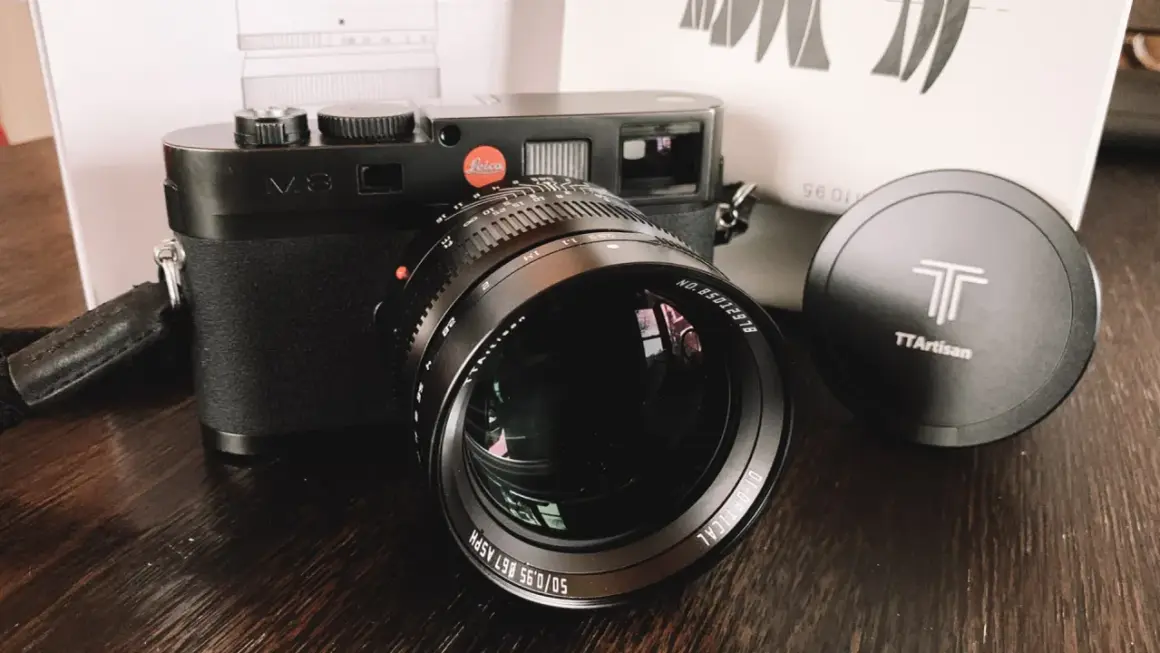
An f/0.95 50mm prime is one of those lenses that changes how you shoot as much as it changes how the image looks. It gives you a bright viewfinder image, very shallow depth of field, and enough light to work in places where slower glass starts to struggle. I am going to break down what that really means in practice, when the lens is worth the money, and which filters make it easier to use without fighting the light.
The fast 50 that gives you light, separation, and a very deliberate workflow
- A 50mm f/0.95 is a specialist lens: extremely bright, manual-focus on most models, and built for isolation rather than convenience.
- Relative to f/1.4, it buys you just over one stop of extra light and a noticeably thinner focus plane.
- On APS-C, the field of view behaves like roughly a 75mm portrait lens; on Micro Four Thirds, about 100mm.
- A quality ND filter matters more than a basic clear filter if you plan to shoot wide open outdoors or on video.
- Budget versions can sit in the low hundreds, while premium Leica-class options live in a very different price bracket.
What a 50mm f/0.95 lens actually buys you
At 50mm, you are still in familiar territory on a full-frame body: natural perspective, flattering subject size, and a look that works for portraits, details, and general-purpose storytelling. The f/0.95 part is where things get extreme. Lower f-numbers mean a larger aperture, so you get more light and a shallower depth of field, and the last tenth of a stop is the expensive one.In practical terms, f/0.95 is a little over one stop faster than f/1.4 and just over three stops faster than f/2.8. That is not just a numeric gain in exposure. It changes how much background separation you get, how easily you can stay at lower ISO values, and how forgiving the image feels when you are working in dim interiors or at dusk. I usually think of it as a look-first aperture, not a spec-first one.
Sensor size matters too. On APS-C, a 50mm lens behaves more like a short telephoto, which can be excellent for portraits. On Micro Four Thirds, the same lens feels even tighter. That is useful if you want compression and subject isolation, but it is less useful if you expected a classic normal-lens field of view. That distinction matters, because the next question is not whether the lens is bright, but whether it fits the kind of shooting you actually do.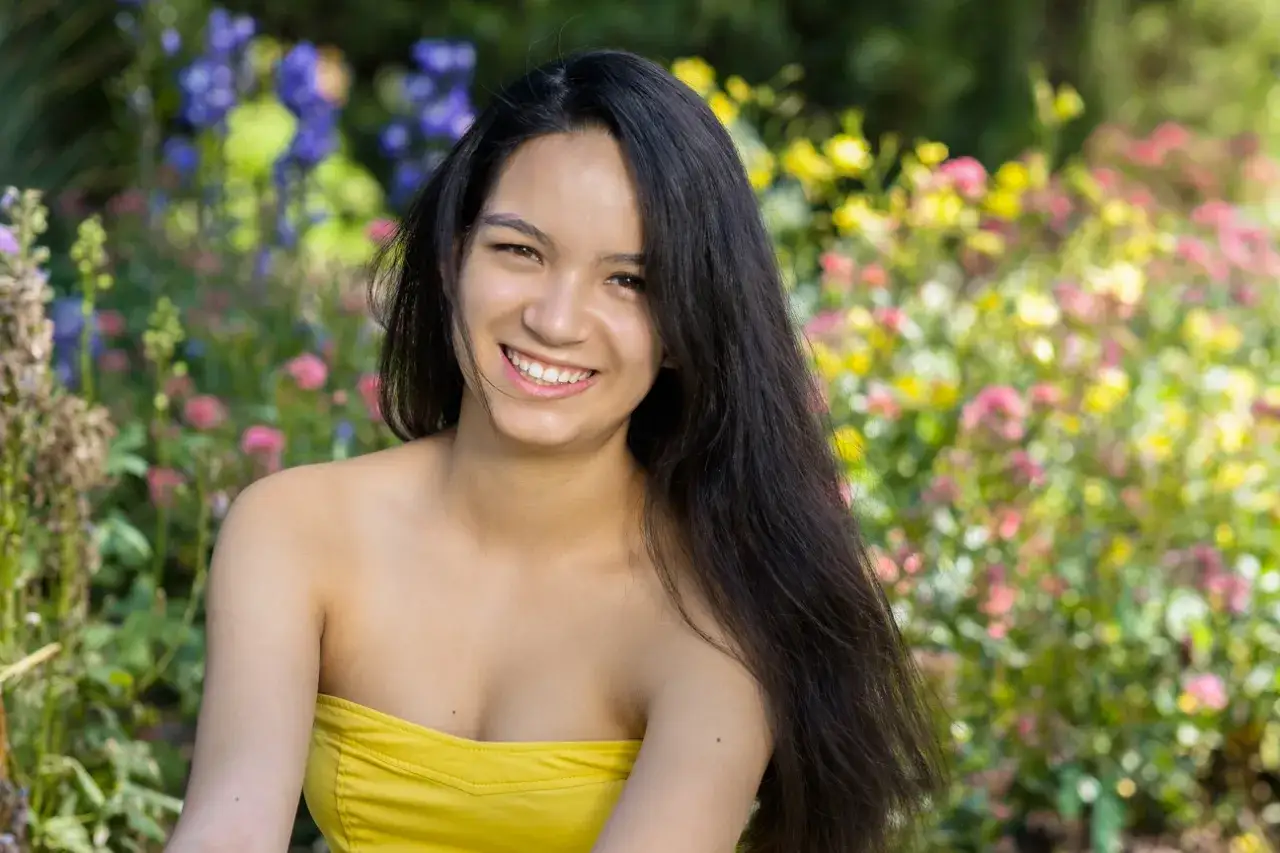
Where it shines and where it falls short
The best use cases are the ones that reward subject separation and careful framing. I reach for a lens like this for portraits, quiet documentary work, moody interiors, evening street scenes, and video shots where I want the background to melt away without turning the image into a blur exercise. It is also very good for close detail work, because the rendering can make one face, one object, or one gesture feel intentional.
- Portraits work well when the subject is still and the focus point is precise, especially on the near eye.
- Low-light scenes benefit because you can often stay at a cleaner ISO and still keep the image bright.
- Video can look cinematic fast, but only if your focus pulling is disciplined.
The tradeoff is equally real. At f/0.95, the depth of field can be so thin that focus accuracy becomes the whole game. A few centimeters of subject movement can turn a sharp portrait into a missed frame, and that gets worse as you move closer. Most of these lenses are manual focus, and even when a camera mount supports contacts or electronic communication, the workflow still favors slow, deliberate shooting. Wide open, you may also see softer contrast, more flare, or less edge sharpness than you get at f/1.4 or f/2. I do not see that as a flaw so much as the cost of the look.
That tradeoff is exactly why the way the image changes as you stop down is so important, because a lens like this is rarely used only one way.
How the look changes when you stop down
| Aperture | What changes | When I use it |
|---|---|---|
| f/0.95 | Maximum light, strongest subject separation, and often the softest wide-open character | Night portraits, moody stills, and scenes where the shallowest possible focus plane is the point |
| f/1.4 | Still very bright, but easier to hit focus and usually cleaner in the frame | Handheld portraits, events, and low-light work where I need a better hit rate |
| f/2 | More depth, better contrast, and a little more forgiveness | People, street scenes, and mixed-light situations |
| f/2.8 | Much easier focus tolerance and stronger edge performance | Interviews, general use, and any shot where reliability matters more than drama |
The pattern is simple: stopping down improves the hit rate faster than it costs you light. I usually find that the jump from wide open to f/1.4 is the most important one, because it keeps the fast-lens character while making the result more usable. The same is true across most ultra-fast primes, which is why I rarely treat f/0.95 as a permanent setting. Once you know that, the next question is how to manage the light you are letting in, and that is where filters become part of the lens choice rather than an afterthought.
Choosing filters that actually help
For a lens this fast, I think in three filter jobs, not one. Protection, light control, and reflection control solve different problems, and mixing them up usually leads to worse results.
Protect the front element
A high-quality clear or UV filter makes sense if you want physical protection for the front element. I would only use one if the coating quality is good and the ring is slim, because cheap glass can add flare at exactly the moment when an f/0.95 lens is already vulnerable to it. If you are going to keep a filter on the lens all the time, this is not the place to save a few dollars.
Cut the light
An ND filter is often the most useful accessory. It reduces the amount of light reaching the sensor, which lets you stay wide open in daylight or keep a sane shutter speed for video. For stills, a fixed 3-stop or 6-stop ND is usually cleaner and more predictable. For video, a variable ND is more flexible, but I would only buy a good one, because cheap variable filters can introduce color shifts or uneven darkening.
Read Also: Best Real Estate Photography Lens - Stop Guessing, Get Results
Control reflections
A circular polarizer is useful for glass, water, and product work, but it is not the first filter I would buy for this lens. It can reduce glare and deepen skies, which is helpful, but it also cuts light. On a lens that is already very bright, I treat a polarizer as a situational tool, not a default accessory.The final detail is fit. Check the front thread before you buy anything, because 50mm f/0.95 lenses commonly ship with different diameters, such as 58mm, 60mm, 67mm, or 72mm. If you already own filters in a larger size, a good step-up ring is often smarter than rebuilding your whole kit. That becomes easier to judge once you compare the main lens versions side by side.
How I would compare the main versions before buying
| Version | Typical U.S. price band | What stands out | Main tradeoff |
|---|---|---|---|
| APS-C 50mm f/0.95 versions | About $175 to $220 | Best value, lighter than the full-frame premium options, and a portrait-friendly view on crop bodies | Not a classic full-frame 50mm field of view |
| TTArtisan M 50mm f/0.95 ASPH. | About $755 | Full-frame rendering, 67mm filter thread, and a strong value proposition for manual-focus users | Still heavy, still manual focus, still not a convenience lens |
| Leica Noctilux-M 50mm f/0.95 class | Roughly the $7,000-plus tier | Premium build, iconic rendering, and a very refined optical reputation | Cost, size, and the fact that it is as much a statement lens as a tool |
If I were buying for a full-frame body and wanted the actual 50mm experience, I would focus on the full-frame manual-focus options first. If I were shooting APS-C and wanted the fastest portrait lens I could reasonably live with, the cheaper crop-sensor versions start to make a lot more sense. The expensive option is not automatically the best one; it is the one that only makes sense if you care about the rendering and are willing to pay for it.
The decision I would make for different shooting styles
I would buy a 50mm f/0.95 if I regularly shoot portraits, nightlife, interiors, music, or cinematic stills, and I enjoy working slowly with manual focus. I would also buy it if the shallow-focus look is a creative signature I want to lean into, not just a technical trick.
- Choose it if you value rendering, subject separation, and low-light flexibility more than speed of use.
- Skip it if you need fast autofocus, deep depth of field, or one lens that covers everything without compromise.
- Pair it with a slim clear filter, a good ND, and focus peaking or magnification if your camera supports it.
- Consider f/1.4 or f/1.8 instead if you want most of the usefulness with much less cost and stress.
My rule is simple: buy a 50mm f/0.95 only if the look itself is the reason you want it. If the answer is "I just need a faster 50," a good f/1.4 or f/1.8 with the right filters is usually the better tool; if the answer is "I want the shallow-focus rendering and I am willing to work for it," this lens class can be genuinely inspiring.