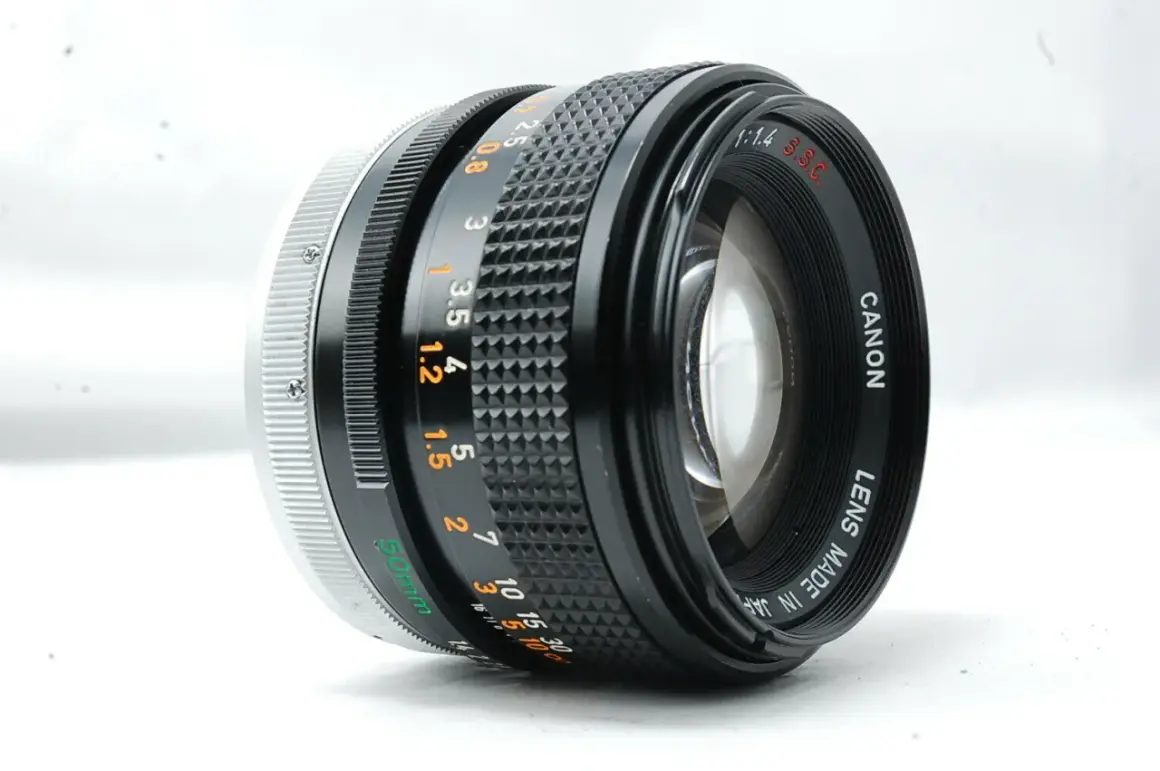
Canon FD glass still earns a place in serious kits because the lenses are compact, mechanical, and often surprisingly strong optically. The best Canon FD lens depends on whether you want a clean standard prime, a fast portrait tool, or a wide-angle that still behaves well with filters and hoods. In this guide I focus on the lenses that actually make sense to buy in 2026, what each one does well, and where the real tradeoffs hide.
The fastest route to a smart FD purchase is to match focal length, condition, and filter size to your shooting style
- New FD 50mm f/1.4 is the safest all-around choice for most photographers.
- FD 35mm f/2 is the better walkaround lens if you shoot street, travel, or video.
- New FD 85mm f/1.8 gives the best balance of portrait look, price, and handling.
- FD 24mm f/2.8 is the practical wide-angle pick, especially if you use filters.
- Premium 1.2 lenses are impressive, but they are specialty buys rather than first purchases.
What makes an FD lens worth buying today
I do not rank FD lenses by sharpness alone. That is too narrow, especially with a manual-focus system where handling, flare control, weight, and filter compatibility all shape the shooting experience. A lens that looks brilliant on paper can still be annoying in real use if it is too heavy, too rare, or awkward with the filter set you already own.
For me, a worthwhile FD lens needs three things: good optical character, usable mechanics, and reasonable access to filters and hoods. That last point matters more than people expect. Old Canon primes were designed around smaller filter threads than many modern lenses, but the premium pieces often jump to 72mm, which quickly changes the cost of polarizers, NDs, and diffusion filters.
The other big question is the camera body. On mirrorless, FD lenses are easy to enjoy because a simple passive adapter keeps the lens at full quality and focus peaking makes manual focus practical. On Canon EF DSLRs, I would avoid FD glass unless you are willing to accept an optical correction adapter and the image quality loss that comes with it. That is why I focus here on lenses that still make sense as working tools, not just collector trophies.
Once you decide that usability matters as much as reputation, the shortlist gets much clearer, and the next step is comparing the lenses that consistently deserve attention.
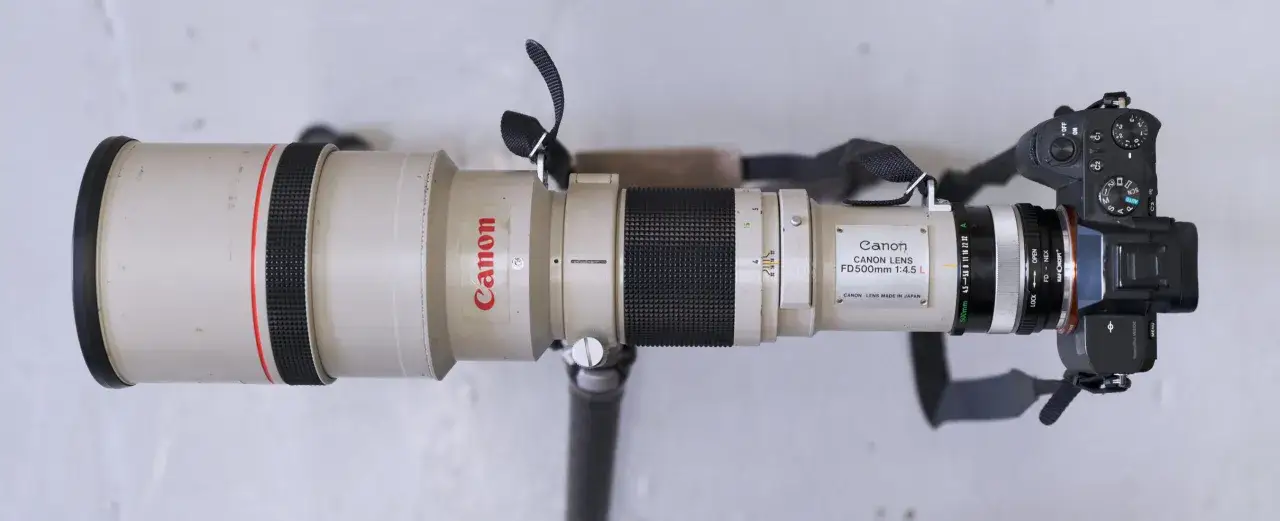
The FD lenses I would put at the top of the list
If I were building a practical FD kit from scratch, this is the group I would look at first. I am favoring lenses that deliver strong results without forcing you into rare parts, weird handling, or inflated collector pricing. The used ranges below are broad U.S. estimates because condition changes everything, but they are realistic enough to help you budget.
| Lens | Why I rate it | Filter size | Approx. U.S. used price | Best for |
|---|---|---|---|---|
| New FD 50mm f/1.4 | The most balanced all-rounder, with strong color and easy handling | 55mm | $60-$180 | Everyday shooting, low light, general purpose work |
| FD 35mm f/2 S.S.C. | My favorite walkaround focal length when I want context and speed | 55mm | $120-$220 | Street, travel, documentary, video |
| FD 24mm f/2.8 S.S.C. | A practical wide angle that stays manageable with filters | 55mm | $100-$180 | Interiors, landscapes, environmental portraits |
| New FD 85mm f/1.8 | The portrait sweet spot: compact, flattering, and not overhyped | 52mm | $200-$320 | Portraits, stage, detail work |
| New FD 100mm f/2.8 | A sleeper telephoto with excellent portability | 52mm | $80-$160 | Portraits, compression, small subjects, video |
| New FD 50mm f/1.2L | Fast, iconic, and more special than practical | 52mm | $700-$1,000+ | Shallow depth of field, low light, character |
| New FD 85mm f/1.2L | The prestige portrait lens, but a heavy and expensive one | 72mm | $900-$1,500+ | Portrait look above all else |
The short version is simple: 50mm f/1.4 for the first buy, 35mm f/2 for the most versatile second buy, and 85mm f/1.8 for the best portrait value. I would only move into the 1.2L lenses if I already knew I wanted their size, price, and rendering. They are good lenses, but they are not automatically the smartest lenses.
If you want the system to stay light and flexible, the 50/1.4, 35/2, and 85/1.8 make a far stronger real-world kit than one famous lens that you hesitate to carry. That becomes even clearer once focal length is matched to the kind of images you actually make.
Which focal length fits your shooting style
I usually choose FD lenses by scene first and sharpness second. The focal length determines whether the lens helps you compose or fights the frame, and that difference matters more on a fully manual system where you are doing every decision yourself.
Street and travel
The 35mm f/2 is the lens I reach for when I want one FD lens that stays out of the way. It gives enough width for context without distorting faces the way a wider lens can, and the faster aperture makes it more useful indoors than a slower wide-angle zoom. Canon’s 35mm f/2 design is also physically well behaved, which makes it easy to carry all day.
The 24mm f/2.8 is the better pick when you need actual width for interiors, architecture, or cramped city scenes. It is not glamorous, but it is practical, and the 55mm filter thread keeps the filter bill under control. If I had to choose one lens for travel storytelling, I would take the 35mm first and the 24mm only when I know I need the extra width.
Portraits
The 85mm f/1.8 is the portrait lens I think most shooters should start with. It gives flattering compression without feeling too long, it is light enough to use casually, and it avoids the cost and weight of the 85mm f/1.2L. Canon clearly designed it as a practical portrait lens, and the 52mm filter size is easy to live with.
The 100mm f/2.8 is the underrated option. It is only f/2.8, but the extra reach can be useful for headshots, detail, and tighter framing on mirrorless bodies. At 270g, it is the easiest telephoto in this group to carry, and it does not drag the front of the camera downward the way heavier optics can.
If you want the classic shallow-focus look and you are willing to pay for it, the 85mm f/1.2L is the statement piece. It is big at 680g and uses 72mm filters, so I treat it as a deliberate choice rather than a default recommendation. That tradeoff is the point: more subject separation, but also more cost, more weight, and more careful focusing.
Low light and shallow depth of field
The 50mm f/1.4 is still the best balance of speed and practicality for most people. It gives you enough light for indoor work, smooth background blur when you need it, and a familiar normal perspective that works for almost anything. Canon positioned this lens as a standard reference for a reason; it earned that reputation by being consistently useful rather than extreme.
The 50mm f/1.2L is the more dramatic choice. It is compact for what it is, but it is still a specialty lens, and the difference between f/1.4 and f/1.2 is usually less important than focus accuracy, subject distance, and optical condition. I would take the 1.4 unless I specifically wanted the 1.2 look or the collector appeal.
Read Also: Leica 75mm Summicron - The Portrait Lens You Need?
Wide-angle and interiors
The 24mm f/2.8 is the lens I would trust for most practical wide-angle work because it keeps size, cost, and filter use under control. The rarer 24mm f/1.4 S.S.C. Aspherical is a different story altogether: it was the world’s largest-aperture 24mm at the time, weighs about 500g, and uses a 72mm filter thread. It is a remarkable lens, but it belongs in the specialist category, not the everyday-buy category.
For me, the wide-angle decision is mostly about whether I want convenience or rarity. The f/2.8 lens is the rational pick; the f/1.4 aspherical lens is the one you buy because you know exactly why you want it. That split leads directly into the less glamorous part of the purchase: filters, hoods, and the small accessories that make the lens easier to use.
How filters and hoods change the result
FD lenses sit in a useful middle ground for filters because many of the best options use 52mm or 55mm threads. That is small enough to keep accessories affordable, but large enough to avoid the cramped, tiny-filter problem that older systems sometimes create. Once you step into the 72mm premium lenses, the whole accessory budget changes.
| Lens family | Common thread size | What I do with it |
|---|---|---|
| 24mm and 35mm primes | 55mm | Use a hood and a slim polarizer or ND to avoid vignetting |
| 50mm standard primes | 52mm or 55mm | Standardize with a step-up ring if you own modern 67mm or 77mm filters |
| 85mm and 100mm short telephotos | 52mm | Great candidates for one shared filter set |
| 135mm and fast premium portraits | 72mm | Use stronger hoods and budget more for filters |
I prefer step-up rings over buying duplicate filters. If your filter drawer is already built around 67mm or 77mm, stepping a 52mm or 55mm FD lens up to that size is cleaner than keeping five separate filter kits. I would avoid step-down rings on wide-angle lenses because that is where vignetting becomes a real risk.
Hoods matter just as much. Old Canon coatings are good, but they are not magic, and FD wide angles can show flare more quickly than modern lenses. A proper hood improves contrast, protects the front element, and keeps your filter work from being wasted by stray light. For video shooters, I also like fixed ND or high-quality variable ND on mirrorless, because the manual iris and manual focus combination makes exposure control especially visible in motion.
Once you start treating filters as part of the lens system rather than an afterthought, you will also become much more careful about used condition, which is where many good deals quietly turn bad.
What I inspect before buying used FD glass
Condition matters more with FD lenses than many buyers expect. These are mechanical tools, and the wrong copy can feel decent at first glance while hiding flare, haze, or stiffness that ruins the actual shooting experience.
- Focus feel should be smooth and even, not gritty or loose.
- Aperture blades should move quickly and stay dry. Oil on the blades is a warning sign.
- Glass clarity should be checked for haze, fungus, separation, and edge cleaning marks.
- Decentering matters. I test it by shooting a flat subject and comparing all four corners.
- Mount wear and breech-lock hardware should lock firmly without play.
- Filter threads should be usable, because a bent front ring can make the whole lens annoying.
I am also skeptical of bargain prices that look too good for the lens name alone. A clean 50mm f/1.4 is worth more than a tired 50mm f/1.2L with haze and stiff focus, especially if you plan to shoot real assignments instead of leaving the lens on a shelf. The practical rule is boring but true: buy the best condition you can reasonably afford, then build the rest of the kit around that lens.
That buying discipline makes it easier to choose a kit that actually gets used, which is the point of the final shortlist.
The FD kit I would build first for real shooting
If I were assembling a compact but serious FD setup in 2026, I would build it in stages instead of chasing the most famous lens first. That approach gives better results and usually costs less.
- One-lens kit: New FD 50mm f/1.4. It is the cleanest answer for general use and the easiest lens to live with.
- Two-lens kit: FD 35mm f/2 + New FD 85mm f/1.8. This is the best balance of environment and portrait work.
- Three-lens kit: FD 24mm f/2.8 + New FD 50mm f/1.4 + New FD 100mm f/2.8. This gives you wide, normal, and short telephoto coverage without much dead weight.
If the question is the best Canon FD lens, my honest answer is the New FD 50mm f/1.4. It is the lens I would trust first because it is sharp enough, fast enough, affordable enough, and easy enough to build around. If I wanted the smartest two-lens answer, I would add the 85mm f/1.8; if I cared more about scenes and context, I would add the 35mm f/2 instead. I would rather own three clean, well-chosen FD primes than one famous lens in questionable condition.
That is the version of the system that still makes sense now: a small set of lenses with distinct roles, sensible filter sizes, and enough character to justify carrying them at all.