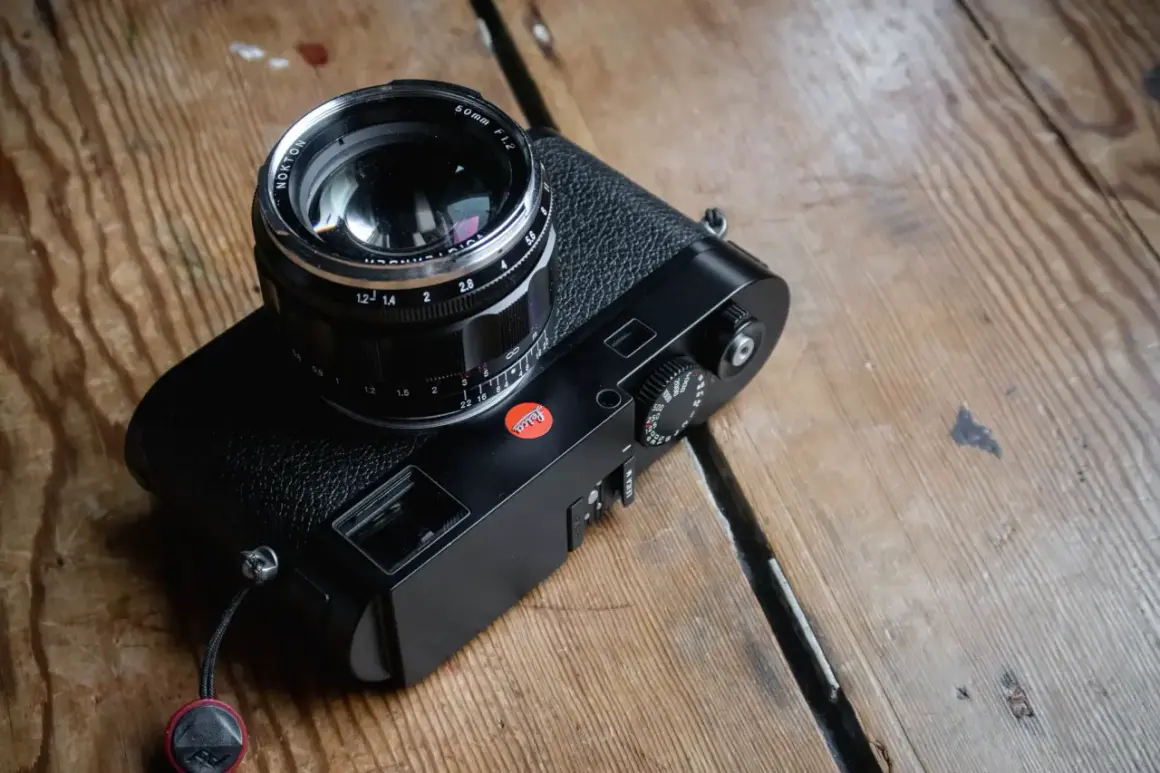
This body is a stripped-down rangefinder that rewards deliberate shooting
- 24 MP full-frame sensor with DNG and JPEG output, native ISO 200-6400, and a pull-100 setting for bright light.
- No Live View, no video, and a very lean menu, so the camera stays focused on rangefinder work.
- 0.68x bright-line viewfinder, manual focus, aperture priority or fully manual exposure, and a 1/4000 s top shutter speed.
- Best for street, documentary, travel, and portrait work where speed comes from preparation rather than automation.
- In 2026, used pricing usually sits in the mid-to-high $3,000s, with the M10 typically costing more.
What Leica removed and why it matters
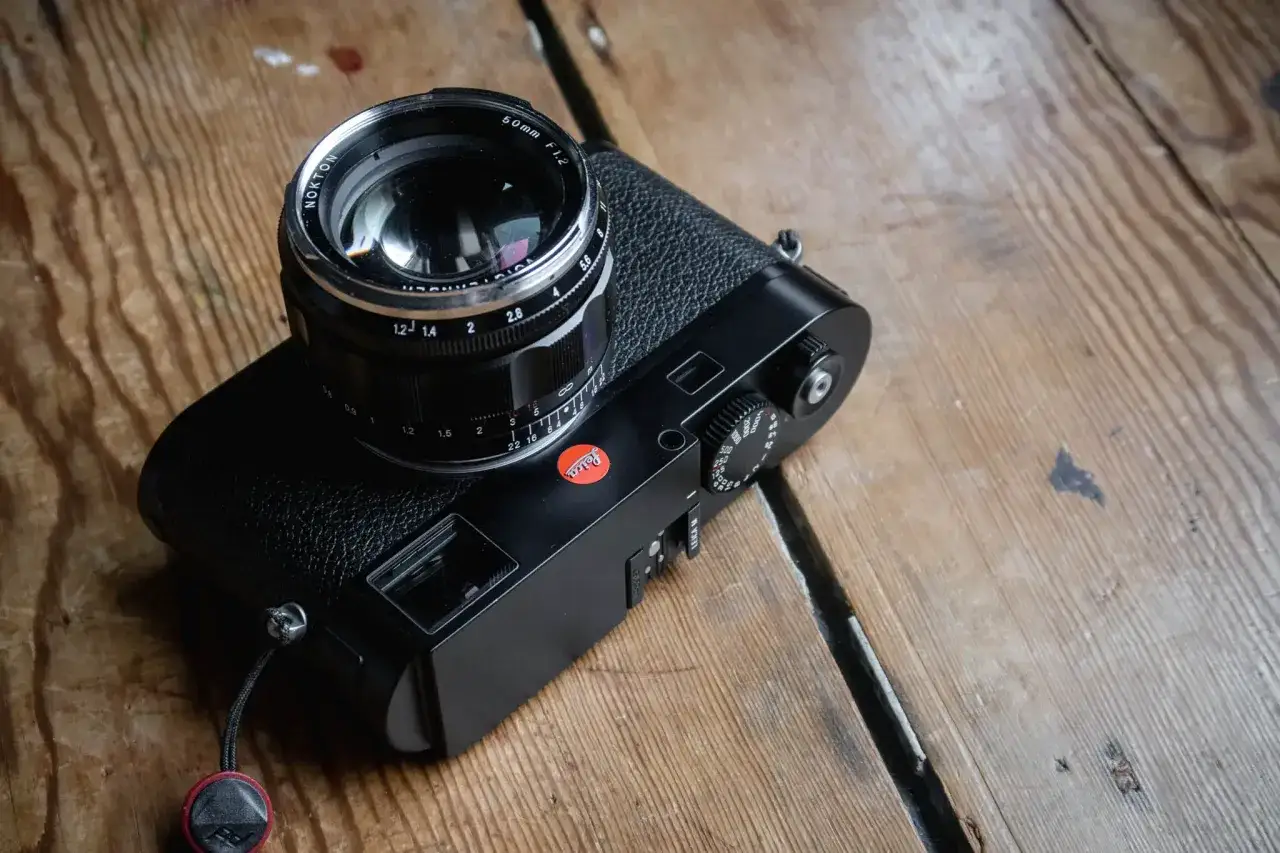
The easiest way to understand this body is to stop thinking of it as a compromise and start thinking of it as a filter. Leica removed Live View, video, and secondary features, then kept the parts that matter most to rangefinder work: the optical finder, the lens coupling, the aperture ring, and the shutter. That sounds austere on paper, but in practice it makes the camera easier to pick up and use quickly, especially if you already know how you like to meter and focus.
The rangefinder patch is the small centered focusing window in the viewfinder where two images line up when focus is correct. That is the whole game here. Once you trust that patch, the body starts to feel less like a digital device and more like a precision instrument that happens to write files to an SD card. Leica’s own positioning leans hard toward minimalism, and the menu really is tiny by digital-Leica standards: the camera is built to keep your attention on aperture, shutter speed, distance, and timing, not on navigation.
I think that is why the 262 still has a following. It removes just enough to make the act of shooting feel cleaner without forcing you back to film. The rear LCD is mainly for review, white balance has its own button, and the body behaves like a camera first and a computer second. Once that philosophy clicks, the next question is how the specs support it in real shooting.
How it behaves when you actually shoot with it
On the spec sheet, the camera is simple. In practice, the numbers explain most of the character: it is not a speed machine, but it is compact enough to travel with and solid enough to feel deliberate.
| Spec | What it means in practice |
|---|---|
| 24 MP full-frame CMOS sensor | Enough detail for editorial work, prints, and moderate cropping without producing huge files. |
| ISO 200-6400, with pull 100 | Good daylight and indoor range, but not the low-light monster newer M bodies can be. |
| 0.68x bright-line viewfinder | A classic Leica framing experience, with automatic parallax compensation and frame lines for 28/90, 35/135, and 50/75 mm lenses. |
| Shutter from 60 s to 1/4000 s in aperture priority; 8 s to 1/4000 s manual; 1/180 s flash sync | Plenty for everyday stills, but not built for extreme sports or very bright flash work. |
| 1 GB buffer, about 8 shots in a burst | Fine for spontaneous sequences, not for long bursts. |
| Approx. 600 g with battery | Substantial, but still easier to carry all day than most full-frame systems. |
The big practical limitation is pace. This body encourages one frame, one decision, not spray-and-pray shooting. The file sizes are manageable, the response is quick, and the camera is ready fast, but the eight-shot buffer keeps you honest. I like that for portraits, street scenes, travel, and small documentary projects; I dislike it for event work, action, or any situation where you are hoping to save moments after the fact. That difference becomes clearer when you place it next to the M240 and the M10.
How it stacks up against the M240 and M10
People usually cross-shop this body with two models: the M240 family that came before it and the M10 that followed it. The comparison is less about image quality than about how much camera you want to carry mentally.
| Camera | Main draw | Biggest tradeoff | When I would choose it |
|---|---|---|---|
| M240 | Live View, video, and the larger 1800 mAh battery make it the most versatile of the generation. | More features mean more menus, more modes, and more ways to get pulled away from the viewfinder. | If you want an M body that can also handle occasional hybrid or review-heavy work. |
| M262 | The leanest stills-first experience in this family, with a simple interface and direct controls. | No Live View, no video, and less battery headroom. | If you want the pure rangefinder experience and know you will not miss the extras. |
| M10 | Slimmer body, 0.73x finder, ISO 100-50000, and Live View/review give it the most modern feel. | It costs more, and the extra flexibility can be distracting if you prefer a purist workflow. | If budget allows and you want the best all-around digital M ergonomics. |
On MPB, I’m currently seeing the M262 around $3,819, while used M10 bodies sit roughly in the $4,799-$5,569 range. That gap matters, because the M10 does give you a better screen, a brighter finder, and higher ISO headroom, but the 262 still makes sense when the goal is simplification rather than feature expansion. If that is the logic you are using, the next question is whether the camera fits your actual shooting style.
Who this camera is for in 2026
I would not recommend it as a first digital camera for everyone. I would recommend it to people who already understand what manual focus, aperture priority, and frame-based composition feel like in practice. The body is much less forgiving if you are expecting autofocus, instant review as a habit, or help from live view when depth of field gets thin.
Best fit
- Street photographers who work with 35 mm or 50 mm lenses.
- Documentary shooters who prefer to work quietly and deliberately.
- Travel photographers who value a small menu and direct control over feature count.
- Experienced manual-focus users who already know how to meter and pre-visualize a frame.
Read Also: Voigtlander Bessa Guide - Choose Your Perfect Film Rangefinder
Poor fit
- Video creators and hybrid shooters.
- Event photographers who need autofocus or long bursts.
- Beginners who want Live View to simplify focus confirmation.
- Anyone expecting modern convenience features to justify the price on their own.
For visual-media teams, I see it as a specialty stills body, not an all-purpose production tool. That is not a weakness if the brief is editorial photography or personal work; it is a problem only when one camera is expected to do everything. If you are still interested, the last useful step is to inspect the body like a used precision instrument rather than a stylish accessory.
What to inspect before you buy a used body
Older Leicas can age well, but only if the rangefinder and shutter are still doing their jobs. I would check the body in the same order I would use it in the field: focus first, then exposure, then usability, then cosmetic condition.
| Check | Why it matters |
|---|---|
| Rangefinder alignment | If the patch is off, focus accuracy suffers and the whole camera feels wrong. |
| Shutter and meter | Make sure speeds sound even and the meter behaves consistently across bright and dim scenes. |
| Rear LCD and buttons | The screen is mainly for review, but if it is damaged you lose the easiest way to confirm files and settings. |
| Battery and charger | The BP-SCL2 battery is central to usability; a weak cell turns a lean camera into an annoying one. |
| Sensor condition | Dust is manageable, but scratches, marks, or persistent spots affect resale and cleanup. |
| Lens mount and 6-bit reader | The tiny coding sensor near the bayonet helps the body recognize coded M lenses automatically. |
For lenses, I would start with 35 mm if you want the cleanest all-around field of view, 50 mm if you want the easiest path into precise rangefinder focusing, and 28 mm if you are comfortable framing with a little more discipline. The bright-line frames automatically switch when a lens is mounted, which keeps the experience quick even though the body itself is stripped down. Once you understand those checks, the camera’s long-term value becomes easier to judge.
Why this body still earns attention in 2026
What keeps the 262 relevant is not novelty. It is discipline. A lot of newer cameras are better at more things, but fewer of them make the act of taking a still photograph feel this direct. If you are building editorial work, street projects, or a personal body of work, that directness has value because it forces decisions earlier.
That only works if you accept the limits. No Live View means you commit to rangefinder focusing. No video means you need a second tool for motion. Modest burst depth means you should not treat it like a mirrorless action body. But if those limits match the way you actually shoot, I think this Leica remains one of the clearest statements about what a still camera can be when the design goal is restraint rather than versatility.
If I were buying one today, I would do it for a specific stills workflow, not for nostalgia or status. The right reason is simple: you want a compact full-frame rangefinder that gets out of the way and makes each frame feel intentional.