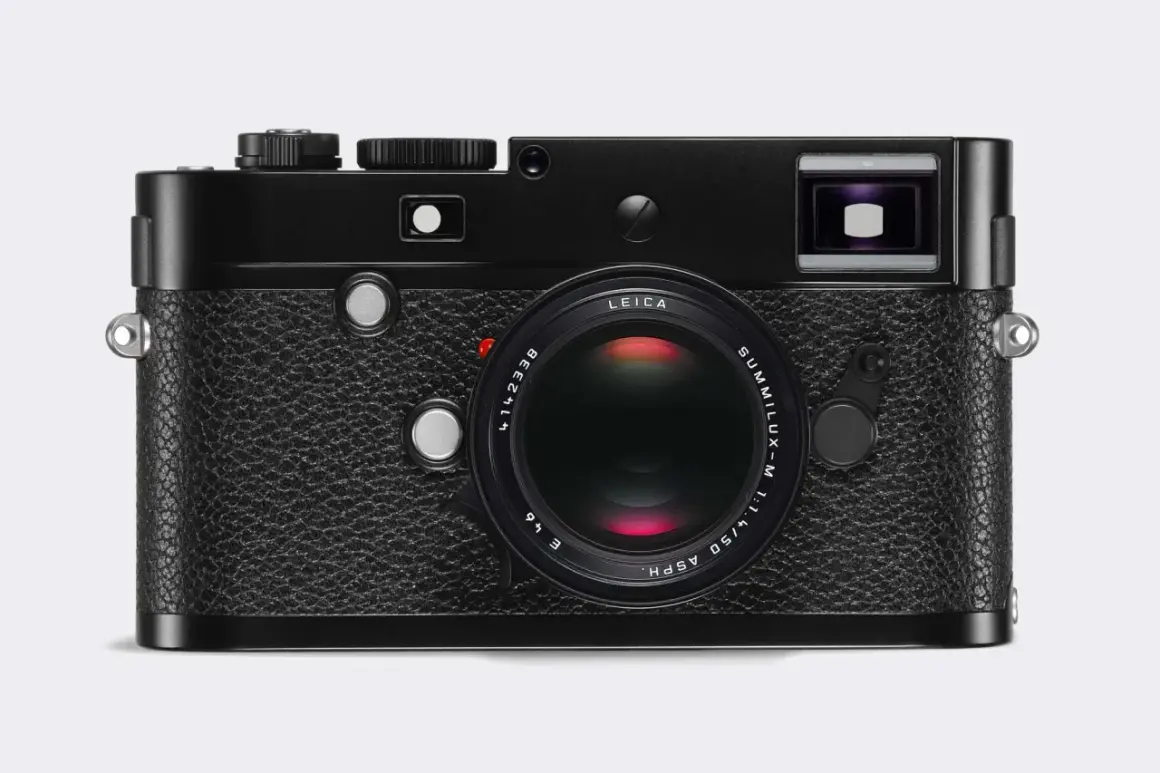
The Leica M (Typ 240) sits in a very specific part of the camera world: old enough to be attainable on the used market, but modern enough to feel like a serious digital tool rather than a collectible novelty. The Leica 240 matters because it forces a clear decision about how you want to shoot, what compromises you can accept, and whether the rangefinder way of working still makes sense for your style. In the sections below, I cover the practical side: what it is, how it handles, what the files look like, what to check before buying, and when I would pass on it.
A classic digital rangefinder with real strengths, real limits, and a very specific buyer
- It is a full-frame 24 MP digital rangefinder built around manual focus and deliberate shooting.
- It offers Live View, an optional EVF, and basic 1080p video, but still behaves like a stills-first body.
- Current U.S. used prices in 2026 are usually driven by condition, battery health, and accessory set more than shutter count alone.
- The M-P version is the same core camera with a more premium body and a few useful refinements.
- This is a strong buy for street, documentary, portrait, and travel work if you already like the M-system rhythm.
- It is the wrong choice if you want autofocus, fast burst shooting, or a modern video-centric hybrid.
What the Leica M (Typ 240) actually gives you
At its core, this is a full-frame digital rangefinder with a 24 MP CMOS sensor, Leica M bayonet mount, and the kind of manual-control layout that makes you slow down and think before pressing the shutter. The body supports DNG and JPEG capture, ISO 200-6400 with a pull-100 option, Live View, and an optional electronic viewfinder. It also records 1080p video, but I would never call that its main job.
What makes it different from a normal mirrorless camera is the shooting logic. You are working through a rangefinder patch, not phase-detection autofocus, and the camera gives you only aperture-priority and manual exposure modes. That sounds limiting on paper, but in practice it creates a very clear rhythm: focus, frame, meter, shoot, review. If you like control and hate menu sprawl, that rhythm is the whole point.
It is also a body built to stay within the Leica ecosystem. The M mount supports classic M lenses, and the 6-bit coding system helps the camera recognize compatible glass and apply lens corrections. If you already own M lenses, that matters immediately. If you do not, it matters less than the fact that this body is still fundamentally a manual-focus platform, not a convenience-first camera. That tension is what shapes everything else about the model.
Once that basic identity is clear, the next question is not whether it is “good,” but whether the physical design still makes sense in real use.
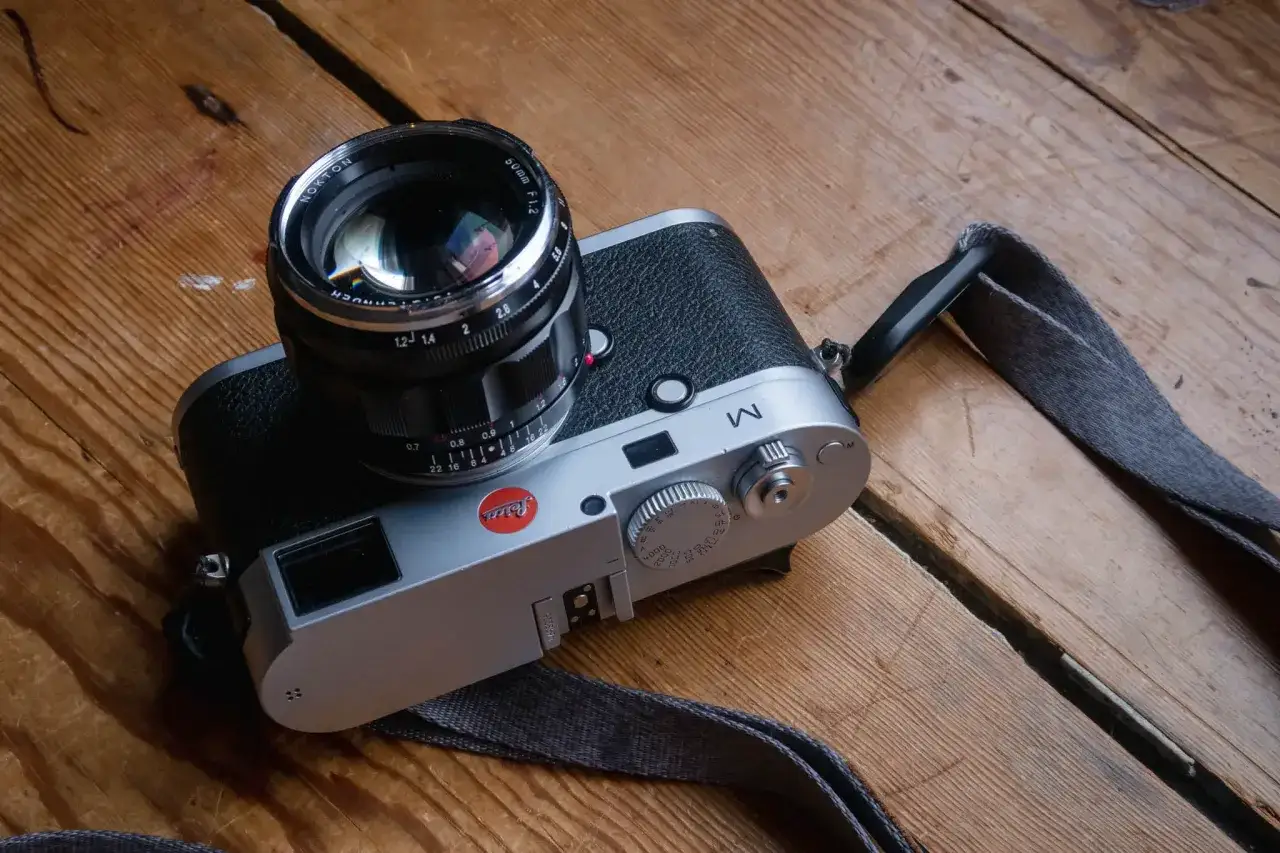
How it feels in the hand and at the finder
The camera is compact by full-frame standards, but not featherweight. Leica lists it at about 138.6 x 42 x 80 mm and roughly 680 g with battery, so it has enough mass to feel solid without becoming bulky. The body is all-metal, with a brass top and base, and that construction is a big part of the appeal. It does not feel disposable, and it does not feel like a toy.
The rear screen is usable, but I would treat it as a review tool rather than a creative interface. The camera was designed around the optical finder, so the monitor does not try to behave like a modern touchscreen-first mirrorless body. That is fine if you understand what you are buying, but it can feel dated if you expect your camera to guide you through every decision.
Battery behavior is one of the real ownership issues here. Leica’s own manual notes that battery performance drops with age and recommends replacement after about four years. For a used body, that is not a footnote; it is a budget item. I would rather buy a cleaner camera with a healthy battery than save a few hundred dollars and immediately inherit an unreliable power source.
The finder experience is where the camera still earns its reputation. The rangefinder patch is bright, the frame lines are classic Leica, and the whole process encourages precision over speed. If you shoot wider or longer lenses often, Live View and the optional EVF become genuinely useful rather than optional extras. That is also the bridge to image quality, because the way you focus and meter here directly affects what the files can do later.
Where the files shine and where they do not
The sensor is a 24 MP full-frame CMOS unit, which is still a practical resolution in 2026. It gives enough room for editorial work, prints, and moderate cropping without turning every file into a storage problem. DNG files can be relatively large, especially uncompressed, so the camera rewards disciplined card management and a sensible editing workflow.
What I like about this class of files is that they are flexible enough for real work without inviting laziness. At lower ISO settings, the camera can deliver very clean, detailed images. At higher ISOs, it is usable, but not magical by current standards. That is the honest tradeoff: you are buying a sensor that still holds up, not one that tries to compete with a much newer low-light monster.
Lens choice matters just as much as sensor quality. A well-checked 35 mm or 50 mm M lens will usually show the camera at its best, especially for street, portrait, and documentary work. Wider lenses can be excellent too, but they ask more of the user, and longer lenses expose the limits of rangefinder focusing more quickly. In other words, this is a camera that rewards fit between body, lens, and subject matter.Video exists, but I would treat it as a convenience feature rather than a selling point. If your workflow depends on modern hybrid performance, the Typ 240 is not the body I would choose. If still photography is the priority and video is just a backup option, the limitations are easy to live with.
How it compares with newer M bodies
When people ask whether the Typ 240 still makes sense, they are really asking how much they are giving up versus newer Leica M bodies. I think the answer depends on whether they want a different result, or simply a more expensive version of the same shooting idea.
| Model | What changes | Why I would pick it |
|---|---|---|
| M Typ 240 | Original 24 MP body, Live View, optional EVF, basic 1080p video | Best entry point if you want the classic digital M experience at the lowest used cost |
| M-P Typ 240 | Sapphire-glass monitor cover, frame selection lever, 2 GB buffer | Better if you want the same image core with a more premium body and a little more headroom |
| M10 | Newer generation body and a slimmer feel in hand | Good for someone who wants a more refined later M without jumping to the newest flagship tier |
| M11 | 60.3 MP sensor and a much more modern workflow | Best when resolution and current-platform convenience matter more than value |
My practical read is simple: the Typ 240 is still compelling if you want the Leica M experience first and a newer spec sheet second. The M-P is the nicer version of the same idea, but not a different one. The M10 and M11 are better if you want to spend more for refinement, resolution, and a newer platform. If you want the emotional and mechanical experience rather than a spec upgrade, the Typ 240 is still the sweet spot.
That comparison leads directly to the part that matters most in 2026: buying one used without inheriting someone else’s problem.
What to inspect before buying used
In the current U.S. market, a clean Typ 240 usually lands somewhere around $2,500 to $3,400, depending on condition, seller type, and what is included. Dealer-priced bodies tend to sit at the top of that range, while honest private-sale copies can be lower. The M-P version often commands a premium, which makes sense because the body refinements and the cleaner finish appeal to buyers who already know they want the camera.
What I check first is not cosmetic perfection. I check battery health, rangefinder alignment, screen condition, shutter operation, and whether the sale includes a charger and at least one known-good battery. A body with visible wear but clean mechanics is often a better buy than a prettier one with uncertain electronics. If the seller cannot explain battery age or recent servicing, I assume I may need to replace something soon.
These are the points I would personally verify before paying:
- The rangefinder patch aligns cleanly at normal distances.
- The rear screen is bright, free of major damage, and readable in normal light.
- The shutter fires consistently at different speeds.
- The battery holds charge for a practical shooting session.
- The card slot, hot shoe, and accessory contacts are intact.
- The body comes with a charger, body cap, and ideally the original box or paperwork.
One useful rule of thumb: if a listing is dramatically below the usual range, I assume there is a reason until proven otherwise. A bargain body can become expensive very quickly if it needs a rangefinder adjustment, battery replacement, or unexpected service. The best deal is usually the cleanest body with the least uncertainty, not the lowest sticker price.
Who should actually buy it in 2026
I would recommend this camera to photographers who value manual focus, compactness, and a deliberate shooting pace. That includes a lot of street photographers, documentary shooters, portrait photographers, and anyone who already owns M lenses and wants a digital body that matches the way those lenses are meant to be used. It also makes sense for people who want a camera with character rather than a feature race.
I would skip it if you need autofocus, fast burst shooting, top-tier video, or the newest sensor technology. It is also a poor choice if you want a first full-frame body and expect the camera to solve technical mistakes for you. This is not a camera that hides bad habits very well, which is part of the reason some photographers love it and others never settle into it.
If I were buying one today, I would only buy the Leica 240 if the seller could prove the camera was healthy, the battery situation was under control, and the price reflected the body’s age rather than its name. A clean, well-kept copy is still a satisfying tool in 2026; a tired one is just an expensive reminder that old premium gear can still be expensive to fix. For the right shooter, though, this remains one of the most distinctive ways to work in digital photography.