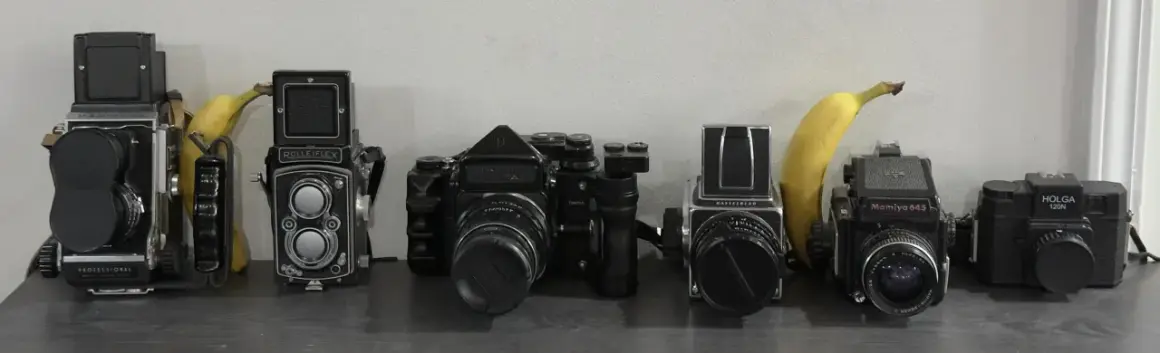
The real answer to hasselblad vs.mamiya is less about brand loyalty and more about how you want to shoot. Hasselblad usually points you toward a current, polished medium-format digital system, while Mamiya tends to reward photographers who want film, modularity, and a lower-cost entry into a more hands-on workflow. That difference matters because the wrong choice is not just about money; it changes how you meter, focus, travel, and build your kit.
What matters most when choosing between these systems
- Hasselblad is the cleaner choice if you want a modern, supported digital medium-format platform.
- Mamiya is usually the better value if you want used film gear or a modular system you can build around.
- Hasselblad’s current lineup starts in the premium range, while Mamiya often enters through the used market.
- Mamiya gives you more flexibility, but it also asks for more condition checks and compatibility research.
- For studio portrait work, both can deliver excellent files; the difference is mostly in workflow and handling.
- If you want fewer surprises, Hasselblad is simpler. If you want more system depth for less money, Mamiya can be the smarter buy.
What the comparison really comes down to
I usually frame this choice around system design, not logo recognition. Hasselblad is the brand with a clear modern digital path in 2026, while Mamiya is mostly a legacy ecosystem that lives on through used bodies, film shooters, and Phase One-supported compatibility. That means the question is not simply which camera is better, but which workflow you want to live with for the next few years.
| Factor | Hasselblad | Mamiya |
|---|---|---|
| Current buying path | New digital bodies and lenses are actively sold | Mostly used film gear and older modular systems |
| Common formats | 100MP digital medium format; legacy square-format V system | 645 systems and larger 6x7 systems such as the RZ line |
| Handling | Compact, refined, more integrated | More mechanical, more modular, often bulkier |
| Best for | Digital-first shooters, studio work, premium travel kits | Film photographers, tinkerers, and value-focused buyers |
| Ownership risk | Lower if bought new | Higher if condition, service history, or adapters are unknown |
That table hides the biggest practical truth: Hasselblad asks for less compromise up front, while Mamiya often gives you more room to adapt the system later. The next step is understanding how that difference changes the shooting experience in real life.
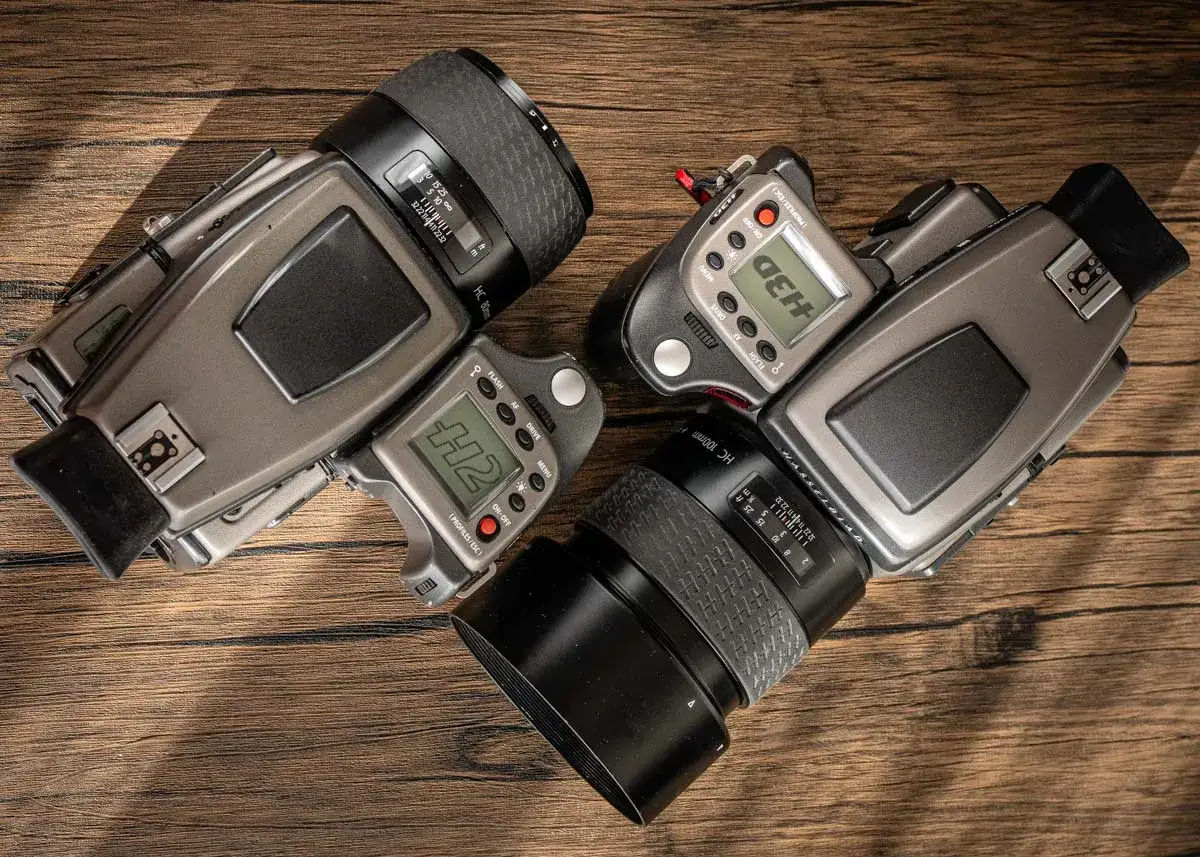
Why the shooting experience feels so different
Medium format can sound abstract until you hold the cameras. Hasselblad’s classic appeal has always been about a disciplined, elegant shooting rhythm: waist-level composing, careful framing, and lenses that slot cleanly into a modular but controlled system. Mamiya, by contrast, often feels more utilitarian and more expandable, especially in the 645 and RZ families. I think that difference matters more than spec sheets do.
Hasselblad’s historic V cameras became famous for their leaf-shutter lens design, which made flash sync simple and photography feel deliberate. The current digital bodies keep that premium, slower-paced identity, but they wrap it in modern conveniences like autofocus, stabilization, and internal storage. Mamiya systems are usually more variable. A 645 body feels different from an RZ67, and an RB-style setup feels different again. That flexibility is useful, but it also means you need to know what you are buying before you commit.
- Hasselblad feels more integrated, which is helpful if you want predictable results and less setup friction.
- Mamiya feels more like a platform, which is useful if you enjoy changing backs, finders, and body styles.
- Hasselblad’s shape and controls encourage concentration on the frame.
- Mamiya often rewards experimentation, especially if you want to move between portrait, studio, and film work.
If the camera itself shapes your rhythm, the next question is which brand actually gives you a better image-making advantage today.
Where Hasselblad is the stronger buy in 2026
For a new purchase, Hasselblad is the easier recommendation. The current system is built around 100MP digital bodies, and the files are designed for people who care about color accuracy, dynamic range, and a clean post-production workflow. The X2D II 100C and 907X & CFV 100C sit in the premium zone, with body prices starting at $7,799 and $7,399 respectively, so this is not casual gear. But if you need a modern medium-format camera that behaves like a current product, Hasselblad is the brand that gives you that confidence.
What I like most is that Hasselblad does not force you to assemble a system from scratch in the way older medium-format platforms often do. You get 100MP capture, in-body image stabilization, and a more streamlined digital workflow without having to hunt for obscure adapters or verify whether a back is still officially supported. That matters a lot if you are shooting for clients and cannot afford to lose a day to compatibility issues.
- Best strength: modern digital image quality with a premium user experience.
- Best fit: studio portrait, commercial stills, landscape, and hybrid creators who want fewer technical distractions.
- Main limitation: high entry cost and less room for bargain hunting.
That does not mean Hasselblad is automatically the right answer. If your priority is value, film character, or modular experimentation, Mamiya still has a very real advantage.
Where Mamiya still makes more sense
Mamiya remains attractive because it is less about buying a shiny new ecosystem and more about choosing the right piece of medium-format history. A lot of photographers are drawn to the Mamiya 645 line for its 6x4.5 frame and to the RZ67 for its larger 6x7 negatives and rotating back. That rotating back is not a gimmick; it genuinely changes the way you work on a tripod, especially for portraiture.
There is also the practical side. Phase One still documents support and adapters for Mamiya systems, including compatibility notes for Mamiya 645 AF-D and newer bodies. That does not make every Mamiya setup equally easy, but it does mean the ecosystem is not dead. It is simply fragmented, and that fragmentation is both the opportunity and the headache.
My rule with Mamiya is simple: buy the body only if you are comfortable checking shutter condition, foam seals, battery behavior, back alignment, and adapter compatibility. If those details sound tedious, the savings can disappear fast.
- Best strength: value, modularity, and a strong film-first experience.
- Best fit: portrait artists, film shooters, and photographers who like building a system piece by piece.
- Main limitation: more maintenance risk and a less unified ownership experience.
Once you factor in ownership costs, the real difference between these brands becomes even clearer.
What ownership actually costs beyond the sticker price
This is where many buyers misread the market. Hasselblad is expensive at the front end, but the cost is easier to understand: you pay for a new, supported system and you know what you are getting. Mamiya can look cheaper on paper, but the final bill depends on condition, service history, accessories, and whether you need a digital back, a finder, a grip, or a specific adapter.
| Cost area | Hasselblad | Mamiya |
|---|---|---|
| Entry price | New digital bodies start around $7,399 to $7,799 | Used bodies can be far cheaper, often in the hundreds to low thousands depending on condition |
| Maintenance | Lower risk if bought new and kept within warranty | Often needs a CLA, seals, or body checks |
| System expansion | Lenses and accessories remain premium-priced | Some accessories are affordable; rare parts can be surprisingly expensive |
| Digital path | Already built into the system | Can require adapters, supported backs, and careful compatibility research |
In practice, Mamiya often wins the budget game only if you are willing to accept some uncertainty. A cheap body is not a cheap system if the shutter needs service or the accessory you need is discontinued. Hasselblad is the opposite: you pay more, but the path is straighter. That trade-off usually decides the purchase before image quality does.
Which photographer each system fits best
If I reduce the choice to real-world use cases, this is how I see it:
- Studio portrait photographer: Hasselblad if you want modern digital convenience; Mamiya if you want a more tactile, camera-in-hand process and do not mind film or older bodies.
- Film photographer: Mamiya usually wins, especially if you want the 645 or RZ67 look and a system that feels built around intentional shooting.
- Travel or location shooter: Hasselblad has the advantage because the current digital bodies are more compact and easier to live with.
- Hybrid creator: Hasselblad is simpler if you need fast digital output; Mamiya is better if your workflow includes scanning film or mixing stills with a more analog brand identity.
- Budget-conscious medium-format buyer: Mamiya is the obvious starting point, but only if you inspect the kit carefully.
What I would not do is choose either brand because of nostalgia alone. The camera has to fit the way you actually make pictures, not the way you imagine medium format should feel.
The decision rule I use before spending medium-format money
If you are still undecided, I use four questions. They cut through most of the noise.
- Do I want a current digital system that I can buy new and use immediately?
- Am I comfortable buying used gear that may need service or compatibility checks?
- Will I shoot film often enough to justify the older Mamiya path?
- Do I want the camera to be a straightforward tool, or do I want a system I can keep customizing?
If the answer to the first question is yes, I would lean Hasselblad without overthinking it. If the answer to the second, third, and fourth questions is yes, Mamiya becomes much more interesting. That is the cleanest way I know to avoid buying a medium-format system that looks impressive on paper but fights your actual workflow in daily use.
So the practical takeaway is simple: Hasselblad is the better modern digital purchase, while Mamiya is the better legacy value and modularity play. If you are choosing for a production workflow, I would optimize for reliability and file delivery; if you are choosing for film character and system flexibility, Mamiya still has a lot to offer.