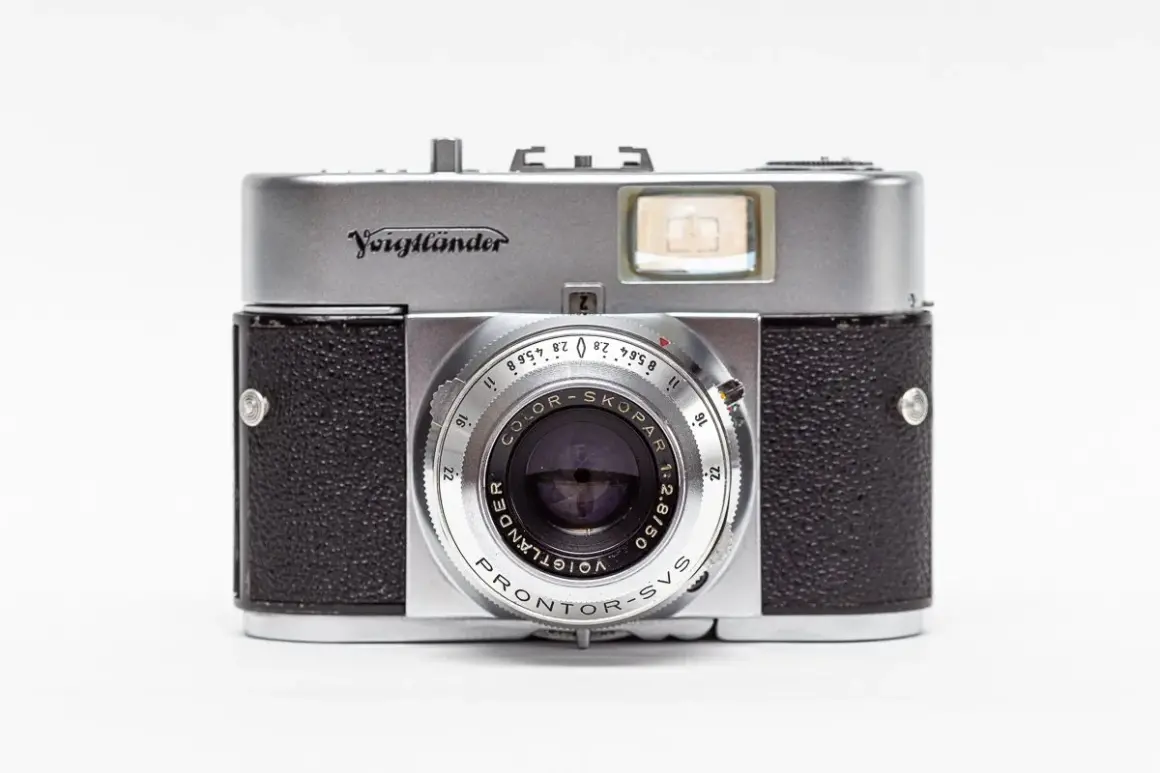
Voigtländer occupies an unusual place in camera history: the name is old, the legacy is real, but in 2026 the brand is far more relevant to lenses and rangefinder-friendly gear than to brand-new camera bodies. That matters because buyers often want one of three things at once: a working film camera, a distinctive manual-focus system, or a collectible piece of photographic history. This article breaks those paths apart so you can see which bodies are worth knowing, what each one actually does, and where the modern gear story begins.
Key facts that matter before you buy or shoot
- Voigtländer’s current catalog is lens-first; new camera bodies are not the brand’s main focus anymore.
- The most relevant camera bodies are the historical Bessa, Vito, Vitessa, and Bessamatic families, plus the later Cosina-built Bessa rangefinders on the used market.
- Bessa-L favors scale focusing and wide lenses, while Bessa-R, R2, R3, and R4 bodies are the ones rangefinder shooters usually compare.
- Voigtländer lenses are manual focus and are built for Leica M, Sony E, Nikon Z, Fujifilm X, Micro Four Thirds, and other platforms.
- If you want a working film camera, condition matters more than the badge on the front.
What Voigtländer means in 2026
Today, the cleanest way to think about Voigtländer is this: the brand is an optics company first, with camera bodies living mainly in its history and the used market. Voigtländer’s own catalog now centers on lenses, adapters, accessories, and binoculars, and that is the biggest clue about how the brand fits into a modern kit. In practice, the camera question splits into legacy film bodies and the later Bessa rangefinders that Cosina revived for serious film shooters.
I find it helpful to separate the brand into three buckets. One bucket is collector history, where the old German and Austrian camera designs live. Another is usable film gear, which is mostly the Cosina-built Bessa line. The third is current manual-focus lenses, which are the real center of gravity now. Cosina’s history page shows that modern rangefinder revival clearly: the BESSA-L appeared in 1999, followed by the BESSA-R in 2000, and that set the tone for everything that came after.
| Bucket | What it means now | Who should care |
|---|---|---|
| Legacy Voigtländer bodies | Older film cameras from the brand’s earlier eras | Collectors, design fans, and repair-minded film shooters |
| Cosina-built Bessa bodies | Used-market rangefinders from the late film era | Street, documentary, and wide-angle film photographers |
| Current Voigtländer optics | Manual-focus lenses for modern and classic mounts | Digital shooters, Leica M users, and hybrid creators |
That split between heritage and active product line explains why the Bessa family matters so much, and the next section is where the useful history starts.
The camera families that built the name
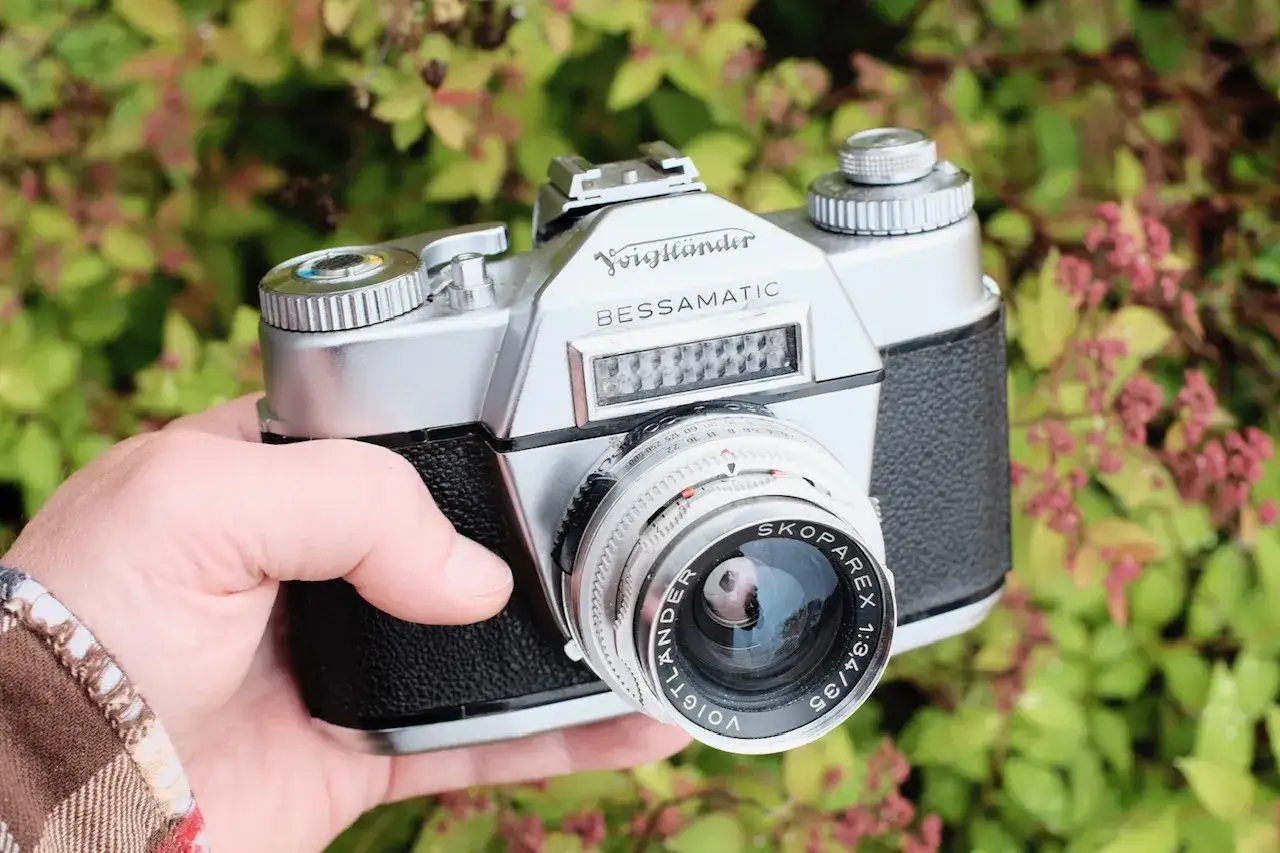
Voigtländer did not become a respected camera name because of one famous body. It built that reputation across several eras, each with a different kind of camera and a different kind of user. The early folding and viewfinder cameras established the brand’s mechanical identity, the SLR era showed that the company could compete in the 35mm mainstream, and the Bessa revival made the name relevant again for film photographers who wanted something practical rather than nostalgic.
| Era | Representative cameras | Why they matter | Today’s relevance |
|---|---|---|---|
| Early 20th century to postwar years | Bessa, Vito, Vitessa, and related folders | These shaped the brand’s optical and mechanical reputation | Mostly collector territory, but historically important |
| 1950s to 1970s | Bessamatic, Ultramatic, and other SLR bodies | Showed Voigtländer could play in the serious SLR market | Interesting to collectors; serviceability varies |
| 1999 to 2015 | BESSA-L, BESSA-R, BESSA-T, BESSA-R2A/R2M, BESSA-R3A/R3M, BESSA-R4A/R4M | The last practical Voigtländer rangefinders and the bodies most people still seek out | The main used-market cameras worth knowing |
The dates tell the story. The BESSA-L launched in February 1999 and ended in May 2003. The BESSA-R followed in March 2000 and ran until July 2004. Later bodies like the R3M and R4M stayed in the lineup until September 2015, which is why they still show up in conversations about a usable Voigtländer film camera. For me, that puts the practical sweet spot firmly in the Bessa era rather than in the much older collector era.
Once you know which families exist, the real buying decision becomes much simpler: you are no longer choosing a brand, you are choosing a shooting style.
How the Bessa rangefinders differ in real use
If I were buying one of these bodies today, I would stop thinking in model names and start thinking in shooting behavior. That is where the differences become obvious. Some Bessa bodies are made for wide-angle, scale-focus work. Others are balanced general-purpose rangefinders. A few lean hard toward 50mm shooting or toward aperture-priority convenience. The body that feels “best” on paper is often the wrong one in your hands.
| Model | What it gives you | Best match | Main compromise |
|---|---|---|---|
| Bessa-L | No built-in viewfinder or rangefinder, L39 mount, scale focusing | Ultra-wide lenses and minimalist shooting | Less forgiving if you dislike estimating distance |
| Bessa-R2A | Aperture-priority automation, 0.7x finder, 35/50/75/90 framelines | Fast, general-purpose film use | Electronic dependence and battery checks matter |
| Bessa-R3M | 1.0x finder, fully mechanical shutter, 40/50/75/90 framelines | 50mm and 40mm shooters who want a calm, bright finder | Less comfortable if you live on 35mm or wider |
| Bessa-R4M | Mechanical body with wide-angle framelines, including 21mm coverage | Documentary and wide-angle shooters | Not the most natural choice for 50mm-first users |
The pattern is simple. If you want a balanced body with some automation, the R2A makes sense. If you want pure mechanical reliability, the R3M and R4M are the names to know. If you love 50mm framing, the R3M is the cleanest fit. If your work lives at 21mm, 25mm, or 28mm, the R4M is the one that really earns its reputation. And if you want the most stripped-back, almost architectural way to shoot film, the Bessa-L is the odd but useful outlier.
R2M, R3A, and R4A follow the same logic with different balances of electronic control and manual operation. That is why I would choose by focal length first and model second; it saves a lot of regret later.
Once you know which body fits your lenses, the modern Voigtländer lens lineup becomes much easier to understand.
Where Voigtländer lenses fit today
This is where the brand is most alive. Voigtländer’s current lineup is built around manual-focus lenses across VM, E, Z, X, MFT, RF, and SLR systems. The VM mount is the classic rangefinder lane: it is designed for Leica M compatibility and can also be adapted to mirrorless bodies. Because the flange distance is short, adapters stay thin and the body-lens combination usually remains compact and well balanced.
That matters for creators who want the character of a manual lens without being trapped in one camera ecosystem. A VM lens can live on a film rangefinder, a digital Leica M, or a mirrorless camera with an adapter. E-mount, Z-mount, X-mount, and Micro Four Thirds lenses are even simpler because they mount directly to those systems. In other words, the brand has shifted from making bodies that define the system to making optics that travel between systems.
| Mount family | Best for | Why it matters |
|---|---|---|
| VM | Leica M, film rangefinders, and adapted mirrorless bodies | Closest to the classic Voigtländer rangefinder experience |
| E | Sony full-frame and APS-C users | Good fit if you want manual focus on a modern digital body |
| Z | Nikon Z shooters | Strong choice for compact, high-quality manual lenses on current Nikon mirrorless bodies |
| X | Fujifilm X users | Small, characterful lenses for street, travel, and documentary work |
| MFT | Micro Four Thirds shooters | Lightweight manual-focus setups with a very small footprint |
The practical takeaway is simple: if you are not specifically chasing a film body, Voigtländer still makes a lot of sense. The lenses are compact, manual, and intentionally distinctive. That makes them appealing for photographers who want to slow down a little and shape the image more deliberately, which is exactly why the brand keeps showing up in serious gear conversations. Before buying a body, though, the used-market checklist matters more than the logo.
What to check before buying a used body
The fastest way to overpay is to confuse rarity with usability. A vintage camera can look beautiful and still be a poor buy if the finder is dim, the shutter is inconsistent, or the meter is unreliable. I would treat a used Voigtländer body the same way I would treat any mechanical tool: inspect the weak points first, then decide whether the asking price still makes sense.- Check the finder and rangefinder alignment. A bright finder with a clean, well-aligned double image is a good sign. If the patch is dim or the images do not merge cleanly, expect service.
- Test the shutter at every speed. Mechanical bodies should sound and feel consistent from slow to fast speeds. On electronic bodies, battery response should be immediate and stable.
- Inspect seals and foam. Deteriorated foam is common on older film cameras and can cause light leaks or sticky operation.
- Match the finder to your focal lengths. A 1.0x finder is excellent for 50mm work, but wide-angle shooters may prefer a different body altogether.
- Ask about service history. CLA means clean, lubricate, and adjust. If the seller cannot prove recent service, assume the camera may need it.
- Check meter behavior in bright and low light. Electronic Bessa bodies rely on accurate metering, so weak or erratic LEDs are not a small issue.
The mistake I see most often is buying a body because it is the “good” Bessa rather than the right Bessa. A 50mm shooter and a 21mm shooter do not want the same finder behavior, and a scale-focus body is only charming if you actually enjoy working that way. That is why the final step is not about specs at all; it is about how you shoot in practice.
A Voigtländer kit I would actually build in 2026
If I were assembling a compact, deliberate kit now, I would keep the body choice simple and let the lens do the talking. The most successful Voigtländer setups are usually the ones with a clear purpose rather than the ones that try to do everything.
- For 35mm street work: Bessa-R2A or R2M with a 35mm lens. This is the balanced option when you want a rangefinder that feels quick but not fussy.
- For 50mm-focused shooting: Bessa-R3M with a normal lens. The 1.0x finder is the cleanest match for this focal length and keeps composition relaxed.
- For wide-angle film work: Bessa-R4M or Bessa-L with 21-28mm glass. This is the most honest path if you love environmental frames and broad context.
- For digital hybrid creators: a current VM, E, Z, or X-mount Voigtländer lens on a mirrorless body. You get the rendering and handling without depending on a scarce film body.
- For collectors: early Bessa, Vitessa, Vito, or Bessamatic cameras, but only if you are comfortable treating them as mechanical objects that may need service.
My blunt take is that the brand makes the most sense for people who enjoy deliberate photography. If you want autofocus, subject tracking, and zero friction, look elsewhere; if you want compact manual-focus gear with character, Voigtländer still earns its reputation. That is the practical way I would read the camera name today.