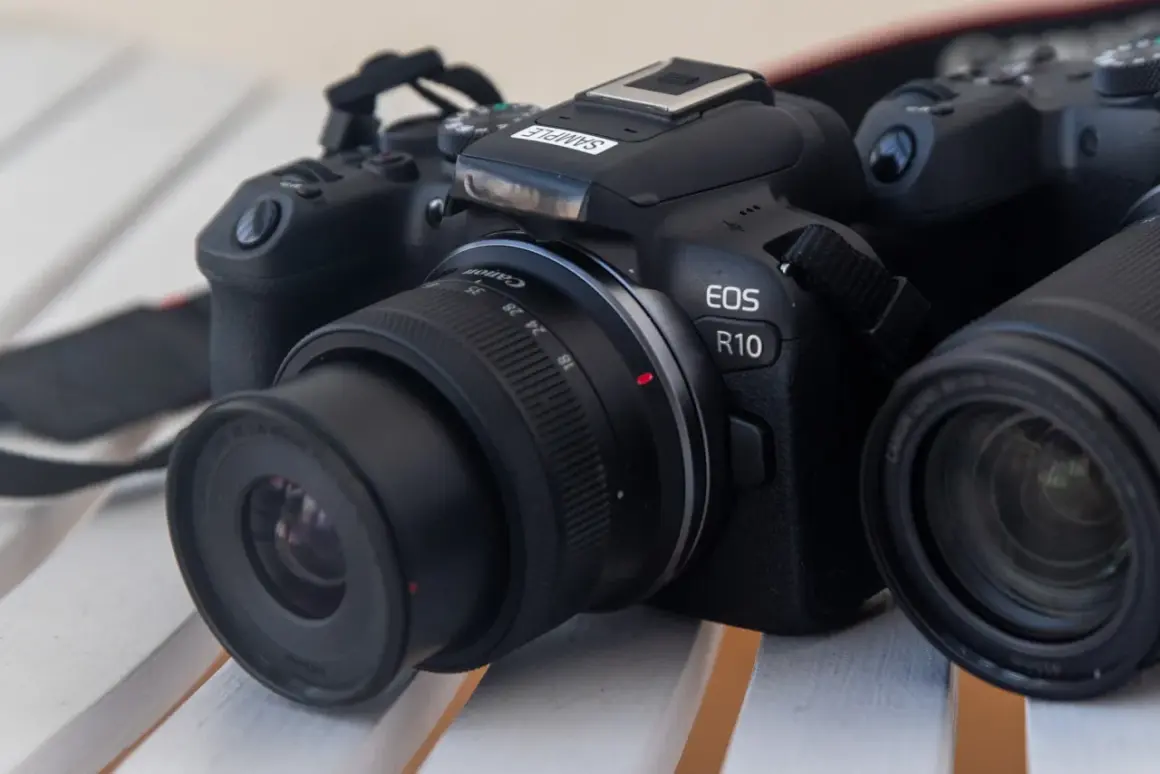
Canon R10 weather sealing is limited, and that matters if you shoot outdoors more than a few times a year. I would treat the camera as a lightweight, capable APS-C body that handles normal travel and everyday use well, but not as a body built for steady rain, beach spray, or dust-heavy work. The practical question is not whether it can survive a little bad weather, but how far you can push it before protection becomes mandatory.
The R10 is a careful-weather camera, not a rough-weather camera
- Canon does not position the EOS R10 with the same weather-resistance language it gives the EOS R7.
- The camera is not waterproof, and it should never be treated like an underwater or exposed-spray body.
- Built-in sensor cleaning helps with loose dust on the sensor, but it does not seal the camera against rain or moisture.
- Common RF-S kit lenses for the R10 also lack dust/weather resistant construction.
- If weather protection matters often, the R7 is the cleaner Canon APS-C step up.
What Canon actually says about the EOS R10 body
Canon’s launch materials made a clear distinction between the EOS R7 and the EOS R10. The R7 was the body singled out for dust and moisture resistance, while the R10 was presented as the lighter, simpler option. That tells me the R10 was never meant to be read as a sealed body, even if it feels solid in hand.
Canon’s own support guidance is even more direct: the camera is not waterproof, and it should not be used underwater. The spec sheet also lists a normal operating environment of 0-40 C and 85% humidity or less, which is useful as an operating limit but not a promise of weather protection. I also like to separate that from the R10’s dust-management features: it has sensor cleaning and Dust Delete Data, which help with loose dust on the sensor, but they do not stop rain, spray, or airborne grit from getting into the body.
| What Canon provides | What it really means | Why I care |
|---|---|---|
| Weather-resistance language is not used for the R10 | The body was not marketed as dust- and moisture-resistant | I would not rely on it in ugly weather |
| Not waterproof | Rain and splash exposure still matter | Waterproof and weather-tolerant are not the same thing |
| Self-cleaning sensor system | Helps remove loose dust from the low-pass filter | Useful, but it does nothing for rain or condensation |
| Dust Delete Data | Stores dust position data for later cleanup in software | Good for post-processing, not for field protection |
That distinction matters once you start shooting in the field, where the difference between resistant and protected becomes very real.
What that means in real shooting conditions
In practice, I would break the R10’s outdoor use into a few clear categories instead of pretending all bad weather is the same. Light mist, damp air, and a few stray drops are one thing. Steady rain, sea spray, windblown sand, and long exposure to humidity are another. The first group is manageable with care. The second group is where I start assuming risk, not luck.
| Condition | Risk level | My practical read |
|---|---|---|
| Light drizzle or mist | Moderate | Possible with a cover and short shooting intervals |
| Beach wind or salt spray | High | I would keep the camera protected or put it away |
| Dusty roads, concerts, or event floors | Moderate to high | Safe enough only if I limit swaps and keep caps on |
| Cold-to-warm temperature changes | Condensation risk | Use a sealed bag and let the body acclimate |
The last row is the sneaky one. Condensation is easy to ignore because it does not look dramatic, but moisture forming inside or on the body can be just as damaging as obvious rain. Canon’s own handling guidance points to a sealed plastic bag during temperature changes, and that is advice I take seriously with any non-sealed camera.
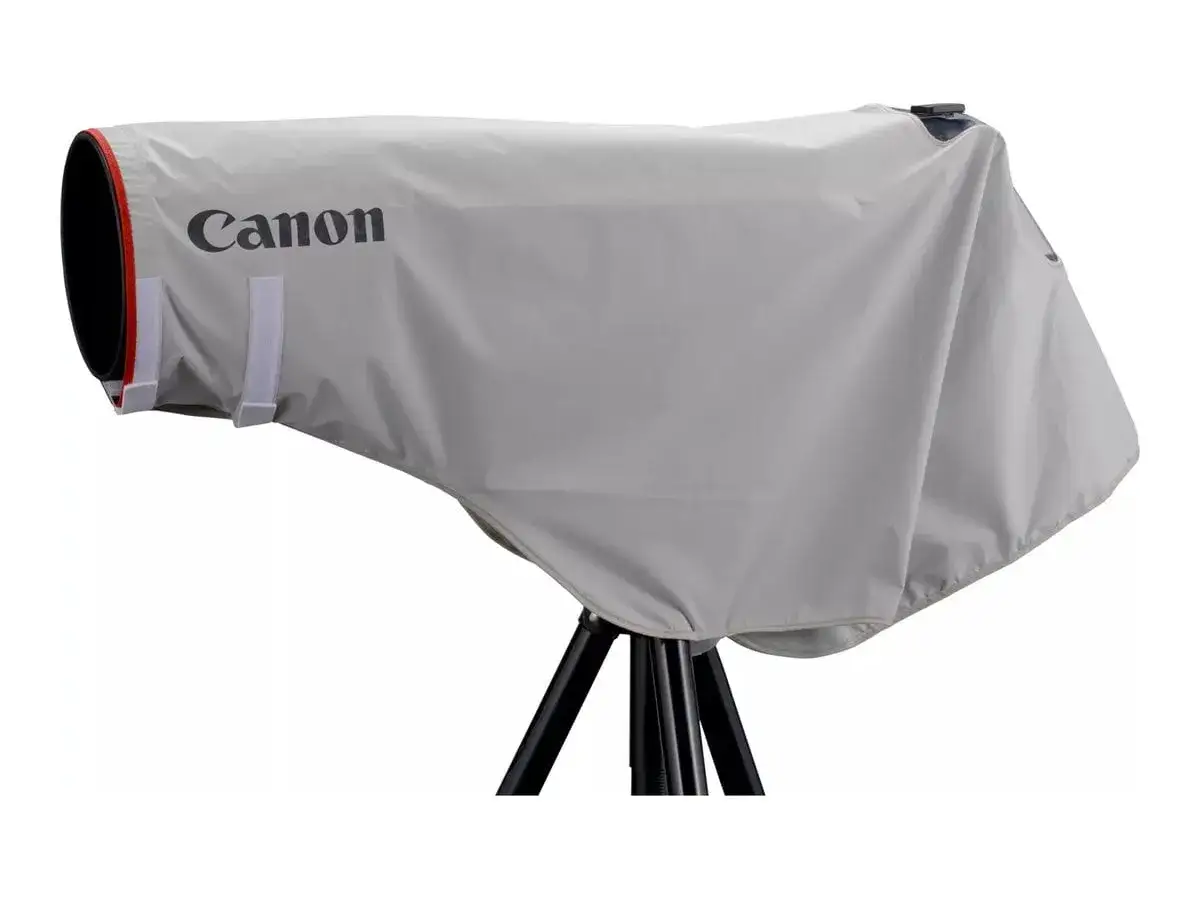
How I would protect the R10 when conditions get messy
If I were using the R10 outside, I would think in terms of prevention, not recovery. Once water, grit, or condensation gets in, the camera is already in the danger zone. My goal would be to make the exposure short, controlled, and predictable.
- I would keep a small rain cover in the bag and deploy it before the weather turns, not after.
- I would keep a microfiber cloth in an easy pocket so I can clear droplets quickly without digging through the bag.
- I would use a hand blower for dust instead of wiping grit across the body or lens mount.
- I would avoid lens changes in wind, sand, or rain unless there is no alternative.
- I would let the camera acclimate in a sealed bag when moving between air-conditioned interiors and humid outdoor air.
- If the body gets properly soaked, I would stop using it and follow Canon’s service guidance rather than testing it again.
I do not see that as being overly cautious. I see it as the cost of using a camera that is meant to be carried, not abused. The R10 is very usable outdoors, but I would always add my own protection around it rather than assuming the body will do the job for me.
Lens choice matters more than many buyers expect
Canon’s lens pages make the same point in a quiet way: the common R10 kit zooms are not weather-resistant lenses. That does not make them bad lenses. It just means the whole kit is built around light weight and convenience, not around shrugging off wet conditions.
| Lens | Canon weather note | What it means on the R10 |
|---|---|---|
| RF-S18-45mm F4.5-6.3 IS STM | Dust / Weather Resistant Construction: None | Fine for everyday shooting, not a lens I would trust in wet weather |
| RF-S18-150mm F3.5-6.3 IS STM | Dust / Weather Resistant Construction: None | Great range for travel, but still not a weather-ready kit lens |
| RF-S10-18mm F4.5-6.3 IS STM | Dust / Weather Resistant Construction: None | Useful for landscapes and interiors, but not a rain lens |
That is why I would not judge the R10 system by the camera body alone. A body and lens combination lives or dies as a package, and the R10 kit package is clearly optimized for portability first. If weather resistance is a real requirement, I would look for a lens and body combination that is explicitly designed for it, not hope the default kit will cover the gap.
How the R10 compares with Canon bodies built for rougher weather
When weather matters enough to influence the purchase, the cleanest comparison is usually the EOS R10 versus the EOS R7. Canon’s own comparison article says the R7 benefits from a higher level of dust- and water-resistance, while the R10 stays on the lighter, more compact side. It also puts the R10 at 15.14 oz and the R7 at 21.59 oz, so you can see the tradeoff in your hands as well as on the spec sheet.
| Body | Weather resistance | Why I would choose it |
|---|---|---|
| EOS R10 | No weather-resistance claim like the R7 | Best when weight, size, and simplicity matter more than ruggedness |
| EOS R7 | Higher level of dust- and water-resistance | Better fit for changing outdoor conditions and more demanding use |
I would not oversell the R7 as waterproof, because it is not. But if weather exposure is part of the job, it is the more sensible Canon APS-C body to buy. The R10 is the camera I would choose when I want to stay light and fast; the R7 is the camera I would choose when I want more margin against the elements.
The simplest way I judge whether the R10 is enough
I keep the R10 in the safe-to-use category for planned outdoor work in decent conditions, not for weather that is actively trying to win. If the shoot is mostly indoors, on travel days, in controlled street sessions, or outdoors where I can keep the camera covered between shots, the R10 still makes sense.
If rain, humidity, dust, surf, or repeated lens changes outside are part of the plan, I would move up to a more weather-ready body or budget for a stricter protection workflow. In 2026, that is still the cleanest way to think about it: the R10 is a strong everyday camera, but its weather protection comes from your habits and accessories, not from a sealed body that you can forget about.