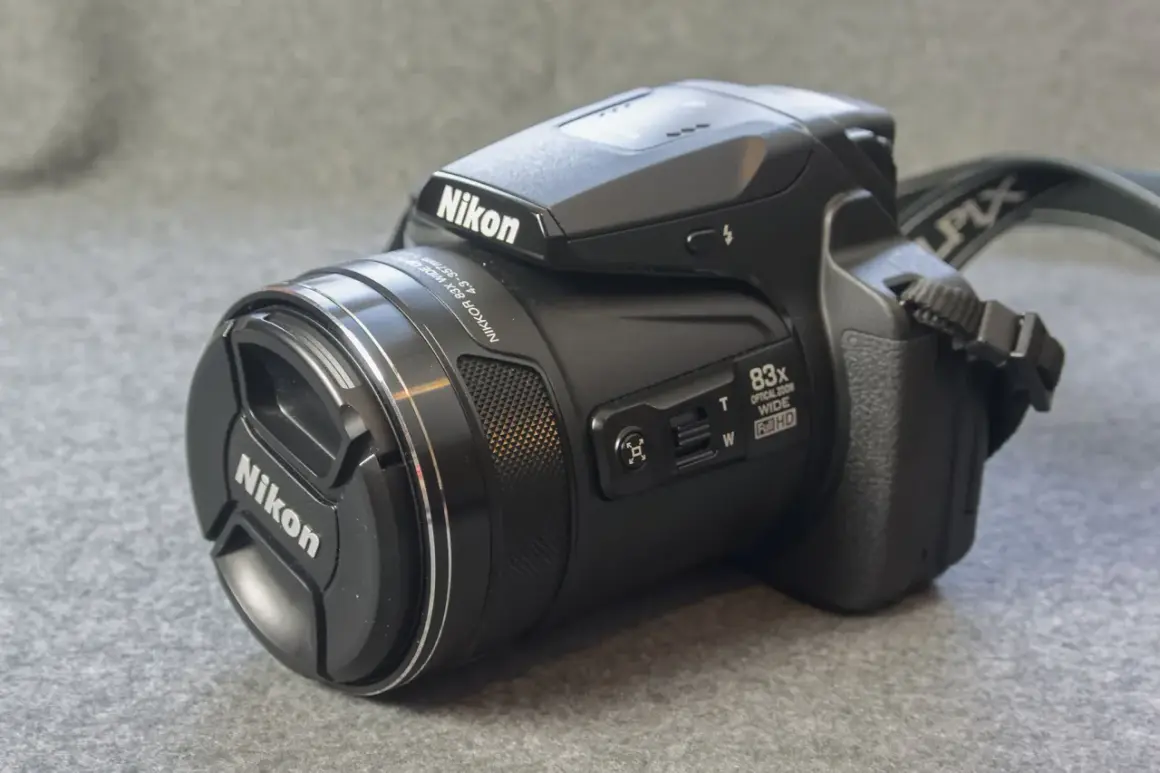
The misspelling nickon p90 usually points to Nikon's Coolpix P900, a bridge camera built around extreme zoom rather than headline-grabbing low-light performance. In this article I break down what model people usually mean, what the P900 actually does well, where it struggles, and whether it still makes sense to buy in 2026. If you care about wildlife, moon shots, travel details, or simply pulling distant subjects into frame, the details matter more than the name on the search result.
What matters most about this camera
- The search term usually leads to the Nikon Coolpix P900, not the older Coolpix P90.
- The P900's defining feature is an 83x optical zoom with a 24-2000 mm equivalent range.
- It is best at birds, the moon, airshows, and distant outdoor subjects where reach matters more than ultimate image quality.
- Its main compromise is the small-sensor look: weaker low-light performance, less flexibility for shallow depth of field, and more dependence on good technique at long zoom.
- In 2026, the P900 is most sensible as a used buy; the P950 and P1100 are the cleaner current Nikon alternatives.
What people usually mean by this camera name
This query usually lands in one of two places: the older Coolpix P90 or the far more famous Coolpix P900. They are not interchangeable. The P90 is a 2009 bridge camera with a 24x lens, while the P900 moved the idea into superzoom territory with 83x reach and a much more ambitious telephoto range. That difference is the whole story, because one is a legacy used-market camera and the other is the model people remember for its extreme zoom.
| Model | What it means in practice | Why it matters |
|---|---|---|
| Coolpix P90 | Older bridge camera with 24x zoom and 26-624 mm equivalent reach. | Fine as a legacy camera, but not the extreme-zoom model most people expect. |
| Coolpix P900 | 83x superzoom with 24-2000 mm equivalent reach and 16.1 effective megapixels. | This is the model people usually mean when they talk about Nikon's long-zoom bridge camera. |
| Coolpix P950 | Same 83x range, but adds 4K video, RAW, and an accessory shoe. | A cleaner choice if you want the same idea with fewer compromises. |
| Coolpix P1100 | 125x zoom and 24-3000 mm equivalent reach. | The current flagship if maximum reach is the priority. |
I separate them because the buying decision changes fast once you know which model is on the table. Nikon's current COOLPIX lineup now centers on the P950 and P1100, so the P900 belongs to the used market rather than the new-shelf market. Once you have the right model in mind, the real question becomes how that zoom behaves outside a spec sheet.
How the zoom changes what you can shoot
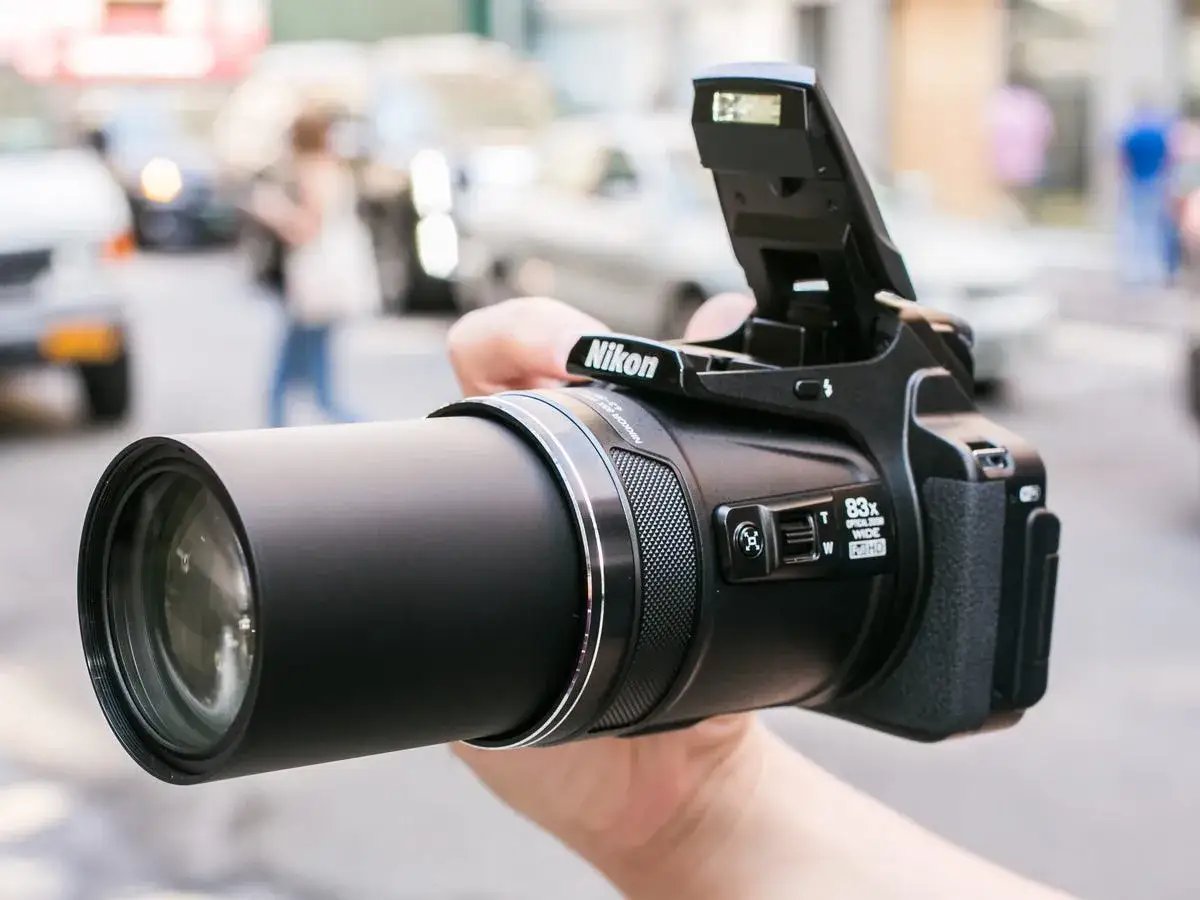
The P900's appeal is simple: it puts distant subjects within reach without forcing you into interchangeable lenses. At the wide end, 24 mm is broad enough for landscapes and travel scenes; at the long end, 2000 mm equivalent gets you into birds, moon details, rooftops, and field sports that would otherwise sit frustratingly far away. That range is the reason the camera became famous in the first place.
In practice, the zoom matters most when the subject is fixed or moving predictably. I would use it for a heron across a pond, a moonrise above the horizon, a football game from the stands, or a tower you cannot physically approach. The camera also supports macro-style close focusing, so it is not only a telephoto tool. It can still do the odd detail shot, especially on trips where you want one body to cover a lot of ground.
The part that gets ignored in spec comparisons is technique. At the long end, tiny hand movements show up immediately, so stability matters more than almost anything else. A tripod helps, but even bracing your elbows, shooting in bursts, and starting with a wider framing before zooming in can improve results. Nikon's Dynamic Fine Zoom extends reach beyond the optical range, but I treat that as emergency magnification rather than a reason to buy the camera. Optical zoom is the value; digital stretch is the fallback. That leads naturally to the more important question of where the P900 still earns real-world respect.
Where the P900 still earns its keep
I would still recommend the P900 for people who care more about reach per dollar than about perfect files. It is a strong fit for bird feeders, wildlife parks, school sports, outdoor concerts, airshows, and casual astronomy. It also works well for travelers who want a single fixed-lens camera and do not want to build a lens kit around it.
That kind of flexibility is why bridge cameras continue to matter in 2026. A mirrorless body with a long telephoto lens can absolutely outperform it, but that setup is more expensive, heavier, and less immediate. The P900 sits in a practical middle ground: enough zoom to solve the real problem, enough automation to keep it approachable, and enough manual control to let a careful user do more than spray-and-pray shooting.
There is also a subtle advantage that newer buyers sometimes overlook. Because the lens is built in, you do not have to think about buying the wrong lens, swapping glass in dusty conditions, or carrying multiple pieces of gear to get one distant shot. For some people, that simplicity is the entire point. The tradeoff, of course, is that the camera is locked into the optical limits Nikon designed into it.The tradeoffs you feel after the first week
The P900's compromises show up quickly if you expect it to behave like a modern mirrorless camera. The sensor is small, which means low-light noise arrives sooner than many buyers expect. Depth of field is also harder to control, so the creamy background separation people associate with larger-sensor cameras is limited. If you want strong subject isolation, this is not the tool I would reach for first.
Autofocus and subject tracking are good enough for many casual uses, but they are not the camera's strength. Fast birds in flight, erratic animals, and indoor action can expose the limits of the system. I would describe it as dependable for patient shooting and less convincing for chaotic motion. The lens reaches far, but it does not change the laws of physics.
- Low light is the first place quality falls off.
- Fast action needs careful timing, not just zoom.
- Digital zoom should be the last resort, not the plan.
- A long zoom punishes sloppy handholding more than most beginners expect.
That is why I see the P900 as a specialist camera, not an all-purpose one. If you understand its limits, it is still useful; if you expect a modern hybrid shooter, it will feel dated very quickly. The next question is whether it still makes sense to spend money on one now.
How I would buy one in 2026
If I were shopping today, I would only buy the P900 if the price was meaningfully lower than a clean P950 and the seller could prove that the camera works across the full zoom range. In the current used market, clean copies often sit around the mid-$500s, and bundled listings with extra batteries or a case usually sit higher. That makes condition more important than the headline number.
| Model | Why I would choose it | Main compromise |
|---|---|---|
| P900 | Lowest-cost way into Nikon's extreme-zoom idea. | Older body, older feature set, and no modern video or RAW workflow. |
| P950 | Same 83x reach, plus 4K, RAW, and better handling. | Costs more, though it still uses the same small-sensor philosophy. |
| P1100 | Maximum reach at 3000 mm equivalent, with the newest Nikon bridge-camera design. | Pricier and larger, with the same broad bridge-camera limitations. |
For the P900 specifically, I would check five things before paying: smooth zoom movement from wide to full telephoto, reliable stabilization, a clean LCD and viewfinder, a battery door and card slot that close firmly, and a seller who can show at least one real photo set taken at the long end. Missing chargers, weak batteries, and sticky zoom mechanisms matter more than minor cosmetic wear. On a camera this old, the lens mechanism is usually the thing that decides whether the deal is sensible or annoying.
If your budget is tight and you want the simplest answer, I would lean toward a clean P900 only when the price is clearly below the newer alternatives. If you want the better long-term purchase, the P950 is the balanced choice, and the P1100 is the one to look at when maximum reach is the actual goal. That is the decision tree I would use myself, and it keeps the purchase grounded in what the camera really does well.
The buy test I would use on a used P900
My rule is straightforward: buy the P900 only if you need reach first and image perfection second. It is still a clever tool for distant subjects, but it is not the camera I would choose for indoor work, low-light family events, or any job that depends on modern hybrid features. Those jobs belong to newer gear with larger sensors or a different lens strategy.
If you are comparing it with the P950 or P1100, the most important upgrade is not just zoom. It is the smoother balance of features around that zoom: 4K on the newer models, RAW support on the P950 and P1100-era thinking, and a more current handling experience. In other words, the P900 still makes sense when the price is right and the use case is narrow. If you want a camera that feels current rather than merely capable, I would step up one generation.
That is the practical reading of the whole topic: the P900 is a memorable superzoom, the P90 is an older bridge camera that gets mistaken for it, and the newer Nikon models exist because the category kept moving. If you match the camera to the job instead of the name, the decision becomes much easier.