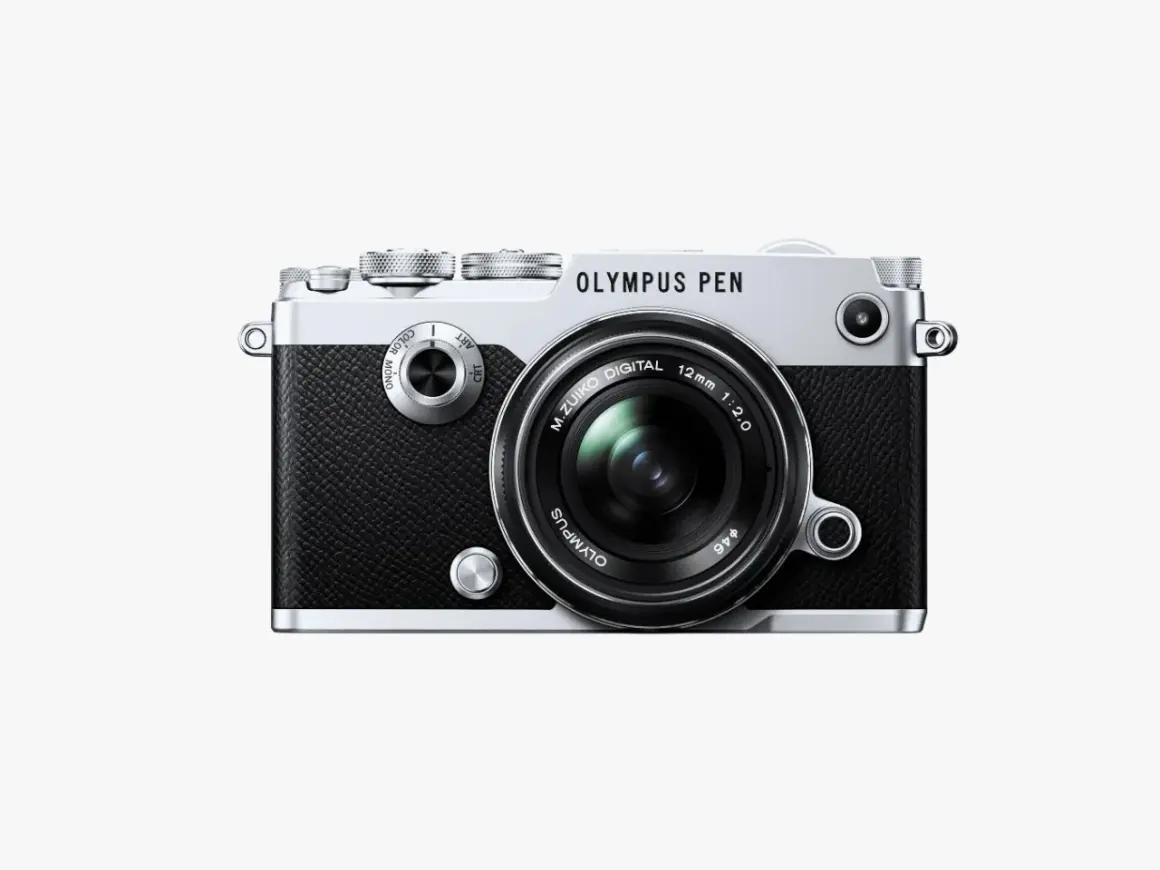
The PEN-F is a creative body first and a technical body second
- It is a 20.3 MP Micro Four Thirds mirrorless camera with 5-axis stabilization and a 2.36 million-dot EVF.
- Its strongest features are the creative dial, monochrome and color profiles, and a shooting experience that rewards deliberate work.
- The body has no weather sealing, no built-in flash, and only Full HD video, so it is not the best all-rounder for rough or hybrid use.
- Used bodies are still expensive in the U.S., so condition and accessories matter as much as the design.
- It makes the most sense with compact primes and with photographers who like making JPEG decisions in camera.
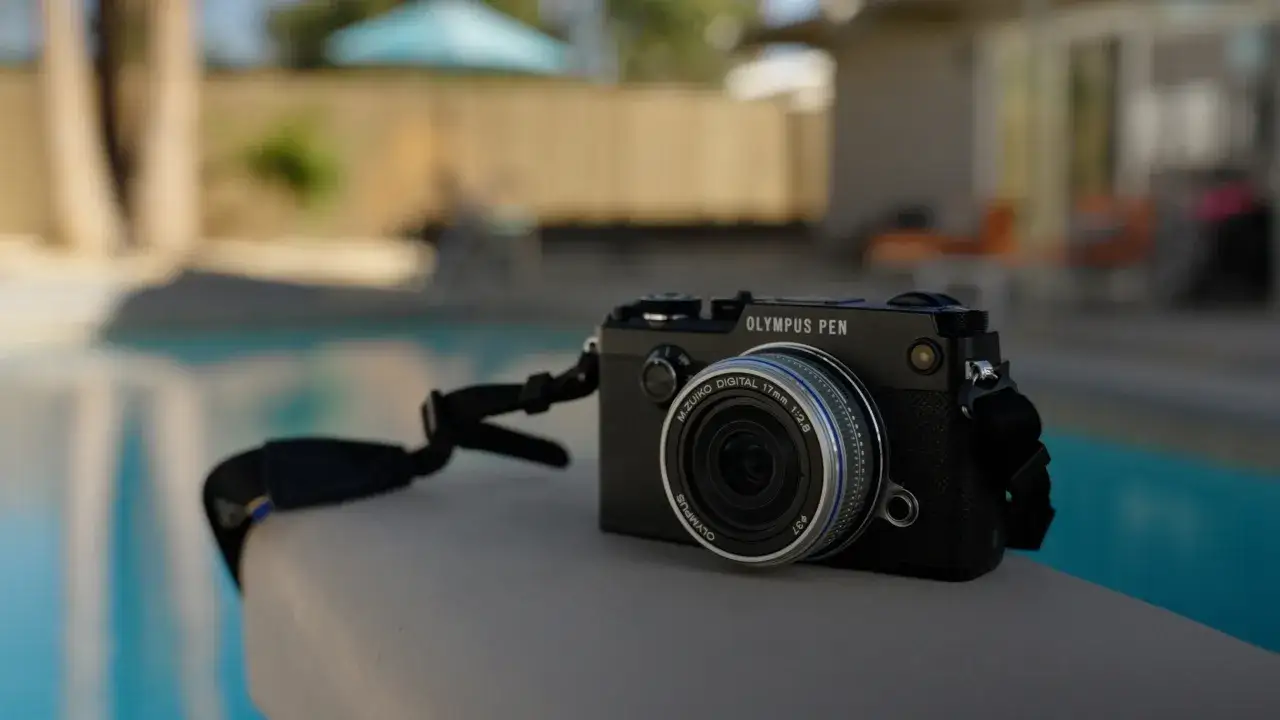
Why the PEN-F still stands out
The PEN-F is not memorable because it is the fastest or most modern camera in its class. It is memorable because it feels intentional. The body design nods to Olympus's classic PEN lineage, but the digital version adds a front creative dial, a clean metal build, and controls that make it easy to change the look of a file before it ever reaches Lightroom.
That matters more than nostalgia. When I pick up a camera like this, I want the interface to encourage decisions, not delay them. The PEN-F does that well with its exposure compensation dial, its profile controls for monochrome and color, and the way the body balances in one hand with a small lens attached. It is the kind of camera that makes you slow down in a good way, and that is exactly why it still has a following.
That personality is what makes it memorable, but the next section is where you can see why it still holds up technically.
The specs that matter more than the spec sheet
OM System's support page still lists the body at about 427 g with battery and card and roughly 330 shots per charge. That is respectable, but not exceptional, and it tells you a lot about what the camera prioritizes: compactness, stabilization, and a refined stills experience over brute-force speed.
| Feature | What it means in practice | My read on it |
|---|---|---|
| 20.3 MP Micro Four Thirds sensor | Enough detail for prints, web work, and moderate cropping | Still completely usable if you expose well and keep expectations realistic |
| 5-axis in-body image stabilization | Helps keep handheld shots sharp at slower shutter speeds | One of the camera's most valuable features, especially with compact primes |
| 81-point contrast-detect autofocus | Reliable for static and moderate subjects, less ideal for erratic motion | Fine for street, travel, and portraits, but not what I would choose for action |
| High Res Shot up to 50 MP equivalent | Creates much larger files for static scenes | Excellent for tripod work, product shots, and interiors, less useful for moving subjects |
| Full HD video up to 1080/60p | Good enough for casual clips and simple delivery | Clearly dated in 2026 if video is part of the buying decision |
| 2.36M-dot EVF and dual-axis 3.0-inch screen | Better framing flexibility and a more premium shooting feel | Makes the camera easier to enjoy, especially for manual focus and low-angle work |
| No weather sealing and no built-in flash | Less protection in bad conditions, and one more accessory to think about | A real limitation if you want a rugged body or expect an all-in-one tool |
The important part is not the numbers by themselves. It is that they point toward a camera built for careful still photography, not fast hybrid shooting, and that distinction becomes obvious as soon as you start using it.
That technical profile is useful only if the camera also feels right in hand, which is where the PEN-F becomes more interesting.
What it feels like to actually shoot with it
The best thing about the PEN-F is not a number, it is a sensation. The front creative dial gives you direct access to looks that most cameras hide behind menus, and the monochrome and color profile controls let you shape the file before you press the shutter. I would not call that a gimmick. For JPEG shooters, it is a serious workflow advantage because it reduces the amount of post-processing needed later.
I also like the physical balance of the body. With a small prime on the front, it feels compact without feeling toy-like. The dual-axis rear screen makes low-angle framing and overhead shooting easier than on a simple tilt-only display, and the electronic viewfinder is good enough that I am happy composing manually when the light is tricky. The handling is not about raw speed. It is about keeping the process deliberate and tactile.
In practice, that means the PEN-F rewards photographers who like to make decisions in the moment, which leads directly to the kinds of shooting where it shines and the kinds where it does not.
Where it works best and where it doesn't
| Shooting scenario | Why it works | Why it can disappoint |
|---|---|---|
| Street and travel | Small body, compact lenses, quiet operation, and strong stabilization | No weather sealing, so I would not treat it like a bad-weather body |
| Portraits and people | Good color rendering, useful monochrome tools, and enough resolution for client work | Contrast AF is fine, but not ideal for fast-moving children or candid chaos |
| Product, still life, and interiors | High Res Shot is genuinely useful for static scenes and tripod work | The payoff drops quickly if the subject moves or the light is constantly changing |
| Casual video | Clean enough for simple clips, behind-the-scenes footage, or social posts | Full HD only, so it is not a modern hybrid-camera answer |
| Sports, wildlife, and fast action | It can shoot sharp stills when the subject cooperates | The autofocus system and general pacing are not built for demanding action work |
My blunt take is this: if you want a camera that feels calm, compact, and expressive, the PEN-F is excellent. If you want one body to cover action, weather, and video with no compromises, it is the wrong shape of solution. That difference becomes even more important once you start shopping used.
How I would buy one used in 2026
This is where the camera gets tricky. MPB currently shows used bodies in the U.S. from $1,119 to $1,479, which is a strong reminder that the PEN-F is a cult-favorite body, not a bargain-bin relic. At that price, I would treat condition and completeness as part of the value, not an afterthought.
Before buying, I would check a few things carefully:
- The creative and exposure compensation dials, because those are part of the camera's identity and should turn cleanly.
- The rear screen hinge and EVF, because wear there affects both usability and resale value.
- The battery and charger, ideally with at least one genuine BLN-1 battery that still holds charge well.
- The bundled flash, since the camera does not have a built-in flash and the original FL-LM3 was part of the kit.
- The sensor and lens mount, because dust, wear, or rough handling can turn a premium body into an annoying repair project.
I would also ask how much the camera has actually been used. A clean shell with heavy button wear is not a great deal. A well-kept body with the original accessories can be worth more than a cheaper one that is missing small but important parts. Once you factor in condition, the next question is whether the lens ecosystem makes the body feel complete.
The lenses that make the camera make sense
The PEN-F is at its best when the lens stays small enough to match the body. That is one of the reasons Micro Four Thirds still works here. The camera was designed around a compact, elegant shooting style, and a huge zoom can technically fit while also defeating the charm of the whole setup.
- 17mm f/1.8 for street, travel, and everyday use. It is wide enough to feel flexible without making the camera bulky.
- 25mm f/1.8 for a natural perspective and low-light work. If I could pick one general-purpose prime, this would be high on the list.
- 45mm f/1.8 for portraits. It gives you a flattering perspective and keeps the kit light.
- 12-40mm f/2.8 PRO if you want one lens that covers most situations. It is excellent, but it makes the body feel more serious and less nimble.
- Compact pancake zooms if your priority is travel convenience over speed and shallow depth of field.
The real trick is balance. When the lens is appropriate for the body, the PEN-F feels elegant and deliberate. When the lens gets too large, it starts to feel like a nice camera carrying the wrong glass, which is exactly the kind of mismatch that makes people underestimate it.
The decision I would make today
- I would buy it if I wanted a camera for street, travel, portraits, black-and-white work, and careful JPEG shooting.
- I would skip it if I needed fast subject tracking, 4K video, or a body I could use hard in bad weather.
- I would only pay premium used prices if the body were clean, complete, and clearly well cared for.
For me, the PEN-F is still special when the photographer wants a camera that encourages taste, pace, and attention. If that is the experience you want, it remains a compelling piece of gear; if you are shopping purely on capability per dollar, the used price usually points somewhere else.