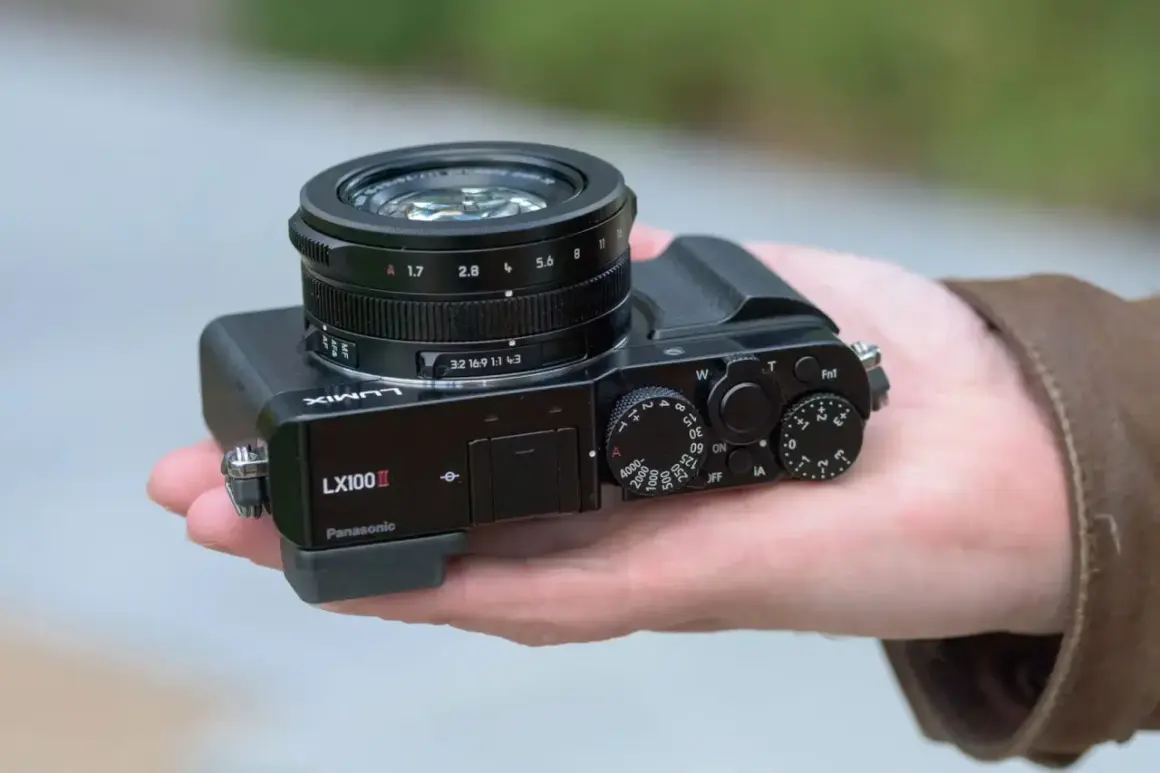
The Panasonic Lumix DMC-LX100K occupies a narrow but still compelling space: a premium compact with a large sensor, a fast zoom lens, and controls that feel intentionally photographic rather than phone-like. In 2026, that mix still matters because it gives you real image quality in a body you can carry often, without stepping all the way into a larger mirrorless setup. This article breaks down what the camera does well, where it has aged, and whether it still makes sense for street work, travel, and creator-focused shooting.
The short version for practical buyers
- It is a premium compact, not a system camera. The fixed 24-75mm equivalent lens is the whole point.
- The 4/3-type 12.8MP sensor still delivers solid files. It is strong for web, editorial, and moderate print work, but not for heavy cropping.
- The lens is the headline feature. The f/1.7-2.8 range gives it a real advantage in low light and subject separation.
- It is best for deliberate shooting. Street, travel, everyday carry, and short-form video suit it better than fast action or long interviews.
- It is a used-market camera in 2026. Panasonic lists it as discontinued, so buying used is the realistic path.
- Value depends on condition. The original LX100 usually costs less than the LX100 II, but the older body also gives up some refinements.
What the LX100 is really for
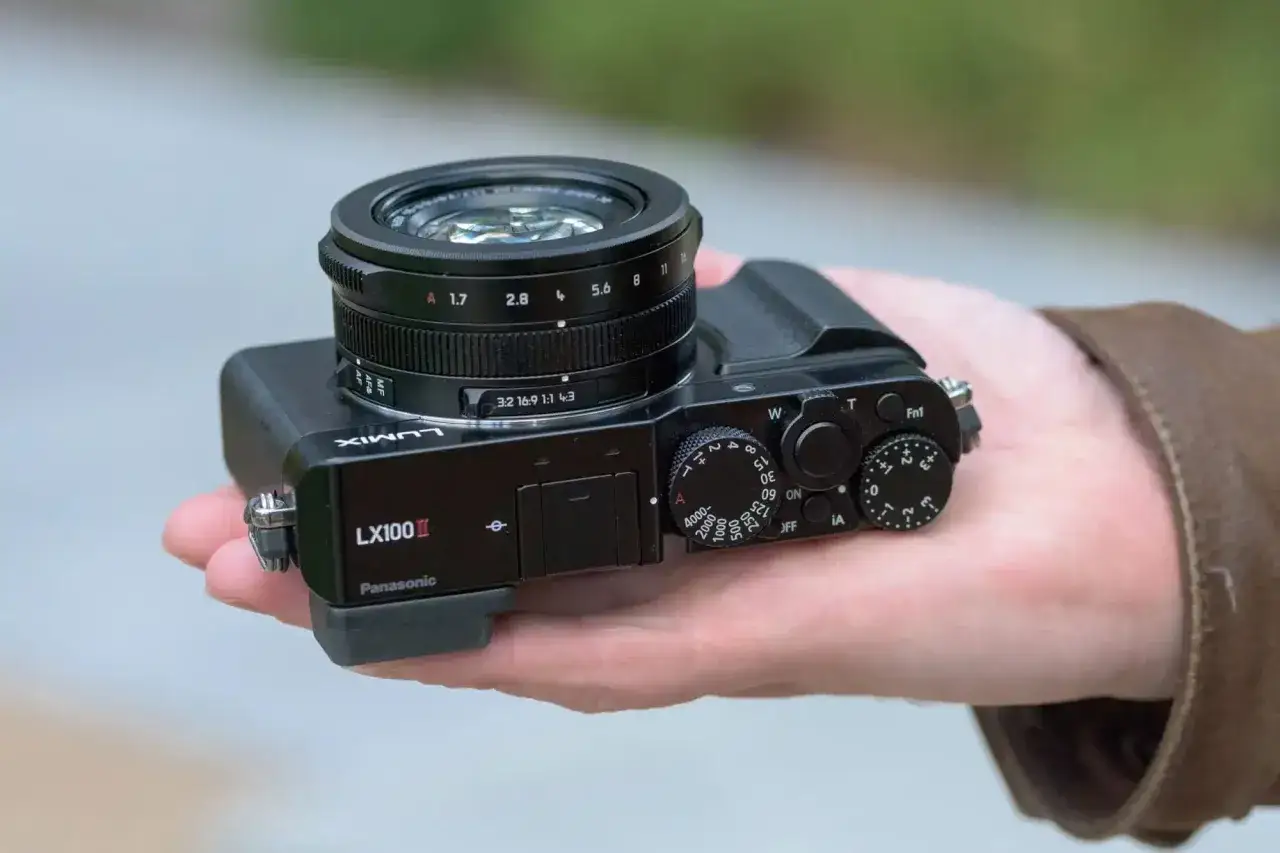
The LX100 is built for photographers who want a camera that feels more deliberate than a phone and less bulky than an interchangeable-lens body. I see it as a creative carry camera first: something you can use for street scenes, travel notes, product details, and everyday storytelling without thinking about lens swaps or a bag full of accessories.
That role matters because it explains the whole design. The fixed zoom covers a practical range, the controls are physical, and the camera is meant to be handled rather than hidden in an app. If your priority is flexibility through lenses, this is the wrong category. If your priority is speed, simplicity, and better image quality than a small-sensor compact, it still makes a lot of sense.
In other words, the LX100 is not trying to be everything. It is trying to be the camera you actually take out of the house, and that is why it has survived so well in conversation even after newer gear has arrived.
The specs that matter in real shooting
Spec sheets can make this camera look either more advanced or more outdated than it really is. The useful way to read it is to focus on the pieces that change actual shooting behavior.
| Spec | What it means in practice |
|---|---|
| 4/3-type MOS sensor, 12.8MP effective | Cleaner files and better depth-of-field control than a typical compact; enough resolution for web, social, and moderate print use, but not a camera for aggressive cropping. |
| 24-75mm equivalent f/1.7-2.8 zoom | Wide enough for street, interiors, and travel, while still giving you real subject separation at the wide end and useful reach at the long end. |
| 3.1x optical zoom with multi-aspect framing | You get one lens that covers a lot of daily situations without feeling cramped when you switch between aspect ratios. |
| 2.76M-dot equivalent EVF and 3-inch rear LCD | The EVF is a major advantage in bright light; the rear screen is usable, but it feels older than modern touch-heavy designs. |
| 4K video with a 15-minute clip limit | Good for short clips, BTS, and social content, but not ideal for long-form run-and-gun recording. |
| Optical image stabilization | Helpful for stills and gentle handheld work, though it does not replace in-body stabilization for difficult video situations. |
| Approx. 393 g with battery and card | Substantial enough to feel stable, light enough to carry all day without turning into a burden. |
| DMW-BLG10 battery, about 350 shots on the rear monitor | Fine for a day of casual shooting, but I would carry a spare if you plan to work seriously. |
The important takeaway is that this is a camera with a strong optical foundation. The lens and sensor combination still do the heavy lifting, which is why the LX100 can look better than many newer compact cameras even when the body itself feels a little old-fashioned.
Where it shines in practice
I think the LX100 earns its reputation in three very different kinds of shooting: street, travel, and detail-focused everyday work. Those are the situations where its fast lens, viewfinder, and compact shape work together instead of fighting each other.
Street and everyday carry
The 24mm-equivalent wide end is broad enough for context, but not so extreme that it becomes awkward for portraits or tighter framing. That makes it easy to move quickly through city scenes, market stalls, and candid moments without changing your whole approach every time the subject shifts. For street photography, that balance matters more than a longer zoom range.
Travel and documentary work
For travel, the LX100 does something a lot of more expensive cameras do not: it encourages you to keep shooting because the setup is simple. The EVF helps in harsh daylight, the lens range covers most common scenes, and the body is small enough that you are less likely to leave it behind in a hotel room. I also like it for visual documentation, where the goal is not perfect versatility but a strong, consistent look.
Read Also: Old Cameras - Sell, Donate, Recycle Safely
Food, interiors, and close detail
The close-focus behavior is more useful than many people expect. At the wide end, the camera can focus very close, which makes it genuinely handy for food, product flat-lays, and interior details. For a production-minded workflow, that is valuable because one camera can cover wide context shots and tight texture shots without much friction.
That strength becomes even more interesting when you think about creator work. For behind-the-scenes stills, small brand assets, or editorial-style coverage, the LX100 gives you a look that is cleaner and more intentional than a phone without forcing you into a full kit.
Where it starts to feel dated
I would not pretend the LX100 has aged perfectly. It has real limits, and the older the camera gets, the more those limits matter in workflows that are fast, hybrid, or heavily video-driven.
- Autofocus is good enough, not cutting edge. It can handle everyday photography well, but it is not the kind of tracking system I would trust for unpredictable sports or moving wildlife.
- The rear screen is fixed. That is manageable for stills, but less convenient for low-angle framing, vlogging, or self-shooting.
- There is no external microphone input. For interviews or polished video work, that is a hard limitation because you are locked to the built-in audio.
- 4K clips are time-limited. The 15-minute ceiling is fine for short sequences, but it gets in the way if you want to record longer takes.
- Resolution is modest by 2026 standards. 12.8MP is enough for many uses, but if you crop heavily or deliver large print files, newer high-resolution bodies have an advantage.
So my read is simple: this is still a very capable compact, but not a modern all-in-one creator camera. If your work depends on long-form video, fast subject tracking, or live production flexibility, you should look elsewhere. That tradeoff becomes clearer once you compare it with the newer version and with other compact options.
How it stacks up against the LX100 II and other compact options
Panasonic lists the LX100 on its discontinued-products pages, so in 2026 I would treat it as a used-market purchase rather than a new one. That makes price-to-condition the key question, not the original launch spec. In the current used market, MPB has shown original LX100 bodies roughly in the $629 to $874 range, while LX100 II bodies have been sitting closer to $909 to $1,049.
| Camera | Why I would pick it | Main compromise | Best fit |
|---|---|---|---|
| LX100 | Lowest entry cost into the LX100 formula, with the same core lens-and-sensor concept. | Older screen, older AF behavior, and a smaller 12.8MP file. | Buyers who want the look and handling without paying for the later update. |
| LX100 II | More resolution, refined handling, and a better rear screen. | Usually costs more on the used market. | Users who like the original concept but want a more polished body. |
| Ricoh GR III | Smaller, very direct, and excellent for street work with a fixed wide prime. | No zoom, so composition is less flexible. | Photographers who want the smallest serious pocket camera and are happy living at one focal length. |
| Sony RX100 series | More zoom range and very strong autofocus in a tiny body. | Smaller sensor look and a different shooting feel. | Creators who value reach and speed more than the LX100’s lens character. |
My practical rule is this: choose the LX100 if you want the original balance of size, speed, and control; choose the LX100 II if you want that same idea with fewer compromises; and choose something else if your priority is zoom reach, pocketability, or modern autofocus above all else. That comparison only becomes meaningful once you know what to inspect on a used copy.
What I would check before buying a used body
Because this is an older camera, condition matters more than the model name on the front. I would inspect a used LX100 exactly the way I would inspect an older lens-centric tool: by testing the parts that move, the parts that display, and the parts that affect image quality.
- Lens movement - Make sure the zoom extends and retracts smoothly with no grinding, hesitation, or odd noise.
- Aperture behavior - Test several f-stops and confirm that the blades respond cleanly.
- EVF and LCD - Look for dead pixels, haze, color shifts, or brightness problems.
- Buttons and dials - Rotate the top dials and rear controls to confirm they still feel positive and consistent.
- Battery health - Expect older packs to be weaker than the official rating; a spare battery is a smart purchase.
- Card slot and file writing - Use a UHS-I U3 card and make sure the camera writes RAW and 4K files without errors.
- Autofocus consistency - Test both wide and telephoto ends, especially in mixed indoor light.
- Sample files - Check ISO 1600 and ISO 6400 shots to see whether the sensor behavior matches your tolerance for noise.
If I were buying one for production-adjacent work, I would prioritize condition over extras. A clean, well-kept body with a strong battery and a healthy lens barrel is worth more than a bundle of accessories you will not use. Once that is clear, the question is whether the camera actually fits the way you shoot.
The smartest way to use this camera in 2026
The LX100 still makes sense when you want a camera that encourages you to shoot with intent. I would use it as a street camera, a travel companion, a detail capture tool for visual stories, or a compact secondary body for brand and editorial work. I would not choose it as my main hybrid video camera, and I would not choose it if I needed long clips, external audio, or cutting-edge autofocus.
If you want the most practical version of the answer, it is this: buy the LX100 only if you value the lens, the handling, and the compact footprint enough to accept the age of the body. If that tradeoff sounds reasonable, the camera still has a lot to offer. If it does not, the used market gives you better alternatives for either pure stills or more modern hybrid shooting.