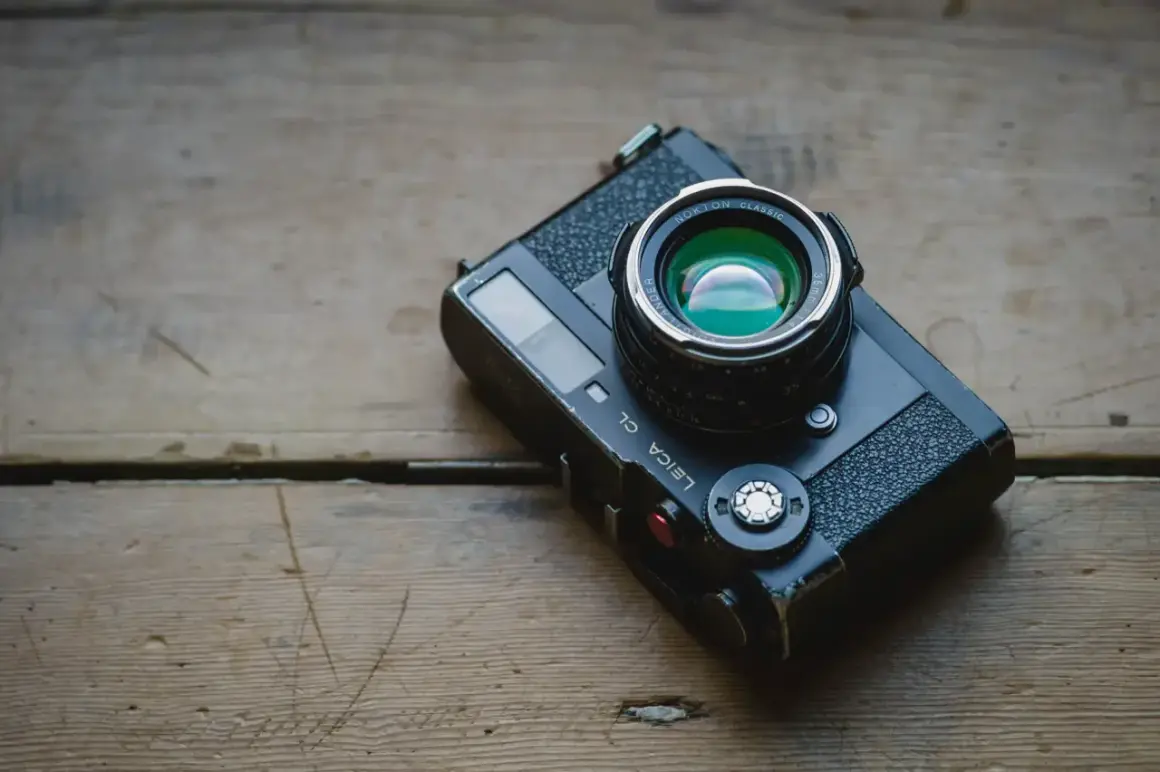
This Leica CL review looks at the things that actually matter in use: handling, image quality, lens options, and whether a discontinued APS-C Leica still deserves attention in 2026. The CL is not trying to win a spec contest; it is trying to feel like a small, elegant camera that makes you want to shoot more often. That is a different promise, and it only works if the compromises stay reasonable.
Key takeaways for buyers who want the short version
- The CL is a premium APS-C mirrorless body with a built-in EVF, the electronic viewfinder that shows you a live preview through the eyepiece.
- Its 24MP files still look excellent for travel, street, portrait, and editorial work when paired with good lenses.
- The biggest compromises are battery life, the lack of in-body image stabilization (IBIS), and a lens system that is excellent but expensive.
- Because Leica discontinued the CL/TL line in 2022, I would treat it as a used-market buy, not a future-proof system investment.
- If you value handling and build quality over autofocus speed, burst depth, and video features, the CL still makes sense.
Why the Leica CL still feels relevant in 2026
The Leica CL launched as a compact APS-C body on Leica’s L-mount, the mirrorless mount the company uses across TL, SL, and adapted lenses. That alone tells you almost everything about its character. It sits in the awkward but interesting space between a premium compact and a full interchangeable-lens system camera, which is why I think it is more relevant as a used creative tool than as a modern spec sheet hero.
Leica discontinued the line in 2022, so in 2026 I judge it by a different standard: does it still earn its premium through usability, not just badge value? The short answer is yes, but only for a specific kind of photographer. If you want direct controls, a strong EVF, solid metal construction, and a body that feels intentionally designed rather than feature-stuffed, the CL still has real appeal. If you want the newest autofocus algorithms or the best value per dollar, the math gets much less flattering.
To make that distinction clearer, I start with the numbers that matter most in actual shooting.
The specs that matter in real shooting
| Spec | What it means in practice |
|---|---|
| 24MP APS-C sensor | Enough resolution for large prints, cropping, and clean travel or editorial work without giant files. |
| 2.36M-dot EyeRes EVF | One of the CL’s best features; the framing experience feels precise and confident. |
| L-mount with TL, SL, M, and R compatibility via adapters | Flexible lens options, but the best balance still comes from compact native glass. |
| Up to 10 fps burst shooting | Fine for candid moments and moderate action, not a sports-first machine. |
| About 14 DNG raw frames | Raw burst shooting fills quickly, so the CL is fine for moments, not long sequences. |
| 4K video up to 30 fps | Useful for casual clips and short productions, but far from a modern hybrid benchmark. |
| About 403 g with battery | Small enough to carry daily, though some lenses will outweigh the body quickly. |
| About 220 shots per charge | Bring a spare battery if you shoot for a full day. |
What stands out is how balanced the spec sheet is. Nothing here is outrageous, but nothing feels random either. The CL is built for deliberate photography, and that is why the body design matters so much. DNG is Leica’s raw file format, and it is part of the reason the burst buffer matters more than the headline frame rate. The next question is whether the handling actually delivers on that promise.
Handling and controls feel like the real reason to buy one
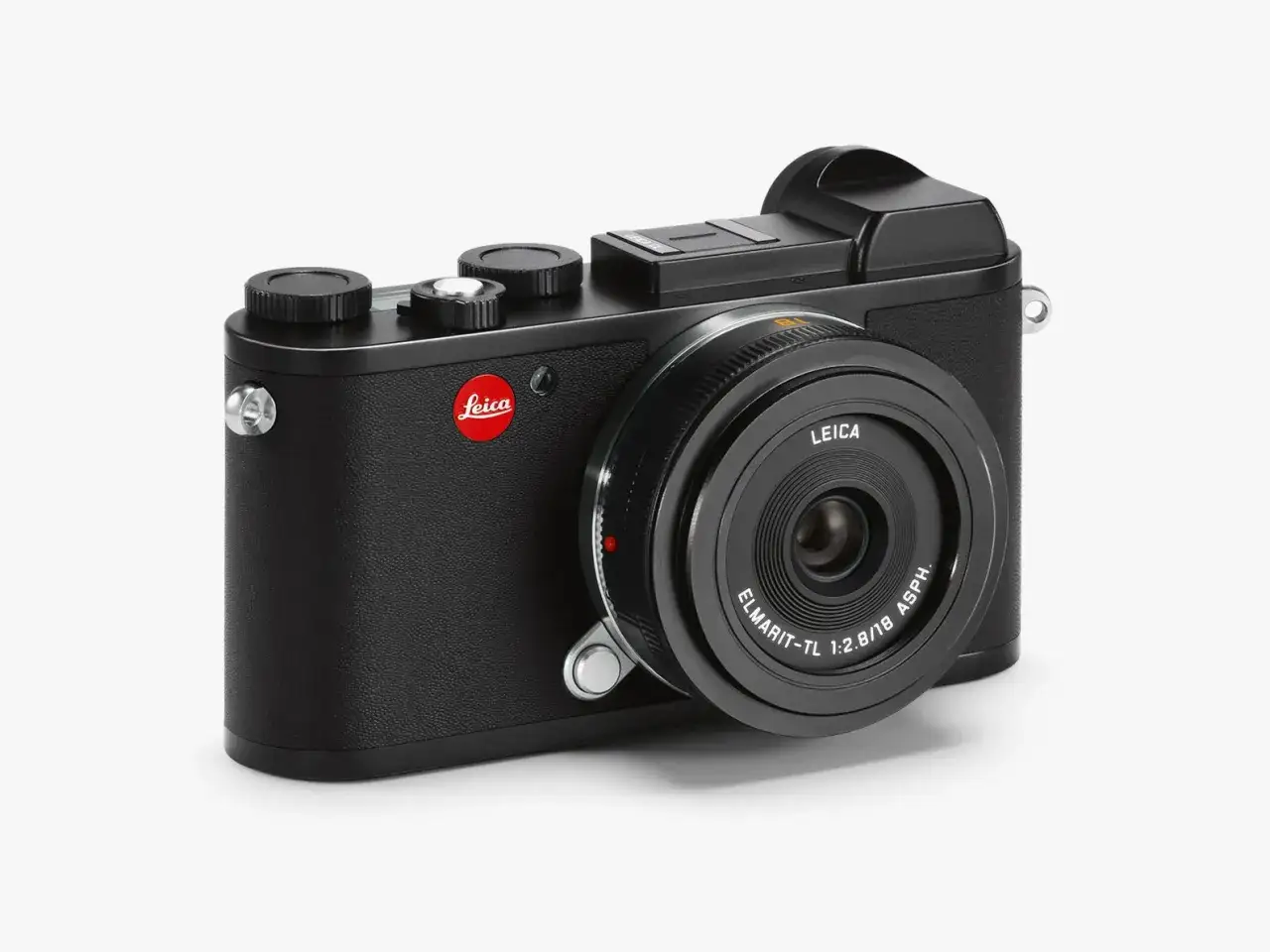
The first thing I notice on the CL is not the sensor or the mount. It is the way the camera invites you to work with it. The top plate keeps the core settings within immediate reach, the body feels dense and precise, and the whole design has a calm, almost analog rhythm that many newer cameras never quite manage. I do not mean “simple” in a stripped-down way; I mean that the camera asks for decisions up front and then gets out of the way.
That matters more than it sounds. When aperture, shutter speed, ISO, and exposure compensation are easy to access, I spend less time hunting through menus and more time watching the scene. The built-in EVF reinforces that habit because the camera feels stable at eye level, and the viewfinder is good enough that I stop thinking about the hardware and start thinking about composition. Manual focus is also more practical than the CL’s small size might suggest, especially when I use focus peaking or magnification with adapted glass.
There is a catch, though: the CL feels refined, not generous. Controls are excellent, but the camera does not give you the deep handgrip or the sprawling custom-button layouts that more modern bodies often use to mask complexity. In other words, it is delightful if you like deliberate shooting, and merely adequate if you want a camera that does everything by muscle memory without much thought. That tension becomes even more obvious once you look at the files it produces.
Image quality is still very good, but the sensor sets the limits
The CL’s 24MP APS-C sensor, a smaller format than full frame, is the heart of the camera, and it still holds up well for real-world work. At base ISO, the files are clean, detailed, and easy to edit, with enough resolution for magazine spreads, travel prints, and fairly aggressive cropping. Leica cameras are often talked about as if their magic is abstract, but here the practical benefit is easy to see: the images look polished without needing much help.
What I would not do is pretend this sensor behaves like a modern full-frame body. Subject separation is more limited, high ISO performance falls behind larger-sensor Leica models, and shadow recovery is good rather than miraculous. None of that is a flaw if you understand what you are buying; it is simply the trade-off for the smaller format. In fact, I think the CL is at its best when the photographer leans into that reality instead of trying to force it into a full-frame role.
For me, the key question is not whether the CL matches a modern flagship. It is whether the files still feel good to work with after the novelty wears off. In daylight, city scenes, portraits with smart lens choices, and editorial-style documentation, the answer is yes. The camera gives you a clean starting point and a consistent rendering style, which is exactly what many photographers want from a premium body. The lens you mount on it, however, changes the experience dramatically.
Lens choices decide whether the CL feels brilliant or expensive
The CL system makes more sense when you think in focal-length equivalents rather than absolute numbers. On APS-C, the camera turns a compact prime into a very usable everyday perspective, and that is where the system starts to feel genuinely Leica-like: small, deliberate, and expensive in all the right and wrong places. The body is only half the story.
| Lens | Approximate full-frame view | Why it works on the CL |
|---|---|---|
| Leica TL 18mm f/2.8 | About 27mm | Great for street, interiors, and general walkaround shooting. |
| Leica TL 23mm f/2 | About 35mm | The most natural everyday choice for travel and documentary work. |
| Leica TL 35mm f/1.4 | About 52mm | Best all-round prime if you want a normal perspective and subject separation. |
| Leica TL 60mm f/2.8 Macro | About 90mm | Strong for portraits, detail, and product work with a clean rendering. |
| Leica SL lenses | Same focal length, larger package | Optically excellent, but the body-to-lens balance becomes less compact. |
| Leica M lenses via adapter | Manual focus only | Fantastic if you already own M glass and want a compact digital body for it. |
If I were building a CL kit from scratch, I would start with the 23mm or 35mm TL lens and stop there until I knew the camera fit my habits. That is the safest way to avoid the classic Leica trap: buying a beautiful body and then realizing the lenses are what really define the system’s cost. The CL can absolutely justify itself, but only when the lens choices match the way you actually shoot.
The good news is that the L-mount gives the camera more breathing room than its discontinued status suggests. The bad news is that the most affordable route is still not cheap, and the premium feel of the body makes budget lenses look out of place faster than they would on a more utilitarian camera. That is why the next part of the evaluation is less about specs and more about use cases.
Where the CL still makes sense for actual photography
Street and travel
This is where the CL is easiest to like. The body is compact enough to carry all day, the EVF helps me compose quickly in changing light, and the camera encourages a more thoughtful pace without becoming slow. With a 23mm or 18mm TL lens, it feels like a serious travel camera rather than a pocket compromise.
What I appreciate most here is restraint. The CL does not bombard me with gimmicks, so I stay focused on timing, framing, and light. That makes it a strong fit for cities, museums, markets, and any assignment where I want to be present rather than constantly adjusting gear.
Portraits and detail work
With the 35mm f/1.4 or 60mm macro, the CL becomes surprisingly capable for portraits and object work. The smaller sensor means you will not get the same shallow depth of field as a full-frame Leica at the same framing, but the files still have enough depth and clarity to look elegant rather than clinical. For editorial portraits, product shots, and detail studies, that is often a better balance than people expect.
I also like the way the CL encourages disciplined composition in this role. It is not a camera that begs for endless burst shooting; it rewards timing and lens choice. That can be a strength if you work in a controlled environment or shoot people who respond better to a quieter, less intrusive camera.
Read Also: Hold Camera Better - Sharper Photos Every Time
Video and action
Here the camera is competent, not competitive. 4K at 30 fps is fine for social clips, behind-the-scenes footage, and casual hybrid use, but the CL is not the body I would choose for a video-forward workflow in 2026. The battery life is modest, the burst buffer is short, and autofocus is good enough for regular shooting without feeling like a modern subject-tracking system.
Action is similar. Ten frames per second sounds useful, but the practical ceiling is lower once you account for buffer depth and real-world autofocus demands. If your work regularly includes sports, birds, or fast-moving events, I would steer you elsewhere. If you mostly shoot people, places, and objects, the CL is far more convincing.
That leads directly to the real 2026 question: who should still buy one, and who should treat it as an attractive distraction?
The checklist I would use before buying one today
- Inspect the EVF carefully. The viewfinder is one of the CL’s selling points, so dust, display issues, or alignment problems matter more than they would on a cheaper body.
- Test the dials and buttons under your thumbs. The camera’s charm depends on the controls feeling precise, not vague or sticky.
- Check battery health and plan for a spare. Roughly 220 shots per charge is workable, but not generous.
- Mount the lens you actually intend to use. A body-only test does not tell you whether the handling works once a TL, SL, or adapted M lens is attached.
- Budget for the full system, not the body. Recent used-market listings I checked put CL bodies around the $2,000 mark, which is exactly why the lens plan matters so much.
- Confirm the shooting style matches the camera. If you want compact luxury, direct controls, and a slower creative pace, the CL fits. If you want in-body image stabilization (IBIS), deep buffers, and cutting-edge autofocus, it does not.
My bottom line is straightforward: the Leica CL is still a compelling camera because it feels coherent, not because it wins on paper. I would buy it today only if I valued the shooting experience as much as the image output, and only if I accepted that the system is now a used-market choice with a premium attached. For the right photographer, that premium still buys something real: a small Leica that makes the act of shooting feel considered, focused, and worth carrying.