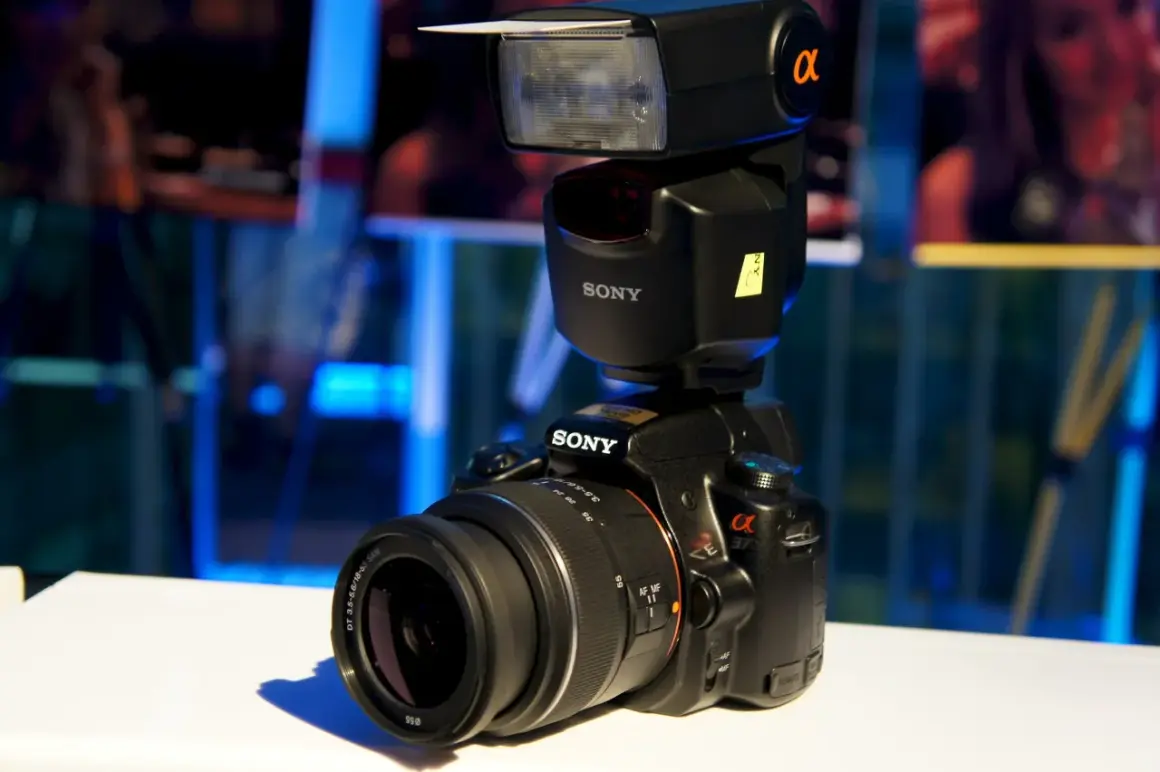
The Sony A37 is one of those cameras that makes more sense once you stop judging it like a modern mirrorless body. It is a compact A-mount SLT camera with an APS-C sensor, a translucent mirror design, in-body stabilization, and enough manual control to teach real exposure skills without getting expensive. In this article I break down what it is, where it still works in 2026, and what I would check before spending money on a used copy.
This older Sony body still earns a place when the job is simple and the budget is tight
- It is an SLT camera, not a conventional DSLR, so its handling and autofocus behavior are a little different from older mirror-flip bodies.
- The core strengths are stills in good light, useful in-body stabilization, and a straightforward A-mount lens path.
- Its practical ceiling is lower than a modern hybrid camera, especially for low light, cropping, and video ambitions.
- Used copies are only worth serious attention if the battery, charger, mount, and controls are healthy.
- For creators, it works best as a learner’s camera, a backup body, or a low-cost stills tool rather than a future-proof main rig.
What the SLT-A37 actually is
I would describe the A37 as Sony’s bridge between a classic DSLR and a more modern live-view workflow. The camera uses Sony’s SLT design, so the mirror is fixed and semi-transparent rather than flipping out of the way on every shot. That gives you a different experience: continuous phase-detect autofocus in more situations, less of the old mirror-flip rhythm, and a body that behaves a bit more like a training tool for real photography than a polished modern hybrid.
The important part is not the label on the box but the way it shoots. Sony’s own specs point to a 16.1MP APS-C Exmor CMOS sensor, a 15-point AF system with 3 cross-type points, and in-body SteadyShot. That combination is old by 2026 standards, but it still covers the basics well enough for portraits, family work, practice sessions, and simple video. Once you understand that design choice, the rest of the camera starts to make sense, and the spec sheet stops looking random.
The specs that matter in real shooting
The raw numbers matter less than what they mean in hand, but they do explain why this body feels the way it does. I read the A37 as a camera with a solid learning core, a modest resolution ceiling, and a lens system that rewards practical choices more than spec chasing.
| Feature | Sony listed | What it means in practice |
|---|---|---|
| Sensor | 16.1MP APS-C Exmor CMOS | Enough for web, social content, modest prints, and learning composition without heavy file sizes. |
| Autofocus | 15-point phase-detect AF with 3 cross-type points | Still usable for moving subjects, especially compared with simpler entry-level bodies from the same era. |
| Metering | 1,200-zone evaluative metering | Helps the camera make more stable exposure decisions when light is mixed or uneven. |
| ISO range | Still photos from ISO 100 to 16,000; auto behavior is much more conservative | I would think of ISO 1,600 as a practical comfort zone and 3,200 as the upper edge for emergencies. |
| Video | Full HD capture with region-dependent 60i or 50i and 24p or 25p options | Good enough for casual clips and simple behind-the-scenes footage, not a modern 4K workflow. |
| Stabilization | In-body SteadyShot | Useful with older primes and lenses that do not have optical stabilization built in. |
| Viewfinder | Electronic viewfinder, 0.46-type, 1.44M-equivalent dots | Makes exposure preview and framing easier than a very basic optical finder in many situations. |
| Battery | NP-FW50 rechargeable pack | Still common enough to replace, but on a used body I would always assume the battery may be tired. |
I would not read those specs as a promise of speed or low-light magic. I would read them as a sign that this camera is strongest when you want a straightforward stills body, not a feature-packed creator machine. That distinction matters, because it tells you whether to keep reading or move on to a newer platform.
Who it still makes sense for in 2026
I would still recommend this body to a few very specific people. First, it makes sense for beginners who want a camera with real controls instead of a phone-like experience. Second, it is logical for anyone who already owns A-mount lenses and wants a cheap body to keep using them. Third, it can work as a backup stills camera for a small production setup, especially if your actual deliverables are web images, thumbnails, BTS stills, or social content rather than high-end commercial video.
I would skip it if you need the camera to do too much. For me, the deal-breakers are simple: no 4K, older autofocus logic, modest high-ISO behavior, and a system that is no longer the center of Sony’s lens strategy. That does not make the camera bad. It just makes it narrow, and narrow tools are only smart when the job fits the tool.
- Good fit: learning exposure, portraits, casual travel, family use, legacy A-mount glass, low-cost backup work.
- Also useful for: behind-the-scenes photos, thumbnail stills, simple Full HD clips, and anyone who values an EVF over a very basic optical finder.
- Poor fit: 4K video, heavy cropping, fast sports, advanced subject tracking, and a modern creator workflow built around current lenses and apps.
Once you know where it fits, the next question is whether a particular used copy is healthy enough to justify the price.
What to check before buying a used body
For this model, condition matters more than age. A clean, working body with a healthy battery is worth far more than a cheap one with a sticky shutter button, weak battery, or a damaged mount. In the current U.S. used market, I would expect a working body to land roughly in the $150 to $200 range, with kits climbing higher when the lens and accessories are complete.
| Check | What I want to see | Why it matters |
|---|---|---|
| Battery and charger | NP-FW50 battery that charges normally and can hold a usable session | Weak batteries are common on older bodies and can make a good camera feel broken. |
| Lens mount and contacts | No wobble, bent pins, corrosion, or obvious abuse | Mount damage turns lens swaps into a problem instead of a routine. |
| Mirror and sensor area | Normal dust is fine; scratches, oil, or impact marks are not | Dust can usually be managed, but damage changes the value of the camera fast. |
| Buttons and dials | Every control responds cleanly, with no sticking or random jumps | Worn controls are a hidden repair bill waiting to happen. |
| LCD and EVF | Readable display, no heavy fading, lines, or flicker | You need both screens to work if you want the body to be usable day to day. |
| Test files | A recent still photo and a short video clip from the seller | That is the fastest way to confirm focus, exposure, recording, and basic stability. |
I do not panic over a little dust on an older translucent-mirror body. Sony’s maintenance guidance for this kind of camera is simple: use a blower and a soft brush, and do not touch or spray the mirror surface. What I care about is whether the body looks neglected, abused, or incomplete. If the seller cannot show a recent test shot, I treat that as a warning rather than a bargain.
After the body passes that checklist, the lens ecosystem decides whether the kit is genuinely useful or just cheap.
The lens and accessory choices that change the value
The safest way to think about this camera is to treat A-mount glass as the native path. If you already own Sony or compatible A-mount lenses, the A37 becomes much more attractive. If you do not, the lens bundle matters more than the camera body alone, because the body is only half the purchase.
| Bundle code | What usually comes with it | Why I care |
|---|---|---|
| SLT-A37 | Body only | Best only if you already own A-mount lenses or want to build a kit slowly. |
| SLT-A37K | DT 18-55mm zoom | The most straightforward starter bundle for general use and learning. |
| SLT-A37M | DT 18-135mm zoom | My favorite single-lens option for travel or casual work, because it covers more without swapping lenses. |
| SLT-A37Y | DT 18-55mm plus DT 55-200mm | Better if you want reach for family events, daylight sports, or compressed background shots. |
The crop factor is worth remembering here. A 35mm lens behaves like roughly a 52.5mm equivalent, and a 50mm lens behaves like about 75mm equivalent, which is useful when you want a natural portrait look. Because the camera has in-body SteadyShot, older primes can still be practical even when they lack optical stabilization. That is one of the reasons this mount remains interesting for budget shooters: the body carries some of the stabilization burden.
I would also budget for a spare NP-FW50 battery, a decent SD card, and a hood for any lens you expect to use outdoors. Those are small purchases, but on an older camera they often matter more than the difference between two nearly identical listings. Once the lens choice is sorted, the remaining gains come from how you set the camera up.
How I would set it up for cleaner results
If I were using this body today, I would keep the setup simple and deliberate. The camera rewards clarity more than experimentation for the sake of it.
- Start with RAW or RAW plus JPEG if you want room to fix exposure and white balance later.
- Use Aperture Priority for portraits and travel, then switch to Manual when the light is stable and you want full control.
- Keep the ISO ceiling modest. I would target ISO 1,600 as a normal upper limit and 3,200 only when I need the shot.
- Leave SteadyShot on for handheld stills, then turn it off on a tripod if the image starts to look unstable.
- For moving subjects, use continuous AF and a fast enough shutter speed. For people walking, I usually want at least 1/250 sec; for calmer scenes, 1/125 sec can be enough.
- For video, shoot in good light and avoid expecting modern subject tracking. This camera is happier with simple movement than with chaotic, low-light action.
I also like to remember how the camera “feels” when I choose a lens. A 35mm on APS-C is a practical normal lens, while a 50mm gives you a classic short portrait view. That simple lens math is useful on a body like this, because it pushes you to make intentional choices instead of relying on software to save the frame.
Why this old Alpha body still earns its keep
I would not buy the A37 for prestige, and I would not buy it because it is the newest thing on a shelf. I would buy it if I wanted a cheap, honest camera that teaches exposure, works with A-mount lenses, and still produces solid stills when the body is clean and the battery is healthy. In 2026, that is a narrower job than a modern hybrid camera, but it is still a real job.
If you are choosing gear for a small production kit, I would draw the line like this: buy it when the price leaves room for a spare battery and a lens you actually want to use, and skip it when you need 4K, modern autofocus tracking, or a system that is still expanding around current mirrorless glass. That is the practical lens I would use on any older camera, and it is the one that makes the A37 make sense.
Handled that way, the camera stops looking like a relic and starts looking like a budget tool with a very specific purpose.