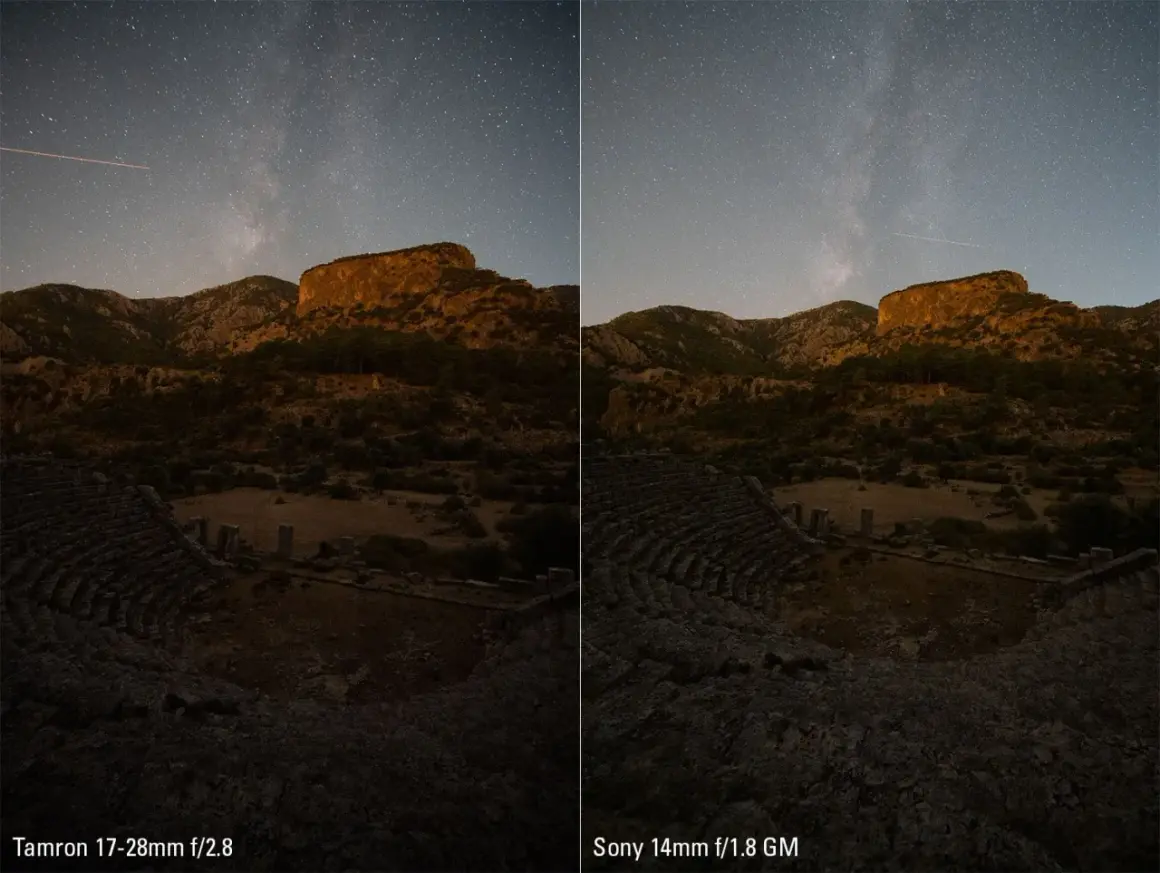
Choosing between a long zoom and a wide-angle lens changes more than framing. It changes how close a subject feels, how much of the scene survives in the frame, and how much work you need to do with filters, background blur, and edge control. I usually think of it as a choice between reach and context, and that is why the decision matters for stills, video, and hybrid production.
The real trade-off is reach, breadth, and control
- A zoom lens is defined by variable focal length, while a wide-angle lens is defined by a short focal length and a broad field of view.
- If you mean a lens that makes distant subjects feel larger, you are really comparing a telephoto zoom with a wide-angle lens.
- Longer zooms are the safer choice for sports, wildlife, stage work, portraits from a distance, and event coverage.
- Wide-angle lenses are stronger for landscapes, interiors, architecture, travel, and immersive video because they keep more of the scene in frame.
- Filters behave differently on wide lenses, especially ultra-wide ones, where thick stacks can vignette and polarizers can look uneven.
- The best first purchase depends on what you miss most often: subjects that feel too small, or scenes that feel too cramped.
What people usually mean by this comparison
Strictly speaking, a zoom lens is any lens with variable focal length. A wide-angle lens is any lens with a short focal length and a broad angle of view. In everyday camera talk, though, people often use “zoom” to mean a longer lens that makes distant subjects look closer, which is why this comparison usually becomes telephoto versus wide-angle.
That distinction matters because the categories overlap. A 14-24mm lens is both a zoom and a wide-angle lens. A 70-200mm lens is also a zoom, but it behaves like a long lens built for reach and subject isolation. Once that is clear, the real question stops being about labels and starts being about what you need the frame to do.
I also separate field of view from perspective. Field of view is how much the lens shows. Perspective is the relative size relationship between objects in the scene, and that changes mostly with camera position. A long lens often feels compressed because you stand farther away to frame the subject, not because the glass itself magically flattens the scene. That difference becomes the foundation for everything else.
Once that terminology is clear, it is much easier to compare the image each lens actually creates.
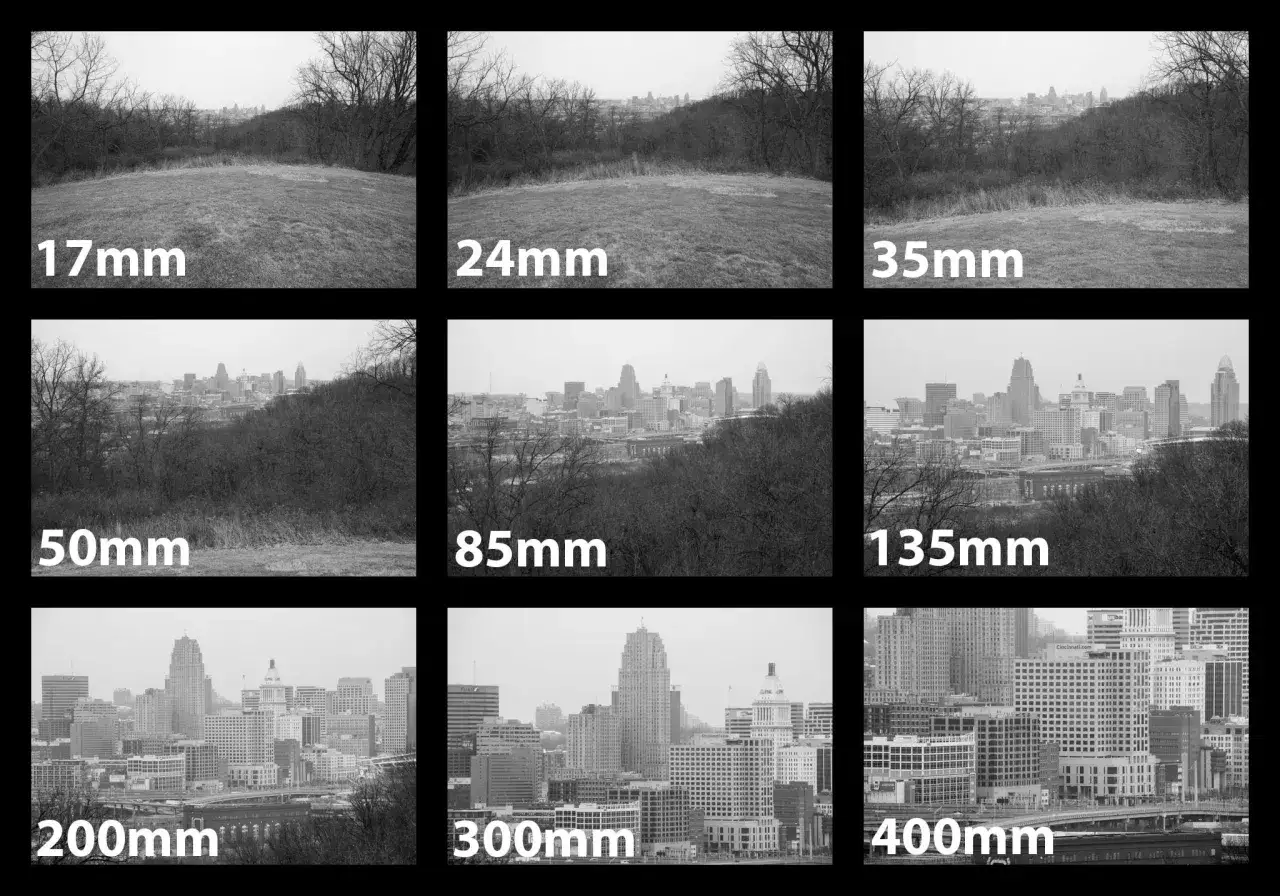
How each lens changes the look of the same scene
When I compare these lenses, I look at image behavior first and specs second. The frame is doing the real work, so the useful question is not “Which one is better?” but “What does each one do to the subject, the background, and the viewer’s attention?”
| Factor | Long zoom / telephoto | Wide-angle lens |
|---|---|---|
| Field of view | Narrower, so the subject fills more of the frame | Broader, so more of the environment stays visible |
| Subject relationship | Makes distant subjects feel closer and more prominent | Makes subjects feel smaller unless you move closer |
| Perspective | Feels more compressed when you frame from farther away | Feels more expansive and can exaggerate foreground size |
| Background blur | Usually easier to isolate the subject with blur | Usually harder to blur the background at the same framing |
| Common focal lengths | 70-200mm, 100-400mm, 150-600mm | 12-24mm, 14-24mm, 16-35mm |
| Typical use | Sports, wildlife, events, portraits, stage work | Landscapes, interiors, architecture, travel, video |
| Main risk | Shake, weight, and missed moments if the subject moves fast | Distortion, clutter, and weak composition if the frame is too open |
The practical takeaway is simple: a longer lens gives you more control over what enters the frame, while a wide lens gives you more context and more room to tell the story of the place. That is why the same subject can look dramatic in one lens and ordinary in another.
That difference is even more obvious once you start using each lens for a specific type of work.
When a long zoom gives you better results
A long zoom earns its place when you cannot, or should not, get closer. That is why I reach for it first in sports, wildlife, concerts, ceremonies, and candid work where staying unobtrusive matters. It lets me fill the frame without stepping into the scene.
- Sports and wildlife: Reach is the whole game. A 70-200mm or 100-400mm lens lets you frame action from a safe distance and still keep the subject dominant.
- Events and stage work: I can stay quiet and out of the way while still isolating faces, gestures, and emotional moments.
- Portraits: Longer focal lengths often flatter faces because I do not need to stand uncomfortably close, and the background separates more cleanly.
- Detail and documentary work: Signs, products, instruments, or small visual moments are easier to isolate when the lens does the reaching for me.
The trade-off is obvious if you shoot handheld. Camera shake becomes more visible as focal length rises, and subject movement starts to matter more than lens sharpness. A general handheld rule for stills is to keep shutter speed at least around the reciprocal of the focal length, then go faster if the subject is moving. Stabilization helps, but it does not freeze a running player or a turning performer.
I also think about aperture here. Constant-aperture zooms such as f/2.8 lenses are popular because they keep exposure more consistent across the zoom range and help in lower light, but they are usually larger and heavier. Variable-aperture zooms like f/3.5-5.6 are easier to carry, but they can lose light as you zoom in. That is a real trade-off, not a spec-sheet footnote.
When you need reach, the long zoom is usually the more decisive tool. Wide-angle work solves a different problem, and that is where the next set of advantages starts to matter.
When a wide-angle lens is the smarter choice
A wide-angle lens is the better tool when the scene itself matters as much as the subject. I reach for it in landscapes, interiors, architecture, travel, and video whenever I want the viewer to feel inside the space instead of looking at it from a distance.
- Landscapes: A wide frame lets foreground, middle ground, and sky work together instead of cutting the story into pieces.
- Interiors and architecture: You can show an entire room, a facade, or a tight location without backing into a wall.
- Travel and street work: The lens keeps the scene energetic and immediate, especially when you want people plus environment in one frame.
- Video and vlogging: A wider field of view makes handheld movement more forgiving and keeps the shot usable when the camera is close.
Wide lenses do have a personality, and you need to manage it. The closer the camera gets, the more the foreground grows and the edges can stretch. That can be a strength when you want drama, but it can make noses, hands, doorways, and straight lines look awkward if you are careless. If I am photographing people with a wide lens, I keep faces closer to the center and watch the edge of the frame like a hawk.
There is also a composition side to this that beginners often miss. A wide lens does not automatically make a photo better just because it includes more. It can just as easily include too much empty floor, too much ceiling, or background clutter that weakens the subject. With a wide lens, I have to build the frame more deliberately.That difference becomes even more obvious once you add filters to the front of the lens.
Filters change the decision more than most people expect
This is where lens choice stops being only about image style and starts affecting workflow. Wide-angle lenses, especially ultra-wide ones, are more sensitive to filter thickness, filter stacking, and front-element accessories. Long zooms are generally easier to filter because the narrower field of view is less likely to reveal the filter edges.
- Polarizers: Great for cutting reflections and controlling sky glare, but on very wide lenses they can create uneven darkening across the sky because the angle of polarization changes across the frame.
- ND and variable ND filters: Useful for video and motion blur in bright light, but thick mounts can cause corner cut-off on a wide lens more easily than on a telephoto zoom.
- Slim filters: These reduce the chance of vignetting on wide-angle lenses by keeping the filter ring thinner.
- Step-up rings: These let a smaller front thread use a larger filter size, which is economical, but too many stacked rings can become a problem on ultra-wide glass.
- Square filter holders and matte boxes: These help when you want more control over wide-angle filters, especially in landscape and video work where alignment and corner clearance matter.
If I am building a practical kit, I try to standardize filters around the largest front thread in the group and use step-up rings on smaller lenses. That saves money and avoids buying duplicates. The exception is an ultra-wide lens, where I would rather use a slimmer filter solution than force a bulky stack and hope for the best. Vignetting is easier to prevent than to clean up later.
For a lot of creators, this is the hidden reason a wide lens feels more demanding. It is not just the composition. It is the accessories, the light path, and the way the front of the lens behaves once you start attaching things to it. Once you understand that, choosing a lens stops being a guess and starts looking like a set of constraints.
A practical way to choose without overbuying
When I have to choose between these two directions, I do not start with the lens catalog. I start with the shots I keep missing.
- Choose wide first if your photos keep feeling cramped, you work in tight rooms, or your video needs a more immersive perspective.
- Choose a long zoom first if your subjects are far away, your compositions need stronger separation, or you shoot action that moves faster than you do.
- Choose a standard zoom first if you need one flexible lens to cover both sides of the problem, knowing it will not fully replace either extreme.
- Check the filter thread before buying if you plan to use polarizers, NDs, or matte-box accessories regularly.
For a lean two-lens kit, the classic full-frame pairing is still something like a 16-35mm plus a 70-200mm. That combination covers the wide, environmental, and telephoto ends without a lot of overlap. On APS-C, a setup in the rough equivalent range of 10-24mm plus 55-200mm gives you a similar spread of creative options. If your work is mostly weddings, events, or corporate video, a 24-70mm or 24-105mm can sit in the middle as a workhorse, but it remains a compromise rather than a replacement for true width or true reach.
I use one simple question when the choice is still fuzzy: do I need the scene to feel bigger, or do I need the subject to feel closer? If I need context, I go wide. If I need separation and reach, I go long. That rule is plain, but it avoids more bad purchases than any marketing claim about sharpness, speed, or versatility.
The choice that saves the most frustration on set
The better lens is the one that solves the framing problem in front of you. A long zoom gives you control, reach, and cleaner subject isolation, while a wide-angle lens gives you context, scale, and a more immersive look. If you shoot people, places, and motion, both have a role, but they solve different problems.
My practical advice is to buy for the kind of mistake you make most often. If your images are always too tight, go wider. If they always need cropping later, go longer. Once that pattern is clear, the decision becomes straightforward, and your lens choice starts working for the shot instead of against it.