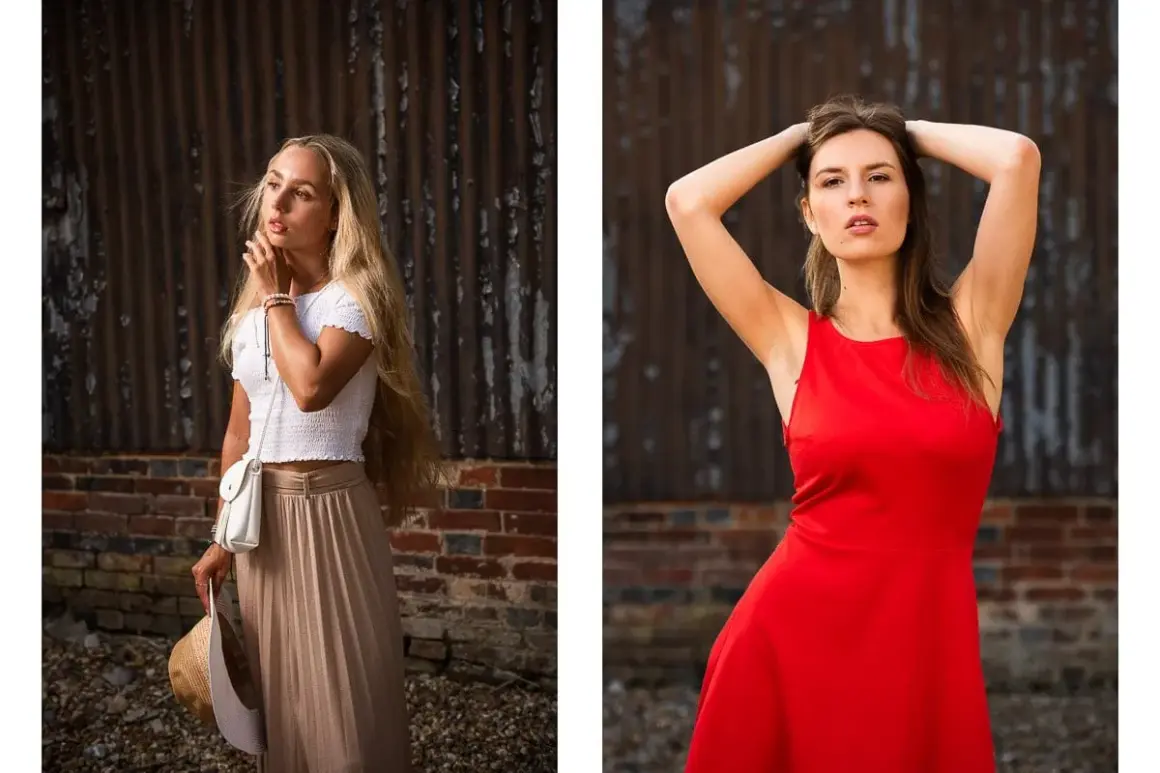
The 50mm vs 85mm decision is really about how close you want to work, how much of the scene you want to keep, and how cleanly you want your subject to separate from the background. I care less about which lens is “better” in the abstract and more about which one fits the room, the subject, and the story I want the frame to tell. In this article, I break down the practical differences, where each focal length shines, how crop sensors change the math, and which filters actually matter.
Which lens fits which job
- 50mm is the more flexible choice when you need context, tighter spaces, or a lens that can cover portraits and general use.
- 85mm is the stronger portrait tool when you want cleaner background separation and more flattering working distance.
- Perspective is driven mostly by camera distance, not magic inside the lens, so the 85mm look comes from standing farther back.
- On APS-C bodies, a 50mm often behaves like a short portrait lens, while an 85mm can become very tight indoors.
- Filters do not change focal length, but ND, CPL, and diffusion filters can change how usable each lens feels in real work.
How these focal lengths change framing and perspective
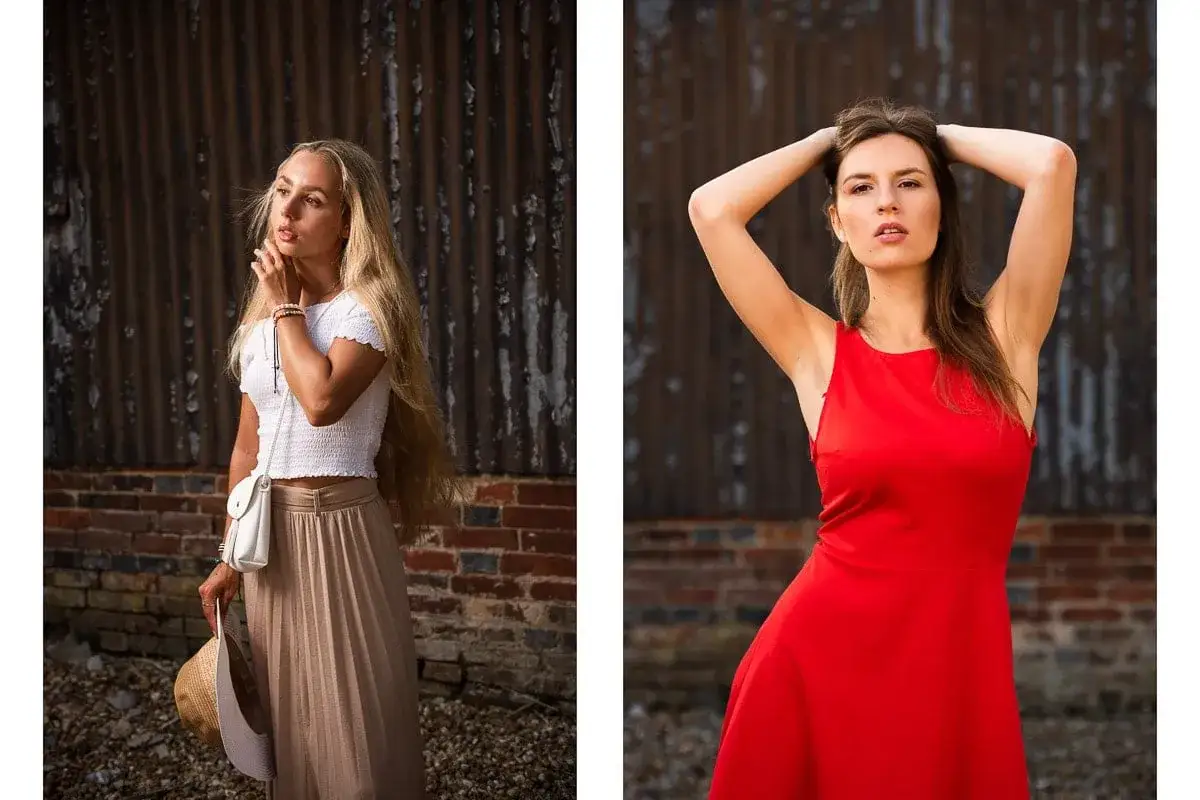
The biggest difference is not sharpness. It is how much of the room each lens keeps in view and how far I need to stand to get the composition I want. A 50mm feels more neutral and present, while an 85mm narrows the scene enough to simplify the background and make the subject read more cleanly.
If I want the same framing on the same camera, the 85mm usually pushes me back about 70% farther than the 50mm. That extra working distance is why faces often look a little more relaxed and why backgrounds seem to flatten out behind the subject. The lens does not compress perspective by itself; the distance changes, and that changes the look.
| What I notice in practice | 50mm | 85mm |
|---|---|---|
| Field of view | Broader and more contextual | Tighter and more selective |
| Working distance | Closer to the subject | Farther back |
| Background separation | Moderate | Stronger |
| Subject feel | More conversational and immediate | More polished and separated |
| Room needed | Less | More |
That framing difference is the foundation for everything else, because the next question is not “which one looks nicer” but “which one works better for the way I shoot.”
When a 50mm lens is the stronger choice
I reach for a 50mm when I need the frame to breathe a little. It is the better choice for environmental portraits, backstage coverage, small interiors, and mixed shoots where I do not want to keep changing lenses every time the subject moves. On a visual media set, that flexibility matters more than people sometimes admit.
- Environmental portraits work well because the subject still feels connected to the room, office, studio, or location.
- Small spaces are easier because I do not have to back into a wall just to fit the frame.
- Groups or couples are simpler to compose without making everyone squeeze into a narrow slice of the scene.
- Hybrid stills and video benefit from the natural framing, especially when I need one lens to do a lot of jobs.
- Run-and-gun work feels faster because I can move less and still cover a range of shots.
The tradeoff is that I am usually closer to the subject, so I have to watch facial distortion more carefully. If I lean in too much for a tight portrait, the nose, forehead, and near cheek can start to dominate the frame. That is not a flaw of the lens so much as a reminder that distance still matters more than brand loyalty.
Once the 50mm’s strengths are clear, the 85mm starts to make a lot more sense as a specialized tool rather than a direct replacement.
When an 85mm lens pulls ahead
An 85mm is the lens I want when the subject is the whole point. It is the classic choice for headshots, beauty work, fashion portraits, and interview setups where I want the background to fall away and the face to carry the frame. On a person, that extra working distance is often a blessing because it feels less intrusive and gives the subject a little more breathing room.
- Headshots look cleaner because the face is rendered with less obvious close-up exaggeration.
- Background clutter drops out faster, which is useful when the location is messy or visually busy.
- Portrait lighting is easier to control because I have room to place modifiers, flags, and stands between me and the subject.
- Subject comfort often improves because I am not hovering right in front of someone’s face.
- Shallow depth of field is easier to use well, especially at wider apertures like f/1.8 or f/1.4.
The downside is equally practical: an 85mm can feel cramped indoors, and autofocus mistakes show up quickly when the depth of field is thin. I also have to think harder about where I stand, which can be a problem at events, in apartments, or on crowded sets. For portraits, though, it is still the lens I trust most when I want the image to feel deliberate.
That choice changes again once sensor size enters the equation, because the same focal length does not behave the same way on every camera body.
How crop sensors change the decision
On full-frame, the difference between these two focal lengths is straightforward. On APS-C, it becomes more practical and sometimes more confusing, because the camera crops the image and changes the effective field of view. That is why the same lens can feel like a different tool depending on the body it is mounted on.
| Camera format | 50mm behaves like | 85mm behaves like | What that means in practice |
|---|---|---|---|
| Full-frame | Standard short-portrait range | Classic portrait range | Either lens can work well; the choice is mostly about space and style. |
| APS-C 1.5x | About 75mm equivalent | About 128mm equivalent | The 50mm becomes a very useful portrait lens; the 85mm gets quite tight indoors. |
| APS-C 1.6x | About 80mm equivalent | About 136mm equivalent | The 50mm often feels like the sweet spot for general portrait work. |
This is where I see a lot of bad buying advice. People hear that 85mm is the “portrait lens” and assume it is automatically the right answer on every camera. On APS-C, a 50mm can actually be the more useful portrait prime because it gives you a portrait-friendly angle of view without forcing you to step too far back. That distinction matters a lot in small studios, homes, and event spaces.
Once the sensor format is clear, the next thing worth thinking about is not another lens category but the filters that can quietly make the lens easier or harder to use.
Which filters are actually worth using
Filters do not change the focal length, and they do not turn a 50mm into an 85mm. What they do change is how the lens behaves in real production conditions, especially when I am shooting video, managing reflections, or trying to control contrast in bright light. For this topic, I care about a few filters much more than the rest.
- Protective filters are mostly about physical safety. They are optional, and if I use one, I want good optical quality so I am not adding softness or flare for no reason.
- Circular polarizers help cut reflections on glass, water, and glossy surfaces. They can be useful in product work, but on faces I use them carefully because they can affect skin tones and reflections in eyeglasses.
- ND and variable ND filters matter a lot for video. If I want to shoot wide open in daylight, they let me keep a natural shutter speed without stopping down the lens.
- Diffusion or mist filters soften highlights and can take the digital edge off portraits. They are a style choice, not a correction, but they can be effective when used with restraint.
Once I look at filters this way, the lens choice stops being a simple focal-length debate and starts looking like a workflow decision.
The choice I make when the shot has to work
If I need one lens to handle the most situations with the least friction, I pick the 50mm. It is easier to live with, easier to move with, and easier to use when the environment matters as much as the subject. If the brief is primarily portrait work and I have room to step back, I pick the 85mm because it gives me a cleaner frame and a more controlled look.
- Pick the 50mm if you shoot in tight rooms, need more context, or want one lens for mixed content.
- Pick the 85mm if you want a polished portrait perspective, better subject isolation, and more comfortable working distance.
- Pick both if you cover weddings, events, or commercial sessions where the room and the subject type can change fast.
My practical rule is simple: I choose the lens that lets me compose without fighting the space. For visual media production, that usually means the 50mm when I need flexibility and the 85mm when I need portrait impact. Once you start thinking in terms of distance, framing, and subject comfort instead of focal length alone, the right choice becomes much easier to make.