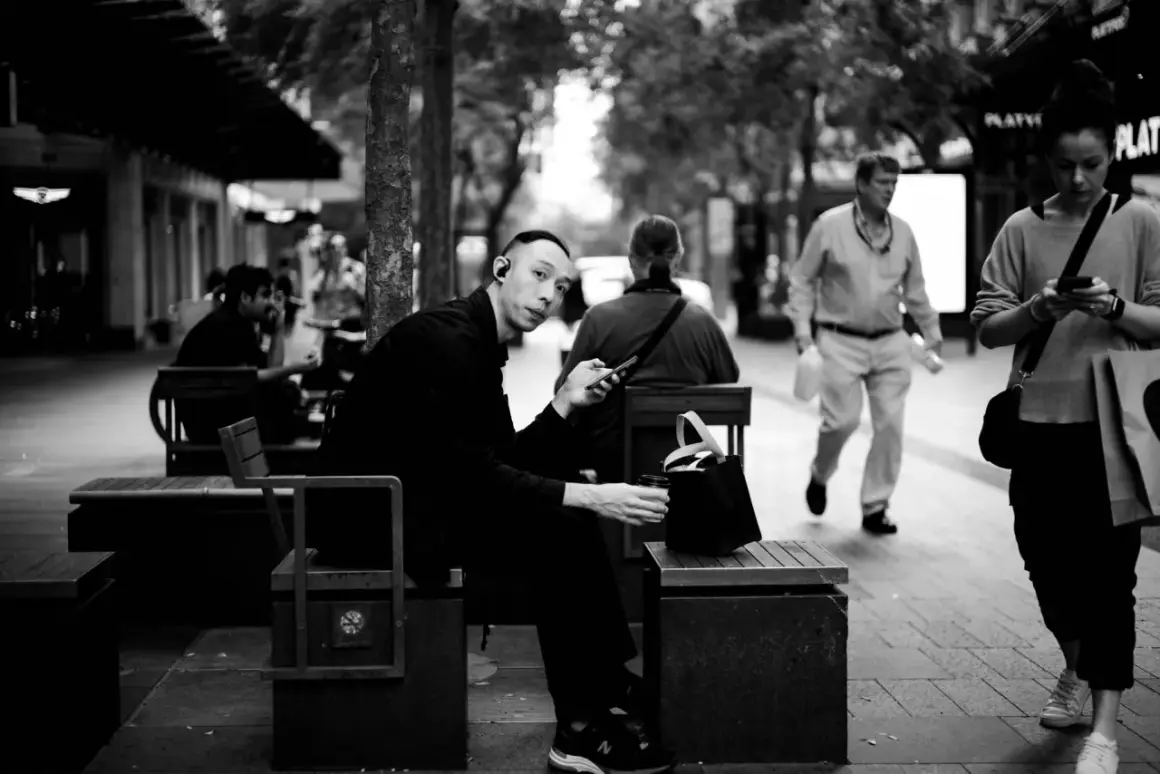
35mm gives context and 50mm gives separation
- 35mm gives you more context, easier framing in tight spaces, and a less intimidating working distance.
- 50mm makes it easier to isolate people, gestures, and cleaner backgrounds without crowding the frame.
- For the same framing, 50mm usually puts you about 43% farther back than 35mm, which changes how you interact with the scene.
- On APS-C, the choice shifts: 35mm behaves like roughly 52-56mm equivalent, while 50mm becomes about 75-80mm equivalent.
- If you want one lens to learn street with, I usually lean 35mm; if you already know you prefer distance and tighter compositions, 50mm can be the cleaner fit.
- For protection, a clear filter is useful; for reflections, a polarizer can help, but it also costs light and slows response.

How the two focal lengths feel in real street scenes
The easiest way to understand the difference is to imagine the same subject in front of you. With 35mm, I can usually stay closer, keep more of the environment, and let the frame carry some of the street’s texture. With 50mm, I naturally step back, tighten the composition, and let the subject dominate the image.
That shift is not just cosmetic. For the same framing, 50mm asks for about 43% more shooting distance than 35mm. In practical terms, if a subject fills the frame at 6 feet with 35mm, 50mm needs roughly 8.5 feet. That extra distance changes the social feel of the photo, the amount of background you include, and the kind of moments you are likely to catch.
| Factor | 35mm | 50mm | What it means on the street |
|---|---|---|---|
| Frame width | Wider | Tighter | 35mm keeps more context; 50mm trims distractions faster. |
| Working distance | Closer | Farther back | 35mm is easier in crowds; 50mm feels more observational. |
| Background presence | More visible | Less visible | 35mm tells a fuller story; 50mm makes it easier to simplify. |
| Subject interaction | More direct | More discreet | 35mm can feel more immersive; 50mm is often less intrusive. |
| Composition speed | Fast if you like layering | Fast if you like restraint | Each lens favors a different instinct, so one will feel natural sooner. |
That is why I do not think of these lenses as rivals in the abstract. I think of them as two different ways of editing reality before the shutter even fires, and that becomes obvious once you start shooting in crowded, unpredictable places.
Where 35mm works better
35mm tends to shine when the street itself is part of the story. If I want a person, a gesture, and enough background to explain where that moment happened, this is usually the focal length I reach for first. It is forgiving in tight spaces, practical in markets and transit stations, and strong for documentary-style street work where context matters as much as the subject.
- Crowded sidewalks and public transit - you can work close without constantly clipping the frame or backing into people.
- Layered scenes - foreground, subject, and background all have room to coexist, which makes the image feel alive.
- Environmental portraits - the subject still matters, but the location adds meaning instead of becoming dead space.
- Fast moments - if someone turns, laughs, or steps into a good pocket of light, 35mm gives you more margin for error.
The tradeoff is that 35mm makes you earn your simplicity. If you are sloppy with the background, the frame will show it. If you stand too far away, the subject can shrink and lose weight. I think that is why some photographers love it and others bounce off it; it rewards attention, not just enthusiasm. Once you understand that tradeoff, it becomes much easier to see why 50mm appeals to a different shooting rhythm.
Where 50mm gives you an edge
50mm is the more selective lens. It is the better choice when I want to remove visual noise, isolate a face or gesture, and keep a little distance between me and the scene. On a busy street, that can feel calmer and more controlled. You are not fighting to fit everything in; you are waiting for the right fragment to arrive.
That makes 50mm especially useful for:
- Cleaner street portraits - the framing naturally excludes more clutter, so expressions carry more weight.
- Edge-of-scene shooting - you can work from across the sidewalk or from a doorway without stepping into the action.
- Gestures and details - hands, faces, reflections, and interactions separate more easily from the background.
- Deliberate pacing - if your style is patient and observational, 50mm matches that rhythm.
I also think 50mm is often misunderstood. It does not magically "compress" a scene by itself; what really changes is the distance you choose and the way that distance reshapes perspective. The longer lens simply makes it easier to work farther away, and that is what gives the image a tighter, more layered look.
The downside is obvious: in cramped spaces, 50mm can feel restrictive fast. If you are indoors, in narrow alleys, or trying to include both a subject and their surroundings, you may run out of room before you run out of ideas. That is where sensor size starts to matter, because the same lens can feel completely different on a crop body.
Why sensor size changes the decision
If you shoot full frame, the comparison is straightforward. On APS-C, it is not. Crop factor changes the effective angle of view, so the lens you choose may feel noticeably tighter than the number on the barrel suggests. That matters in street photography, where a small change in framing can decide whether a scene feels open or boxed in.
| Camera format | 35mm lens looks like | 50mm lens looks like | Practical effect |
|---|---|---|---|
| Full frame | 35mm | 50mm | The classic street pairing |
| APS-C at 1.5x | About 52.5mm equivalent | About 75mm equivalent | 35mm becomes the more natural option; 50mm starts feeling portrait-like |
| APS-C at 1.6x | About 56mm equivalent | About 80mm equivalent | 50mm is quite tight for general street work unless you prefer a long, selective look |
That is why I would not give the same recommendation to every photographer. On a crop-sensor body, a 35mm lens often behaves more like the "normal" street choice people expect from a 50mm on full frame. If you are trying to keep the comparison honest, this is the part that changes the answer the most.
Once the focal length makes sense on your camera, the next question is how to make it fast enough to use in the real world, and that is where handling and filters start to matter.
How to make either lens work faster on the street
Street photography punishes hesitation, so I like to simplify the setup as much as possible. A fixed focal length already removes one decision. The rest is about making sure the lens does not slow you down with unnecessary handling or filter choices.
- Use zone focus when the light allows it. At f/5.6 or f/8, pre-focusing at a known distance gives you instant response and makes both lenses easier to use.
- Keep an eye on the frame edges. With 35mm, this prevents clutter from creeping in. With 50mm, it helps you avoid cutting off hands, feet, or small but important gestures.
- Choose filters with a job. A clear protective filter makes sense if you are shooting in rain, dust, or rough handling. It is not a creative upgrade; it is just insurance.
- Use a circular polarizer sparingly. It can reduce reflections on glass and shiny surfaces, but it also costs roughly 1-2 stops of light and can make quick candid work less fluid.
- Do not add filters out of habit. In street work, every extra stop matters when the light drops or the scene moves quickly.
If I am being strict, the best street setups are usually the simplest ones. A small prime, a clean front element, and a shooting distance you already trust will do more for your results than any accessory trying to solve a framing problem after the fact. Once that is in place, the last decision is stylistic: do you see the street from inside it, or from a step back?
The lens I would start with and why
If I had to choose one lens for most street photographers, I would start with 35mm on full frame. It is the better teacher. It forces you to think about context, it works in tighter spaces, and it gives you more chances to keep a scene alive instead of reducing it too early. That extra flexibility matters when you are still learning how to read a street before the moment disappears.
- 35mm if you work in crowds, want more context, or like moving closer to people.
- 50mm if you prefer cleaner frames, more distance, and slower observation.
- A clear filter if your kit gets exposed to rain, dust, or rough handling.
- A polarizer only when reflections are actually part of the image you want.
I would start with 50mm only if my style already leaned toward distance, quiet observation, and cleaner compositions. It is a sharper editorial choice. You wait more, you include less, and you end up with images that feel leaner and often more controlled. Neither approach is superior in every situation; they just reward different instincts.
My blunt rule is this: 35mm tells the street, and 50mm edits it. If you want more story in the frame, pick the wider of the two. If you want more distance and less clutter, pick the longer one. I usually care less about the lens name than about whether it matches the way I naturally move through a scene, because that is what decides whether the camera feels invisible or gets in the way.