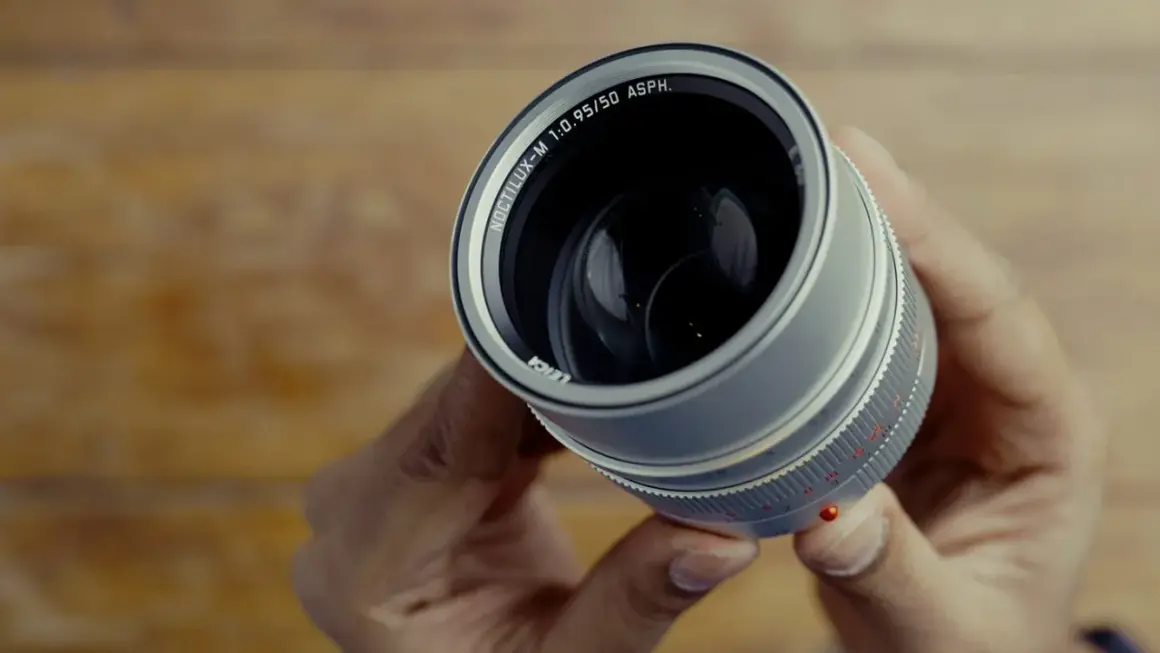
The Leica Noctilux-M 50mm f/0.95 is not just another fast normal lens; it is a very specific tool for photographers who want extreme subject separation, low-light freedom, and a rendering style that feels instantly recognizable. In this article I break down what it is, how it behaves in real shooting, which filters actually matter, and where it sits against Leica’s other 50mm options. That matters because this is the kind of lens people buy for a look, not for convenience, and the gap between those two reasons is where most bad decisions happen.
The Noctilux is about character first and convenience second
- The modern 50mm Noctilux is the f/0.95 version, but the line also includes the newer f/1.2 reissue and the earlier classic versions.
- Its real strengths are subject isolation, low-light work, and a very distinctive wide-open rendering.
- It is a manual-focus M-mount lens with a 1 m minimum focus distance, so precision matters more than speed.
- The lens uses E60 filters and has an integrated hood, which makes daylight control more practical than people expect.
- In the U.S., the lens lives in luxury territory, so the right question is whether you want the Noctilux look, not whether it is “worth it” in a generic sense.
What the Noctilux name really promises
Leica uses the Noctilux name for its fastest M-System lenses, and historically that badge has always meant “more light, more character, less compromise.” The name itself is tied to night and light, which is fitting: this is a lens designed to stretch available light and turn it into something expressive rather than merely usable.
Most people today mean the 50mm f/0.95 when they talk about the modern Noctilux, but the line also has a current 50mm f/1.2 ASPH. reissue. That matters because the Noctilux story is not one fixed formula; it is a family of lenses built around a very particular idea of how a 50mm prime should feel.
If you want the simplest possible answer, I would describe the Noctilux as a 50mm lens that prioritizes atmosphere, separation, and signature rendering over clinical perfection. That makes it exciting, but it also makes it specialized, which is exactly why the next question is always about the optics themselves.
The specs that shape the image
According to Leica’s technical sheet, the modern Noctilux-M 50mm f/0.95 ASPH. is built around 8 elements in 5 groups, uses a 1 m minimum focus distance, accepts E60 screw-on filters, and weighs about 700 g. Those numbers matter because they explain the shooting experience better than marketing language ever will.
| Spec | What it means in practice |
|---|---|
| Maximum aperture f/0.95 | Extremely shallow depth of field and strong low-light capability, but a focus plane that gets unforgiving very fast. |
| 8 elements in 5 groups | Complex optics built to keep the lens characterful without collapsing into obvious optical mess at the edges. |
| 1 m minimum focus distance | Best suited to portraits and subject isolation, not tight close-up work. |
| E60 filter thread | Practical for ND or protective filters, but it also means you should buy the right size once and avoid improvising with adapters. |
| Integrated hood | Useful for flare control and one less accessory to carry, though it adds to the lens’s already substantial presence. |
| About 700 g | Heavy by M-lens standards, so it changes how the camera balances in hand and on a strap. |
The optical takeaway is simple: this lens is engineered to create a very specific image signature, not to disappear in your hand. Once you accept that, the filter question becomes more important than most buyers realize, especially in daylight.
Filters, hood, and bright-light shooting
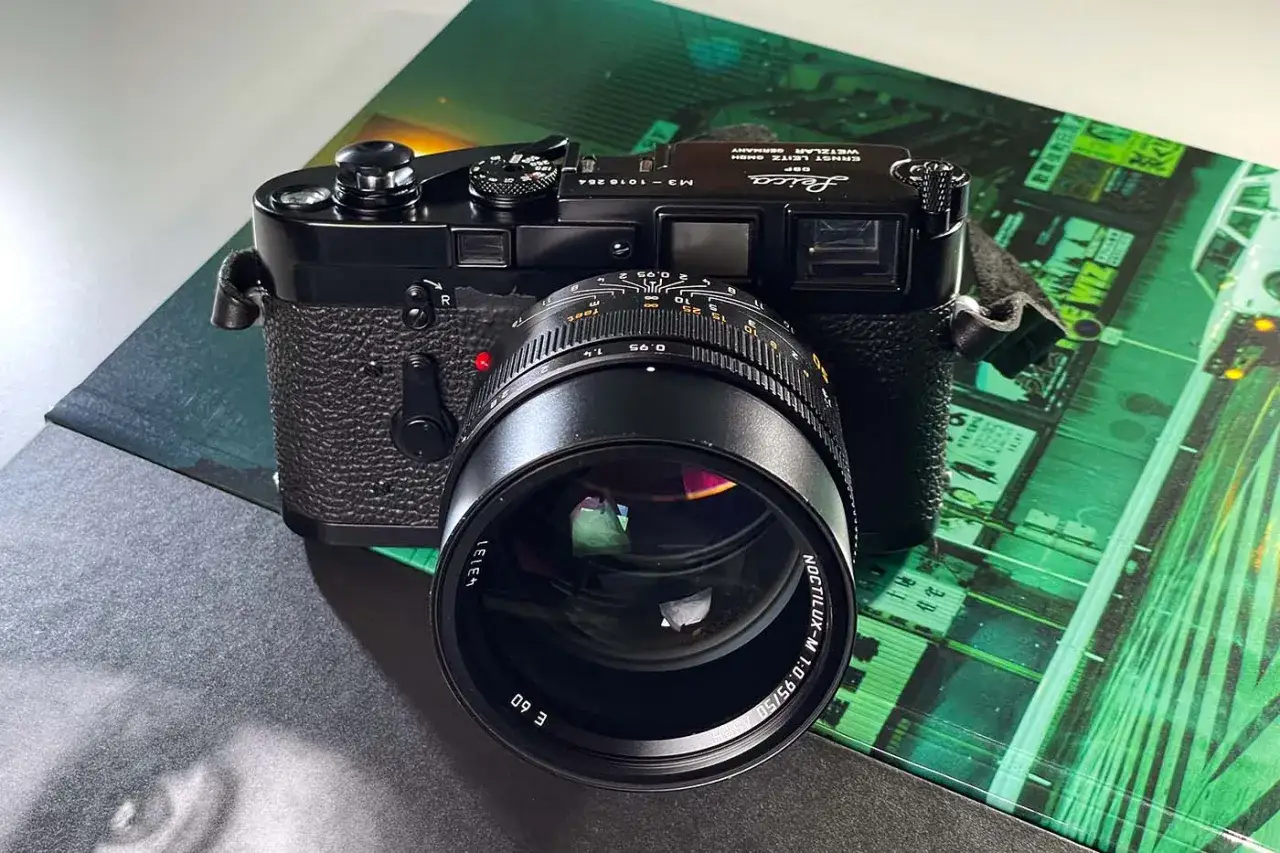
Why the front of this lens deserves a plan
Because the lens accepts E60 filters and already has an integrated hood, you do not need a complicated accessory stack to use it well. What you do need is a deliberate front-end setup. In my experience, that usually means one of three things: a good neutral density filter for wide-open daylight, a clear protective filter if the lens will live on the road, or a polarizer only when the scene actually benefits from it.
If I were building a practical kit around this lens, I would start with a high-quality ND filter. Wide open at f/0.95, bright daylight can force shutter speeds that are too high for comfortable shooting, especially if you want to keep the aperture at its most expressive setting. A 3-stop ND is a sensible starting point, and a stronger one makes sense if you regularly shoot in harsh sun.I would also avoid cheap stacked filters. The lens already has a lot of front-end character, and piling on low-grade glass can reduce contrast, invite flare, and make the setup more awkward than it needs to be. The hood does a useful job on its own, so the best filter setup is usually the simplest one that solves a real problem.
That practical filter plan matters even more once you start using the lens in real scenes, because its strengths and weaknesses show up fast when the subject is moving.
How it behaves when you actually shoot with it
The Noctilux is famous for its look, but that look only becomes useful if you understand where it shines. I think of it as a lens that rewards intention. If the frame is built around one subject and the background needs to fall away cleanly, it can produce images that feel almost unreal in a good way. If the scene is busy and your focus is sloppy, it will expose every weakness.
- Portraits are the obvious strength. The lens gives strong separation and a very narrow focus plane, which can make a face feel sculpted from the background.
- Low-light stillness is where the f/0.95 aperture really earns its keep. Static subjects, quiet interiors, and ambient-lit scenes can look remarkable.
- Street work is possible, but it is not the easiest path. The lens is heavy, obvious, and slower to use than a smaller 50mm prime.
- Moving subjects are the hardest case. The aperture helps with exposure, but it does not freeze motion by itself, and the depth of field can become so thin that a slight timing error costs the frame.
There is also a rendering reality that people sometimes gloss over: the lens is not always at its best wide open. At f/0.95 it can look dreamy, slightly soft, and beautifully separated, but many files become more flexible and more balanced once you stop down a little. I often think of f/1.4 to f/2 as the range where the lens becomes easier to live with while still keeping its identity.
That balance between magic and discipline is exactly why the cost conversation is unavoidable, because a lens this specialized is hard to justify unless you know what you are paying for.
What it costs and why the number stays high
In the U.S. market, this lens sits in premium territory that most photographers will never call practical. B&H currently lists the modern f/0.95 version at $14,400, with used copies still landing far above ordinary pro-lens budgets. That price does not just buy optics; it buys rarity, Leica’s machining standards, and a very specific visual signature that has almost become a category of its own.
For buyers, the important point is not whether the price is “high” in the abstract. It is whether the look solves a problem in your work. If you shoot portraits, editorial features, or atmosphere-heavy personal projects, the lens can justify itself as a creative instrument. If you mainly need a fast 50mm for general use, I would treat that money as a warning sign and look elsewhere first.
The newer 50mm f/1.2 reissue also matters here because it gives another route into the Noctilux idea without going all the way to the most extreme modern version. That makes the comparison with Leica’s other 50s much more useful than a simple yes-or-no buying test.
How it compares with Leica’s other 50s
| Lens | What it feels like | Best for | Main tradeoff |
|---|---|---|---|
| Noctilux-M 50mm f/0.95 ASPH. | The most extreme, most distinctive modern Noctilux look with very shallow depth of field. | Portraits, low light, and images that should feel unmistakably “Leica.” | Weight, cost, and a very narrow margin for focus error. |
| Noctilux-M 50mm f/1.2 ASPH. | Still characterful, but a little more heritage-minded and a bit easier to use in everyday work. | Photographers who want the Noctilux identity without going to the most extreme aperture. | Still expensive, still specialized, still not a casual 50. |
| Summilux-M 50mm f/1.4 ASPH. | The practical luxury choice: fast, compact enough to carry often, and easier to integrate into real work. | Most serious Leica users who want speed without drama. | Less of the Noctilux signature and less separation wide open. |
| APO-Summicron-M 50mm f/2 ASPH. | The precision option: cleaner, smaller, and more straightforward. | Photographers who value sharpness, portability, and consistency over spectacle. | Slower aperture and a more restrained image character. |
If I were choosing purely on character, I would rank the Noctilux first. If I were choosing on day-to-day practicality, I would probably end up with the Summilux or the APO-Summicron. That does not make the Noctilux a bad buy; it just means it is a lens you buy with a clear creative reason, not because it is the “best 50mm” in some generic sense.
The checks I would make before buying one
The decision becomes much easier when you stop asking whether the lens is impressive and start asking whether it fits your workflow. Here is the checklist I would use before spending Noctilux money:
- Do I actually want the lens’s look wide open, or would I stop it down most of the time?
- Am I comfortable with manual focus and a very thin depth of field?
- Will my subjects be static enough for this kind of precision?
- Am I okay carrying a 700 g 50mm on a rangefinder body?
- Do I already own, or plan to buy, good E60 filters and an ND for daylight use?
- Am I buying it for personal work, paid portrait work, or simply because I want to own a legendary lens?
If your answers point toward deliberate portraiture, available-light work, and an appetite for a very specific rendering, the Noctilux makes sense. If your answers point toward speed, flexibility, and everyday convenience, I would move down Leica’s 50mm ladder and save the difference for glass you will use more often.