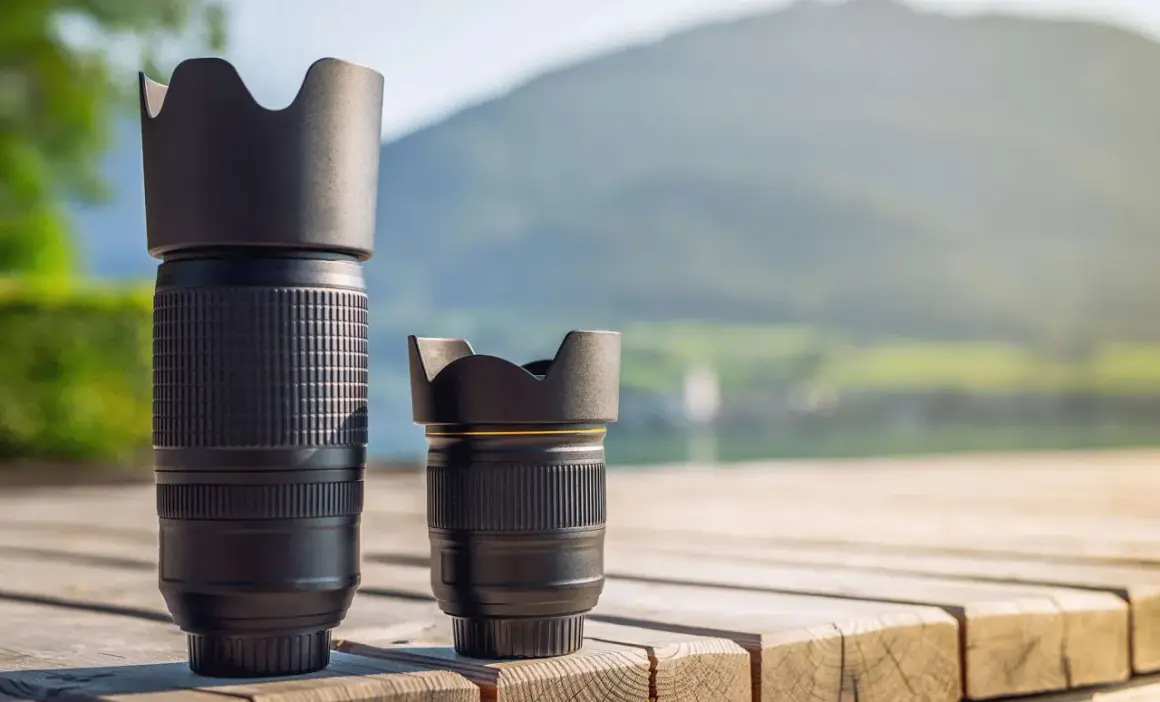
The telephoto vs normal lens choice is really a choice between reach and realism: do you want the subject to feel closer and more isolated, or do you want the frame to feel natural and easier to work with? In practice, that decision changes perspective, background separation, how much room you need, and even how fast you can move on set. This article breaks that down in plain English so you can pick the lens that fits the shot instead of fighting the gear.
What matters most when choosing between them
- Standard lenses give a more natural, neutral look and are easier to use in tighter spaces.
- Telephoto lenses narrow the field of view, bring distant subjects closer, and separate the background more aggressively.
- A 50mm lens is the classic reference point on full frame, but sensor size can change how that focal length feels.
- For portraits, interviews, sports, and event coverage, telephoto often looks cleaner; for walkaround shooting and contextual storytelling, standard lenses are more flexible.
- Filters shape light, not perspective, so they can support the shot but they cannot replace the right focal length.
What a standard lens really gives you
When I say standard lens, I mean the focal length range that feels closest to a neutral, everyday point of view. Canon's lens guide places standard lenses around 40-55mm on full frame, while telephotos begin around 70mm and up. In the middle sits the familiar 50mm, which is why it is often treated as the baseline lens for learning composition.
The important part is not that a standard lens mimics the human eye perfectly, because it does not. The real advantage is that it usually gives you a believable perspective without exaggerating depth or compressing the scene too much. That makes it easy to frame people, products, interiors, and street scenes in a way that still feels honest. Once you understand that neutral starting point, the visual difference from a longer lens becomes much easier to read.
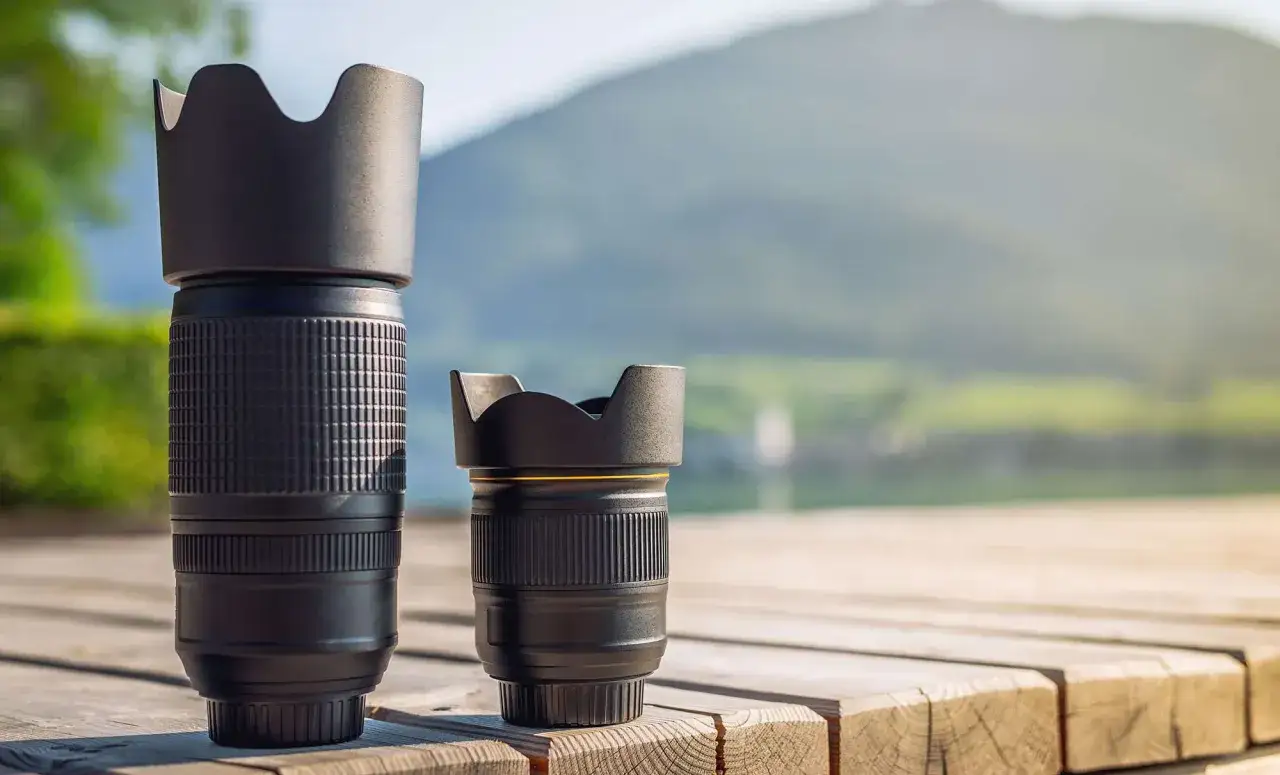
How the frame changes when you switch focal lengths
The visible difference between these lenses is bigger than just “more zoom” or “less zoom.” A telephoto lens narrows the angle of view, so the subject occupies more of the frame from farther away. A standard lens keeps more of the environment in play, which helps when the background is part of the story. As B&H puts it in practical terms, a standard lens gives the most normal perspective, while telephoto makes the background feel closer and the subject look more isolated.
| What changes | Standard lens | Telephoto lens |
|---|---|---|
| Field of view | Wider, with more context visible | Narrower, with less of the scene included |
| Perspective | More natural and less compressed | More compressed, with background elements feeling closer |
| Subject distance | You can work closer to the subject | You usually need to stand farther back |
| Background separation | Moderate, depending on aperture and distance | Stronger, especially with a wide aperture |
| Handling | Easier in small rooms and faster to maneuver | More sensitive to camera shake and subject movement |
| Typical use | Documentary, lifestyle, product, run-and-gun video | Portraits, sports, events, wildlife, detail shots |
One detail beginners miss is that telephoto compression is mostly about camera position. When you move back to keep the subject framed the same way, the background appears larger and closer because your viewpoint changed. The lens enables that framing, but your distance from the subject is what shapes the look. That is why the same person can feel intimate at 50mm and much more sculpted at 135mm, even when both shots are technically sharp. With that in mind, the next question is when a standard lens is actually the better tool.
When a standard lens is the smarter default
I reach for a standard lens when I want the camera to stay out of the way. It is the safer choice for documentary work, lifestyle content, behind-the-scenes coverage, and any shoot where I need to keep context visible. If I am filming a product on a desk, a founder in a small office, or a street scene with movement happening in the background, a standard focal length usually gives me enough room to breathe without making the frame feel distant.
There is also a practical reason creators keep coming back to this range: it is easier to work with in real spaces. A standard lens is less intimidating for subjects, less awkward in tight rooms, and often lighter than a long telephoto zoom. A 35mm or 50mm prime, or a 24-70mm zoom, covers a huge amount of everyday production work without forcing you to back into a wall. For visual media teams, that means faster setup, less gear fatigue, and fewer missed moments. Once you know what the standard lens does well, the telephoto side of the comparison becomes much more specific.When telephoto earns its place
Telephoto is not just for “zooming in.” It solves problems that standard lenses cannot solve well. If the subject is physically far away, if you cannot move closer, or if the background is messy and distracting, a longer focal length quickly becomes the better option. That is why event photographers, sports shooters, and wildlife photographers depend on it so heavily.
In commercial and brand work, telephoto also has a clear role. A portrait shot at 85mm or 135mm can flatter facial proportions without the mild widening that a shorter lens can introduce. A 70-200mm zoom gives you flexibility for interviews, stage coverage, and detail cutaways without changing position every few seconds. I also like telephoto for shots where I want to separate a person from a cluttered environment, because the narrower angle of view makes the background easier to simplify.
- Portraits benefit from the flattering compression of longer focal lengths.
- Events and performances often leave no room to move, so reach matters more than flexibility.
- Wildlife and sports practically demand telephoto if you want a usable frame.
- Detail shots can look cleaner when the lens trims away everything unnecessary.
The tradeoff is real, though. Telephotos are usually heavier, more expensive, and less forgiving of shaky hands or fast motion. If the subject keeps moving and your framing changes constantly, the longer lens can slow you down. That is where sensor size starts to matter, because the same lens does not feel the same on every camera.
How sensor size changes the decision
Focal length never changes, but the field of view does when the sensor is smaller. That is the part many people get wrong. A 50mm lens is still a 50mm lens on APS-C or Micro Four Thirds, but the camera crops more of the image circle, so the lens behaves as if it were longer.
| Sensor format | 50mm field of view feels like | Practical effect |
|---|---|---|
| Full frame | Classic standard view | Balanced for portraits, general use, and everyday work |
| APS-C | About 75-80mm equivalent | Closer to a short telephoto, which can be great for portraits but tight indoors |
| Micro Four Thirds | About 100mm equivalent | Much more telephoto-like, especially for tight rooms and close framing |
This is why a standard lens on one camera can feel like a portrait lens on another. If you shoot crop-sensor bodies, your “normal” lens may already behave like a telephoto in practice, which changes how much room you need and how natural the framing feels. That does not make one format better than the other, but it does mean you should think in terms of equivalent field of view, not just the number printed on the barrel. Once that is clear, filters become easier to place in the conversation, because they influence light, not the basic geometry of the shot.
Where filters fit into this choice
Filters matter, but they do not change the core telephoto or standard-lens decision. A polarizer can cut reflections and deepen skies, an ND filter can help you keep a wide aperture in bright light, and a protective filter can give you a little peace of mind on location. None of them changes perspective, working distance, or compression. If you want the telephoto look, you still need a telephoto focal length.
In practice, I treat filters as finishing tools. They help me control exposure and light quality, especially in outdoor production or video work, but they do not rescue a mismatched lens choice. On a telephoto, I prefer a clean, high-quality filter stack because extra glass can make flare and contrast issues more noticeable. On a standard lens, I am often more selective and only add a filter when it solves a real problem instead of just sitting there for protection.
- Polarizer for reflections, skies, and water.
- ND filter for bright scenes when you want controlled shutter speed or aperture.
- Protective filter only when the shooting environment justifies it.
That keeps the lens decision honest: focal length controls the look, while filters fine-tune the light. With that distinction in place, the last step is turning the comparison into a simple rule you can use on set.
The lens choice I make when the shoot has to move fast
When I need a fast decision, I start with the question of distance. If I need context, flexibility, and room to move, I pack the standard lens first. If I need separation, reach, or a cleaner background from a fixed position, I go telephoto. That one question solves more real-world debates than any spec sheet does.
- Choose standard when the story depends on environment, speed, and a natural point of view.
- Choose telephoto when the shot depends on distance, compression, or a polished portrait look.
- Choose filters when the light needs control, not when the perspective needs changing.
In the end, I use the lens that makes the shot easier to execute and easier to edit later. That usually means standard for everyday production work and telephoto for controlled, selective framing. If you keep that rule in mind, the choice stops being a gear debate and becomes a practical decision about what the image needs to do.