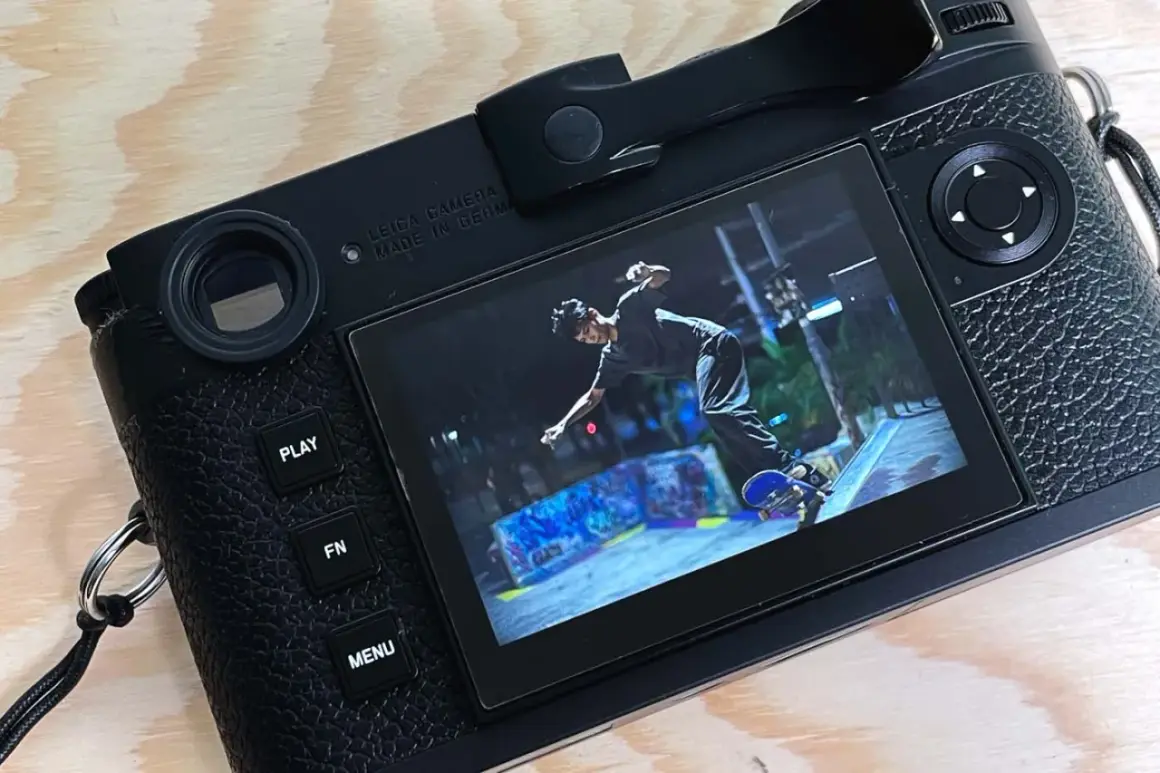
Leica's M11 is a digital rangefinder that asks you to slow down, focus manually, and make each frame count. This article breaks down what the camera actually offers in daily use, how the rangefinder workflow feels, where the image quality is genuinely strong, and which buyers will get the most out of it. I also look at the trade-offs, because with a body like this the limitations are part of the decision.
The essentials that matter before you choose it
- It is a 60.3 MP full-frame digital rangefinder built around manual focus and M-mount lenses.
- Triple Resolution gives you 60.3 MP, 36.5 MP, or 18.4 MP files while using the full sensor area.
- It has 64 GB of internal storage, an SD card slot, and Leica recommends UHS-II cards for best reliability.
- The optical finder has 0.73x magnification and frame lines for 28, 35, 50, 75, 90, and 135 mm lenses.
- It is strongest for street, documentary, travel, and deliberate portrait work, not fast autofocus-driven shooting.
- The M11-P adds content authenticity features and more internal storage, but the core image-making experience is very close.
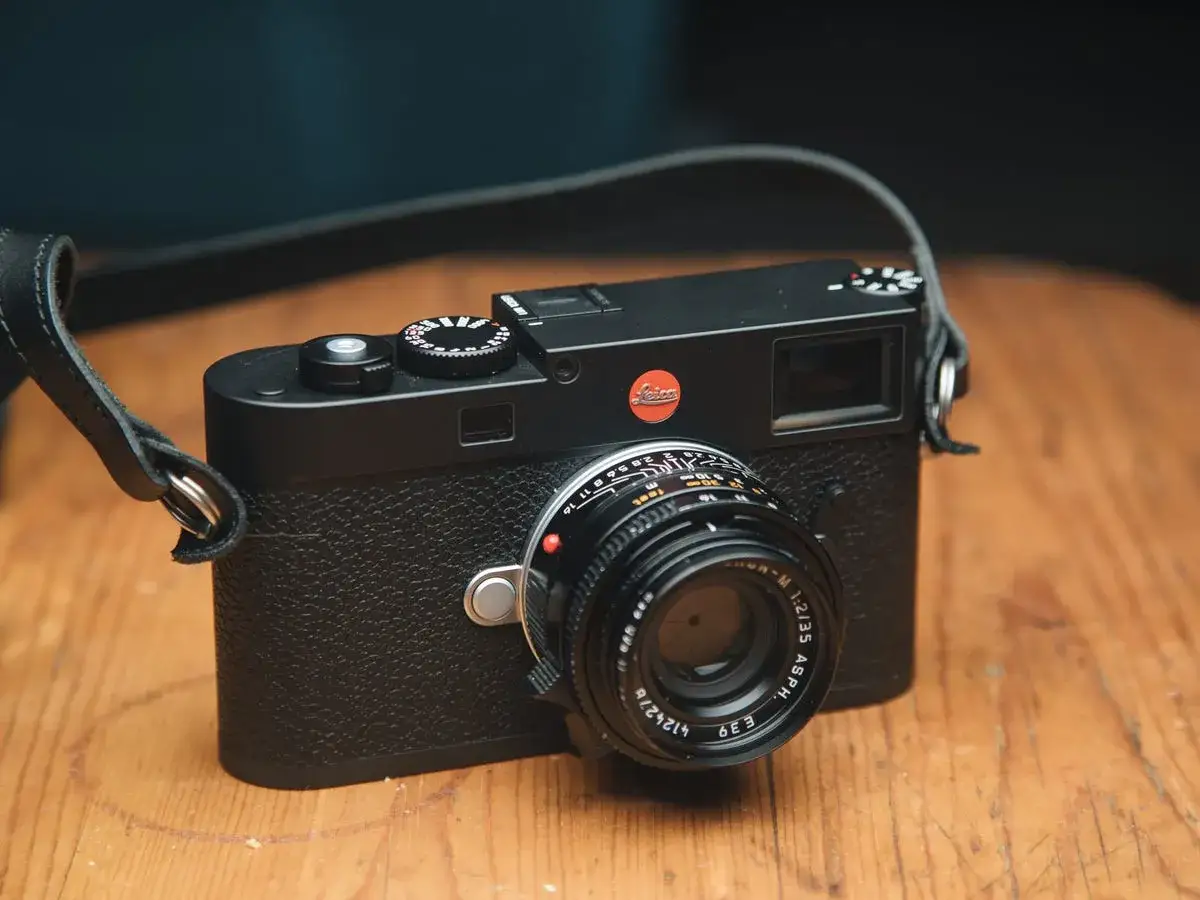
What this rangefinder body really offers
I think the cleanest way to read the spec sheet is to treat this as a stills-first tool, not a general-purpose mirrorless body. The combination of a 60.3 MP full-frame sensor, manual rangefinder focusing, and an M bayonet makes the camera feel like a precision instrument rather than a convenience device.
| Spec | What it means in practice |
|---|---|
| 60.3 MP full-frame BSI CMOS sensor | Lots of detail and crop room, but files are demanding and technique matters. |
| Triple Resolution | You can shoot at 60.3 MP, 36.5 MP, or 18.4 MP without changing the full sensor capture area. |
| ISO 64 to 50,000 | Low base ISO for maximum quality, with enough headroom for higher-ISO work. |
| Mechanical shutter to 1/4000 s, electronic shutter to 1/16000 s | Useful if you want to shoot wide open in bright daylight without always reaching for an ND filter. |
| 64 GB internal memory plus SD card support | Built-in backup layer and less panic when a card fills up mid-shoot. |
| Approx. 530 g black / 640 g silver with battery | The lighter black body is easier to carry all day; the silver version feels denser and more traditional. |
| 2.95-inch touchscreen, 2.33 million dots | Useful for menu work and live view, though it does not replace the optical finder. |
One detail I like is that the body choice actually matters. The black version is roughly 100 g lighter than the silver-chrome model, and after a long day that difference is noticeable; it is not just a cosmetic choice. The removal of the traditional base plate also makes battery and card access faster, which is the kind of practical change you appreciate once you stop romanticizing old camera rituals.
The biggest takeaway here is simple: every major design decision points toward disciplined still photography. That is why the camera feels so coherent in hand, and also why it will frustrate anyone expecting a jack-of-all-trades body.
Why the rangefinder experience still matters
Rangefinder shooting is less about automation and more about timing. The optical finder shows the scene outside the lens axis, bright-line frames help you compose, and automatic parallax compensation keeps the framing honest as you focus closer. The finder’s 0.73x magnification and the camera’s framelines for 28, 35, 50, 75, 90, and 135 mm lenses make it unusually versatile for a manual-focus system.Where it excels
For street, documentary, and travel work, the system stays quiet and unobtrusive. You can see into the frame before you commit to the shot, which is a small but real advantage when body language and background placement matter. I also find that the rangefinder keeps me from overshooting; the camera encourages a cleaner, more deliberate approach.
Read Also: Voigtländer Cameras - Which Body & Lenses Are Best for You?
Where it asks more of you
At the 70 cm minimum focus distance, close work is possible but not casual. If I were shooting portraits, product details, or anything where focus precision matters more than speed, I would lean on live view, magnification, focus peaking, or the optional Visoflex 2 electronic viewfinder. That is the real trade-off: the optical finder gives you speed of awareness, while live view gives you certainty.
My practical rule is this: use the rangefinder when you want to work fast and intuitively, and use live view when the shot is more exacting than the finder can comfortably handle. The best users know when to switch modes instead of forcing one method to do everything.
Image quality, storage, and battery life in practice
The headline feature is the Triple Resolution workflow. The camera records 60.3 MP, 36.5 MP, or 18.4 MP files while still using the full sensor area, which means you can choose between maximum detail and smaller files without changing how you frame the shot. In real-world terms, that is more useful than it sounds, because not every job needs a 100 MB raw file.
- 60.3 MP is the setting I would use for commercial work, landscapes, or any frame I might crop later.
- 36.5 MP is a smart middle ground when I want lighter files and faster handling.
- 18.4 MP is still plenty for editorial delivery, web work, and less storage-heavy workflows.
- Full-resolution DNG files can run roughly 70 to 120 MB, so your cards and archive strategy matter.
- UHS-II cards are the safer bet; Leica’s current firmware notes recommend them because UHS-I cards can create technical issues in rare cases.
The sensor design helps here too. A lack of low-pass filter keeps acuity high, while the 14-bit RAW depth and Leica’s stated dynamic range up to 15 stops give the file enough flexibility for careful editing. In plain English, you get a file that can hold a lot of detail if you expose it well, but it will not rescue sloppy focus or careless highlights.
Storage is one of the most practical reasons the body feels modern. The 64 GB internal memory is not a gimmick; I would treat it as a backup layer and an extra cushion when cards are swapped in the field. The battery is also stronger than people expect for a rangefinder body, with Leica rating it at about 700 shots in standard CIPA rangefinder use and as many as 1700 shots in Leica’s adapted shooting cycle. USB-C charging is built in, which makes travel and long location days easier than they are on older M bodies.
The other workflow feature I would not ignore is multi-field metering in rangefinder mode. On a camera that is often used in mixed light, that matters. It cuts down on exposure guesswork more than people assume, especially when the subject is off center or when the background is much brighter than the foreground. It is one of those quiet improvements that does not sound exciting on a spec sheet but changes how often you need to rescue files later.
How it compares with the M11-P and what that means for buyers
If you only care about the shooting experience, the standard body already delivers the core M formula. The M11-P adds features that matter most to photographers who value provenance, discretion, and more internal storage, not better image quality in the narrow sense.
| Feature | M11 | M11-P | What I read into it |
|---|---|---|---|
| Internal memory | 64 GB | 256 GB | The P is better for long trips and heavier RAW workflows. |
| Content authenticity | No built-in Content Credentials | Built-in Content Credentials | The P matters more for journalism and client provenance. |
| LCD protection | Gorilla Glass 5 | Sapphire crystal | The P is tougher if the camera lives in a bag and gets used hard. |
| Front branding | Standard Leica red dot | More discreet styling | The P is a little more low-profile in the street. |
| Core sensor and lens mount | Same M system foundation | Same M system foundation | Image quality is effectively the same class of output. |
My read is simple: if you are asking whether the standard body is still relevant, it absolutely is. The P version is a better fit when authenticity verification or the larger internal buffer is part of your real workflow. If that does not describe your work, the base camera is easier to justify because the essence of the shooting experience is already there. If you want a more stripped-down route, the M11-D exists too, but that is a different philosophy altogether.
Who should buy it, and what lens set I would start with
This is where the camera becomes much easier to judge honestly. Some photographers will love it immediately, and some will spend a lot of money to discover that they actually wanted a faster, more automated tool. I would sort buyers by use case rather than by brand loyalty.
| Shooter type | Fit | Why |
|---|---|---|
| Street and documentary | Strong | Discreet, responsive, and built for deliberate framing. |
| Travel | Strong if you shoot intentionally | Excellent files, good battery life, and compact M lenses. |
| Portrait | Good | Beautiful lens rendering, but focus discipline matters. |
| Sports and action | Poor | Manual focus and modest burst rates slow you down. |
| Video-first or hybrid work | Poor | This is a stills-first body, not the camera I would choose for motion-heavy jobs. |
| First-time full-frame buyer | Mixed | Wonderful experience, but the learning curve and system cost are steep. |
If I were starting from zero, I would buy one lens first: a 35 mm if I want a single do-everything angle, or a 50 mm if I prefer tighter framing and a more classic look. A 28 mm is excellent for street and environmental work, but it asks for more discipline in composition. The 75 mm and 90 mm frame lines are useful, yet I would only start there if I already know I want portrait or detail work. The M bayonet and 6-bit lens coding help the body recognize compatible lenses, which matters more than many buyers realize when they are relying on frame lines and correction behavior.
I would also budget for a second BP-SCL7 battery, a solid UHS-II card, and a strap that makes the body comfortable to carry all day. If I planned to use a tripod often, I would look at the handgrip as well, since it improves ergonomics without getting in the way of battery and card access. That kind of practical setup usually matters more than chasing another body or lens before you have actually learned the camera.
The checks I would make before buying one in the US
- Decide whether you want the lighter black body or the heavier silver version before you pay for the badge.
- Plan your full system cost, not just the body, because M lenses and accessories are where the real spend happens.
- Be honest about focus tolerance; if you want subject tracking, autofocus, or fast reaction shots, this will feel restrictive.
- Choose the M11-P instead only if content authentication or extra internal storage actually matters to your work.
- Expect the first few weeks to be about learning the finder, the framelines, and your own rhythm with manual focus.
My practical verdict is that this camera is worth it when the act of shooting matters as much as the file at the end. If that sounds like the way you want to work, it is one of the most satisfying digital bodies in the Leica system. If you mainly want speed, automation, or a safer all-rounder, you will get better value somewhere else.