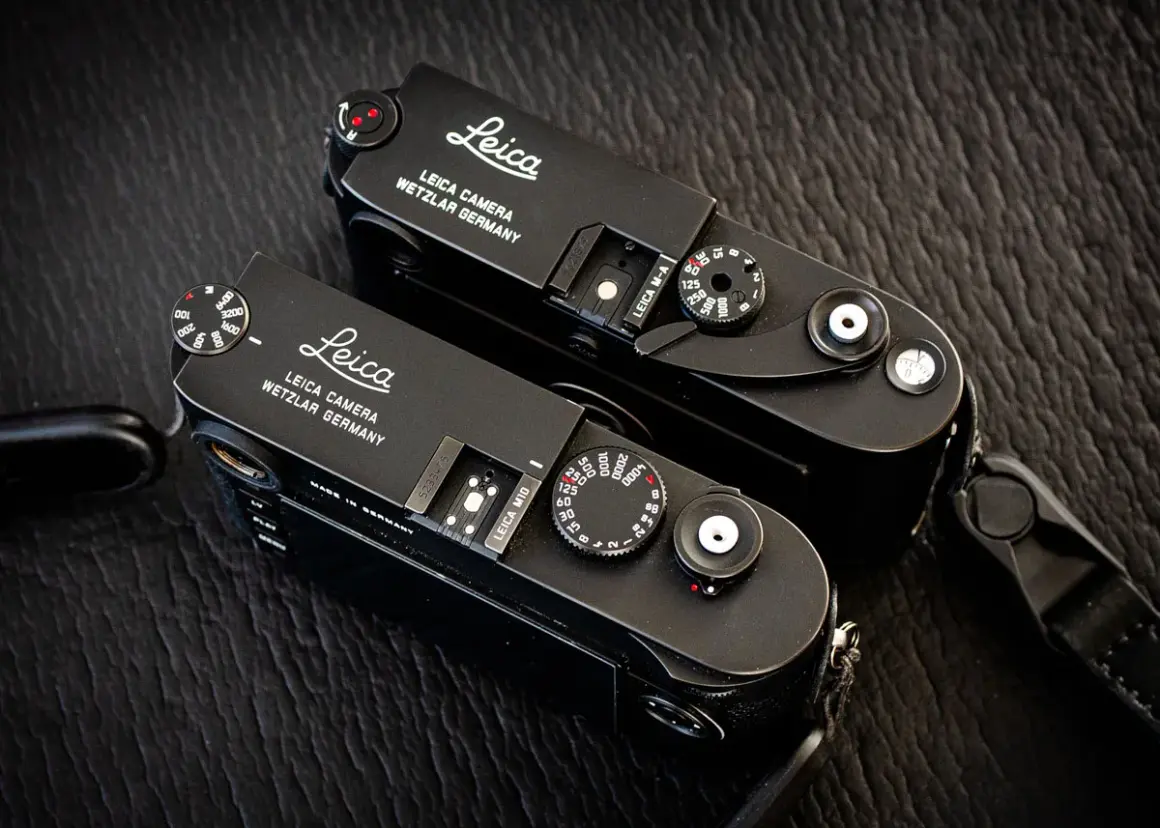
The Leica M and M9 sit close enough in the lineup that they are still cross-shopped, but they solve different problems. The Leica M vs M9 choice is really about whether you want the older CCD look and stripped-down discipline of the M9, or the more flexible M (Typ 240) with live view, video, stronger high-ISO behavior, and a safer ownership path. I’m treating “Leica M” here as the Typ 240, because that is the body most people mean in this comparison.
The decision comes down to image character, flexibility, and repair risk
- M9: 18 MP full-frame CCD, strongest for its rendering and classic shooting feel.
- M (Typ 240): 24 MP full-frame CMOS, better low light, live view, and video.
- Leica’s current service position matters: M9 CCD sensors are discontinued and cannot be replaced.
- For one-body reliability in 2026, the Typ 240 is the safer long-term buy.
- For the most distinctive early-digital Leica look, the M9 still has a real following, but only if you buy carefully.
What each body is really for
I think the cleanest way to frame this is simple: the M9 is the purist’s digital Leica, while the M (Typ 240) is the first digital M that felt genuinely more complete as a tool. Leica’s own 2024 anniversary material describes the M9 as the first digital full-frame rangefinder and the M (Typ 240) as the first M to use a CMOS sensor, which lines up perfectly with how they behave in real use.
The M9 is the body I associate with a slower, more deliberate pace. It gives you the core Leica rangefinder experience and little else, which is exactly why some photographers love it. The Typ 240 keeps that same M lens ecosystem but adds more breathing room when the light changes, the subject moves faster, or the job asks for something beyond a still frame. That gap matters once you move from admiration to actual shooting.
If you are trying to decide which one belongs in your bag, start by asking whether you want a specialized classic or a more versatile everyday body. That distinction will make the rest of the comparison much easier to read.
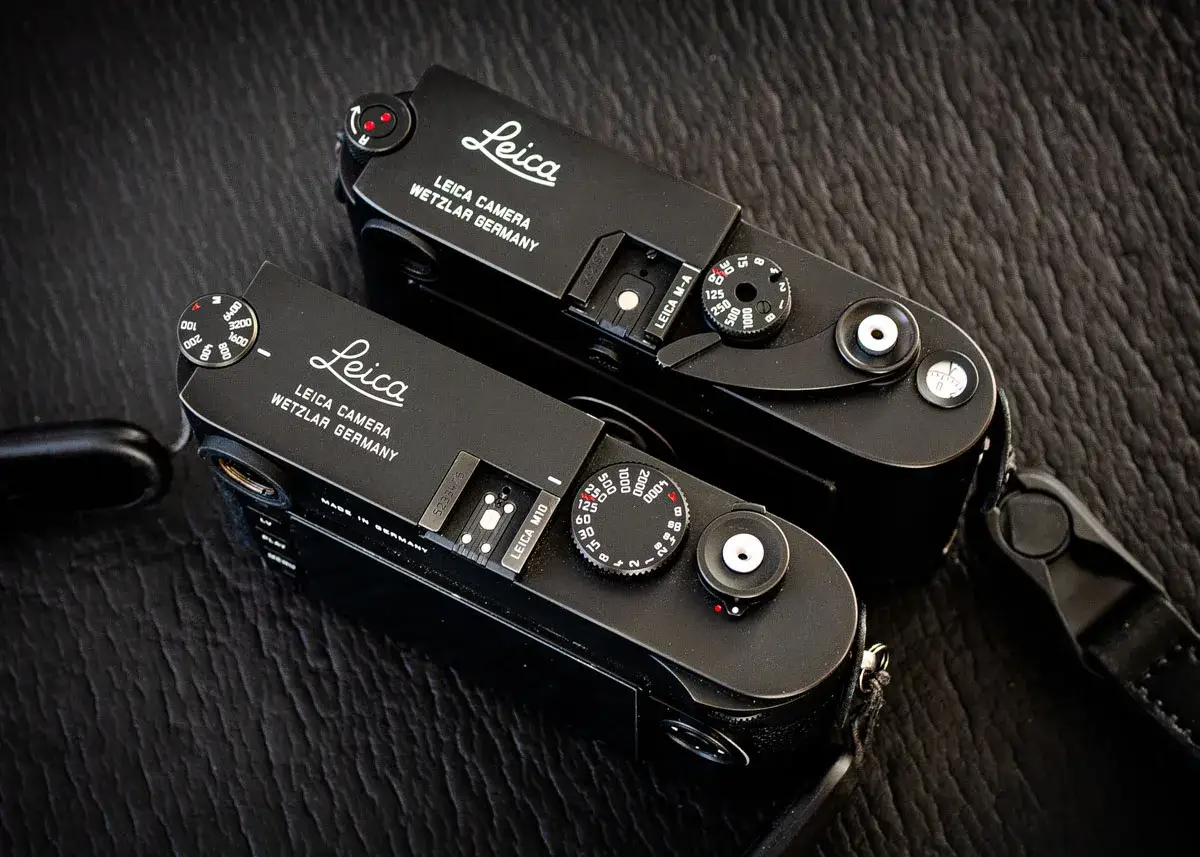
The image gap is bigger than it looks
On paper, the difference looks modest: 18 megapixels versus 24 megapixels. In practice, the gap is larger because the sensor generation changes how the camera handles highlight rolloff, shadow recovery, and high-ISO work. The M9’s CCD files can feel denser and more immediate to some eyes, while the Typ 240’s CMOS sensor gives me more room to push and correct files later.
| Criterion | Leica M9 | Leica M (Typ 240) | Why it matters |
|---|---|---|---|
| Sensor | 18 MP full-frame CCD | 24 MP full-frame CMOS | Defines the overall rendering and how much editing latitude you get. |
| Low-light use | Best kept to lower ISO shooting | Officially rated to ISO 6400, with Pull 100 available | The Typ 240 is simply easier to use when the light drops. |
| File flexibility | More constrained when you try to rescue shadows | More forgiving in mixed light and post-processing | Important if you edit hard or work fast under changing conditions. |
| Overall feel | Classic, direct, highly characteristic | Cleaner, more modern, less temperamental | This is where personal taste starts to matter more than specs. |
I would not oversell “CCD magic” as if it were a universal law. It is a look some photographers genuinely prefer, especially in daylight and controlled light, but it is still a preference, not an automatic quality upgrade. The M9 can look beautiful; the Typ 240 just gives you a wider margin when conditions are less perfect. That difference becomes obvious once you stop pixel-peeping and start shooting people, streets, travel, or interior work.
How the M changed daily shooting
The Typ 240 is the camera that made the digital M feel less like a beautiful limitation and more like a usable system body. It adds live view, video, and sensor-based metering, which means you can treat it as more than a traditional rangefinder when the scene asks for it. Wide-angle lenses, tripod work, close framing, and awkward compositions all become easier because you are no longer forced to rely only on the optical rangefinder window.
That matters in practical ways:
- Live view helps when precise framing matters, especially with wide lenses or awkward camera positions.
- Video is there if you want quick clips, behind-the-scenes footage, or hybrid stills-and-motion work.
- Higher ISO flexibility makes the Typ 240 more usable indoors and after sunset.
- Internal frame illumination makes the bright-line framelines easier to read than the older M9 setup.
- More modern raw handling makes the camera easier to integrate into a current workflow.
The M9 is still satisfying because it stays out of the way, but the Typ 240 is the one I would trust when the assignment is less predictable. That is why this comparison is not just about image character; it is also about how much friction you are willing to live with.
Why the M9 still keeps a following
The M9 is not just an old Leica with a romantic reputation. It has a specific reason people keep coming back to it: the files. In good light, the camera can produce a look that feels compact, direct, and a little more tactile than many later digital bodies. If you like a camera that nudges you toward deliberate composition rather than endless correction, the M9 is still compelling.
It also suits a narrower set of shooting situations better than people sometimes admit. I would happily consider it for daylight street work, environmental portraits, personal documentary projects, and any situation where I want the camera to disappear and the process to slow down a little. What it is not, in my view, is a sensible one-body solution for someone who shoots in mixed light, frequently edits hard, or expects modern convenience features.
The M9 is at its best when the photographer already understands exactly why they want it. If you are still trying to justify it with specs, the Typ 240 is usually the more rational answer.
Ownership risk matters more than nostalgia
This is the part most buyers underweight. Leica’s current service information says the production of the M9 CCD sensors has been discontinued, and defective sensors can no longer be replaced. That means the single biggest failure point on the M9 is no longer a normal repair item, which changes the buying equation more than any spec sheet ever will.
My practical checklist for an M9 purchase would be short and unforgiving:
- Ask for proof of a sensor replacement if one was done.
- Inspect the sensor for corrosion marks, dust, and uneven artifacts in plain files.
- Check shutter count, battery health, and whether the charger is included.
- Test the rangefinder alignment and frameline brightness.
- Buy only with a return window or a seller whose history you trust.
That does not make the M9 a bad camera. It makes it a camera that rewards careful buying. If you are comfortable treating it like a collectible tool rather than a disposable digital body, the risk is manageable. If not, the Typ 240 is easier to own with far less drama.
What I would check before buying either one
Before I spend real money on either body, I care about the boring details that actually determine whether the camera will be fun to live with. Cosmetics are secondary. Function is the point.
- Does the rangefinder patch align accurately at close and medium distances?
- Are the rear buttons, dials, and shutter release responsive and consistent?
- Is the LCD readable, and does it show signs of heavy wear?
- Do I get a working battery, charger, and at least one known-good SD card setup?
- Are sample files clean, with no sensor issues or strange exposure behavior?
If I were buying only one in 2026 for actual use, I would choose the M (Typ 240). If I wanted the most distinctive early-digital Leica look and was willing to accept the maintenance gamble, I would buy the M9 only with clear sensor history and a price that reflects the risk. That is the most honest way to think about this comparison: the M9 is the more romantic camera, but the Typ 240 is the more dependable tool.