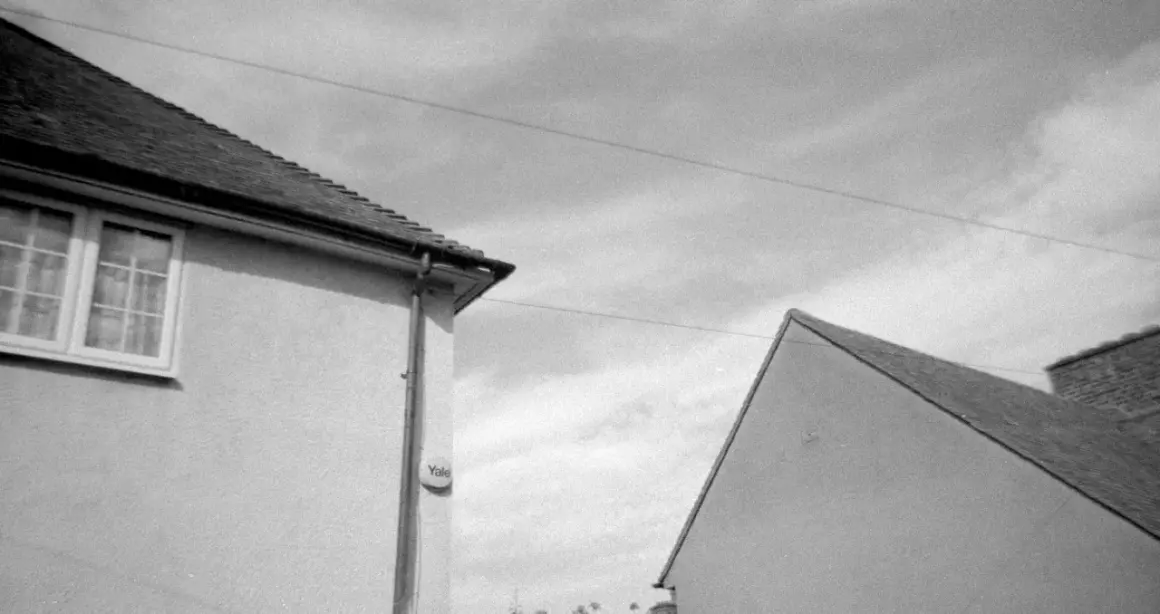
What matters most before you load a roll
- ISO 400 panchromatic black-and-white negative film made by Harman, designed for general-purpose shooting.
- Available in 35mm cassettes, 120 roll film, and 100-foot bulk rolls.
- Current US pricing is usually budget-friendly: about $6.95 for 24-exposure 35mm, $7.99 for 36-exposure 35mm, $6.99 for 120, and about $99 for bulk.
- Expect fine grain, good sharpness, broad tonal range, and forgiving exposure latitude rather than a hyper-smooth modern look.
- It is happiest at box speed, but it can be used at EI 320 or EI 800 when the scene and developer justify it.
- If you want a low-risk budget film for street, travel, documentary, and casual daylight work, this is an easy stock to live with.
What this film is and where it fits
Kentmere Pan 400 is a panchromatic black-and-white negative film, which means it responds to the visible spectrum in a balanced way instead of ignoring certain colors. That matters because it gives you natural-looking tonal separation in skies, skin, brick, foliage, and mixed daylight scenes without needing complicated corrections. Harman positions it as a general-purpose stock with a nominal speed of ISO 400/27, and that is exactly how I would treat it: practical, versatile, and not precious.
It is sold in 35mm 24- and 36-exposure cassettes, 100-foot bulk rolls, and 120 format, so it works whether you are shooting a rangefinder, an SLR, or a medium-format camera. The 35mm cartridges are DX coded, which is useful if you rely on cameras that read film speed automatically. In current US retail, the price sits in budget territory, and that is a big part of the appeal: you can shoot it often enough to learn from it without treating every frame like an expensive event.
| Format | Typical US price | Best use |
|---|---|---|
| 35mm, 24 exposures | About $6.95 | Testing the stock or short casual outings |
| 35mm, 36 exposures | About $7.99 | Everyday shooting and better per-frame value |
| 120 roll | About $6.99 | Medium-format work where each frame matters |
| 100-foot bulk roll | About $99 | Heavy 35mm use and home loading |
The small price gap between 24 and 36 exposures is worth noticing. If you already know you will finish the roll, the 36-exposure version is usually the better value. That practical value story is also why the film has become a favorite “workhorse” option rather than a prestige stock, which leads directly to the more important question: how does it actually render a scene?
How it looks on real subjects
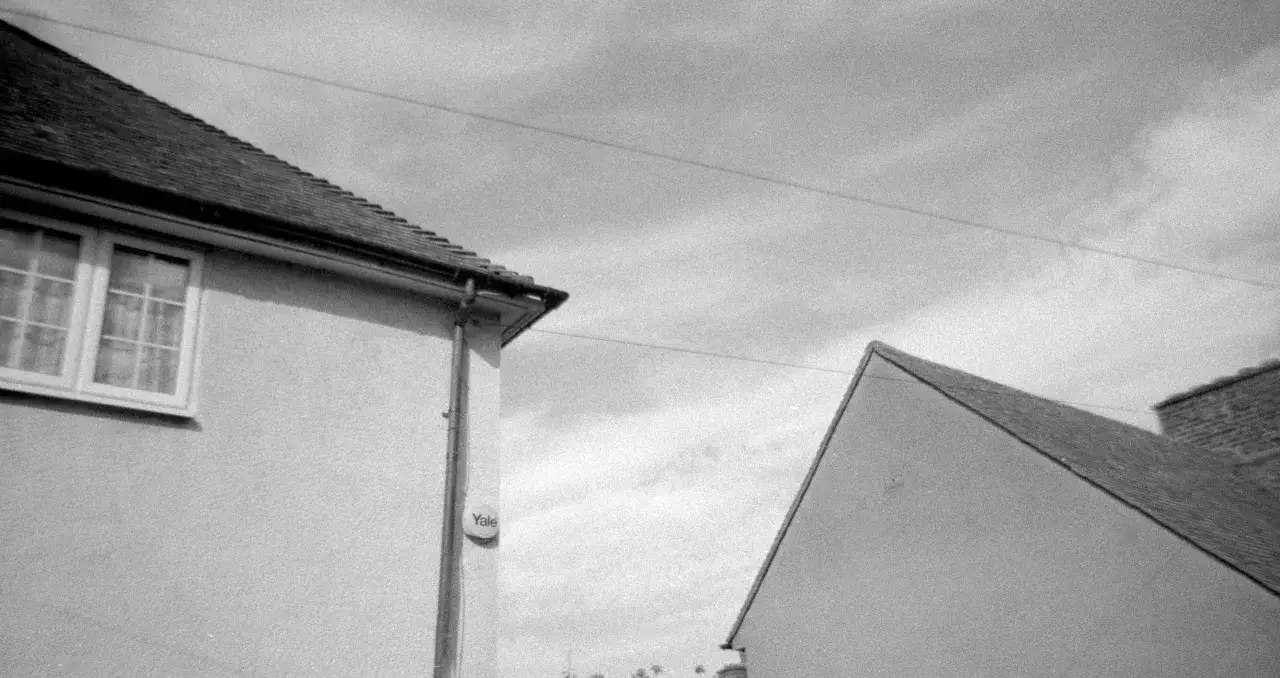
My read on this film is simple: it gives you a clean, honest black-and-white file with enough character to feel analog, but not so much character that it starts dictating the image for you. The grain is present, but it is not aggressive in the way some budget 400-speed films can be. Sharpness is solid, tonal range is broad, and the contrast sits in a comfortable middle zone that scans and prints well.
That makes it especially useful for subjects where you want reliable separation more than dramatic mood. I would reach for it on:
- street photography, where changing light rewards a flexible film;
- travel and documentary work, where you may not control the scene;
- portraits made in natural light, especially if you want a straightforward, classic look;
- indoor scenes with a fast lens or good window light;
- medium-format shooting, where the bigger negative naturally softens the grain.
It is less interesting if your main goal is a very smooth, high-end tonal rendering or a distinctly punchy signature look straight out of the tank. I do not mean that as a criticism; it is just the tradeoff of a budget stock. For many photographers, that tradeoff is exactly the point, because the film stays out of the way and lets the scene do the work. Once you know the look, the next step is exposure control, because that is where this film becomes either quietly excellent or merely average.
How I would meter it for dependable negatives
I would start at EI 400 and only move away from it when the light, lens speed, or development plan gives me a reason. Harman rates the film at ISO 400 using ID-11 at 20°C, and the official data sheet also gives guidance for EI 320 and EI 800. That already tells you how the film is meant to be used: not as a fragile one-note stock, but as something with enough latitude to absorb small exposure choices.
| Exposure index | When I would use it | What changes |
|---|---|---|
| 320 | Flat overcast light or scenes where I want a little more shadow detail | Slightly denser negatives and a gentler feel in the shadows |
| 400 | Default choice for most daylight and mixed-light work | Balanced grain, contrast, and shadow retention |
| 800 | Lower light, a faster shutter speed, or a deliberate push | More visible grain and stronger contrast, with less margin for underexposure |
There are a few practical notes that matter more than people expect. First, the film can be used with color, polarizing, and neutral-density filters in the usual way, but some auto-exposure cameras can undercompensate with deep red or orange filters. Second, Harman notes that no reciprocity correction is needed from 1/10,000 second to 1 second; longer exposures do need compensation. That makes the film friendly for day-to-day shooting, but it also means I would still keep notes if I were working with long shutter speeds or heavy filtration. Good exposure discipline pays off more than fancy development tricks here, and the development step is where the film quietly shows its flexibility.
Developing and scanning it without wasting its flexibility
The data sheet describes Kentmere Pan 400 as very robust in processing, and that has been my basic expectation whenever I handle a budget 400-speed film. It can go through spiral tanks, rotary processors, trays, deep tanks, and automatic processors, and it tolerates less-than-perfect working conditions better than some more temperamental emulsions. For home developers, that matters a lot: the film is forgiving enough to be a good learning stock, but not so forgiving that you can ignore technique.
At 20°C / 68°F, the official chart gives development guidance in familiar developers like ID-11 and D-76, with times around 9:30 at EI 400 in stock solutions and longer times if you rate it at EI 800. Harman also recommends against a pre-rinse in rotary processing because it can lead to uneven development, and that is the sort of specific detail that saves real negatives from avoidable problems. If I were processing it at home, I would keep the workflow boring on purpose: standard agitation, stable temperature, clean chemistry, and no improvisation unless I had already tested it.
- Use a normal developer first, not a special recipe.
- Keep agitation consistent, because this stock rewards predictable technique.
- If you shoot it at EI 800, expect more grain and more contrast, then compensate in development rather than hoping scanning will fix everything.
- When scanning, expect to make a small contrast or black-point adjustment instead of a heavy rescue job.
That processing behavior is one of the reasons I consider it a sensible everyday film. It does not demand a darkroom veteran, but it also gives a careful photographer enough control to shape the negative. Once that is clear, the most useful comparison is not abstract theory; it is how this film stacks up against the other ISO 400 names people actually buy.
How it compares with HP5 Plus, Tri-X, and Fomapan 400
This is where expectations need to stay realistic. Kentmere Pan 400 is not trying to be the most luxurious 400-speed film on the shelf. It is trying to give you a dependable result at a lower cost, and that changes the buying decision. If you want the most recognizable classic look, or if you routinely push film hard, another stock may suit you better.
| Film | General look | Push headroom | Why choose it |
|---|---|---|---|
| Kentmere Pan 400 | Balanced, fine-grained for the price, moderate contrast | Good flexibility, but best kept near box speed unless you have tested your workflow | Lowest-cost dependable 400-speed B&W option |
| Ilford HP5 Plus | Classic, slightly fuller negative with more tolerance in harsh light | Officially supported up to EI 3200 with extended development in select developers | If you routinely push and want a larger safety net |
| Kodak Tri-X 400 | More iconic grain and a more recognizable traditional look | Officially documented to EI 1600 | If you want the classic Kodak monochrome signature |
| Fomapan 400 | Distinct, more characterful rendering with fine granularity claims | Usable, but more developer-dependent in practice | If you want a different look and do not mind variation |
My practical takeaway is this: choose Kentmere Pan 400 when you want the cheapest straightforward path to reliable black-and-white negatives. Choose HP5 Plus when pushing is part of your normal routine. Choose Tri-X when the look itself is the point. Choose Fomapan 400 when you want to experiment with a more idiosyncratic rendering. That comparison becomes even clearer when you decide who the film is really for, because not every photographer needs the same compromises.
What I would do with the first three rolls
If I were introducing someone to this film, I would not start by chasing a dramatic push or an exotic developer. I would use the first three rolls to learn how the stock behaves in the real world, because that tells you far more than a single “best” negative ever will.
- Roll one: shoot at EI 400 in normal daylight, mix open shade and direct sun, and keep the processing standard.
- Roll two: use EI 320 on a day with softer light, then compare shadow detail and midtone separation.
- Roll three: try EI 800 indoors or at dusk if you want to understand how far the grain and contrast can be pushed before the look changes too much.
That three-roll approach is practical because it reveals the film's real personality without forcing conclusions from a single scene. If you like negatives that are easy to work with, scan cleanly, and do not punish modest mistakes, this is a solid buy. If you need maximum push latitude or a very specific signature, spend the extra money on a more specialized stock. The film's value is not that it wins every comparison; it is that it gives you enough quality, at a low enough cost, to keep shooting and learning with very little friction.