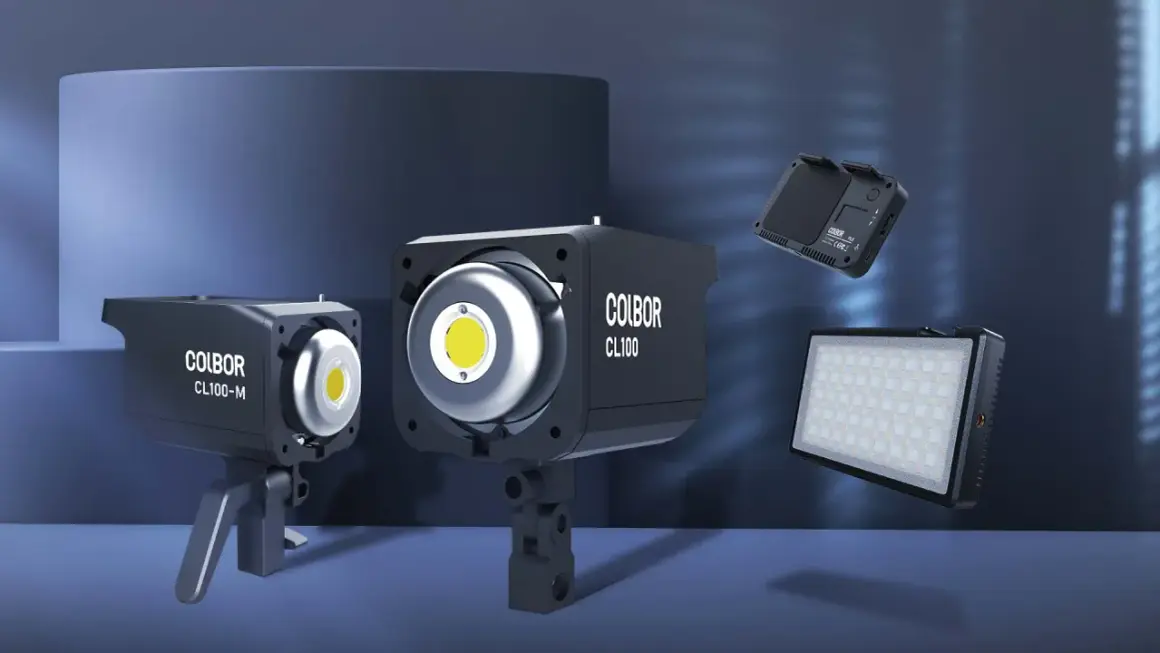
There is no universal winner between continuous light and flash. I usually treat the choice as a workflow decision: do you need to see the light live, or do you need a brief burst that freezes motion and gives you more output for the same size fixture? The continuous light vs flash decision affects exposure, subject comfort, battery life, and whether one setup can cover both stills and video.
The right light is the one that matches the job, not the gear trend
- Continuous light is easier to preview and is the default choice for video.
- Flash is stronger for freezing motion and keeping ISO low in still photography.
- Modern LEDs have made continuous lighting viable for more portrait and product work, but not every scene.
- Flash still gives you more power per watt and more control over ambient light.
- If you shoot hybrid content, the best option depends on which deliverable matters most.
What each light source actually does
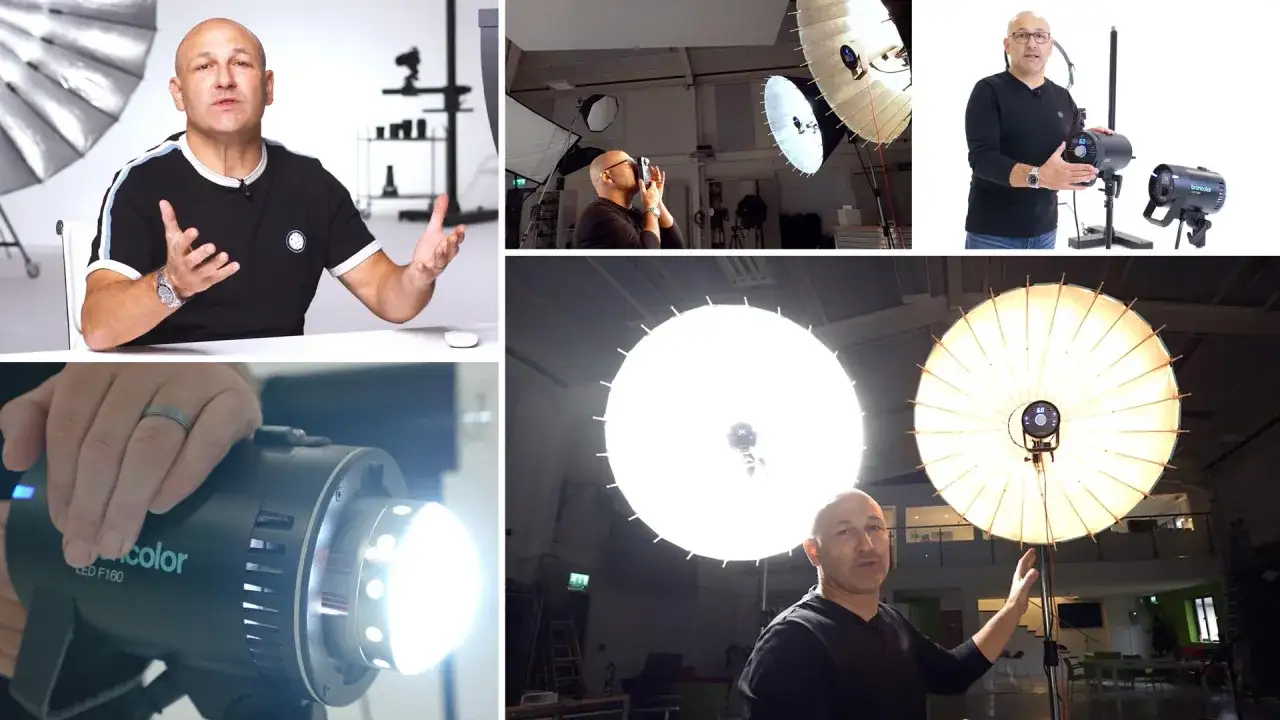
Continuous light stays on, so you can see shadows, catchlights, spill, and reflections before you press the shutter. That makes it feel intuitive, especially if you are learning how modifiers shape a face or a product surface. Flash works differently: it fires a short burst of light, often far brighter than its size suggests, which lets you expose the scene with much more efficiency.
The part people miss is that the difference is not just duration. Flash can freeze motion because its effective burst is so short, while continuous light depends on your shutter speed and the movement in front of the camera. If a hand, a pet, or a dancer moves during the exposure, continuous light only works if your camera settings and output level are strong enough to stop the blur. That is why the same light source can feel forgiving in one shoot and limiting in another.
I think of continuous lighting as a visibility tool and flash as a power tool. That framing makes the rest of the decision much easier, because the real trade-offs show up fast once you compare them side by side.
The trade-offs that matter on real shoots
| Criterion | Continuous light | Flash | What it means in practice |
|---|---|---|---|
| Preview | You see the effect in real time | You see the result after the burst | Continuous is easier for beginners and for shaping light live. |
| Motion freezing | Depends on shutter speed and subject movement | Usually much better | Flash is the safer choice for action, kids, pets, and splash shots. |
| Video use | Essential | Not useful for moving footage | If video matters, continuous light is the practical default. |
| Ambient control | Moderate | Strong | Flash is better when you want to overpower daylight or darken a background. |
| Power efficiency | Needs more output to stay useful at distance | Very efficient for stills | A flash head can deliver a lot of light without turning the room into a furnace. |
| Learning curve | Usually gentler | Steeper | Flash introduces sync speed, ratios, and output control all at once. |
| Color confidence | Depends on LED quality and flicker performance | Usually very consistent | With continuous lights, I still test for flicker and color shift instead of trusting the box. |
This is the version I keep in mind when I am choosing gear for a real job, because the spec sheet rarely tells the whole story. The next question is where each tool actually earns its place.
Where continuous light is the better choice
For video, interviews, and hybrid shoots, continuous lighting is usually the cleanest answer. You can light a face, watch the shadows move as you reposition the fixture, and know immediately whether the setup reads as soft, dramatic, or flat. That saves time, and time matters when you are working with a client or switching between photo and video deliverables.
Video and hybrid content
If I am creating talking-head content, short-form brand videos, or interview clips, continuous light is almost always my first pick. Flash is simply the wrong tool for moving footage, so a light that stays on gives me one setup for both stills and motion. For a creator or production team that delivers reels, ads, and website portraits from the same session, that consistency is hard to beat.
Product and tabletop work
Continuous light is also useful when I need to study reflections on glass, packaging, jewelry, or shiny surfaces. Seeing the reflections live makes small adjustments much faster. For tabletop scenes, especially on a smaller set, I can move a card, shift the light, and immediately see what changed. That is one reason many product teams like continuous lighting for ecommerce video and social content.
Read Also: Indoor Lighting Guide - Make Your Home Feel Right
Teaching, directing, and collaborative shoots
When the subject is nervous, inexperienced, or highly interactive, continuous light can feel calmer. The model does not get startled by bursts, and I can explain changes while everyone sees the setup evolve. That makes the light feel less technical and more conversational, which often helps in portrait sessions where expression matters as much as exposure.
Continuous light is not magic, though. If the room is large, the subject is moving quickly, or you need to shoot at a small aperture without pushing ISO too high, a modest LED can run out of steam fast. That limitation leads naturally to the case for flash.
Where flash is still the stronger tool
Flash is still the better answer when I need maximum still-image performance. It gives me a short, intense burst that can freeze movement, hold detail, and keep ISO lower than I could manage with many continuous setups. In practice, that means cleaner files, sharper motion, and more flexibility when the background light is messy or bright.
Most camera systems sync around a typical flash ceiling near 1/200 to 1/250 second, depending on the body and trigger. Beyond that, high-speed sync can push shutter speeds much faster on supported gear, sometimes up to 1/8000 second, but the trade-off is reduced flash power. That is a real compromise, not a free upgrade, and it matters a lot outdoors when you want a wide aperture without blowing the exposure.
Flash also gives me more light from a smaller source, which is useful on location. A speedlight or compact strobe can fit in a bag, run for many pops on a battery, and still produce a polished image that would take a much larger continuous fixture to match. If I want a dark background, crisp edges, or a low-ISO portrait with strong subject separation, flash is usually the easier route.
The downside is that it is less immediate. I cannot fully judge the final look until after the shot, and that slows the feedback loop. Once you understand that, the next step is to match the light to the kind of work you actually do.
How I choose the right light for each type of job
When I strip the debate down to deliverables, the answer changes by scenario. One light source is not universally superior; the best tool depends on what the client needs, how fast the subject moves, and whether the final asset is still, video, or both.
| Job type | Usually the better choice | Why it tends to work better |
|---|---|---|
| Talking heads and interviews | Continuous light | You can see the exact placement, keep the subject relaxed, and record video without changing the setup. |
| Portrait sessions for stills | Flash, with continuous as an option | Flash gives cleaner files, more subject separation, and better motion control. |
| Product and ecommerce content | Depends on deliverables | Continuous is strong for hybrid photo and video; flash is stronger for high-volume stills and reflective products. |
| Events and receptions | Flash for stills | Event spaces are often mixed and unpredictable, and flash helps overpower the mess. |
| Reels, ads, and behind-the-scenes content | Continuous light | Video is part of the output, so one setup does more work. |
| Kids, pets, and action | Flash | Short burst duration makes it much easier to freeze motion cleanly. |
For portraits, I usually ask one question first: is the final product mostly a still image, or is it part of a broader content package? That answer often tells me more than the genre label does. It also exposes the mistakes people make when they buy the wrong type of light for the wrong workflow.
The mistakes that make both options look worse than they are
The biggest mistake is buying too little output for the space. A small LED panel can look fine in a close interview setup and disappointing in a larger room or with a large modifier. The same is true for flash: if the modifier is too big, the subject is too far away, or you are trying to beat daylight without enough headroom, the system will feel weaker than it really is.
Another common mistake is thinking the source matters more than the modifier. In practice, a softbox, umbrella, diffusion panel, or grid changes the look more dramatically than many people expect. A bare flash and a diffused flash are not the same tool visually, just as a bare LED and a properly shaped LED are not the same experience.
- Do not ignore flicker with continuous light, especially if you shoot at high frame rates or use unusual shutter settings.
- Do not rely only on CRI or TLCI numbers; test skin tones, greens, and any product colors that matter to your brand.
- Do not assume flash is harder for no reason; it just asks you to think about sync, ambient balance, and ratios more deliberately.
- Do not buy for rare edge cases; buy for the work you repeat every week.
Once those mistakes are out of the way, the final decision becomes much simpler. At that point, I usually fall back on a practical buying rule rather than a theoretical one.
The fastest way to decide what to buy first
If your output is at least half video, I would start with continuous light. A good bi-color LED or COB fixture, a softbox, and basic control over spill will cover a surprising amount of work. It is the faster path to a usable hybrid setup, and it reduces friction when you are moving between stills and motion.
If your work is mostly still photography, I would start with flash. A speedlight or strobe gives you more headroom per dollar in controlled stills, and it is usually the better first investment when your main goal is clean, sharp images. For portrait, product, and event shooters, that usually matters more than having a light you can see continuously.
My rule is simple: I buy the light that removes the most friction from the next 20 shoots, not the one that looks best on a spec sheet. That is the practical answer to continuous light vs flash: continuous for visibility and hybrid workflows, flash for power and still-image control.