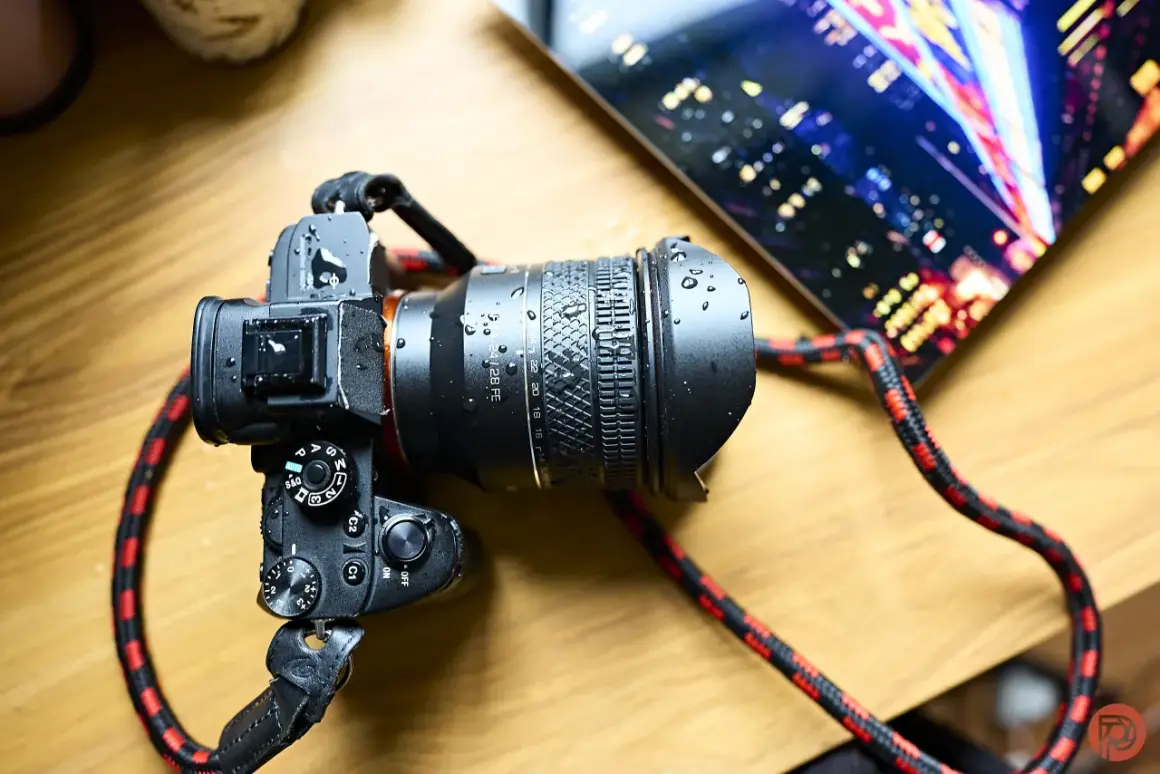
Rokinon sits in a useful part of the market: it is not the prestige choice, but it often delivers enough sharpness, character, and handling to make the price feel justified. The real question is not whether the brand can make a good lens; it is which Rokinon line you are buying and what you expect from it. So, are Rokinon lenses good? For controlled shooting, video work, and budget-conscious stills, often yes. For fast autofocus, heavy weather abuse, or absolute consistency across every frame, I am more selective.
Rokinon is best treated as value-first glass
- The strongest Rokinon options are still the manual-focus ultra-wides and cinema lenses, where the price-to-performance ratio is hard to ignore.
- The newer AF primes and AF zooms make the brand more relevant for hybrid creators, but they are still value alternatives, not premium-native replacements.
- Filter compatibility matters a lot: some ultra-wides do not accept standard front filters, while lenses like the 24-60mm F2.8 AF do.
- Current U.S. pricing spans roughly $249 for a manual 14mm F2.8, $299 for an 85mm Cine DS, $399 to $649 for AF primes, and $899 to $1,199 for AF zooms.
- If you need top-tier autofocus tracking, sealing, and polish for paid event work, I would compare Rokinon directly with Sigma, Tamron, and native lenses.
The short answer depends on your shooting style
My honest take is simple: Rokinon is good when you measure it against a specific job, not against an imaginary “best lens” in a vacuum. That is why the brand has stayed relevant for so long. It gives you access to focal lengths and rendering styles that would cost noticeably more from many native brands, especially if you want a cine-friendly build or a fast ultra-wide without crossing into premium pricing.
That said, I would not describe every Rokinon lens as a universal win. The brand now spans manual-focus stills lenses, Cine DS and Cine AF options, and a newer AF lineup that includes zooms and primes. That range matters, because the answer changes depending on whether you are shooting landscapes, interviews, travel, weddings, or fast-moving events. The practical split becomes clearer when you look at the strengths first, then the compromises.
Where Rokinon lenses punch above their price
Rokinon earns respect in a few very specific places, and those places are not trivial. For a lot of creators, those strengths matter more than a polished brand badge or a fancy sales pitch.
- Optical value - The brand has long been strong on sharpness and contrast for the money. A manual 14mm F2.8 around the $249 to $340 range can still produce a very usable image for astro, interiors, and landscape work.
- Cinema-friendly handling - Rokinon’s cine lenses are built around the needs of filmmakers: geared rings, smooth apertures, and a more controlled feel for focus pulls. The 85mm T1.5 Cine DS at about $299 is a good example of that value.
- Useful focal lengths - The brand has made a career out of giving shooters practical wide angles and fast portrait lenses without pushing every model into premium pricing.
- Lightweight kits - Many Rokinon lenses are easier to carry than heavier pro zooms, which matters on gimbals, travel shoots, and long days with a shoulder bag.
- Respectable contrast and color - In real production work, I care less about lab perfection than about whether a lens gives me files that are easy to grade. Rokinon often does that well enough.
That is the point many buyers miss: the brand is usually trying to solve a workflow problem, not win an optical arms race. Once filters enter the picture, the buying decision gets more specific.
Filter compatibility can make or break the purchase
This is where I see people regret the wrong lens choice. If you regularly use ND, CPL, or diffusion filters, the filter thread is not a side detail. It can decide whether a lens fits your workflow cleanly or becomes annoying on set.
Some Rokinon ultra-wide lenses do not accept standard front filters at all. That is common on very wide designs, but it matters more than most buyers expect. If you shoot landscapes or video and depend on screw-on filters, a lens with a front filter thread is easier to live with than a bulbous front element or a built-in hood that forces you toward matte-box solutions.
- The 14mm F2.8 manual-focus full-frame ultra-wide is listed with no front filter size, so it is not the easiest choice for screw-on filters.
- The 24-60mm F2.8 AF zoom uses a 72mm front filter thread, which is far friendlier for everyday ND and polarizer use.
- The 14-24mm F2.8 AF zoom uses a 77mm filter size, so it is also workable with standard filters.
- If you rely on variable ND or diffusion for hybrid photo-video work, that alone can push you toward the zooms instead of the classic ultra-wide primes.
For me, this is one of the most practical ways to judge the brand. A lens can be optically strong and still be the wrong tool if it slows down your filter workflow. That is why the current lineup matters more than the logo on the barrel.
How the current lineup performs in practice
Rokinon’s lineup is broader now than many people realize, and the pricing tells you a lot about where the company is aiming. The older reputation was built on manual-focus bargains, but the newer AF lenses show that the brand is trying to serve hybrid creators too.
| Line | Typical U.S. price | Best for | Main trade-off |
|---|---|---|---|
| Manual-focus ultra-wide primes | About $249 to $340 | Astro, landscapes, interiors, real estate, controlled video | No autofocus, and some models are not filter-friendly |
| Cine DS and DSX lenses | About $299 and up | Narrative work, interviews, matching lens sets, focus pulls | Manual operation only, so they reward a deliberate shooting style |
| AF primes | About $399 to $649 | Everyday stills, portraits, travel, lightweight hybrid kits | Less of a bargain than the older manual line, but far more convenient |
| AF zooms | About $899 to $1,199 | Hybrid creators, gimbal work, event coverage, travel | Higher price, and wide-angle distortion can depend on correction |
What stands out to me is that Rokinon is no longer just a “cheap manual lens” brand. The current lineup includes AF zooms like the 24-60mm F2.8 and 14-24mm F2.8, plus AF primes that sit in the more serious mid-range. The company is also pushing firmware updates and lens profiles for several lenses, which is the sort of boring support work that separates a living system from a dead-end bargain bin. That leads directly into how Rokinon stacks up against the brands most buyers compare it with.
How Rokinon stacks up against Sigma, Tamron, and native glass
If I am comparing brands honestly, I would frame Rokinon as a value and workflow choice, not as a blanket winner. Sigma, Tamron, and native lenses often feel more polished in day-to-day use, especially when autofocus and sealing are central to the job. But Rokinon still has a lane where it makes excellent sense.
- Against Sigma - Sigma usually feels more refined in autofocus behavior and overall mechanical confidence, but Rokinon can be cheaper and more cinema-oriented in the right focal lengths.
- Against Tamron - Tamron often wins for balanced everyday zoom performance and dependable hybrid use, while Rokinon can be more attractive if you want a special focal length or a cine-specific build.
- Against native lenses - Native glass typically integrates better with the camera body, especially for autofocus tracking, correction profiles, and sealing. Rokinon is more likely to win on price and specific video handling features.
- Against premium cinema glass - Rokinon will not replace high-end cinema lenses in absolute consistency or build sophistication, but it can get a production moving at a fraction of the cost.
That is why I would never recommend choosing by brand alone. If you shoot fast action or depend on every frame being identical in a paid environment, native or more premium third-party glass is often the safer move. If you shoot in a more controlled way and want strong optical return per dollar, Rokinon becomes much more interesting. From there, the right answer turns into a use-case question.
Who should buy Rokinon and who should skip it
I tend to split buyers into three groups. Once you do that, the brand becomes much easier to judge.
- Buy Rokinon if you shoot controlled video - Interviews, short films, product work, and narrative scenes are a natural fit, especially if you care about focus rings, smooth aperture control, and matching primes.
- Buy Rokinon if you shoot landscapes or astro - Wide angles are one of the brand’s strongest lanes, and the lower price makes it easier to own a specialized lens you may not use every day.
- Buy Rokinon if you are building a lean kit - If you need one lens that does a lot without draining the budget, the newer AF zooms and the classic manual-focus primes can be smart picks.
- Skip Rokinon if you depend on fast autofocus - Sports, wildlife, weddings, and event work reward lenses that track quickly and consistently. That is not where Rokinon usually wins.
- Skip Rokinon if weather sealing is non-negotiable - Some models are better protected than others, but I would still give native pro glass the edge when weather and heavy field use are daily realities.
- Skip Rokinon if you need effortless filter use on ultra-wides - The filter story varies a lot by model, and that can be a real workflow issue on set.
If your work sits in the overlap between stills and video, Rokinon can be a strong middle ground. If your work is time-sensitive, event-heavy, or dependent on AF perfection, I would treat the brand as a comparison point rather than an automatic purchase. Before spending money, I still check a few details that save a lot of regret later.
What I would check before buying one
If I were choosing a Rokinon lens today, I would run through a short checklist before I paid for it. That keeps the purchase grounded in the real job, not in the excitement of a low price.
- Confirm the exact mount and make sure it supports your camera body the way you expect.
- Check the filter thread, especially on ultra-wide lenses, if you use ND or CPL filters regularly.
- Decide whether you want manual focus, AF, or cine-style handling before comparing prices.
- Look for firmware support or current lens profiles if you shoot hybrid photo and video.
- Test for corner sharpness, centering, and autofocus accuracy as soon as the lens arrives, especially if you buy used.
That is the lens-buying habit I trust most: match the tool to the workflow, not just to the spec sheet. If you do that, Rokinon can be one of the smartest value buys in the market; if you expect premium-native behavior at a discount, the compromises show up quickly.