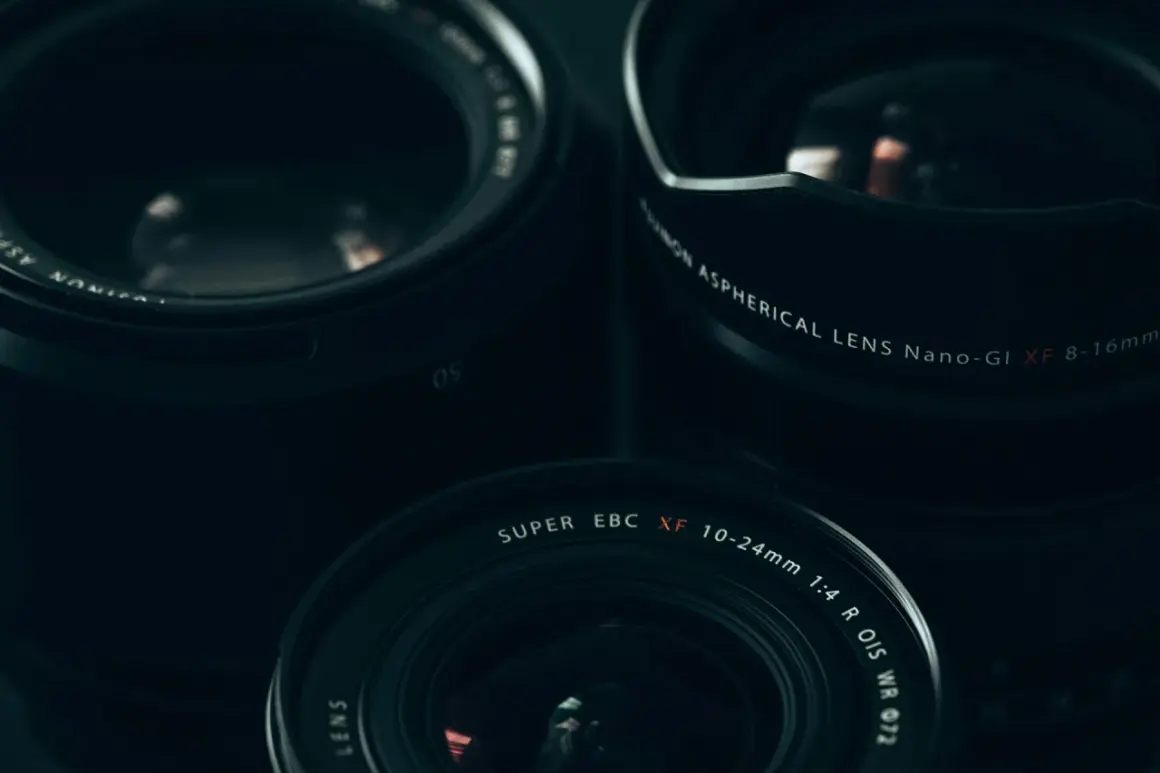
The fastest route to the right Fuji street lens
- Best all-round pick: XF23mmF2 R WR. It gives you a classic 35mm-equivalent view, weather resistance, and a very manageable 180g body.
- Best pocketable option: XF23mmF2.8 R WR or XF27mmF2.8 R WR. Both are tiny, light, and easy to carry all day.
- Best low-light choice: XF23mmF1.4 R LM WR. The f/1.4 aperture helps after sunset and gives cleaner subject separation.
- Best wider storytelling lens: XF18mmF1.4 R LM WR. It captures more context and works well when the street itself is part of the subject.
- Most useful filter setup: a single clear protector matched to the lens thread, plus a hood; use a CPL only when reflections are actually a problem.
What makes a street lens actually useful
On the street, I care less about lab bragging rights and more about whether the lens helps me react quickly. A good street prime should be compact enough to stay invisible, wide enough to include context, and sharp enough that I can crop a little without worrying about the file falling apart.
- Size matters more than people admit. If a lens feels too heavy or too attention-grabbing, it stays home. That is why 84g and 90g options are so appealing for casual walks, while 360g and 370g lenses are more of a deliberate carry.
- Focal length shapes the story. On Fujifilm X cameras, 23mm behaves like 35mm equivalent, 27mm feels close to a 41mm normal view, 35mm becomes a 53mm-equivalent tighter frame, and 18mm opens the scene up to a 27mm-equivalent perspective.
- Aperture and autofocus matter differently depending on your style. If you zone focus, f/2 can be enough; if you shoot at dusk or inside markets, f/1.4 becomes genuinely useful. Zone focus means pre-setting focus distance so you can shoot quickly within a depth-of-field window.
- Weather resistance and filter size reduce friction. WR lenses are easier to trust in rain, dust, and winter grime, and smaller filter threads make it simpler to keep one protector or polarizer in your bag.
That is why the shortlist is much smaller than the full Fuji catalog. Once you know what really matters in the field, the practical comparison becomes much clearer.
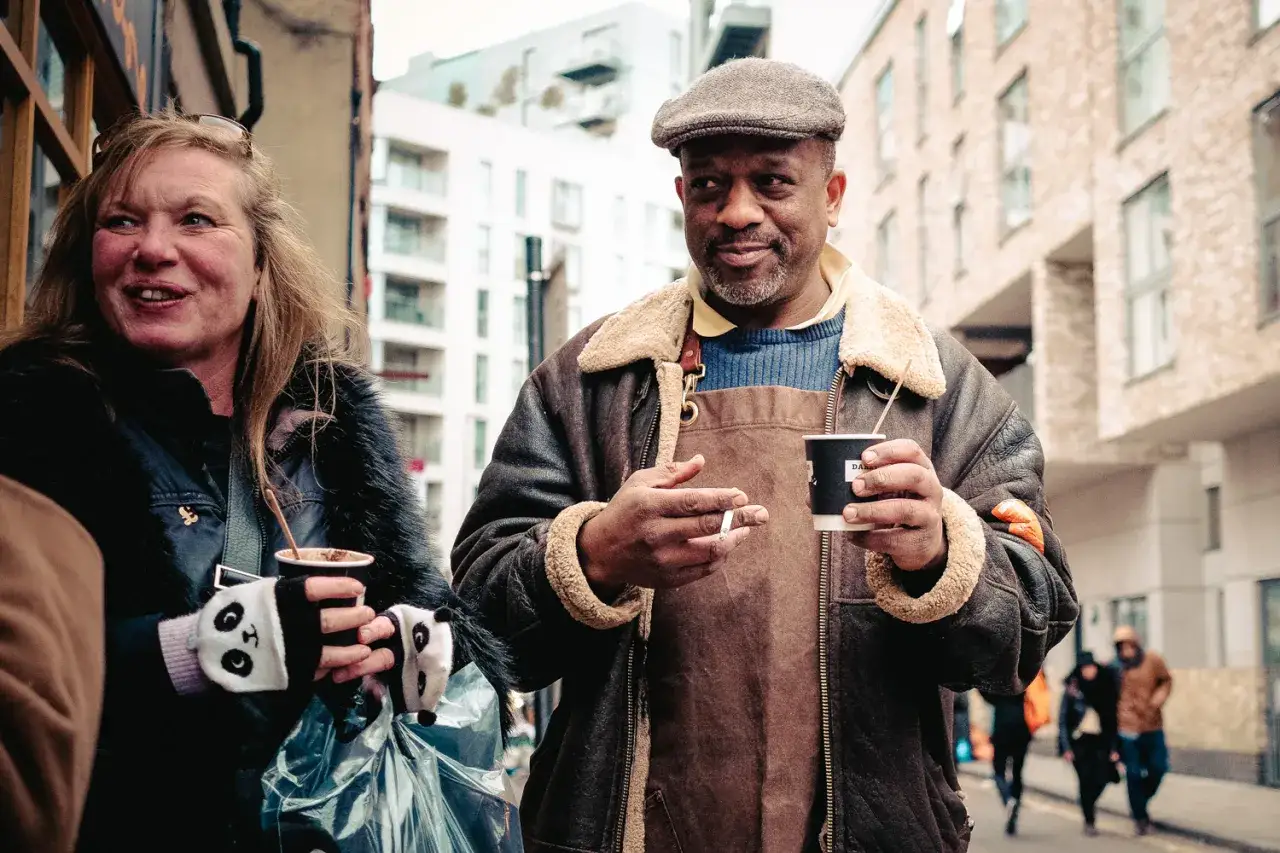
The lenses I would shortlist first
If I had to narrow the field to the lenses that make the most sense for street work, this is the group I would start with. It is not about ranking every Fujinon prime from “good” to “bad”; it is about matching the lens to the way you actually walk, frame, and move through a city.
| Lens | 35mm-equivalent view | Weight | Filter size | Best use | Main trade-off |
|---|---|---|---|---|---|
| XF23mmF2 R WR | 35mm | 180g | 43mm | Balanced all-round street prime | Not the smallest, but the most even mix of speed and size |
| XF23mmF2.8 R WR | 35mm | 90g | 39mm | Invisible everyday carry | f/2.8 limits low-light flexibility |
| XF27mmF2.8 R WR | 41mm | 84g | 39mm | Smallest, most discreet option | Less flexible than 23mm when scenes get crowded |
| XF35mmF2 R WR | 53mm | 170g | 43mm | Tighter candids and cleaner subject placement | Can feel restrictive in narrow streets or indoor spaces |
| XF23mmF1.4 R LM WR | 35mm | 380g | 58mm | Low light and stronger subject separation | Bigger and more noticeable than the f/2 versions |
| XF18mmF1.4 R LM WR | 27mm | 370g | 62mm | Environmental street and layered city scenes | Requires more disciplined composition |
| XF33mmF1.4 R LM WR | 50mm | 360g | 58mm | Deliberate, editorial-looking street detail | Too tight for many spontaneous frames |
My practical default is still the XF23mmF2 R WR. It is the easiest lens in this group to recommend because it stays compact, focuses quickly, carries weather sealing, and gives you a perspective that works for faces, gestures, storefronts, and wider urban scenes without forcing you to keep backing up.
On a smaller body such as an X-E or X-Pro, the 23mm f/2.8 and 27mm f/2.8 almost disappear. On an X-T or X-H body, the 23mm f/2 and 35mm f/2 feel more balanced in the hand. Once you see the trade-offs side by side, focal length becomes the real decision.
How the focal length changes the story you tell
23mm when you want context
At 35mm equivalent, 23mm is the safest starting point for street work. It gives you enough room for background, signage, architecture, and body language without making the frame feel empty. I like it for markets, sidewalks, and layered scenes where the place matters as much as the person.
27mm when you want invisibility
The 27mm prime at 41mm equivalent is the least intrusive way to work. The 84g body keeps the camera small, and the 39mm filter thread makes the kit easy to standardize. Its weakness is simple: you give up some flexibility compared with 23mm, so it rewards clean framing and a more disciplined eye.
35mm when you want cleaner candids
The 35mm-equivalent view tightens the frame enough to isolate expressions and gestures. I reach for it when I want fewer distractions at the edges and a slightly more deliberate look. The trade-off is obvious in crowded cities: sometimes you simply cannot step back far enough.
Read Also: Long Zoom vs. Wide-Angle Lens - Which Is Right For You?
18mm when you want the street to feel large
At 27mm equivalent, XF18mmF1.4 R LM WR makes the environment part of the subject. That works beautifully for layered frames, reflections, and scenes with strong foreground elements, but it also makes composition less forgiving. Small mistakes at the edges show up fast, so I would not call it the easiest street lens, only one of the most expressive.
That is why the “best” choice is really a question of how much context you want to keep in the frame, and how much cropping discipline you are willing to live with.
When a faster prime is worth the extra size
The f/1.4 lenses are not automatically better, but they become better when light drops or when you want more separation between the subject and a busy background. Depth of field, the zone that appears acceptably sharp, gets thinner at f/1.4 and can work against you if you move fast; it can also give your frame a cleaner, more intentional look when you use it well.
XF23mmF1.4 R LM WR gives you a 35mm-equivalent view with a fast aperture, a 19cm close-focus distance, a linear motor, and weather-resistant sealing. XF18mmF1.4 R LM WR brings the same idea to a wider frame, while XF33mmF1.4 R LM WR gives you a 50mm-equivalent perspective that feels more editorial and less crowded.
- Choose f/1.4 for night streets, indoor markets, and scenes where shallow depth of field changes the story.
- Stay at f/2 or f/2.8 when you value portability, depth-of-field margin, and a lower-profile setup.
- Remember the cost is not only money. These lenses are 360g to 380g and use 58mm or 62mm filters, which adds bulk and increases accessory cost.
In street work, a stop of light helps, but it is never a substitute for fast reactions and a frame that already makes sense. The extra speed matters most when your scenes are genuinely dark or when you want to pull one person out of a crowded background.
Filters that help without getting in the way
Street photography does not need a drawer full of filters. It needs a small, sensible set that solves real problems: glare, rain, dust, and reflection-heavy scenes. I think of filters as tools, not as default accessories.
| Lens group | Common thread size | Why that matters |
|---|---|---|
| XF23mmF2 R WR / XF35mmF2 R WR | 43mm | Easy to share one protector between two popular street primes |
| XF23mmF2.8 R WR / XF27mmF2.8 R WR | 39mm | The cheapest and most compact filter ecosystem |
| XF23mmF1.4 R LM WR / XF33mmF1.4 R LM WR | 58mm | Good balance, but filter costs climb |
| XF18mmF1.4 R LM WR | 62mm | Great lens, but the filter stack gets pricier and the hood matters more |
I treat a clear protector as insurance, not as a creative tool. It makes sense in rain, dust, crowds, or when the lens is constantly brushing a coat or bag. If you choose one, keep it slim and high quality, because a cheap filter can introduce more flare than it saves.
A hood is often more valuable than a filter because it blocks stray light from storefronts, traffic, and neon. A circular polarizer can cut reflections in glass and on wet pavement, but it also darkens the image and slows your workflow, so I only use it when reflections are a real part of the composition. Diffusion filters can be beautiful for mood, but on a serious street walk they are usually a deliberate style choice rather than a default accessory.
If you want to simplify your kit, avoid stacking multiple filters on a wide lens. On the street, simplicity usually beats accessory overload, and a light kit is the one you actually keep with you.
The street kit I would carry first
If I were building a Fuji street setup today, I would start with the XF23mmF2 R WR for most situations, add the XF27mmF2.8 R WR only if absolute portability mattered more than flexibility, and move to the XF23mmF1.4 R LM WR if my best work happened after dark. The 35mm-equivalent framing is still the safest place to start, but the right choice depends on whether you want more context, more isolation, or a camera that disappears in your hand.
- Buy the 23mm f/2 WR first if you want one lens that handles almost everything without becoming a burden.
- Buy the 27mm f/2.8 WR first if you care most about discretion and all-day carry.
- Buy the 23mm f/1.4 WR first if you routinely shoot at dusk, indoors, or in heavy mixed light.
- Buy the 18mm f/1.4 WR first if the environment is always part of the story and you are comfortable composing wider frames.
My practical rule is simple: choose the lens that makes you more likely to go out, because a street lens only matters when it is with you at the exact moment the frame appears.