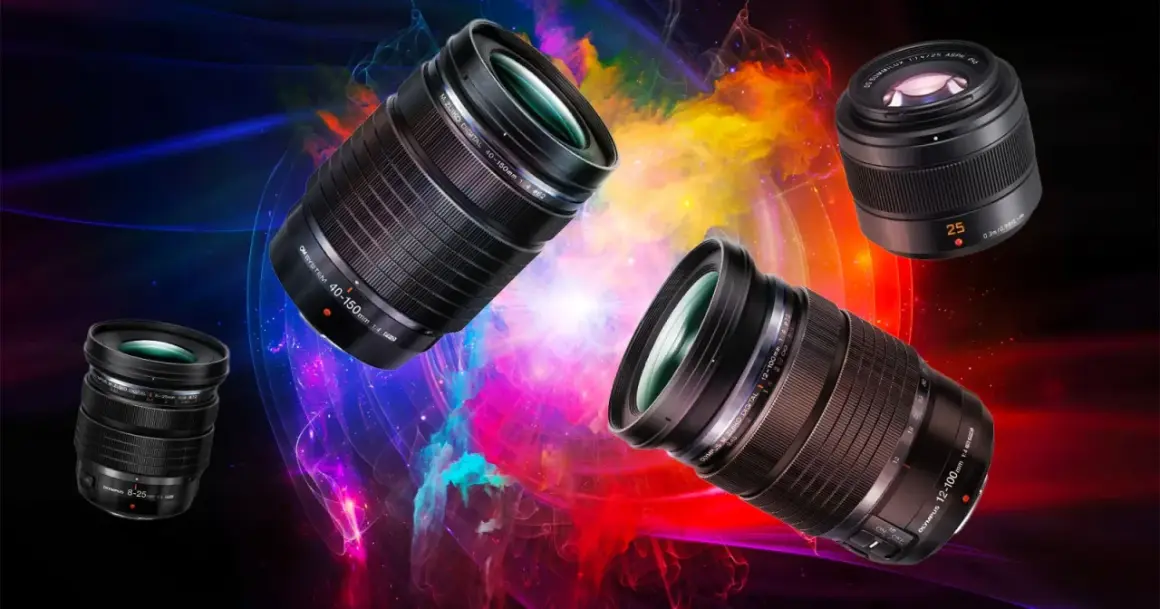
Four Thirds shooters have a narrower lens market than Micro Four Thirds users, so the right choice matters more than it does on a modern system. I focus here on the legacy Olympus and Panasonic glass that still earns a place on the used market, with an eye on real-world sharpness, autofocus behavior, and filter compatibility. You will get the lenses I would actually shortlist, plus the trade-offs that keep a bargain from turning into a bad buy.
The shortest useful answer for building a Four Thirds kit
- Best single all-rounder: the Olympus Zuiko Digital ED 12-60mm f/2.8-4 SWD.
- Best wide zoom if you care about filters: the 11-22mm f/2.8-3.5.
- Best ultra-wide look: the 7-14mm f/4, but it does not take normal screw-in filters.
- Best close-up option: the 50mm f/2 Macro, which also works well for portraits.
- Best telephoto zoom: the 50-200mm f/2.8-3.5 SWD.
- Rare pro choices: the 14-35mm f/2 SWD, 35-100mm f/2, and 150mm f/2 are excellent, but they are heavy, expensive, and not the first lenses I would buy.
What the Four Thirds mount really asks of a lens
Four Thirds is a 2x crop system built around Olympus E-series DSLRs and a smaller set of compatible Panasonic bodies. That means focal length decisions matter in a very practical way: a 12-60mm becomes a 24-120mm equivalent, and a 50mm macro behaves like a 100mm lens in full-frame terms. Olympus' compatibility table also draws a hard line between native Four Thirds bodies and Micro Four Thirds bodies, where you need the MMF adapter family and can lose some autofocus convenience.
That is why I do not judge these lenses only by their optical reputation. I care about whether the lens focuses reliably on the body you own, whether the AF mode stays usable beyond single-shot shooting, and whether the lens is still pleasant to carry in 2026. "SWD" simply means Supersonic Wave Drive, Olympus' ultrasonic AF motor, and on the better lenses it still feels fast enough that the age of the system is less obvious than people expect.
If that sounds a little stricter than a normal lens roundup, it is deliberate. Four Thirds rewards buyers who understand the system's limits, and the next section shows the shortlist I would actually spend money on.
The lenses I would shortlist first
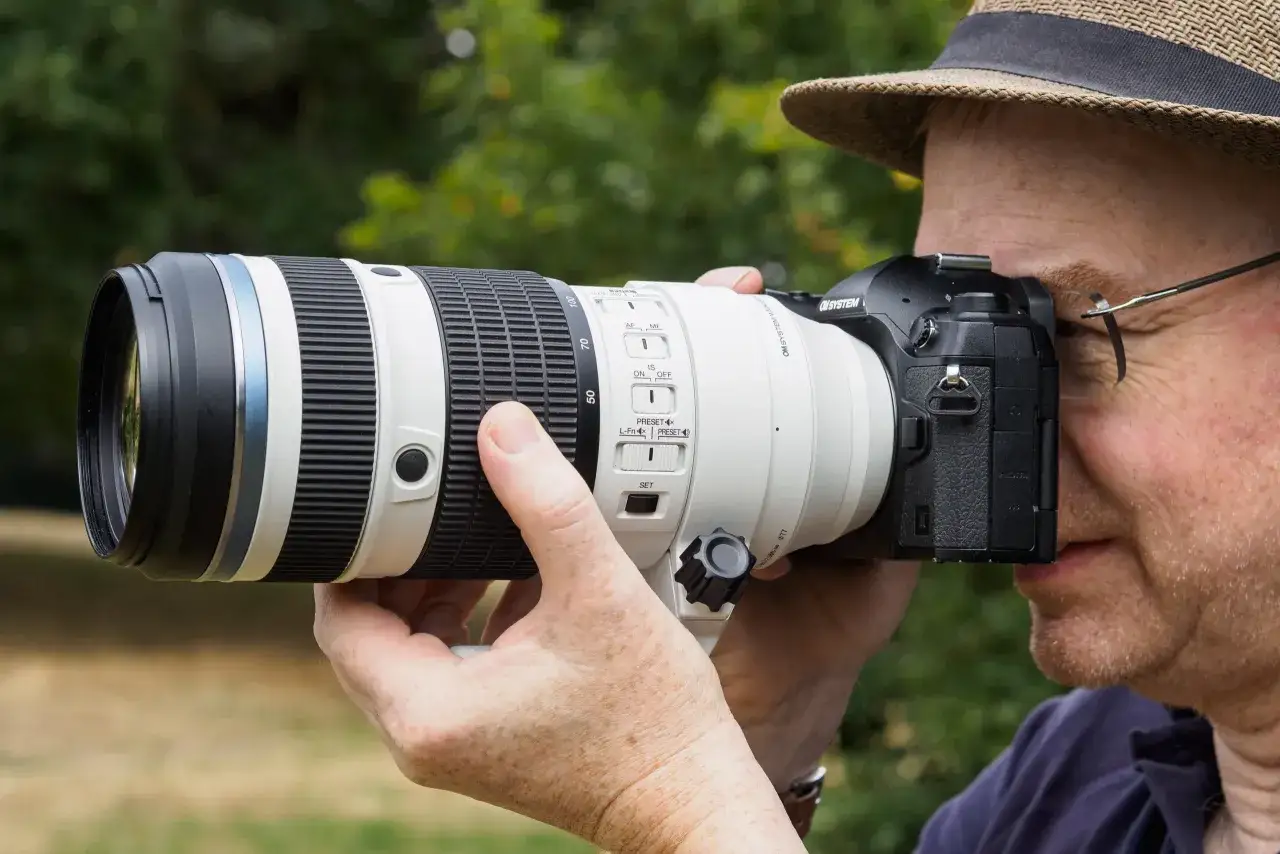
If I were trimming the catalog down to the lenses that still make sense to hunt for, this is the group I would start with. I am mixing optical quality, practical range, current used-market reality, and how annoying the lens is to live with once it is in your bag.
| Lens | Why I rate it | Best for | Approx. used price in the U.S. | Filter note |
|---|---|---|---|---|
| Zuiko Digital ED 12-60mm f/2.8-4 SWD | The best all-rounder. It covers the range most people actually use and still feels like a serious lens. | Travel, documentary, everyday shooting | About $180-$270 | 72mm |
| Zuiko Digital 11-22mm f/2.8-3.5 | The best wide zoom for practical use. Wide enough for landscapes, easier to live with than the 7-14. | Landscape, interiors, architecture | About $130-$205 | 72mm |
| Zuiko Digital ED 7-14mm f/4 | The most dramatic wide-angle option. Excellent optical reputation, but it asks for compromises. | Ultra-wide landscape, architecture, interiors | About $300-$900 | No normal threaded filters |
| Zuiko Digital ED 50mm f/2 Macro | The smartest close-up lens. Sharp, versatile, and useful outside macro work too. | Macro, product, portraits | About $165-$320 | 52mm |
| Zuiko Digital ED 50-200mm f/2.8-3.5 SWD | The telephoto sweet spot. Fast enough to matter, flexible enough to earn its keep. | Wildlife, sports, stage work | About $260-$440 | 67mm |
| Zuiko Digital ED 14-35mm f/2 SWD | The premium standard zoom. Brilliant, bright, and very serious. | Events, low light, paid work | About $730-$1,600 | 77mm |
| Zuiko Digital ED 35-100mm f/2 | The specialist portrait/sports zoom. Rare, powerful, and not subtle about its size. | Portraits, indoor sports, subject isolation | About $1,000 and up | 77mm |
The two cult pieces deserve a special note. The 35-100mm f/2 is a spectacular portrait and indoor-sports zoom, but at roughly 1.65 kg it is a deliberate commitment, not a casual purchase. The 150mm f/2 goes even further in the same direction: it is a 300mm-equivalent prime with an 82mm filter thread and a very real 1.6 kg-class footprint, so I only recommend it if you already know you need that kind of subject separation and reach.
For most people, though, the smartest lens in the table is still the 12-60 SWD. It covers the range that actually gets used and avoids the more awkward compromises of the specialty glass. From there, the best lens depends on the job you want the system to solve.
Which lens fits your shooting style
Travel and documentary work
I would start with the 12-60mm f/2.8-4 SWD because it handles wide scenes, street detail, and modest portraits without forcing constant lens changes. If I wanted to spend less, the 14-54mm II is the runner-up I would consider, but I would only choose it if I knew I could live without the extra reach of the 12-60.
The practical value here is simple: fewer swaps, fewer missed moments, and a range that covers most everyday shooting on a Four Thirds body.
Landscapes and architecture
This is where the choice between the 11-22mm and the 7-14mm matters. I like the 11-22mm f/2.8-3.5 because it is wide enough for most landscapes, still accepts normal screw-in filters, and does not force a special workflow. The 7-14mm f/4 is more dramatic and more immersive, but it comes with a fixed front element and no normal threaded-filter convenience.
If your work involves sunsets, reflections, or long-exposure water scenes, that filter difference is not a footnote; it changes the lens I would buy.
Portraits and events
The 50mm f/2 Macro is the most flexible portrait-adjacent lens in the system for the money. It is sharp, it gives you a flattering 100mm-equivalent perspective, and it can do real close-up work instead of merely pretending to be a macro lens. If I needed a brighter zoom for paid events or indoor work, I would move up to the 14-35mm f/2 SWD; if I needed a longer portrait look, the 35-100mm f/2 is the luxury answer.
I would not confuse those last two with convenience lenses. They are tools for situations where the extra stop or two genuinely affects the shoot.
Wildlife and sports
The 50-200mm f/2.8-3.5 SWD is the telephoto lens I would recommend most often because it gives you a useful 100-400mm-equivalent range without jumping straight into the exotic end of the market. It is still a serious lens, though, so I would budget for weight and a tripod collar if the listing includes one. The 150mm f/2 is the alternative when I want faster aperture and cleaner subject separation rather than a zoom.
If you are choosing between them, ask a blunt question: do you need flexibility, or do you need the look of a fast prime? That answer usually makes the decision for you.Read Also: Master Blurry Backgrounds - The Ultimate Guide
Macro and product work
The 50mm f/2 Macro is the first lens I would buy for close-up work on Four Thirds because it is not a one-trick optic. It gives you the working distance that makes product shots easier, and it doubles as a legitimate portrait lens when the macro job is over. That flexibility matters more than the extra half-stop people obsess over.
If you are shooting tabletop content, equipment details, or small objects for marketing work, this is one of the few legacy lenses that still feels directly relevant to how people create content now.
That kind of job-based thinking is useful, but the system still has one area where buyers get surprised: filters and accessories.
Filters, hoods, and adapter details that change the cost
Four Thirds lenses look cheaper or more expensive than they really are once you factor in filter size. A good 52mm filter is easy to live with, 67mm and 72mm start to feel like a small tax, and 77mm filters can move the whole purchase into a noticeably pricier tier. That is why I always think about the lens and the filter system together instead of treating them as separate decisions.
| Lens | Filter situation | Why it matters |
|---|---|---|
| 11-22mm f/2.8-3.5 | 72mm screw-in filters | Still manageable for CPL and ND work. |
| 12-60mm f/2.8-4 SWD | 72mm screw-in filters | Practical for everyday landscape and travel filters. |
| 50mm f/2 Macro | 52mm screw-in filters | Cheap, common, and easy to replace. |
| 50-200mm f/2.8-3.5 SWD | 67mm screw-in filters | Reasonable cost for telephoto work. |
| 14-35mm f/2 SWD | 77mm screw-in filters | Quality filters cost more at this size. |
| 35-100mm f/2 | 77mm screw-in filters | Good filters are another real expense on top of the lens. |
| 7-14mm f/4 | No normal threaded filter provision | Great lens, awkward if you rely on CPL or ND filters. |
I also care about hoods more than most people do. On a used-market lens, a missing hood is not just cosmetic; for some of these optics, it is part of the protection and part of the handling. The 7-14mm in particular is a good example of a lens whose front-end design works brilliantly optically but makes ordinary filter habits difficult.
If you are adapting Four Thirds glass to Micro Four Thirds, the adapter question sits in the same bucket. Olympus says the MMF-1, MMF-2, and MMF-3 are the relevant adapters, and it also notes that autofocus behavior can be reduced on certain bodies. In plain English, I would not buy adapted Four Thirds glass expecting native MFT convenience.
That leads directly to the mistakes that cost people money.
The mistakes I would avoid on the used market
- Buying by reputation alone. A legendary lens with haze, fungus, or a sticky zoom ring is still a bad buy.
- Confusing Four Thirds with Micro Four Thirds. The names overlap, but the mounts and adapter needs do not.
- Ignoring autofocus limits. Olympus' own notes show that some body and lens combinations fall back to more limited AF behavior, especially when adapted.
- Underestimating weight. The 35-100mm f/2 and 150mm f/2 are not just "a bit large"; they are serious pieces of glass that change how you carry the camera.
- Choosing an ultra-wide without checking filter needs. The 7-14mm f/4 is a classic example of a lens that looks great on paper and becomes awkward the moment you want a normal filter workflow.
- Skipping the hood and cap check. On older Olympus lenses, those missing accessories often matter more than people admit when they are comparing listings.
My rule is simple: if a listing seems cheap because the seller only photographed the front element and did not mention accessories, I assume there is a reason. I would rather pay a little more for a clean, complete lens than gamble on a bargain that turns into a repair project.
Once you stop chasing the absolute cheapest copy, the system gets much easier to buy into. The last step is matching the purchase to a realistic budget.
What I would buy first for different budgets
- Under $200 - look for the 11-22mm f/2.8-3.5 or a clean 14-54mm II. If you find a good 50mm f/2 Macro near the upper end of that range, I would take it instead.
- $200 to $400 - the 12-60mm f/2.8-4 SWD is the smartest first buy, and the 50-200mm SWD becomes the best second lens if you need reach.
- $400 to $800 - this is where the 7-14mm f/4 starts to make sense if you genuinely need ultra-wide work and can live with the filter compromise.
- $800 and up - only move into the 14-35mm f/2 SWD, 35-100mm f/2, or 150mm f/2 if the speed or rendering is solving a real problem in your shooting.
If I had to compress the whole decision into one practical answer, I would start with the 12-60mm f/2.8-4 SWD, add the 50mm f/2 Macro or 50-200mm SWD depending on whether I shoot closer or farther, and leave the exotic glass for later. The best Four Thirds kit is not the one with the rarest lens; it is the one that makes you want to keep shooting.