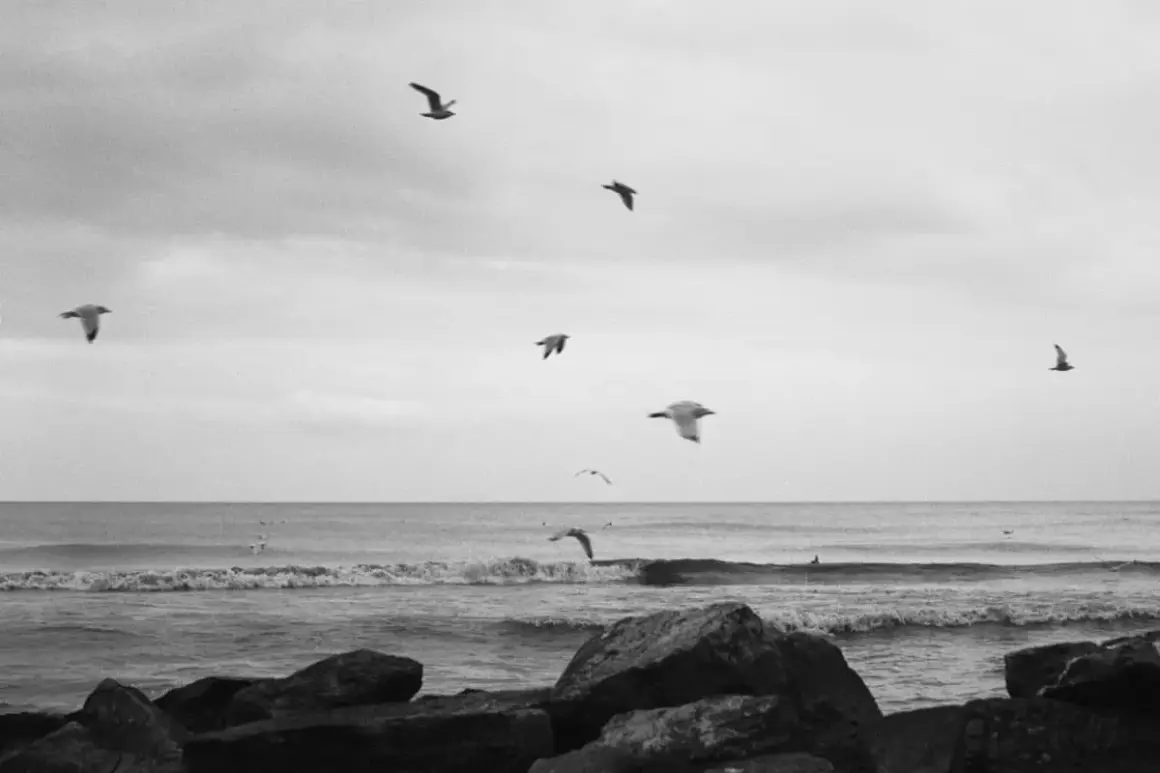
Ilford FP4+ is one of those black-and-white films that rewards restraint more than drama. It gives you ISO 125 speed, fine grain, medium contrast, and enough exposure latitude to survive real-world mistakes, which makes it a strong choice for portraits, landscapes, architecture, and careful street work. In this article I’ll break down what the film actually looks like, where it shines, how it compares with other Ilford stocks, and how I would expose and develop it for clean, usable negatives.
The stock gives you a clean middle ground between speed and delicacy
- ISO 125 makes it slower than HP5 Plus but more flexible than ultra-slow fine-grain films.
- It is known for fine grain, sharp detail, and medium contrast.
- It is available in 35mm, 120, sheet film, and 35mm bulk length.
- It tolerates a fair amount of exposure error, which helps in real shooting conditions.
- It is strongest in good light, controlled portraits, landscapes, architecture, and product work.
- For low light or fast action, I would usually reach for a faster stock instead.
What this film is built to do
Ilford FP4 Plus is a medium-speed black-and-white film designed to deliver a clean negative rather than a flashy one. In practice, that means smooth tonal separation, crisp edges, and enough speed for everyday use without the thicker grain you get from faster emulsions. It is also suited to copying and internegative work, which tells you a lot about its character: it is dependable, controlled, and easy to print or scan when the exposure is good.
I like that balance because it leaves room for interpretation in the darkroom or in post-processing without forcing the image into a look too early. If you want a film that lets the subject matter stay in front of the film stock, this is the kind of material that makes sense. That balance becomes easier to judge once you look at its rendering in more detail.
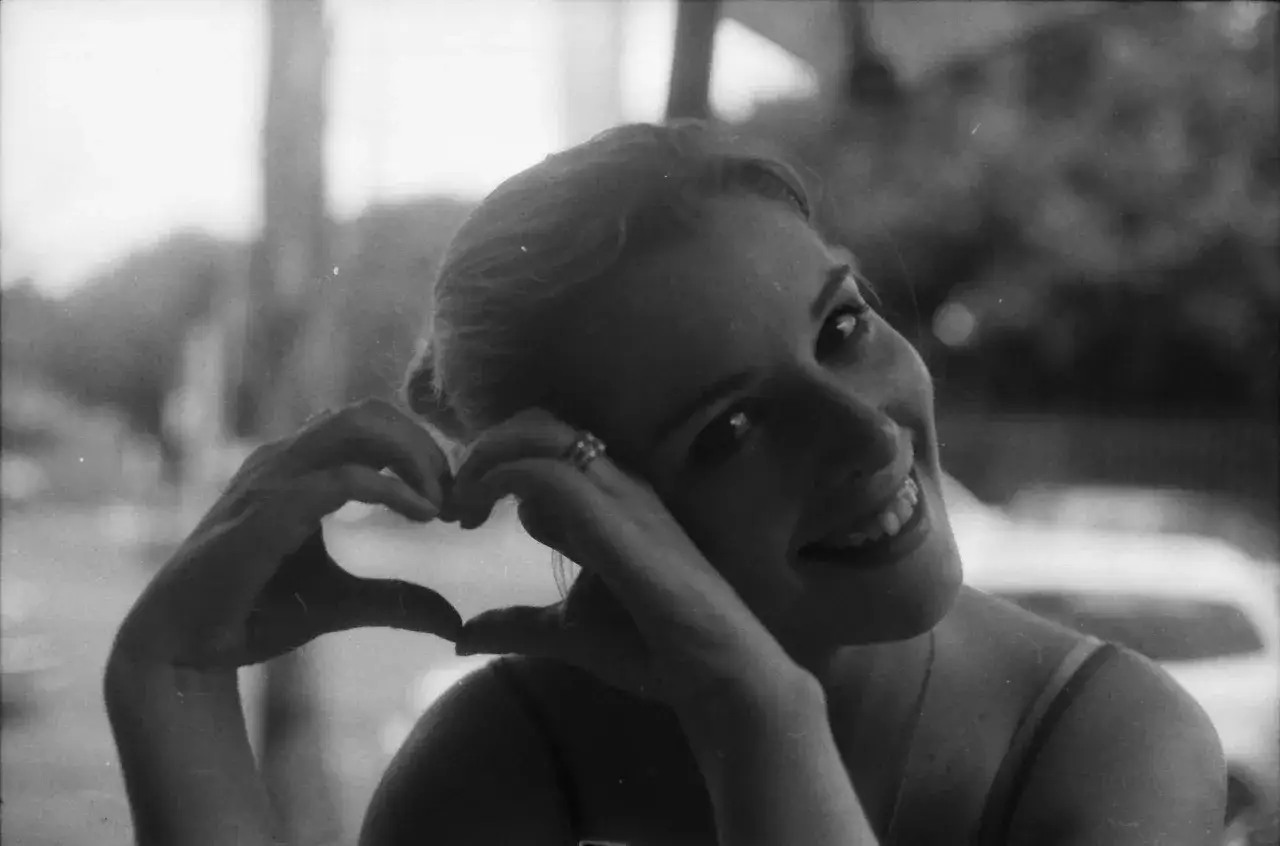
How it renders tone, grain, and sharpness
FP4 Plus has the sort of grain structure that feels fine rather than invisible: present when you want it, but rarely the main event. Its contrast sits in the middle, which helps it hold highlights without turning skin, concrete, or foliage into a hard-edged mess. Ilford’s technical sheet notes that the film can still give usable results even when it is overexposed by as much as six stops or underexposed by two, but I would treat that as a safety margin, not a reason to shoot carelessly.
For me, the real strength is not just sharpness; it is how the film keeps detail readable across the frame when the scene has a lot of texture. That is why large prints and high-resolution scans often suit it well. If you want more apparent drama, you can build it later through development, filtration, or scanning choices, which leads directly into the comparison people usually make first.
Where it sits against the rest of the Ilford lineup
Most people compare FP4 Plus with HP5 Plus, PAN F Plus, and Delta 100, and that is the right shortlist. Each one solves a different problem, so the choice is less about quality and more about what kind of negative you want to start with.| Film | Box speed | Look | Best use | Main tradeoff |
|---|---|---|---|---|
| FP4 Plus | ISO 125 | Fine grain, medium contrast, sharp but restrained | General-purpose work, portraits, landscapes, architecture | Not as fast as HP5 Plus and not as ultra-fine as PAN F Plus |
| HP5 Plus | ISO 400 | Medium contrast, still fine grain for its speed | Available light, action, documentary, travel | More grain and a busier texture |
| PAN F Plus | ISO 50 | Very fine grain, high contrast, extremely sharp | Studio, bright light, tripod work | Needs more light and more discipline |
| Delta 100 | ISO 100 | Very fine grain, highly detailed, modern crispness | Fine art, controlled scenes, detail-heavy subjects | Less forgiving in mixed light than FP4 Plus |
If I had to reduce it to one sentence, FP4 Plus is the safest choice when I want a traditional look without committing to slow-film fragility or accepting the rougher texture of 400-speed stock. That makes exposure and development the next things worth getting right.
How I expose and develop it for clean negatives
I start at EI 125 unless there is a clear reason not to. That gives me a neutral baseline and keeps the negative in the zone the film was designed for. In controlled light, I am comfortable giving it a little extra exposure if I want denser shadows, but I would rather make that decision deliberately than rely on the film’s latitude to fix a sloppy meter reading.
Ilford’s technical spec lists standard development times at 20°C for a range of common developers, and the pattern is useful even if you do not use the exact same chemistry. A few examples are enough to show how the film behaves:
| Developer | Dilution | Time at 20°C | What it tends to do |
|---|---|---|---|
| ID-11 | Stock | 8.5 min | Classic, balanced negatives |
| ID-11 | 1+1 | 11 min | More separation, still very controlled |
| Microphen | Stock | 8 min | A practical choice when you want a little more effective speed |
| Perceptol | Stock | 12 min | Very fine grain, but with a speed tradeoff |
| Ilfotec HC | 1+3 | 8 min | Flexible liquid-developer option for general use |
| Ilfosol 3 | 1+9 | 4.25 min | Fast working developer for compact workflows |
The numbers matter, but they do not replace testing. I would always start with box speed, standard agitation, and a trustworthy scan or print reference, then adjust one variable at a time. If the scene is low-contrast, development can be nudged; if it is already contrasty, I protect highlights first and let the rest follow.
Best subjects and lighting for this stock
FP4 Plus is at its best when the scene gives it something to describe. It likes texture, shape, and tonal structure. That is why it has such a strong reputation for portraiture and architecture, and why I think it often looks better in thoughtful work than in chaotic work.
- Portraits because the medium contrast keeps skin tones natural and easier to print.
- Architecture because the sharpness and restrained grain hold straight lines and surface detail well.
- Landscapes because foliage, stone, water, and skies all benefit from its even tonal scale.
- Product and still life because a clean negative makes retouching, scanning, and printing more predictable.
- Street photography in good light because it gives a classic monochrome feel without the grit of faster film.
The limitation is simple: if the light is weak, the film starts asking for support. A fast lens, a tripod, or a different stock may be the smarter move. That is not a flaw, it is just the practical boundary of ISO 125.
Where photographers usually misread it
FP4 Plus is forgiving, but that forgiveness gets overestimated. The most common mistakes are treating it like a fast film in weak light, overdeveloping to force contrast, and assuming that a thin negative will scan fine just because the grain is small. A thin negative is still a thin negative.
- Using it for handheld dusk work without enough shutter speed.
- Expecting HP5-style grit from a film that is really built for smoother tonality.
- Chasing drama in development before exposure is locked in.
- Ignoring filters outdoors when sky separation matters.
If you avoid those traps, the stock feels far more elegant than expensive. That is also why it remains a sensible choice for photographers who want one dependable black-and-white baseline, which is what I would keep in mind at the end.
Why this film still earns a place in a serious black-and-white kit
I keep coming back to FP4 Plus because it does not ask for a dramatic excuse. It gives you a stable middle ground, easy-to-read shadows, and enough sharpness to make large prints or high-resolution scans feel worthwhile. If you are learning black-and-white film, it teaches discipline without punishing every small mistake; if you are already experienced, it gives you a dependable baseline that can be pushed toward quiet elegance rather than spectacle.
If you want one practical rule, make it this: start at EI 125, expose for the scene in front of you, and only move away from the stock’s normal personality when the light or the subject really demands it. A mild yellow filter can help outdoors, a tripod can rescue slow scenes, and a faster film can save a difficult night, but FP4 Plus remains at its best when you let its calm tonal scale do the work.