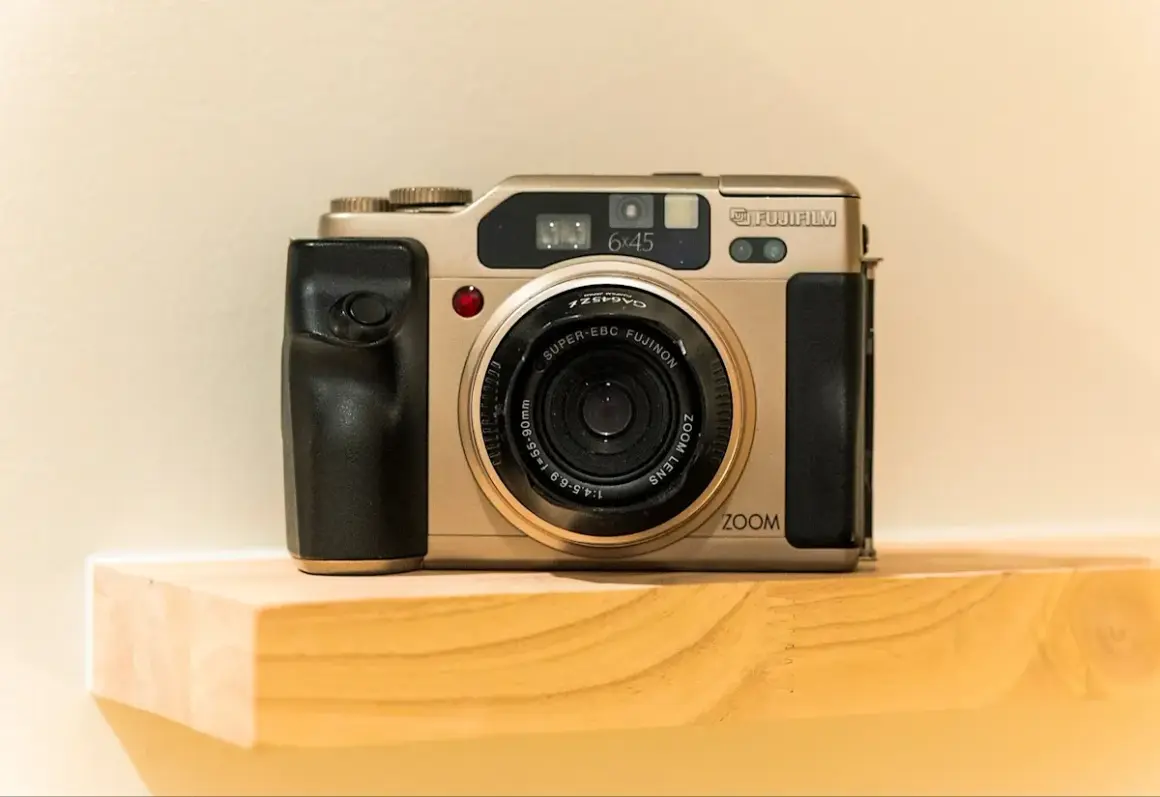
The Fuji 645 family sits in a very specific corner of film photography: medium format detail, a practical frame shape, and bodies that still feel usable instead of ceremonial. This guide breaks down what the system is, how the main Fujifilm bodies differ, what they are like to shoot, and what I would inspect before spending real money on one. I also add a current buying perspective so you can judge whether the camera makes sense for your workflow in 2026.
What matters most before you buy one
- It is a 6x4.5 medium format system, so you get a larger negative without the bulk of 6x7 or the slower pace of 6x6.
- The line splits into two personalities: folding manual rangefinders and autofocus bodies with more automation.
- Working GS bodies tend to reward careful handling, while GA bodies are easier to shoot but depend more on electronics.
- Used prices in the U.S. are no longer casual; condition and service history matter more than cosmetics.
- If you want the simplest path to good negatives, I would start with the autofocus bodies, then move to the folders if you want more control.
What the Fujifilm 645 line actually is
This is not one single camera. It is a medium format family built around the 6x4.5 cm frame, which translates to an actual image area of about 56 x 41.5 mm on the GA bodies. In practice, that means a 4:3ish frame that scans cleanly, prints well, and gives you noticeably more room for tonality than 35mm without turning every outing into a mechanical exercise.
I like 645 because it sits in the middle in a way that still feels useful. You get more frames per roll than with larger medium format systems, which keeps shooting momentum alive, but the negatives are still large enough to support serious detail, smooth transitions, and generous cropping. For editorial work, personal projects, and hybrid film-to-digital workflows, that balance matters more than people sometimes admit.
The cameras in this line were designed for 120 and 220 roll film, although the exact frame count depends on the body. Some models give you 15 frames on 120, others 16, and the 220 count ranges from 30 to 32. I would not obsess over the tiny difference; the bigger point is that this format gives you enough exposure count to work with intention instead of rationing every shot.
That is why the system still makes sense. It is medium format that behaves like something you can actually carry, set up, and finish a roll with before the light changes. From here, the real question is which body style fits the way you shoot.
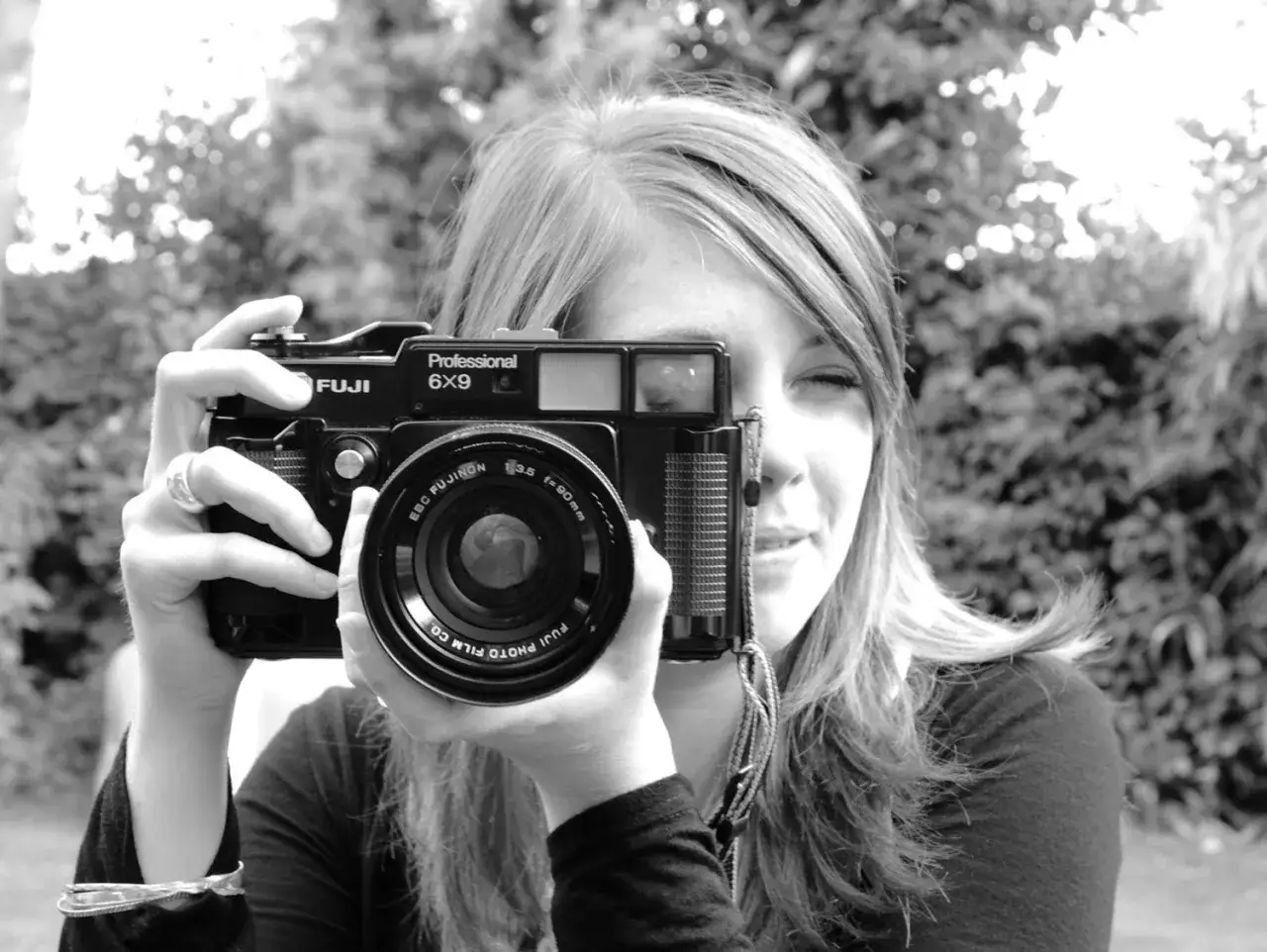
How the main bodies differ in practice
| Model | Body style | Lens | Best for | Main tradeoff |
|---|---|---|---|---|
| GS645 Professional | Folding rangefinder | 75mm f/3.4 | Classic normal perspective, compact carry, deliberate shooting | Bellows and front mechanism need careful inspection |
| GS645S Wide60 | Folding rangefinder | 60mm f/4 | General-purpose work, travel, street, environmental portraits | Still a mechanical folder with the same wear points |
| GS645W | Folding rangefinder | 45mm f/5.6 | Landscapes, architecture, wider documentary frames | Less subject separation and more demanding composition |
| GA645 / GA645i | Autofocus, motorized body | 60mm f/4 | Easiest all-around entry, travel, quick shooting | Electronics age, but the experience is very fluid when healthy |
| GA645W | Autofocus, motorized body | 45mm f/4 | Wider environmental scenes and tighter spaces | Not as flexible for classic portrait framing |
| GA645Zi | Autofocus zoom body | 55-90mm f/4.5-6.9 | One-camera flexibility and multiple framing options | Usually the priciest route, with a slower maximum aperture |
I split the family into two camps when I shop it. The GS bodies are the tactile ones: manual focus, rangefinder viewing, leaf shutters, and a folding front that makes them feel almost impossibly compact for medium format. The GA bodies feel closer to a highly capable compact camera that happens to shoot larger negatives. Autofocus, motorized advance, built-in flash, and more automation lower the friction enough that you can concentrate on timing and composition.
Even the size story is nuanced. A GS645 folds down to about 147 x 114 x 56 mm and weighs around 820 g without batteries, while a GA645 sits at roughly 166 x 110 x 66 mm and about 815 g without batteries. The mass is similar, but the GS disappears into a bag much better. That folding design is the whole trick, and it is also where the maintenance risk lives.
In other words, the main choice is not “which lens is best” but “how much mechanical responsibility do I want to carry.” That question tells you a lot about how the camera will feel on an actual roll.
What shooting one feels like on film
A good 645 camera gives me the rare sensation of slowing down without feeling trapped. The frame count is high enough that I do not panic over every exposure, but low enough that I still edit in my head. That matters for film photography because it changes how you pace a scene. I tend to work more deliberately than I do with 35mm, but not as ceremonially as I would with 6x7.
The autofocus GA bodies make that balance even easier. They behave like serious point-and-shoots with better negatives: load film, set the mode, confirm focus, shoot. For travel, family work, street notes, and fast personal projects, that simplicity is not a compromise. It is often the reason the camera actually gets used.
The GS rangefinders ask for more participation. I would describe them as calm rather than difficult. You focus through the coupled rangefinder patch, think about depth of field, and use the leaf shutter plus manual exposure to keep control over the frame. The 75mm GS645 leans toward a classic normal look, while the wider versions encourage environment-heavy compositions that work especially well for landscapes and visual storytelling.
For hybrid workflows, I think 645 is one of the most practical film formats still around. It scans well, crops elegantly for web layouts and book spreads, and still leaves enough detail to stand on its own. If your final destination is digital, this format is not nostalgic excess. It is a sensible middle ground.
That practical value only holds if the camera is healthy, though, and that is where used-market reality starts to matter.
What to check before buying used
Recent U.S. eBay listings in 2026 put working GS645 bodies roughly in the $500 to $900 range, GA645 bodies around $630 to $900, and GA645Zi examples from about $1,600 to $2,500 or more, with cleaner or boxed copies climbing higher. That spread is a reminder that these are no longer bargain cameras. Condition, service history, and completeness can change the value more than the model name does.
When I inspect one, I look for the following first:
- Bellows integrity on GS bodies, including pinholes, cracking, and stiffness when the front opens.
- Rangefinder accuracy on GS bodies, because a camera that looks clean can still focus badly.
- Autofocus behavior on GA bodies, especially at the close and far ends of the focus range.
- Motor advance and film transport on GA bodies, since smooth operation is part of what you are paying for.
- Battery compartment condition, door integrity, and LCD health on the GA models.
- Lens clarity, looking for haze, fungus, or separation that would compromise sharpness.
- Shutter consistency and the feel of the release, because sticky shutters are not a minor inconvenience on old medium format cameras.
- Light seals and foam, which matter more than people expect once the body starts aging.
I would also ask for a test shot or a demonstration of a full cycle: focus, advance, fire, rewind, and power up again. If the seller cannot show that sequence cleanly, I assume the discount is attached to a problem rather than to luck. That is especially true with foldable bodies, where a camera can look beautiful and still be a maintenance project.
If you are trying to build a dependable shooting tool rather than a shelf piece, the safest buy is usually the most boring one: a clean body, recent service if available, and no mystery behavior. That approach becomes even more important when you decide whether to go manual or automatic.
How I would choose between the manual and autofocus versions
If I wanted the lowest-friction way into the system, I would choose a GA645 or GA645i. The reason is simple: the camera removes enough operational friction that I can focus on making photographs instead of managing the camera. Autofocus, automatic winding, and built-in flash make it easier to use on a real day, not just on an ideal one.
If I wanted a more deliberate camera and did not mind slower operation, I would lean toward a GS645S or GS645W. The GS line feels more like a classic photographic instrument. You slow down, you think through the frame, and the reward is a very direct shooting experience. That appeals to me when I want medium format to feel tactile rather than automated.
I would be cautious about buying the GA645Zi just because it is the most flexible on paper. The zoom range is useful, and the camera is legitimately convenient, but convenience is not the same thing as value. If you already know you want one body, one focal length, and a camera that stays out of your way, a fixed-lens GA body is often the smarter buy.
The easiest rule I can give is this: choose for maintenance tolerance, not just focal length. A camera that fits your shooting habits but fails on reliability will cost more in frustration than a body with the “wrong” lens ever could. That is the kind of tradeoff I care about when I am spending real money on film gear.
Why this system still earns a place in 2026
What keeps these cameras relevant is not nostalgia. It is the combination of a sensible negative size, bodies that can still travel, and lenses that do serious work without demanding a studio routine. The system is old, yes, but it is not obsolete in the practical sense that matters to photographers.
If I were buying one today, I would keep the setup simple: one body, one lens, fresh batteries, one dependable film stock, and a test roll before any important trip or job. That discipline gets you more from the camera than chasing the rarest version ever will. It also keeps the camera a tool instead of a collector’s excuse.
My short version is this: the 645 Fujifilm line is strongest when you want medium format image quality without surrendering speed, portability, or common sense. If that is your brief, the system still makes a lot of sense, and the right body can stay useful for years if you buy carefully and keep the maintenance realistic.