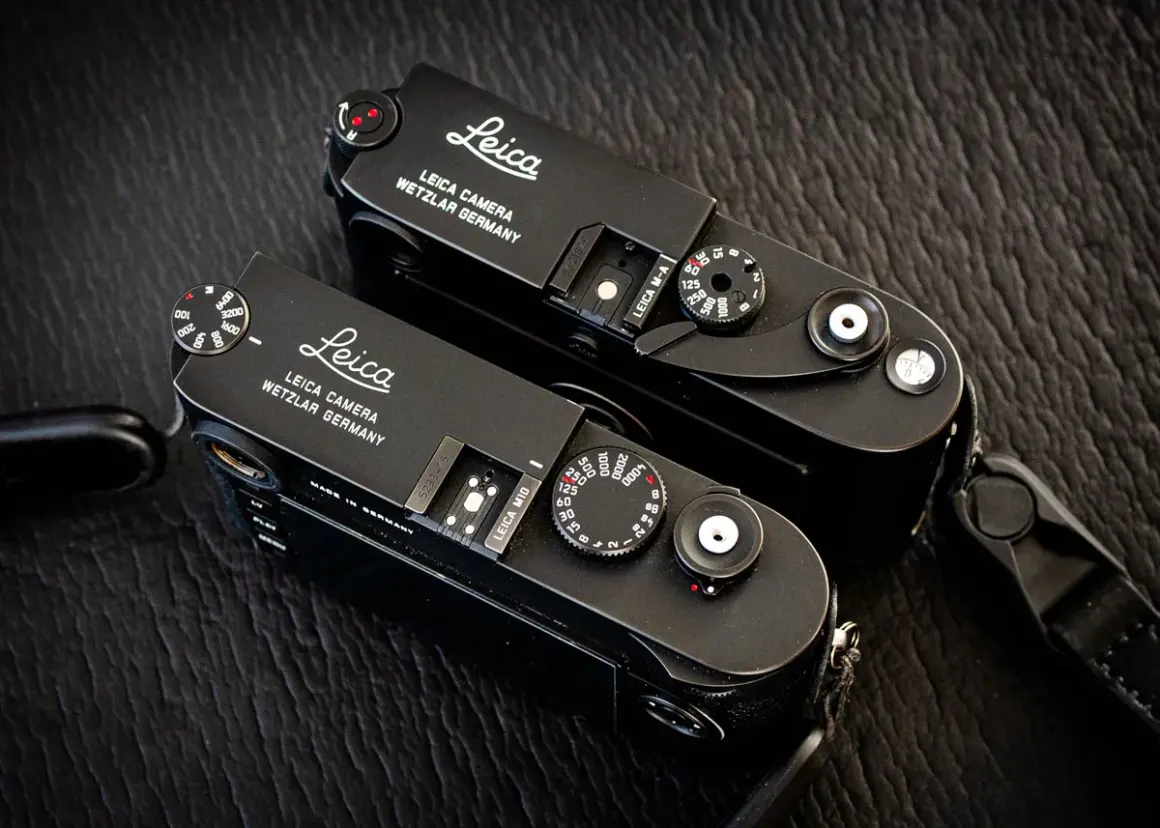
Leica lenses tend to attract strong opinions for a reason: they are expensive, beautifully made, and often tuned for rendering as much as for raw resolution. In many Leica lenses reviews, the same questions keep coming back: is the image character worth the premium, which mount fits your workflow, and how much do filters and hoods change the real-world experience? In 2026, the conversation still splits cleanly between M character, SL precision, and Q-series simplicity.
The essential takeaways before you compare lenses
- Leica glass is usually judged on rendering, handling, and build quality, not just sharpness charts.
- M lenses suit photographers who enjoy compact gear and manual focus; SL lenses suit those who want speed and consistency; Q lenses suit people who want one excellent lens and no decision fatigue.
- Filter choice matters because thread size, hood design, and vignetting can change how usable a lens feels.
- The best review is the one that matches your shooting style, not the one with the loudest superlative.
- Used value and system fit matter almost as much as optical performance.
What people are really trying to learn from Leica lens reviews
When I read a lens review in this category, I look for four things first: how the lens draws contrast, how it handles flare, how it behaves wide open, and whether the reviewer actually used it in scenes that match my work. A Leica lens can be technically excellent and still be the wrong tool if you need faster autofocus, a lighter bag, or a different focal length.
That is why “sharpness” by itself is a weak summary. Microcontrast, for example, is the subtle separation that makes textures look alive without looking over-sharpened. Rendering is broader still: it includes color, highlight roll-off, background blur, and the feeling of depth in a frame.
If a review can explain those tradeoffs in plain language, it is useful. If it only praises a lens as “great” or “legendary,” I treat it as marketing with better grammar. That distinction matters before you compare the main Leica families.
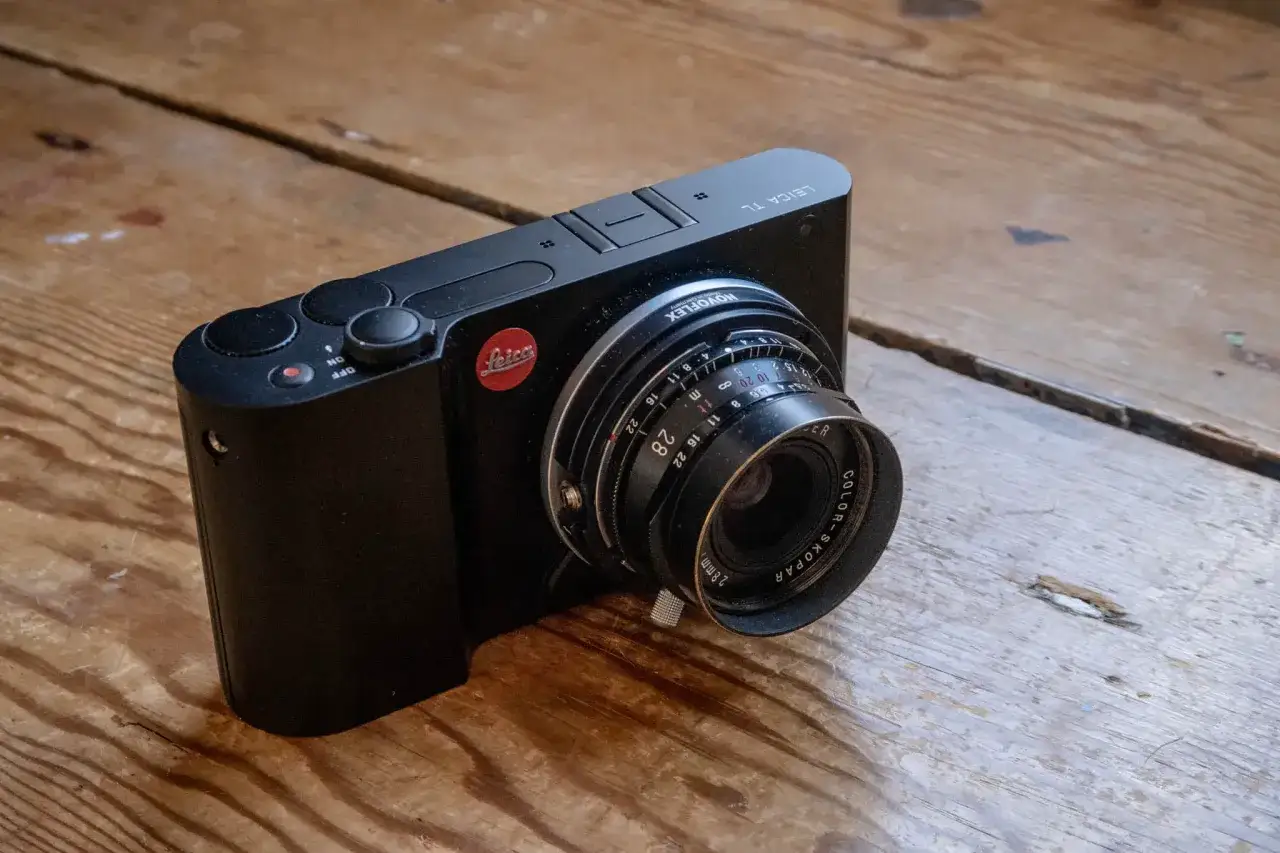
The Leica lens families that get the most attention
The biggest split in Leica lens reviews comes from system choice. The mount you buy into shapes everything else: how much weight you carry, whether you focus manually or with autofocus, and how much control you get over filters and accessories.
| System | What reviews usually praise | Main tradeoff | Filter reality |
|---|---|---|---|
| M lenses | Compact size, tactile focus, character-rich rendering, strong resale value | Manual focus only and a learning curve if you are new to rangefinders | Small threads such as E39 and E46; slim filters help on some wide angles |
| SL lenses | Autofocus, consistency across the frame, professional build, strong video behavior | Larger and heavier; this is premium gear in every sense | Commonly E67, which makes building a filter kit straightforward |
| Q lenses | Simple, all-in-one design; excellent fixed-lens output; travel-friendly workflow | No lens swapping; you live with one focal length | E49 on the current Q line; easy to manage, but the fixed hood affects accessory choice |
That is why an APO-Summicron-M 35mm f/2 ASPH, at roughly 320 g with an E39 thread, feels like a different product from an APO-Summicron-SL 35mm f/2 ASPH, which is around 750 g with an E67 thread. The Q3 43 sits in its own lane again: the lens is fixed, the thread is E49, and the point is to remove decision fatigue without giving up optical quality.
Once you see that, the praise and criticism make a lot more sense.
What reviewers praise and what they keep criticizing
Most Leica lenses earn praise for the same four things:
- Controlled rendering: clean contrast, attractive color, and highlights that do not fall apart easily.
- Mechanical feel: tight tolerances, smooth focus rings, and the sense that the lens is built for long-term use.
- Frame-wide performance: especially on SL and newer Q lenses, where reviewers often note strong edge consistency.
- Character: a look that feels deliberate rather than neutral.
The criticism is just as consistent. Leica is rarely the value leader, and it is not trying to be. A lens may be optically gorgeous and still frustrate you if it is too heavy for daily carry, too expensive for the job, or too dependent on a shooting style you do not actually use. That is especially true when people buy a lens for prestige instead of a concrete need.
I also see a predictable split in opinion: one photographer calls a lens “honest,” another calls it “clinical,” and a third complains that it has no soul. Usually, they are reacting to the same optical behavior from different priorities. If you want perfect correction, the lens may feel controlled; if you want more flare, softness, or obvious character, the same lens can feel restrained.
Those differences are why the next question should always be about how you shoot.
How to choose the right Leica lens for your shooting style
I would not choose a Leica lens by brand alone. I would start with the job and work backward from there.
- Street and documentary: 28mm and 35mm are the classic choices. A 35mm M prime or the Q3 43 gives a natural perspective and enough context for real-world storytelling. If you prefer a tighter frame without jumping to a full telephoto look, 43mm is a very good middle ground.
- Portraits and people: 50mm, 75mm, and 90mm lenses reward careful subject separation. This is where Summilux and APO-Summicron designs matter most, because focus transition and edge behavior are part of the look, not just technical footnotes.
- Travel and everyday carry: I would favor the Q system or a compact M prime. If the lens stays at home because it is too heavy, the optical performance is irrelevant.
- Architecture and interiors: SL zooms and wider M lenses are often the smarter choice. Here I care less about romance and more about distortion control, corner performance, and whether the front end accepts the filters I need.
For hybrid photo/video, the SL system is the least fussy choice because autofocus, stabilization, and more standard filter sizes make rigging simpler. That does not make it better in the abstract; it just makes it easier to build a predictable workflow around. Filters are where those practical details become impossible to ignore.
Why filters matter more with Leica glass than many buyers expect
Filters matter with Leica because the front of the lens is part of the experience, not a generic add-on. A small M lens may use E39 or E46 filters, the Q3 family uses E49, and many SL primes sit at E67, so the filter drawer you need depends on the lens family you choose.
Leica’s own filter line covers UVa II protection, ND for exposure control, polarizing filters for reflections, and color filters for monochrome work. I like that range because it acknowledges a simple truth: a filter is either solving a real problem or it is just adding glass.
| Filter type | Best use | When I am cautious |
|---|---|---|
| UVa II | Front-element protection, dusty travel, easy cleanup | If it adds flare or if a deep hood already offers enough protection |
| Polarizer | Glass, water, skies, reflections, and controlled saturation | On ultra-wide lenses where uneven sky darkening can look awkward |
| ND | Motion blur, long exposures, and video shutter control | If I can simply stop down or lower ISO instead |
| Color filter | In-camera contrast shaping for black-and-white work | If I plan to build the look entirely in post-production |
My rule is simple: on a wide Leica lens, I buy slim filters only when I truly need them, because stacked glass and thick frames can vignette faster than people expect. On a fast prime, a good protective filter can be worth it, but I would rather rely on a hood and careful storage than assume every front element needs a permanent filter.
That practical mindset is also how I read reviews before spending money.
How I would read a Leica lens review before buying
The smartest way to use a lens review is to check whether it answers the questions you actually have. I do not care much about a review that wins the internet and loses the assignment.
- Does the reviewer use the same mount and similar sensor size that I plan to use?
- Did they test the lens wide open, or only at the sweet spot where almost anything looks good?
- Do the sample images come from scenes that resemble my own work?
- Does the review talk about focus feel, flare, hood design, and filter usability, or only about resolution?
- Is the lens compared to the right alternatives, not just the most famous ones?
- Does the reviewer mention real carry weight and handling, not just specs on paper?
If a review never shows real-world files or shooting conditions, I treat it as incomplete. The same goes for reviews that obsess over laboratory sharpness but never explain how the lens feels when you are working quickly. That gap matters more with Leica than with many other brands because the system is partly about the experience of using the lens, not only the final pixel count.
After a week with the lens, only a few things still matter.
What still holds up after the honeymoon phase
When the excitement fades, the Leica lenses that remain compelling usually do so for one reason: their compromise is acceptable every day. M lenses stay appealing if you like compact gear and deliberate focusing. SL lenses stay compelling if you want dependable autofocus and professional consistency. Q lenses stay compelling if you want one focal length and a simple bag.
- M: best if you value compactness, manual control, and a classic shooting rhythm.
- SL: best if you need speed, precision, and a system that behaves predictably in demanding work.
- Q: best if you want excellent image quality without building a lens kit around it.
- Filters: best when they support the workflow instead of getting in the way of it.
That is the lens test I trust: not whether a lens sounds impressive, but whether it makes the next assignment easier and the finished frame better. If it does that, the premium starts to make sense.