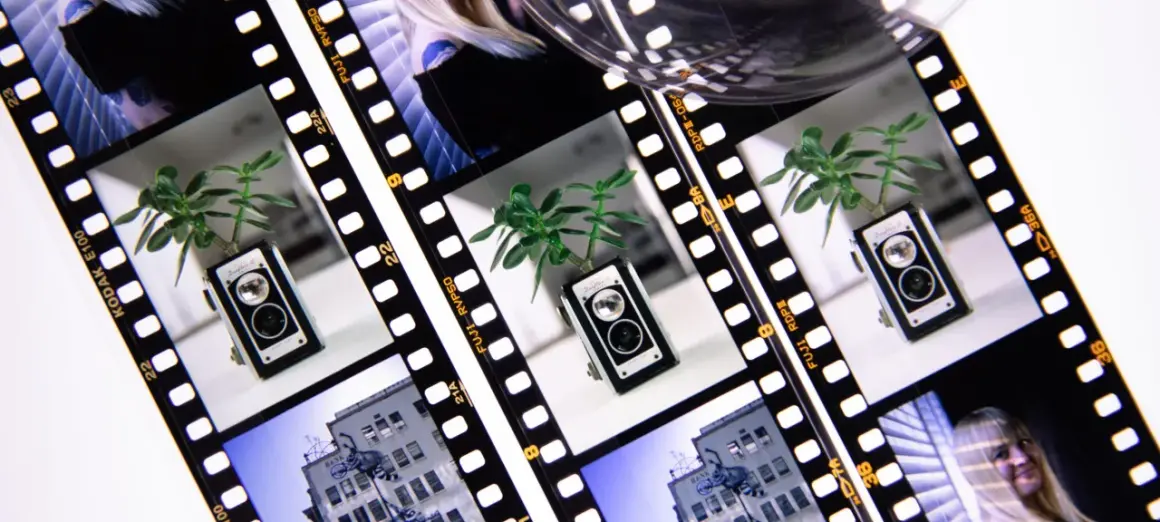
Ektachrome and Velvia are both color reversal films, but they reward very different instincts behind the camera. The Ektachrome vs Velvia decision is really a choice between restraint and drama: one stock leans neutral and scan-friendly, while the other pushes saturation and contrast until the image starts to feel interpreted instead of merely recorded. In this article, I break down the look, the exposure behavior, the lab workflow, and the real-world shooting situations where each film makes the most sense.
The short version if you need to choose now
- Ektachrome E100 is the safer all-round slide film: ISO 100, neutral color, fine grain, and easier scanning.
- Velvia 50 is the more expressive choice: ISO 50, very rich saturation, stronger contrast, and a classic landscape look.
- Both are E-6 color reversal films, so exposure discipline matters more than it does with color negative film.
- For U.S. buyers, Velvia 50 is the relevant Velvia stock; Velvia 100 is officially discontinued in the U.S.
- If your goal is believable color for people, products, or mixed scenes, I would start with Ektachrome.
Reversal film, or slide film, gives you a positive image on the strip itself, so the color curve and contrast are baked in before scanning or projection. That is why this comparison is not about which film is “better” in the abstract; it is about which visual philosophy matches the scene. Kodak describes Ektachrome E100 as neutral, finely grained, and optimized for scanning, while Fujifilm frames Velvia 50 around vivid saturation and rich color tone, and that difference shows up immediately in the same light.
I think of Ektachrome as the film that keeps the subject honest. Velvia is the film that makes the subject sing. Once you see that split, the practical comparison gets much easier to read.
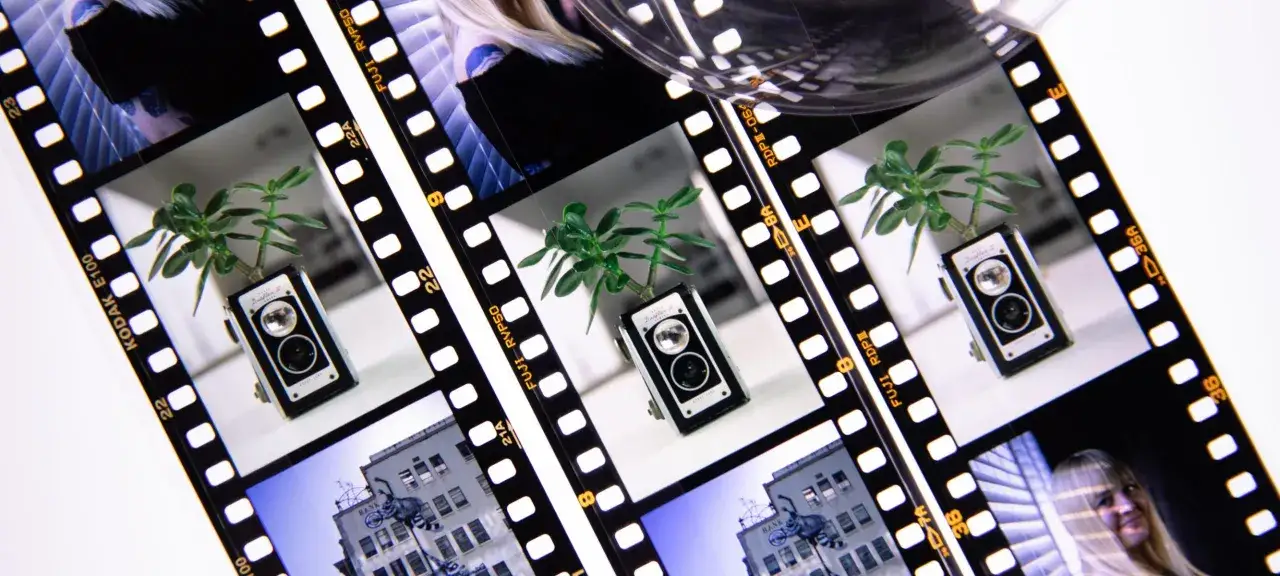
Side-by-side comparison at a glance
When I compare these films, I ignore the hype and look at the things that actually change the final image. The table below keeps the discussion grounded in the details that matter most when you are loading a roll and planning a shot.
| Criterion | Ektachrome E100 | Velvia 50 | What it means in practice |
|---|---|---|---|
| ISO | 100 | 50 | Ektachrome is easier when light falls fast. Velvia usually wants brighter conditions or a tripod. |
| Color rendering | Neutral, clean, slightly restrained | Highly saturated, vivid, rich | Ektachrome records the scene; Velvia interprets it. |
| Contrast | Moderate | High | Velvia can look dramatic immediately, but it can also clip sooner in hard light. |
| Exposure behavior | A little more forgiving for slide film | Less forgiving, especially in high contrast light | Ektachrome is usually the safer choice when you cannot control every variable. |
| Scanning | Easier to digitize cleanly | Often needs more saturation and highlight control | Ektachrome tends to save time in the scanner or post workflow. |
| Best use | Portraits, travel, product, editorial, mixed subjects | Landscapes, foliage, dramatic color, intentional stylization | The subject and the brief should drive the choice. |
| Formats | 35mm and 120 | 35mm and 120 | Both are easy to slot into a modern film workflow. |
| Processing | E-6 | E-6 | You need a lab that can process slide film consistently. |
On a light table, Ektachrome usually feels calmer and more balanced, while Velvia looks denser and more forceful. That is not a defect or an upgrade, just a different creative contract. Once you accept that, it becomes much easier to decide which stock belongs in your camera.
Where each stock actually shines
Portraits and skin tones
For portraits, I usually prefer Ektachrome. Its neutral tonal scale and modest saturation are kinder to skin, especially when a subject already has warm undertones or the light is late afternoon. Velvia can work for editorial fashion or stylized portraiture, but it is less forgiving of red cheeks, warm interiors, and uneven daylight.
If the face is the point of the image, I want the film to support expression instead of competing with it. That is where Ektachrome earns trust, and it is also why so many photographers reach for it when the shot has to feel believable rather than exaggerated.
Landscapes and color-rich scenes
For landscapes, Velvia 50 still earns its reputation. The film makes greens, blues, and autumn color feel immediate, which is why it can turn a good scene into a memorable transparency. I would reach for it when the light is clean, the subject already has strong color structure, and I want the slide itself to carry some of the emotional punch.
Ektachrome can absolutely do landscapes, but it speaks in a lower register. If Velvia feels like a chorus, Ektachrome feels like a well-tuned soloist. That difference matters most when you are trying to decide whether the scene should look dramatic or simply true.
Read Also: Hasselblad 500C - Still Worth It? Your Guide to Buying & Using
Products, interiors, and brand work
For product work, interiors, and brand imagery, I lean back toward Ektachrome unless the brief explicitly wants a stylized presentation. If the image has to represent a material, fabric, paint, food, or artwork accurately, a more restrained film usually ages better. Velvia can be brilliant for a hero shot, but it can also distort the exact hue the client thought they approved.
This is where slide film stops being nostalgic and starts behaving like a production choice. When the image has to support a visual identity, accuracy usually matters more than spectacle, and Ektachrome makes that easier to defend.
The practical takeaway is simple: if the subject already has strong color and you want that color to lead, Velvia is persuasive. If the subject needs room to breathe, Ektachrome is easier to live with. That decision becomes even more important once you start thinking about exposure and scanning.
Exposure, processing, and scanning are where the decision gets real
Slide film rewards discipline, and both of these stocks make that obvious. I meter carefully, protect highlights, and avoid assuming that a bright digital preview means the transparency will hold detail in the same way. The practical difference is that Ektachrome is generally easier to scan cleanly, while Velvia often needs me to tame saturation and contrast a little more before the file looks natural.
- Expose with the highlights in mind. Specular reflections, white clouds, and sunlit fabric can disappear quickly on reversal film.
- Keep the lab consistent. E-6 processing varies enough that an inconsistent lab can change the look more than you expect.
- Scan with restraint. A flat scan gives you more room to shape the file, especially with Velvia.
- Do not chase saturation twice. If the film is already vivid, the scan should not amplify that until skin and skies start looking artificial.
If I had to give one rule, it would be this: do not underexpose and hope the film will save it. Slide film is the wrong place to gamble, and the wrong scan settings can make a good frame look harsher than it really is. That workflow question matters even more when Velvia 100 enters the conversation, because its status changed in the U.S.
Why Velvia 100 is not the baseline choice in the U.S.
The U.S. product page says Velvia 100 was discontinued in the U.S. effective July 6, 2021. I still see older comparisons that use it as the obvious Fujichrome reference, but for a photographer buying film in 2026, that is mostly a historical footnote. If you want the classic Velvia character today, Velvia 50 is the stock that actually belongs in the decision.
Velvia 100 mattered because it kept the saturated Velvia idea but moved to ISO 100. That made it attractive on paper, but it should not be the film you plan a current workflow around if you are shooting in the U.S. The practical comparison today is Ektachrome E100 on one side and Velvia 50 on the other.
That distinction saves a lot of confusion. A surprising number of online comparisons blur the lines between the two Velvia versions, and that can lead you to expect a stock you cannot reliably build around.
How I would choose for portraits, landscapes, and client work
- Portraits and people - Ektachrome E100, because skin tones stay calmer and retouching later is easier.
- Landscapes and autumn color - Velvia 50, because the saturation is part of the composition.
- Travel and mixed light - Ektachrome, because city scenes, skin, signage, and sky do not all get pushed in the same direction.
- Client brand work - Ektachrome when accuracy matters; Velvia when the brief wants a visual statement more than strict fidelity.
- Personal fine-art projects - whichever film supports the mood you already see in your head.
If I were teaching someone new to slide film, I would start with Ektachrome because it gives cleaner feedback on exposure and color management. Once that foundation is in place, Velvia becomes a creative choice rather than a gamble. That is the point where the comparison stops being technical and starts being about intent.
Pick the look before you pick the roll
There is no universal winner here. Ektachrome is the more controlled, scan-friendly option; Velvia 50 is the more dramatic, immersive option. If the final image needs believable color and easier post-processing, I would start with Ektachrome. If the scene already has strong light and color and you want the transparency to carry that energy, Velvia is still hard to beat.
The real mistake is choosing based on reputation alone. Pick the film that matches the subject, the light, and the way you plan to use the image afterward, and this whole comparison stops being a debate and starts being a creative decision.